We flew in from Faroe Islands, jumped into our car, (if you’re ever at Edinburgh airport and leaving a car, we highly recommend FastPark, it was so easy! We followed the signs, scanned our receipt, grabbed our keys out of the locker, walked to the specified bay and were at the servo within 2hrs of having been in Faroe Islands!) topped up fuel and snacks and drove a couple of hours to Inverness.
There was a bit of rain along the way, but that just aided in cleaning the windscreen that we forgot to do at the servo!
We stopped at a supermarket, grabbed some food for lunch and dinner for two days/nights and got the washing machine going whilst dinner cooked.
We’ve had a week in hotels and have a week in hotels ahead of us, so it’s time for a wash and repack of bags. We’ll turn up the heating before we head out tomorrow to make sure everything dries.
We started the day heading to the Scottish Dolphin Centre located at Spey Bay. We walked along the longest shingle beach in Scotland looking for dolphins with no luck. Plenty of birds, no dolphins.
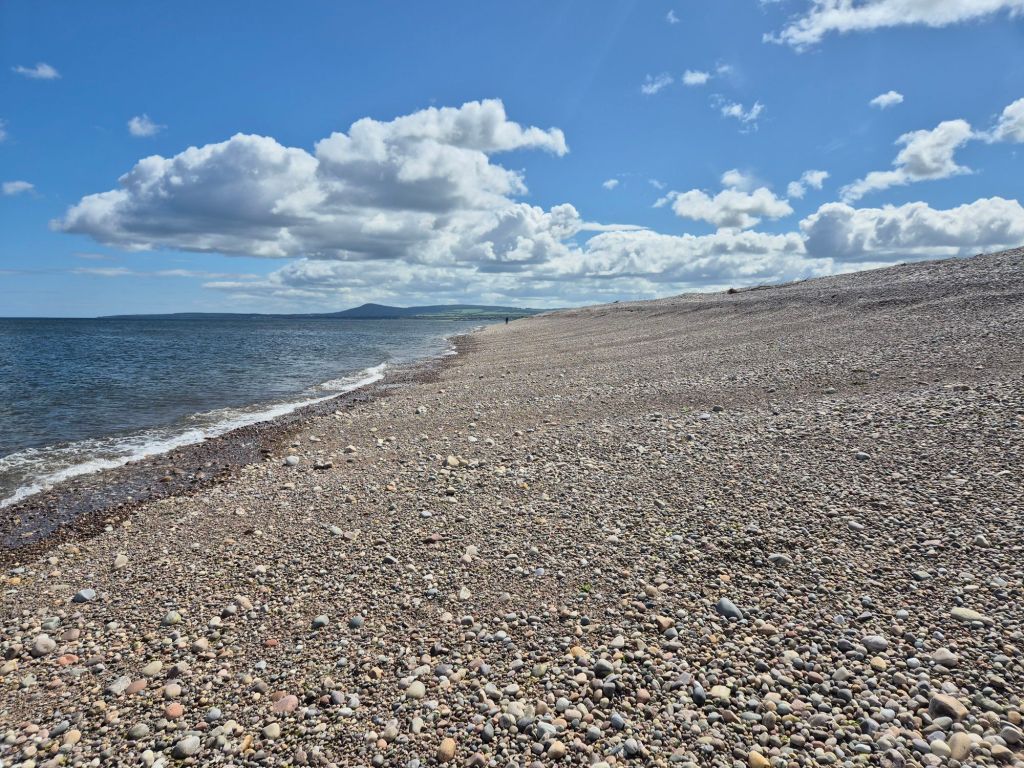
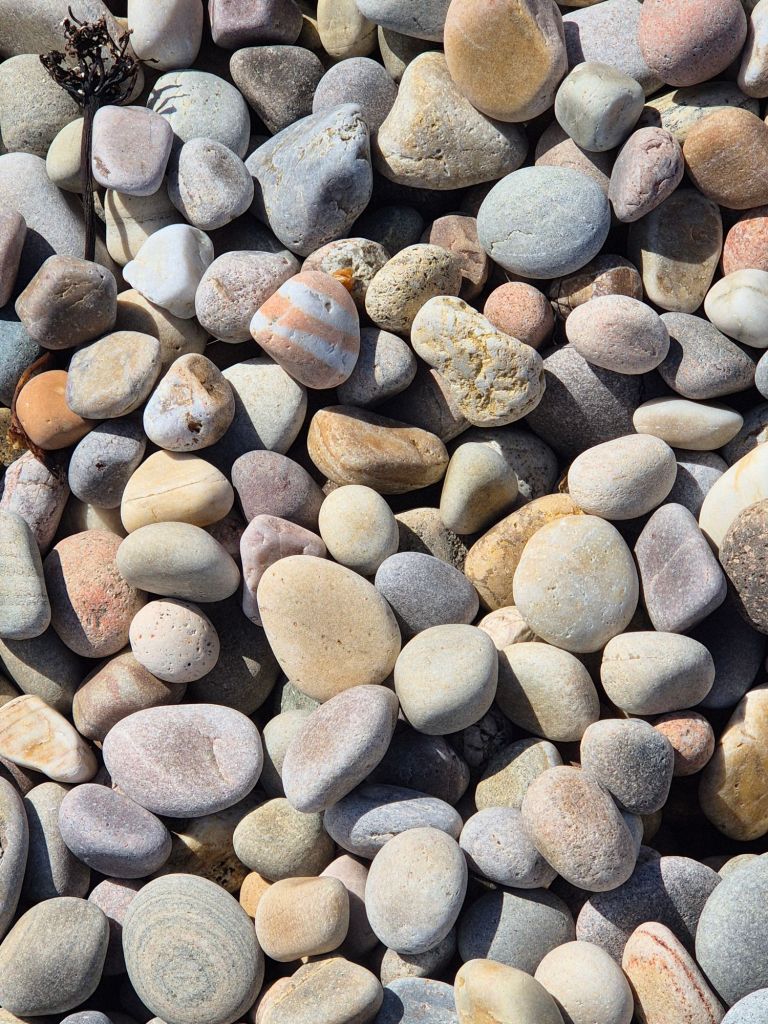
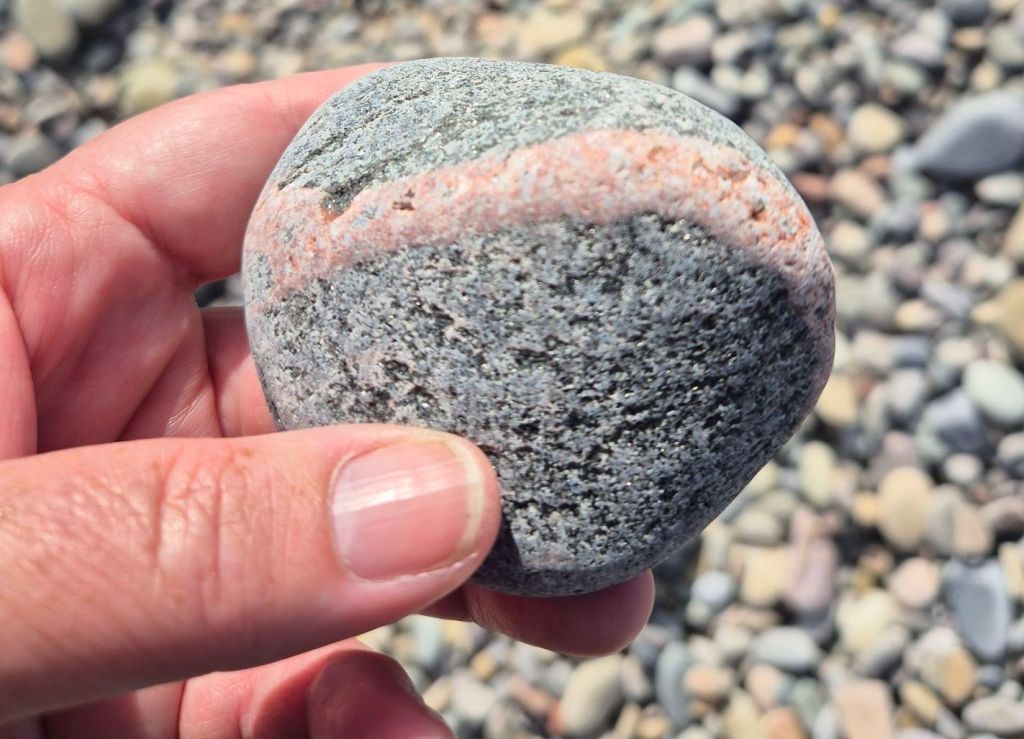
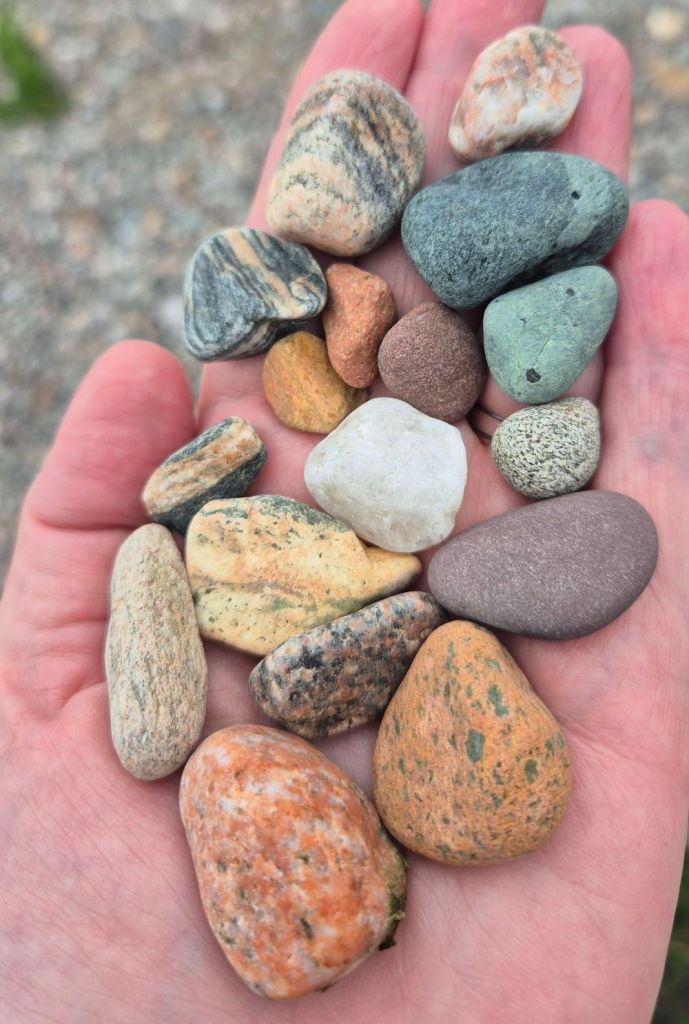
There were beautifully coloured rocks though.
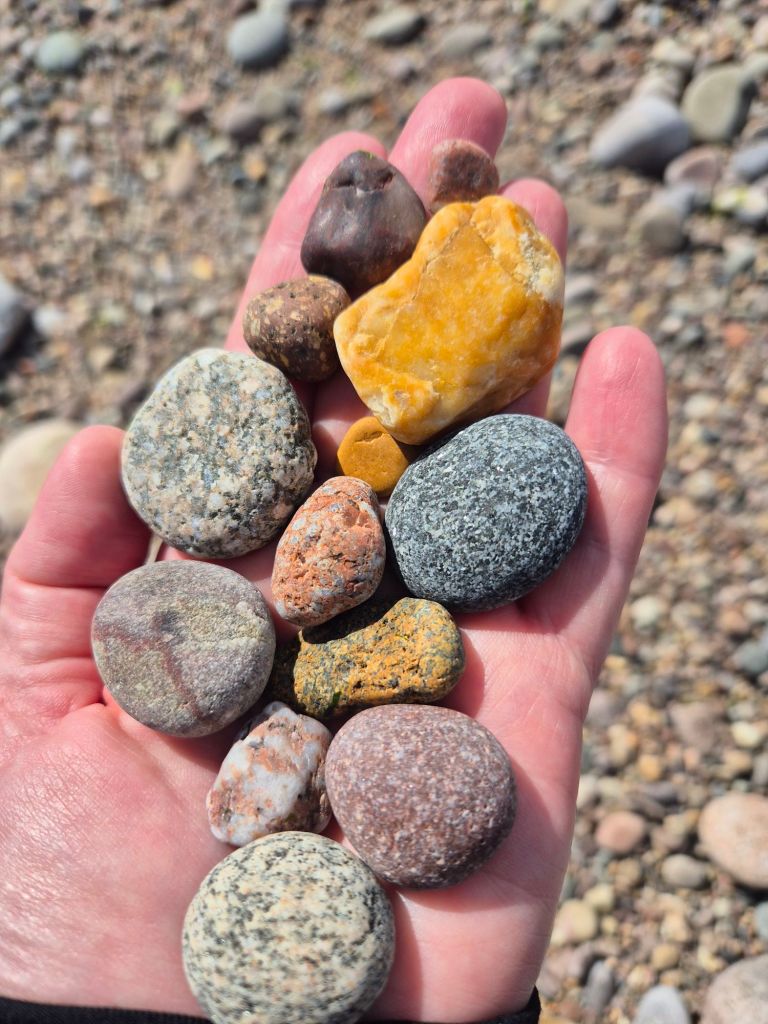
The fastest river in Scotland, the River Spey meets the ocean here. The beach had so many lovely and varied colours of rocks on it.
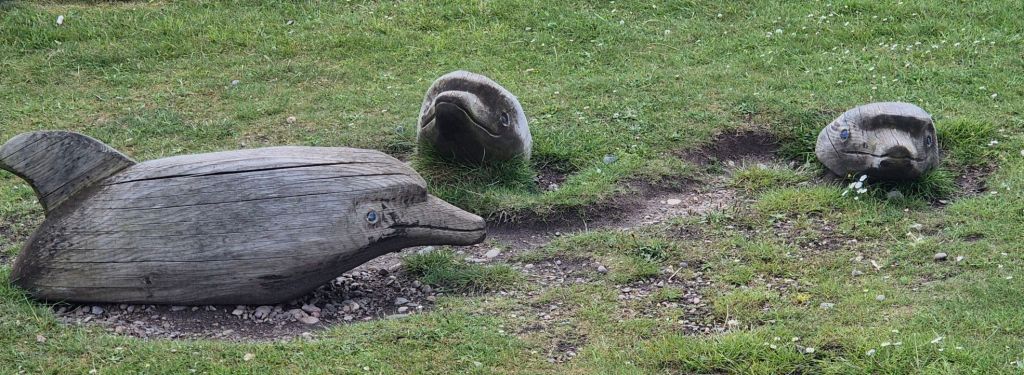
These were the only dolphins we saw today.
From here we headed back along the road to our accommodation stopping at Johnston’s of Elgin, a cashmere fabric and garment producer with a Royal Warrant – the garments were beautiful, but $5000 for a dressing gown??!!
We did a quick shop for road trip food at Tesco then travelled to the Culloden Battlefield.
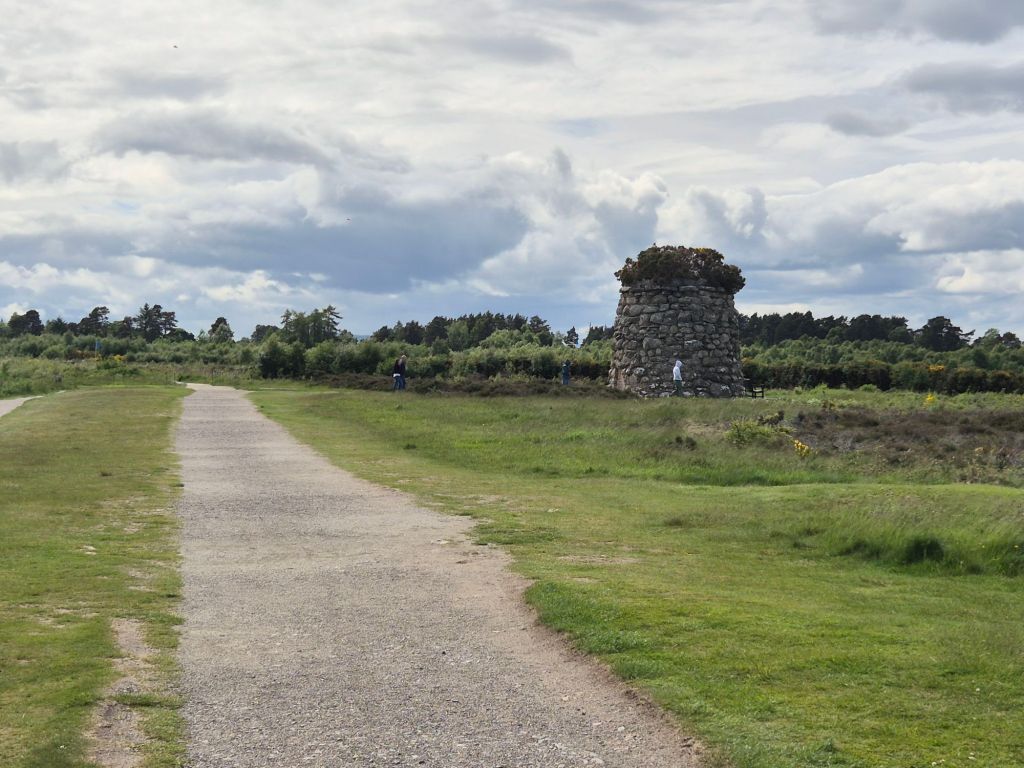
On the way, we drove through Cawdor, of Macbeth fame, and arrived at Culloden, explored the visitor’s centre, did a tour of the battlefield – a really good tour. The battle was fought between Government forces and the Jacobites. The Jacobites were fighting for the return of the Stuarts to the throne. If they’d won we’d not have Andrew or Harry in the Royal Family. Pity they didn’t win.
We then headed back to our accommodation to sort out and re-pack bags for the next week of our road-trip.
You could easily spend a week exploring just the road we drove on today, there was so much to see.
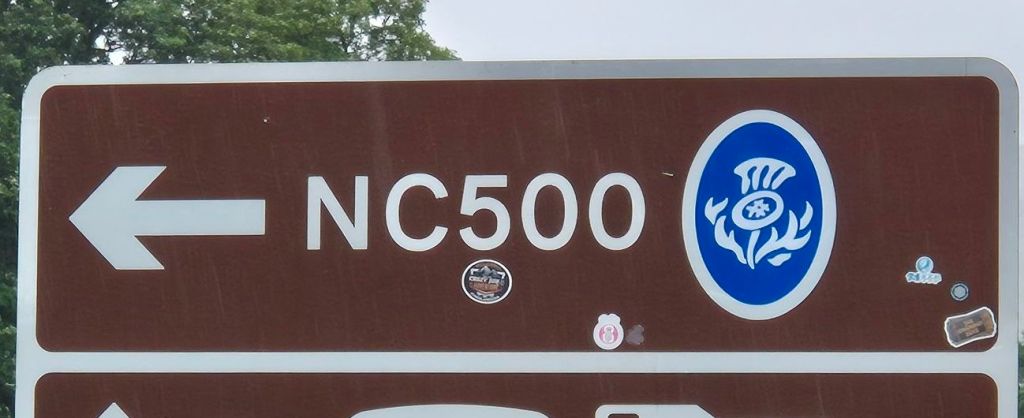
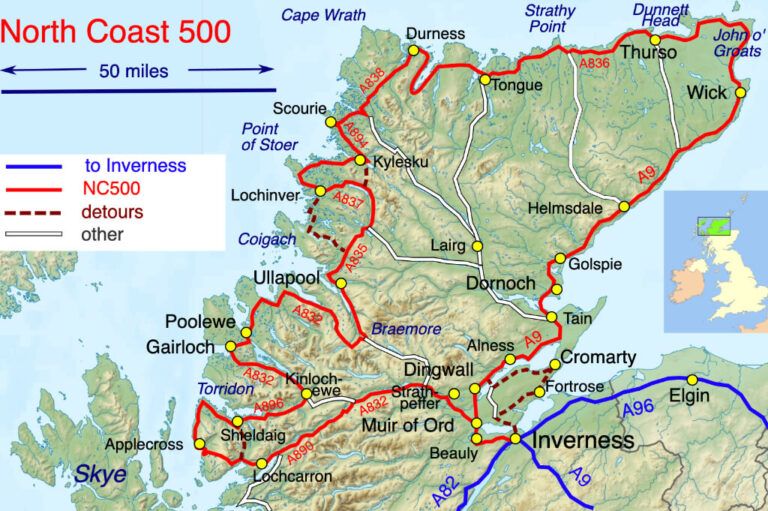
NC500: Inverness to Balmacara – 150km
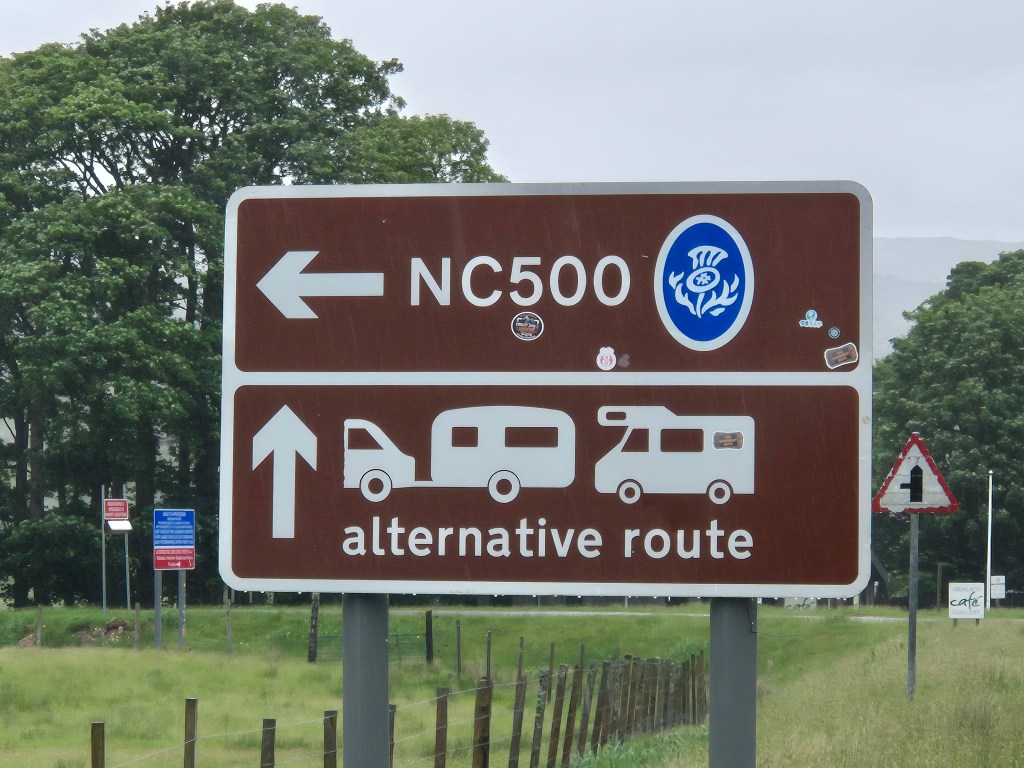
Heading off on our week-long drive of the North Coast 500 (miles, not kilometres) we first stopped in the village of Beauly to visit Beauly Priory.
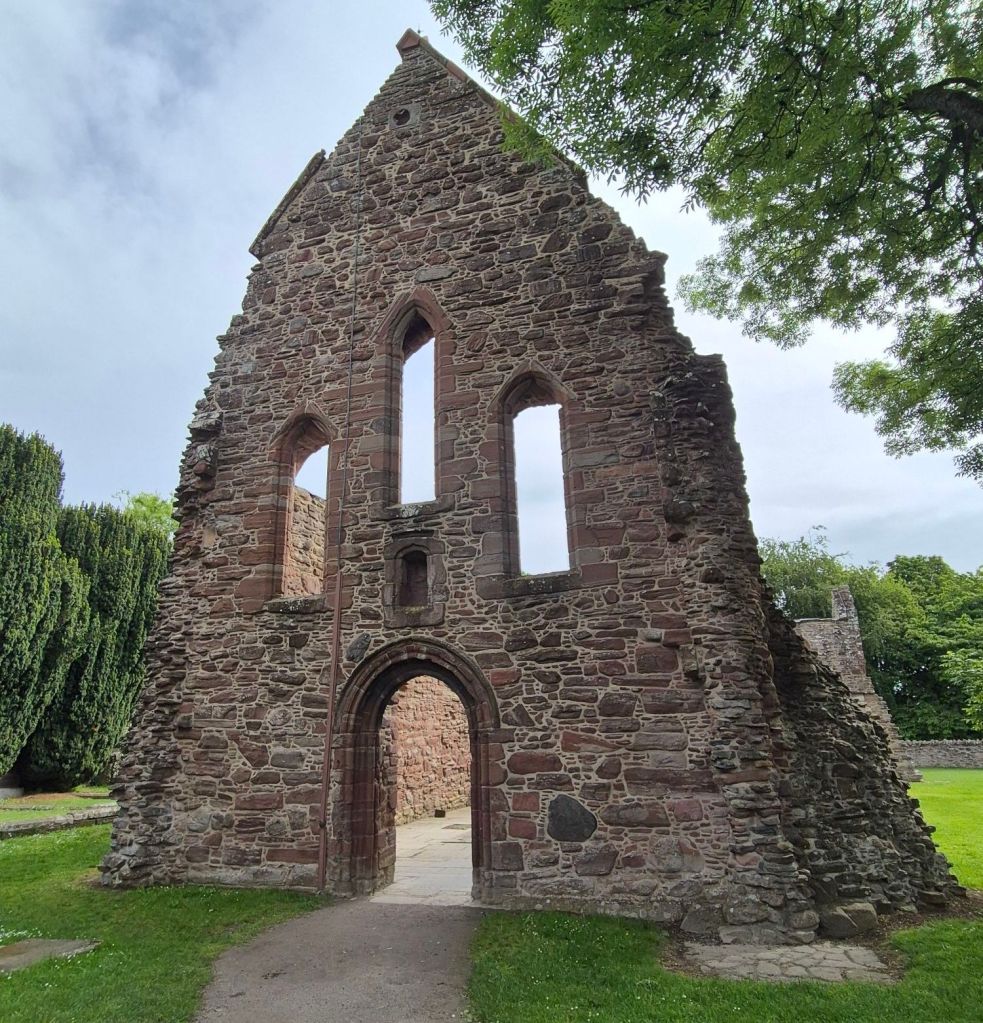
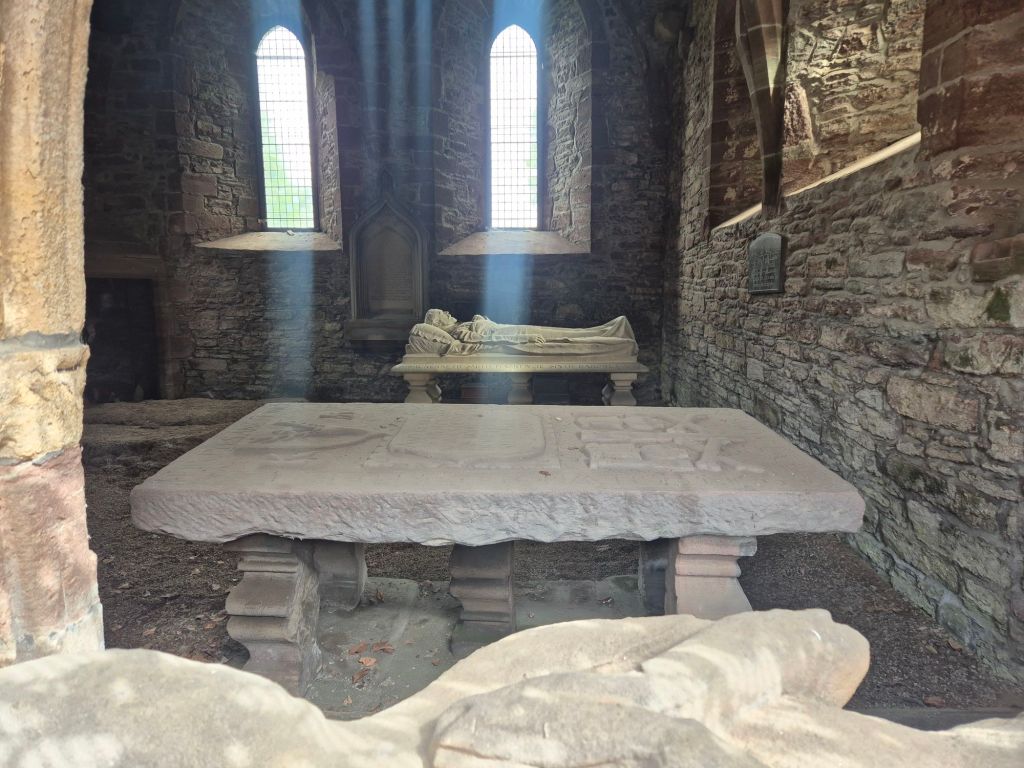
There were some really interesting graves and tombs for families “their infant children Elizabeth, two Donnalls and Mary” and leaders of the Battle of Culloden.
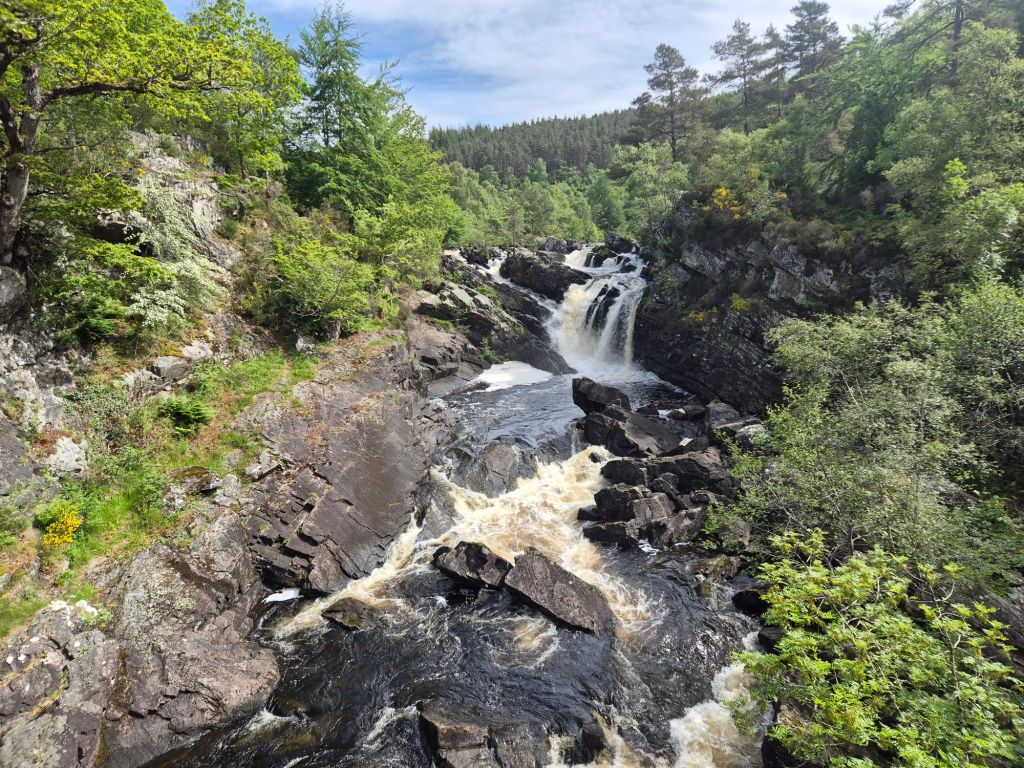
From there we stopped at two very different waterfalls.
Rogie Falls which were a walk in from the road and had a suspension bridge over them. These falls had dark brown water and lots of rocks. From July to September you’d see salmon jumping up the river to spawn. That would be a sight!
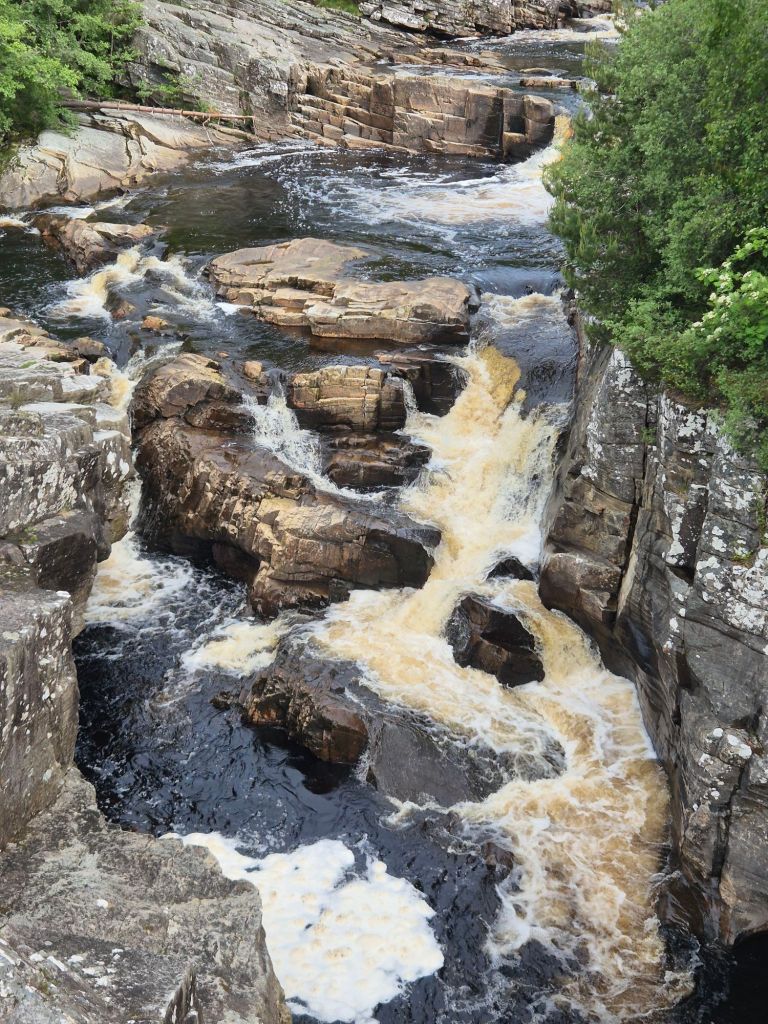
Then Black Water Falls which as per the name also had very dark, black water over really “blocky” rocks. The information board said that drovers used to use these rocks as a crossing place to get to market.
We stopped for a hot drink at the Midge Bite Cafe, no midge bites included thankfully, and continued on to Strathcarron to visit some potteries and a heritage weaving centre.
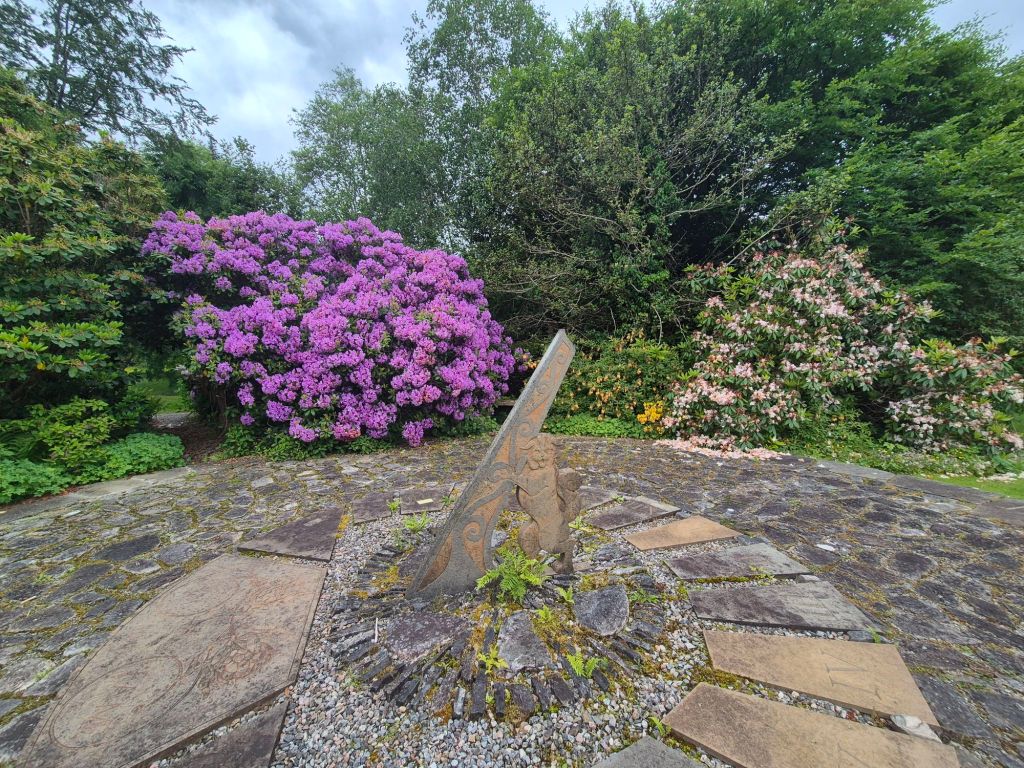
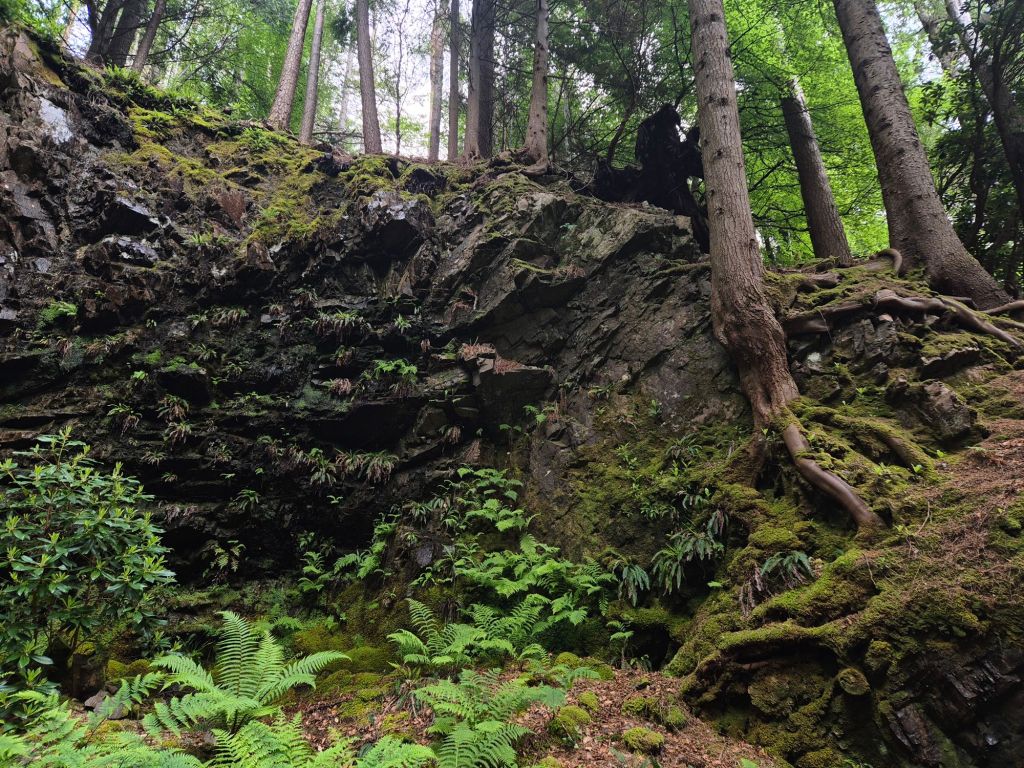
We then went for a walk around Attadale Gardens, following a sculpture trail through rhododendron, water, Japanese, fern and vegetable gardens. The sculpture trail would keep younger ones interested.
From there we drove to (and took a photo of) Eilean Donan Castle, apparently the most photographed castle in Scotland.
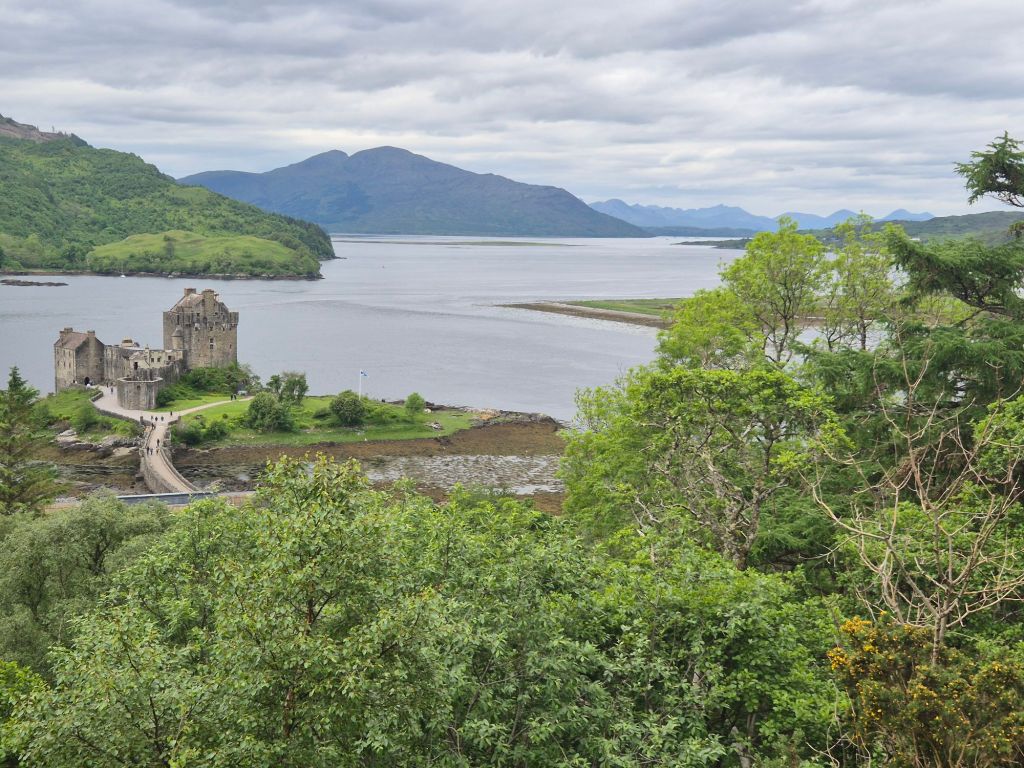
And just because we could, we crossed the bridge over to the Isle of Skye and spent some time unsuccessfully Otter spotting on another beach with a great variety of rock colours.
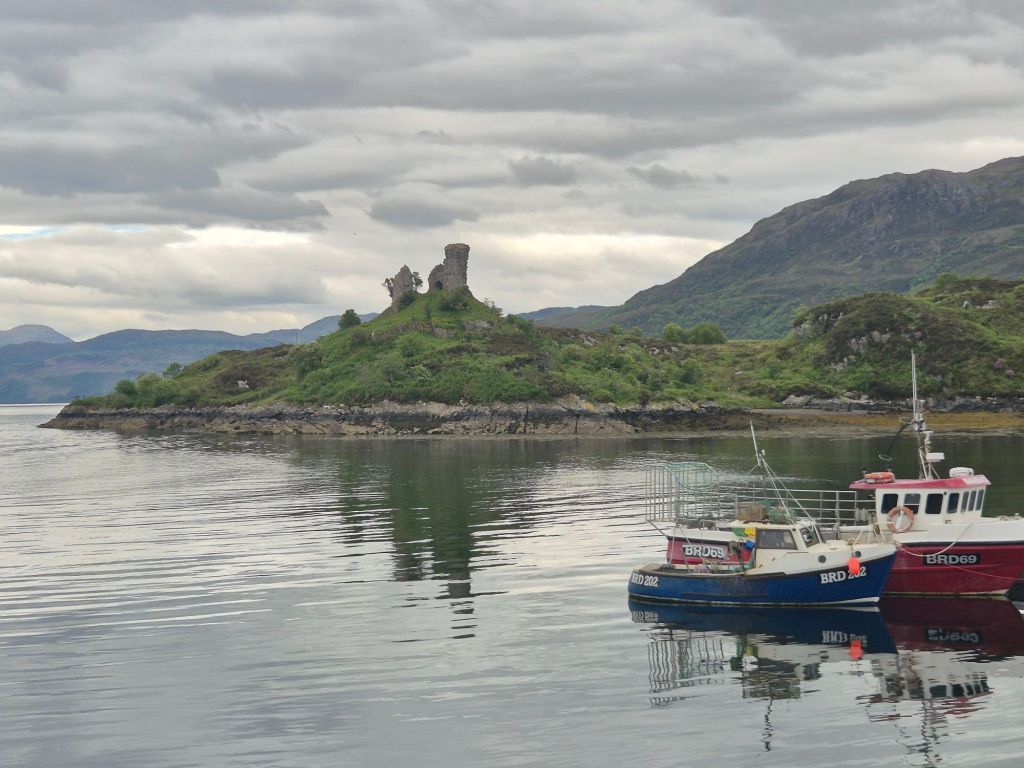
NC500 Day 2: Balmacara to Gairloch – 104km
We woke to a wet and rainy day, with rain continuing until about 4pm. Probably the worst weather day we’ve had since we left home, so we can’t complain!
We headed up and over Bealach na Bà, Scotland’s fourth highest road and most hazardous mountain pass. It’s also an essential element of the North Coast 500. It is mostly a narrow single lane road with intermittent passing points. The views from the top would be amazing if there was no cloud as there was today.
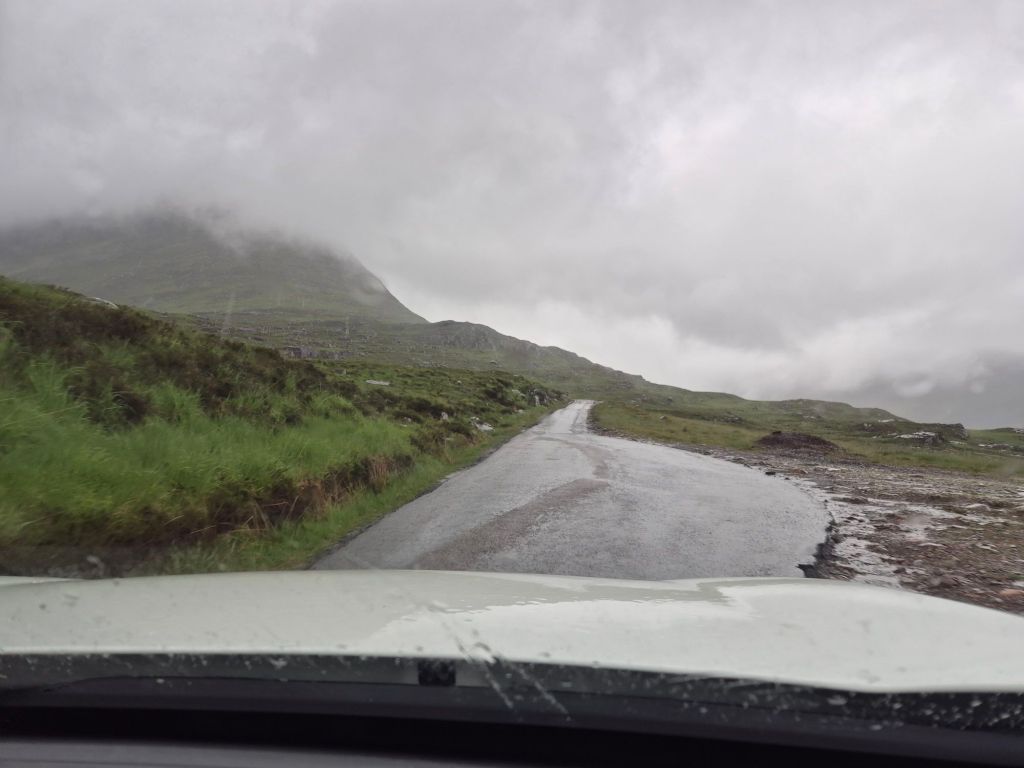
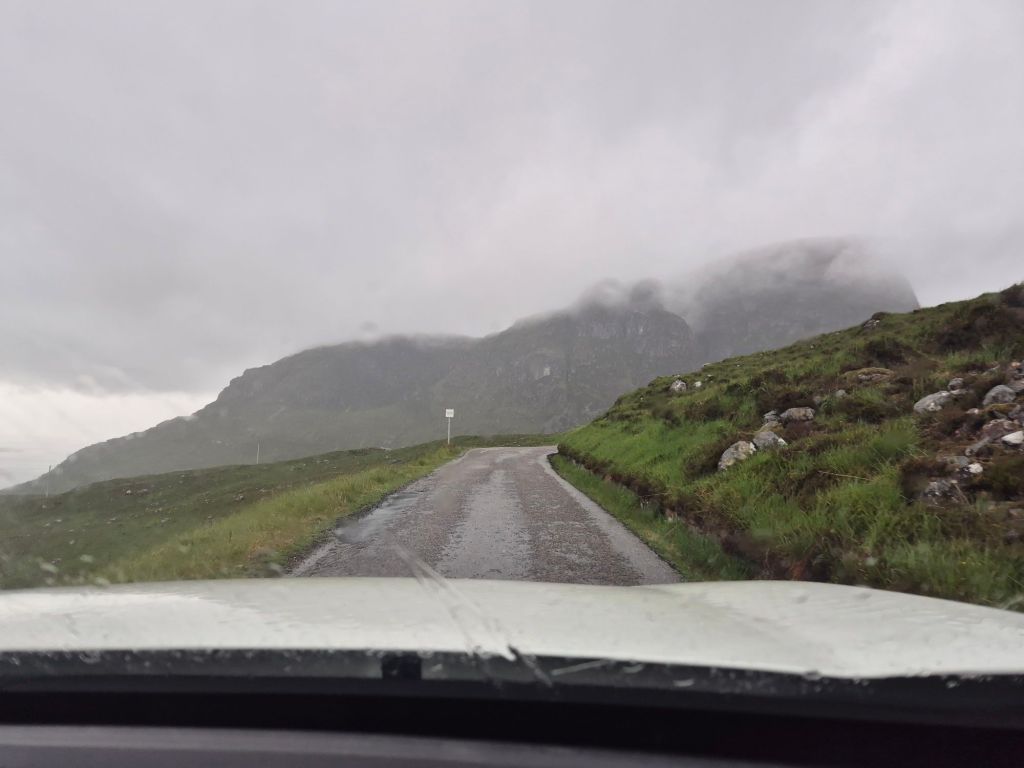
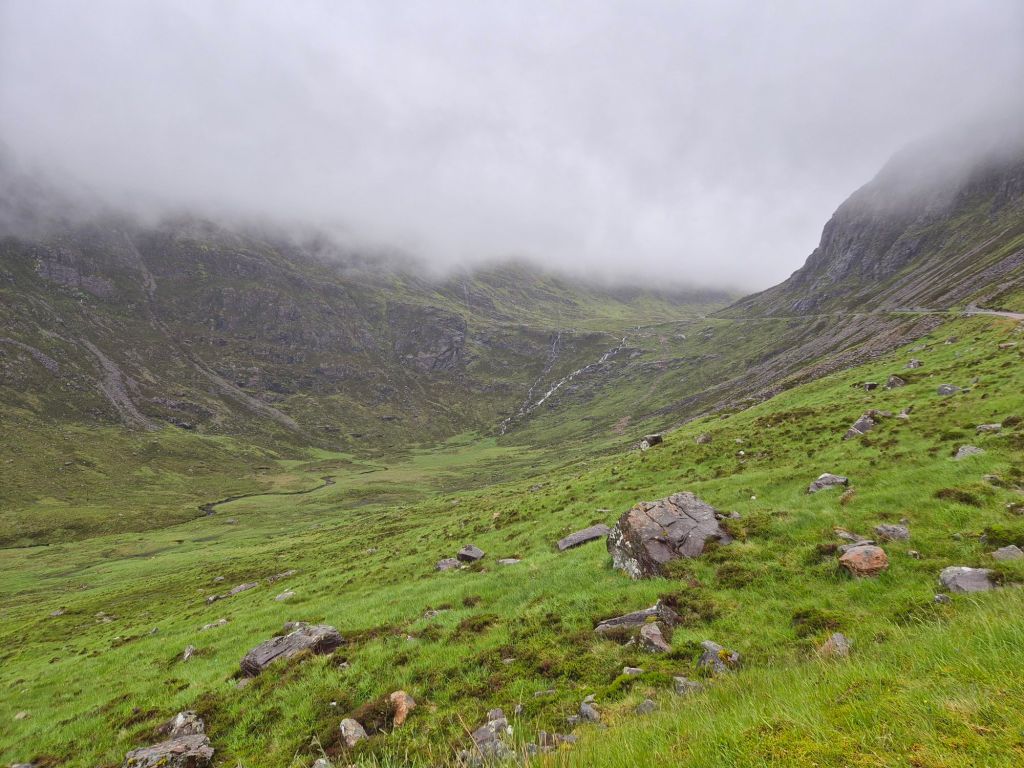
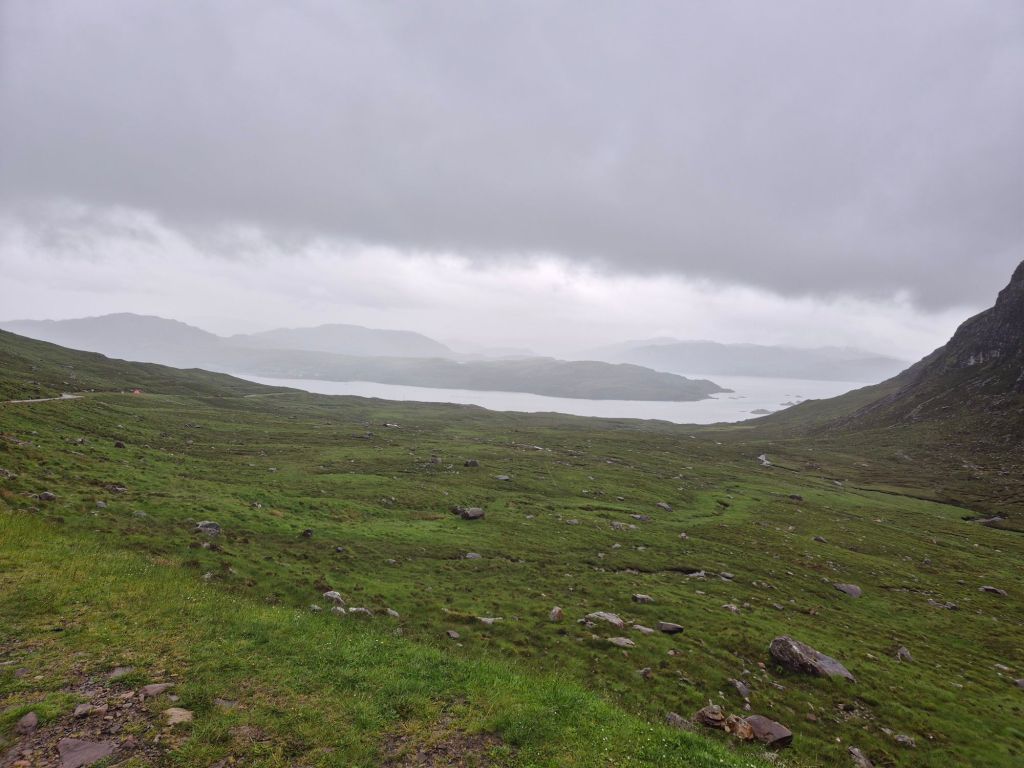
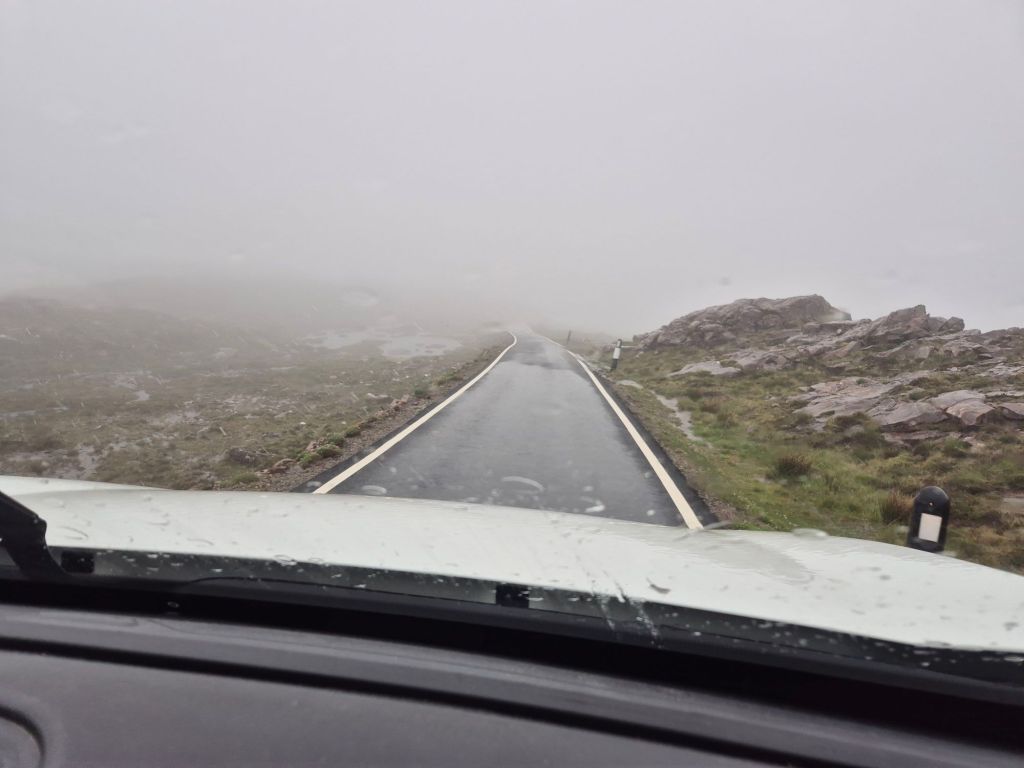
From there we drove the NC500 route around the coast, through valleys and over hills.
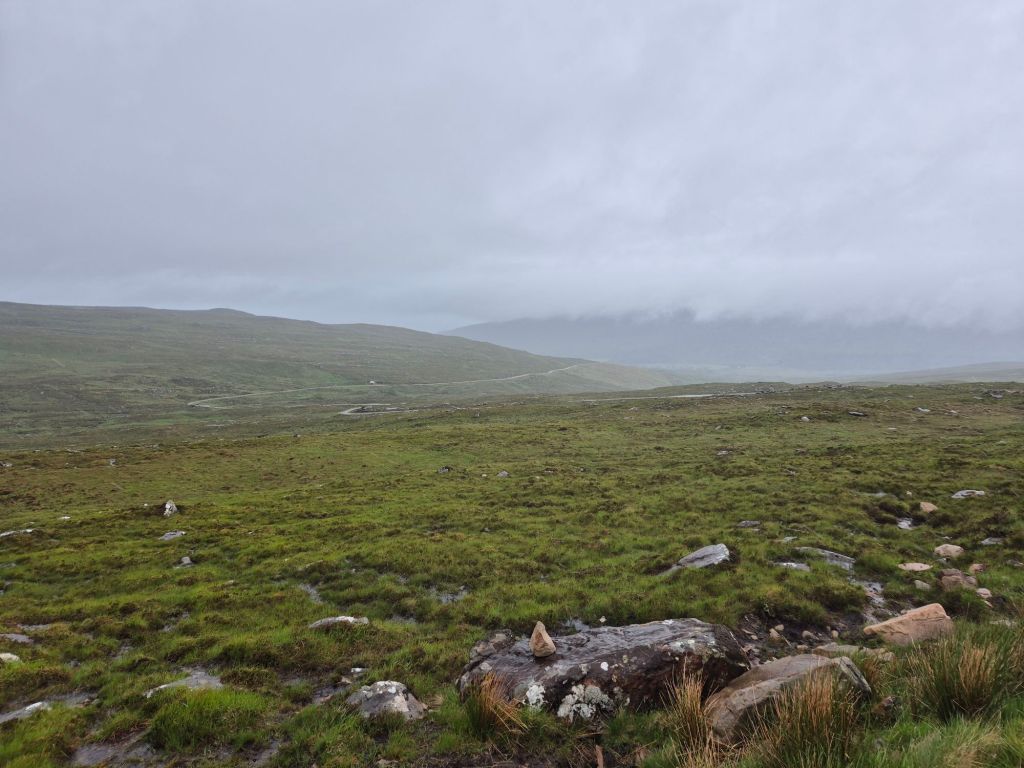
We didn’t stop much due to the rain, but just admired the scenery as we progressed.
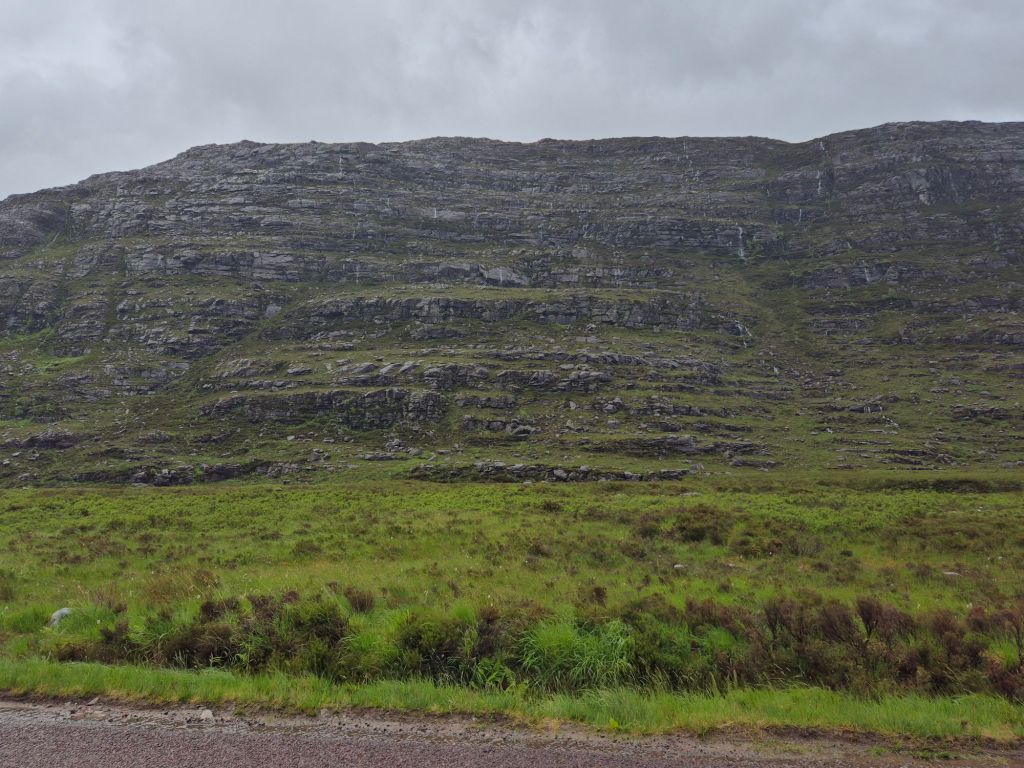
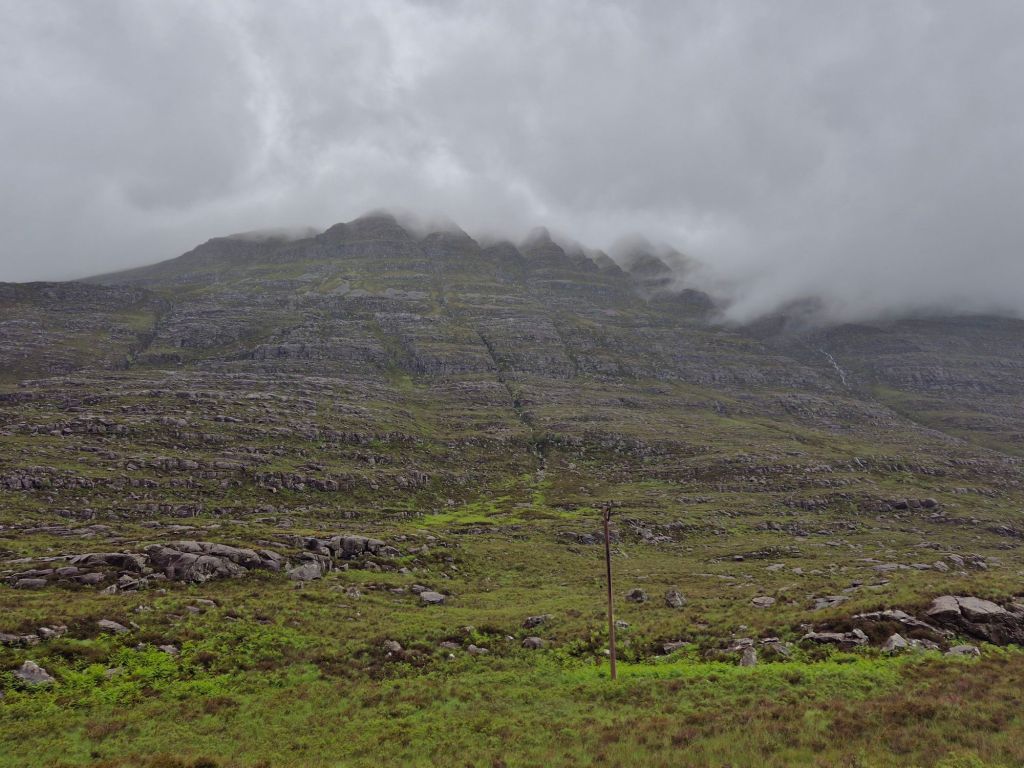
And it was beautiful.
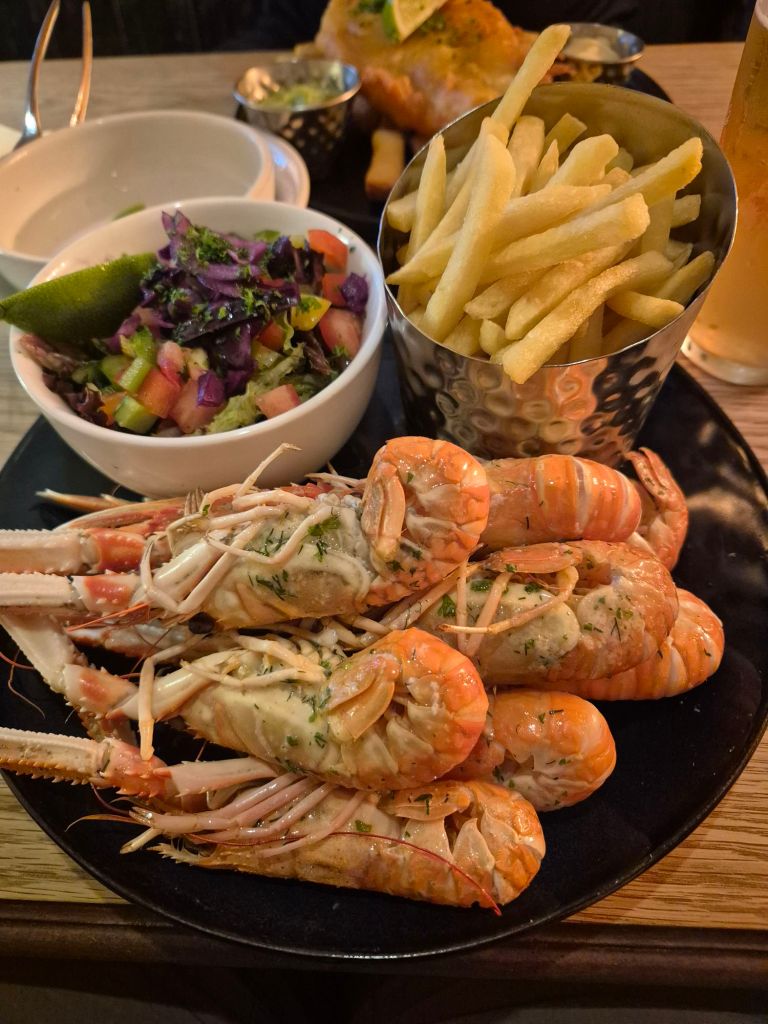
We stopped at a small pub in Badachro for a delicious lunch – langoustines that were only available because the boat had come in already. That’s fresh!
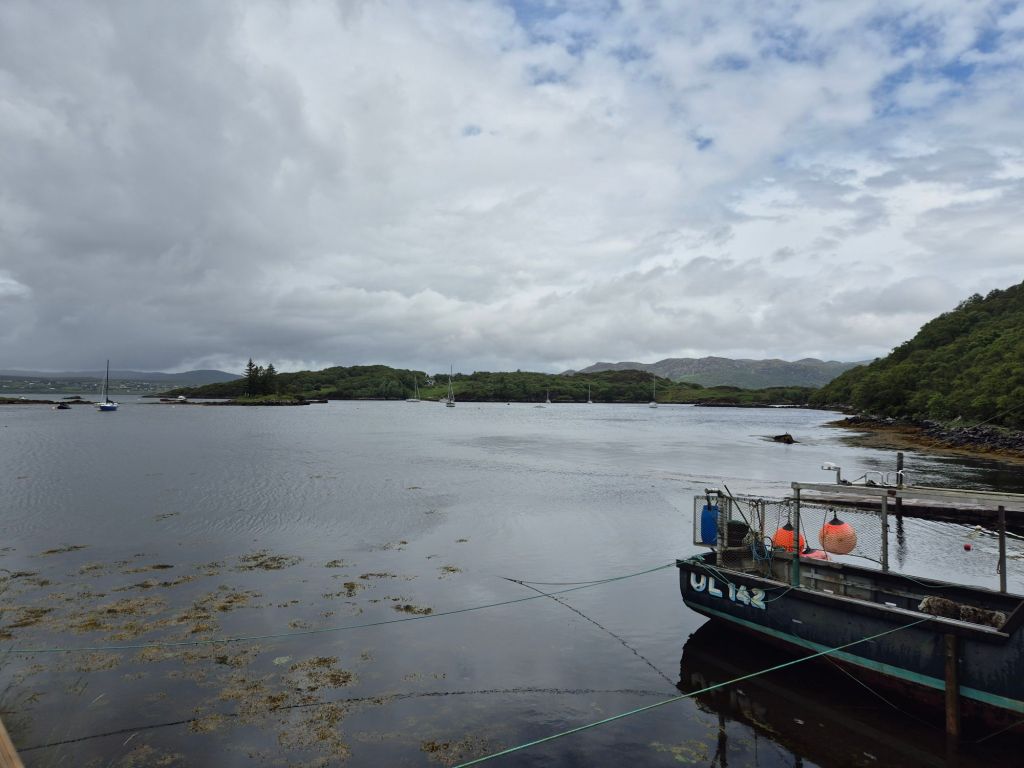
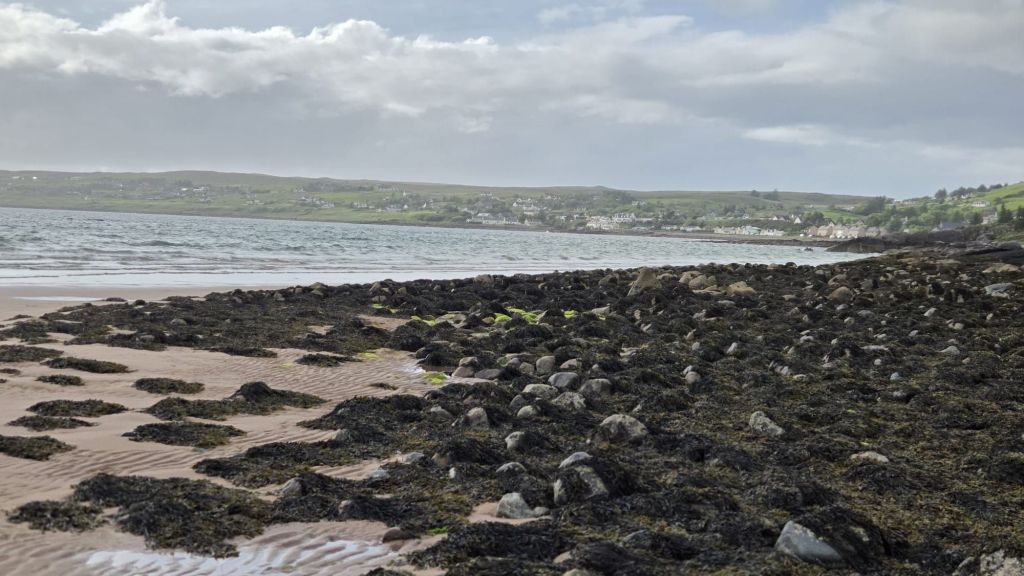
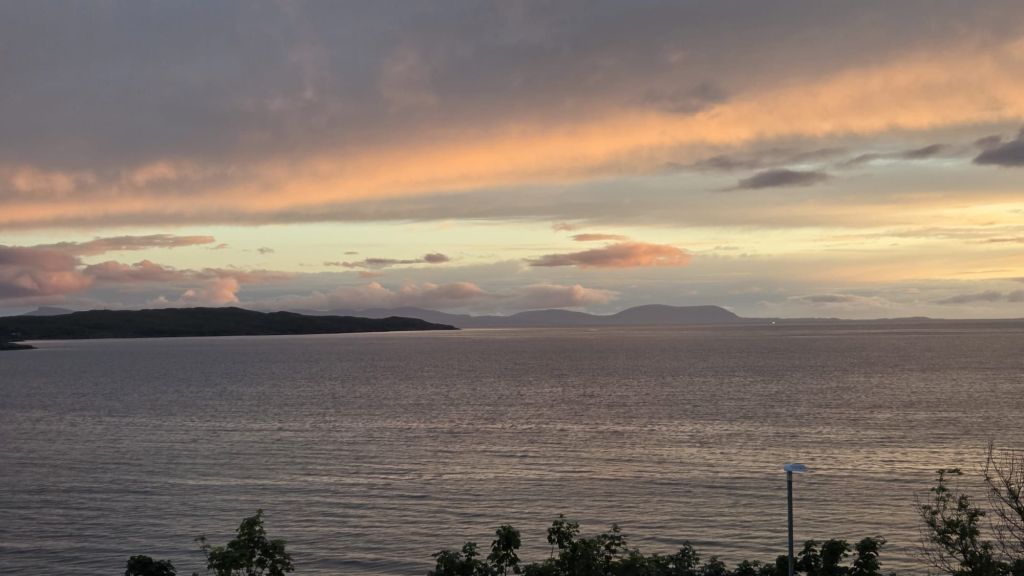
We then finished our day in Gairloch just as the rain stopped.
NC500 Day 3: Gairloch to Lochinver – 147km
This morning dawned bright and sunny. Then rained half an hour later and was back to being bright and sunny again another half hour later. It remained sunny for most of the day.
After grabbing some lunch things from the supermarket we headed to our first stop, Inverewe Gardens.
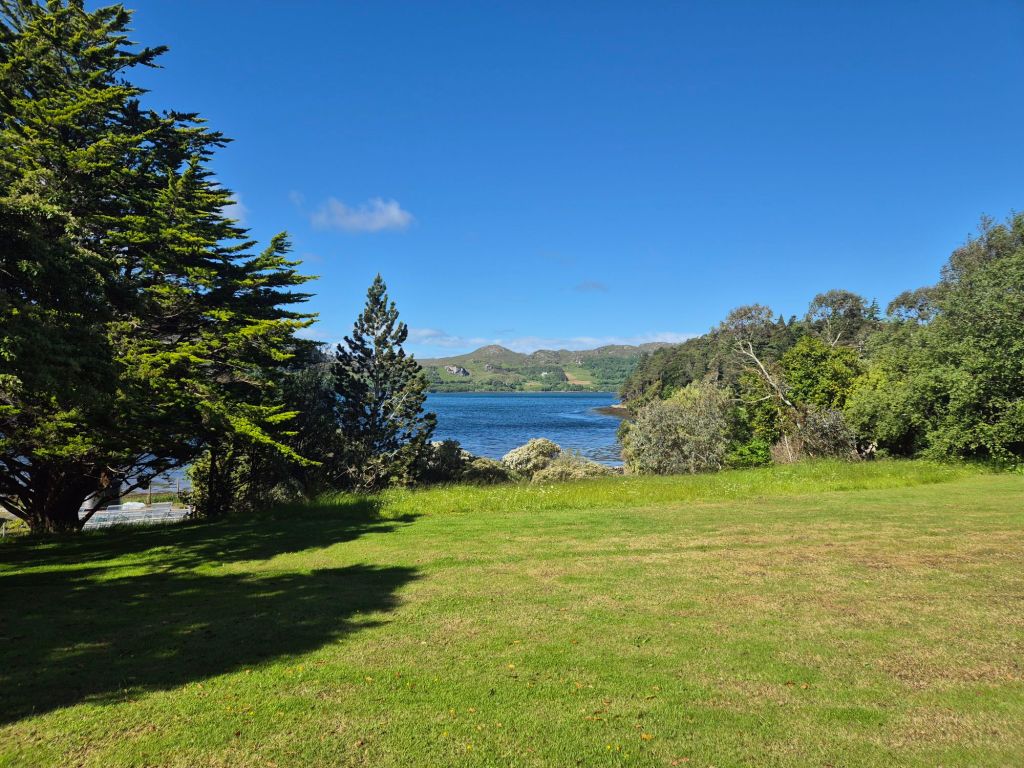
Inverewe Gardens were developed by a man and his daughter from the late 1800s until her death in the 1950s.
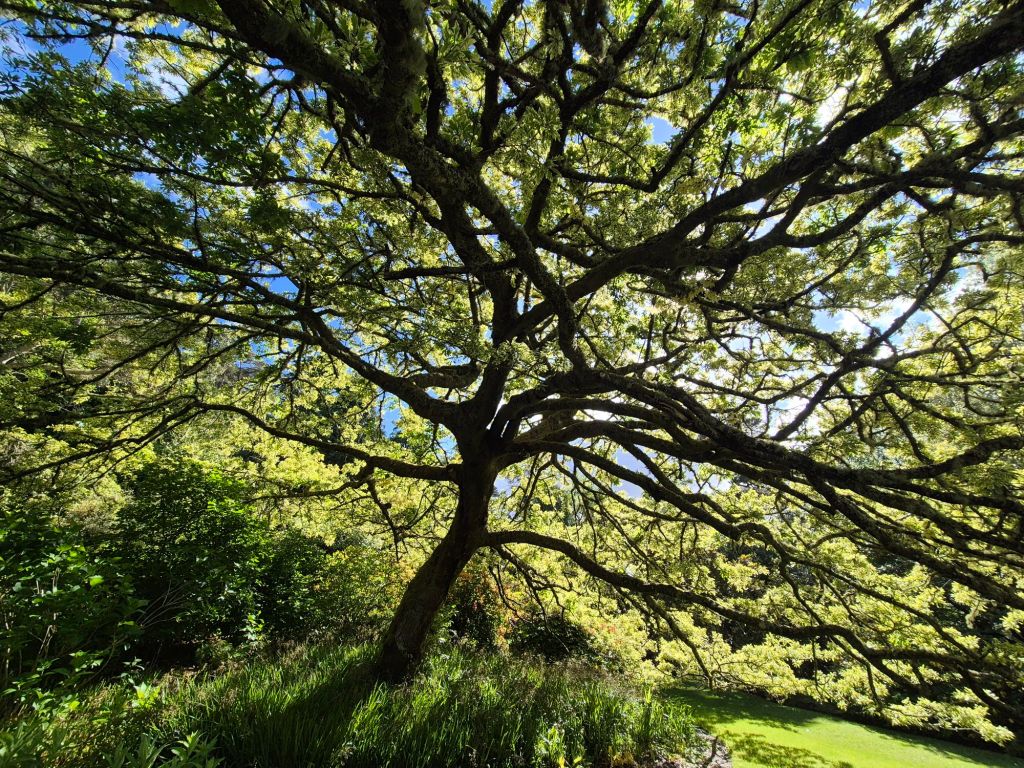
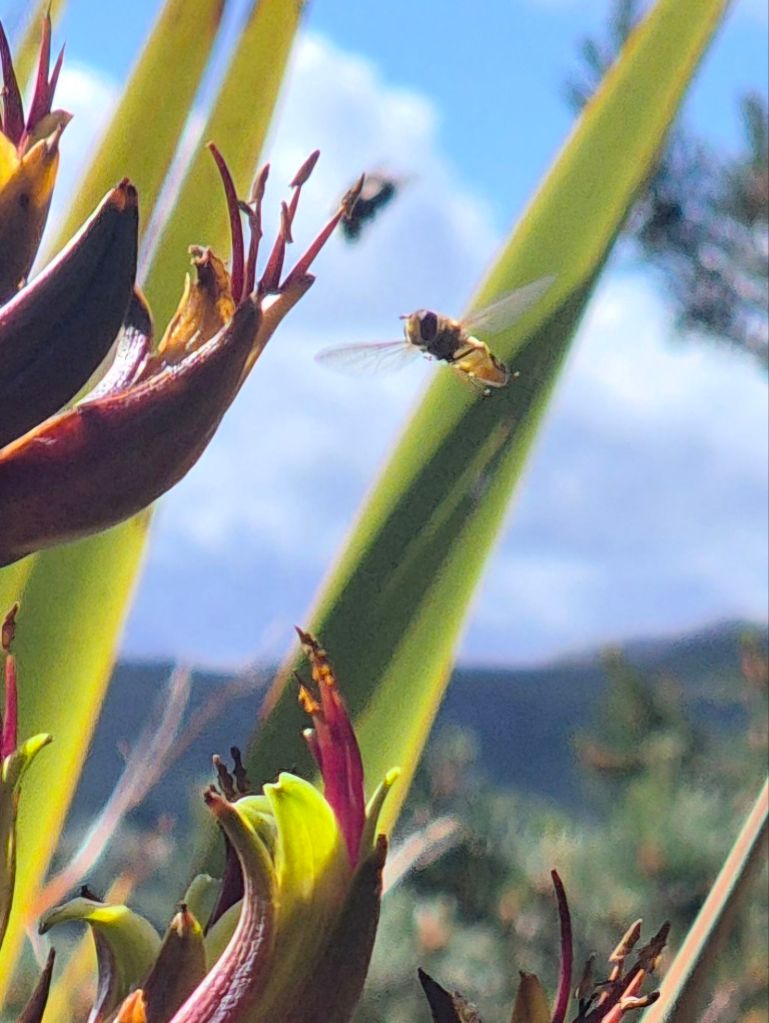
They travelled widely and seem to have lived extraordinary lives collecting plants, hunting, fishing and developing their garden.
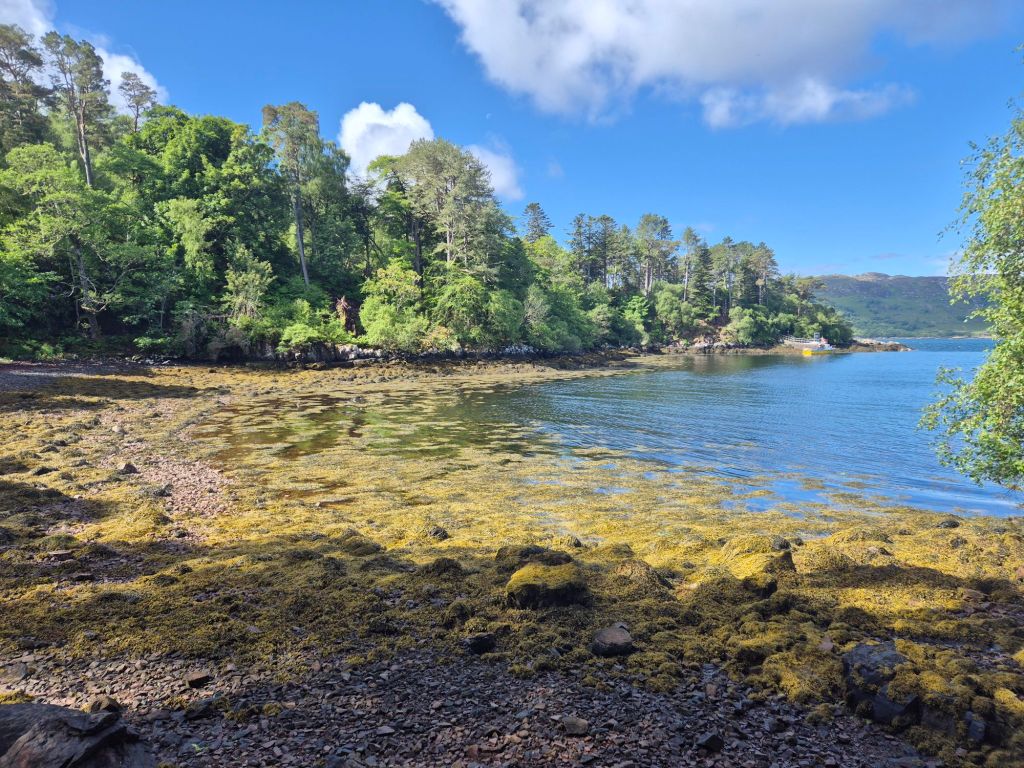
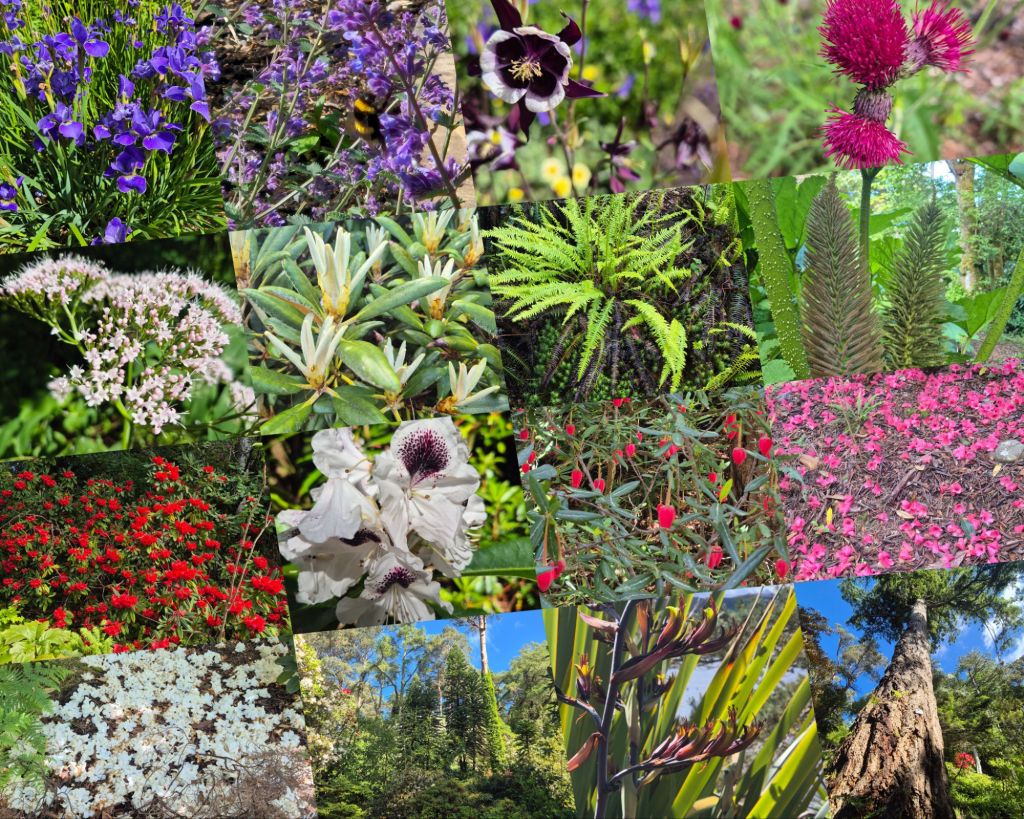
The gardens were beautiful and the house a really interesting and well put together, quirky museum about their life. They even have eight Wollemi Pines growing here!
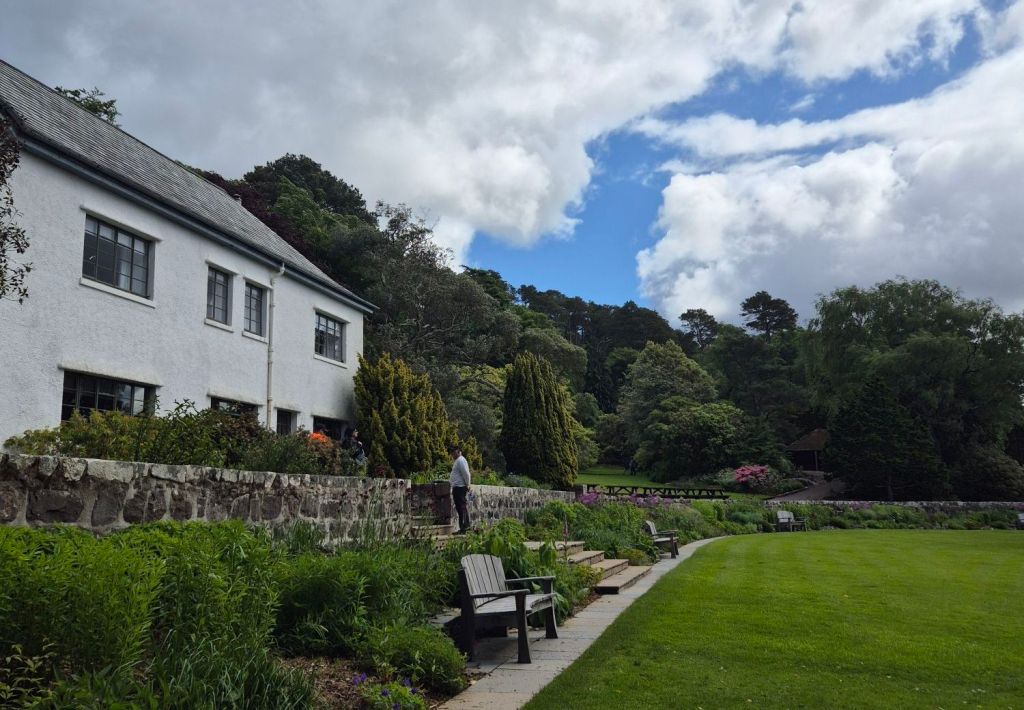
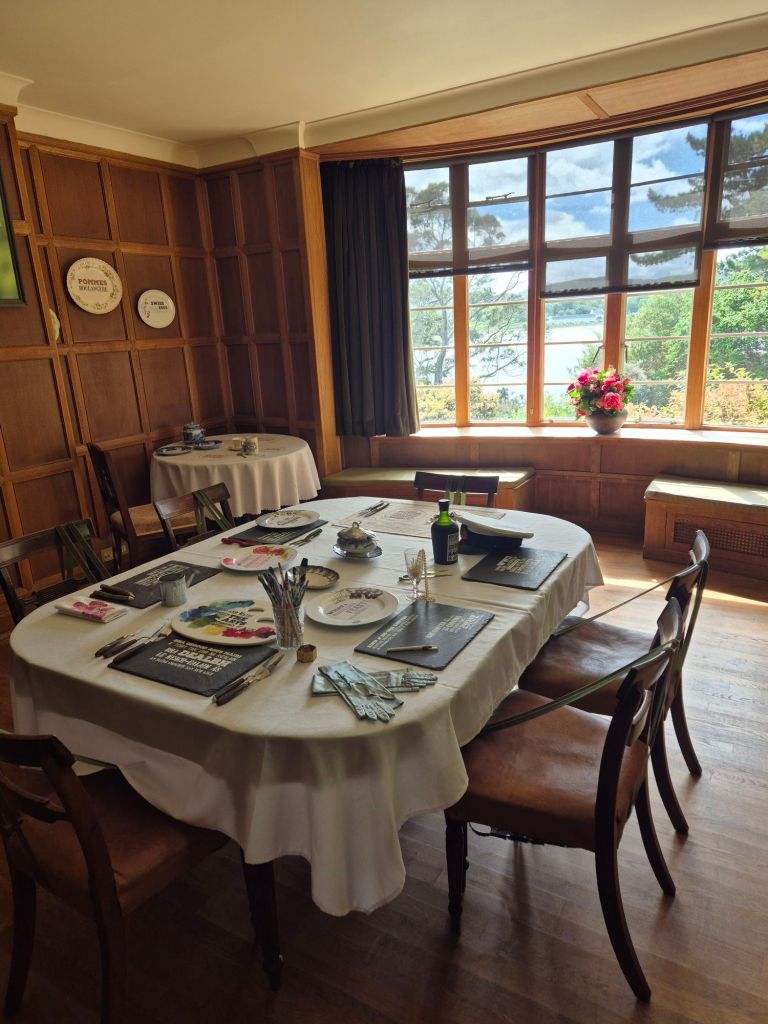
We spent a really quick two hours here and could have spent more but we were still only about 10km from where we started the day!
From here we went to the Arctic Convoy Museum in Aultbea. This was really interesting, largely because neither of us had ever heard of the arctic convoys of WWII. The convoys were intended to deliver supplies to Russia, who had been cut off by Germany, and had the challenge of avoiding the Luftwaffe, German boats and submarines, but also sea ice and ice build up on the boat, which could have flipped them.
78 convoys were conducted over the war years, with multiple boats and 3000 serviceman lost in that time. They also rescued Norwegians who were starving whilst in hiding from the Nazis. The convoys gathered in Loch Ewe (where Aultbea is located) before leaving. Loch Ewe had a complicated protection system put in place to prevent German submarines entering. It really was a fascinating museum largely run by volunteers.
We’ve put a couple of books on our Kindles to read so we can learn more.
From Aultbea, we drove towards Lochinver, stopping at Little Loch Broom for some scenery and to do a quick watercolour painting.
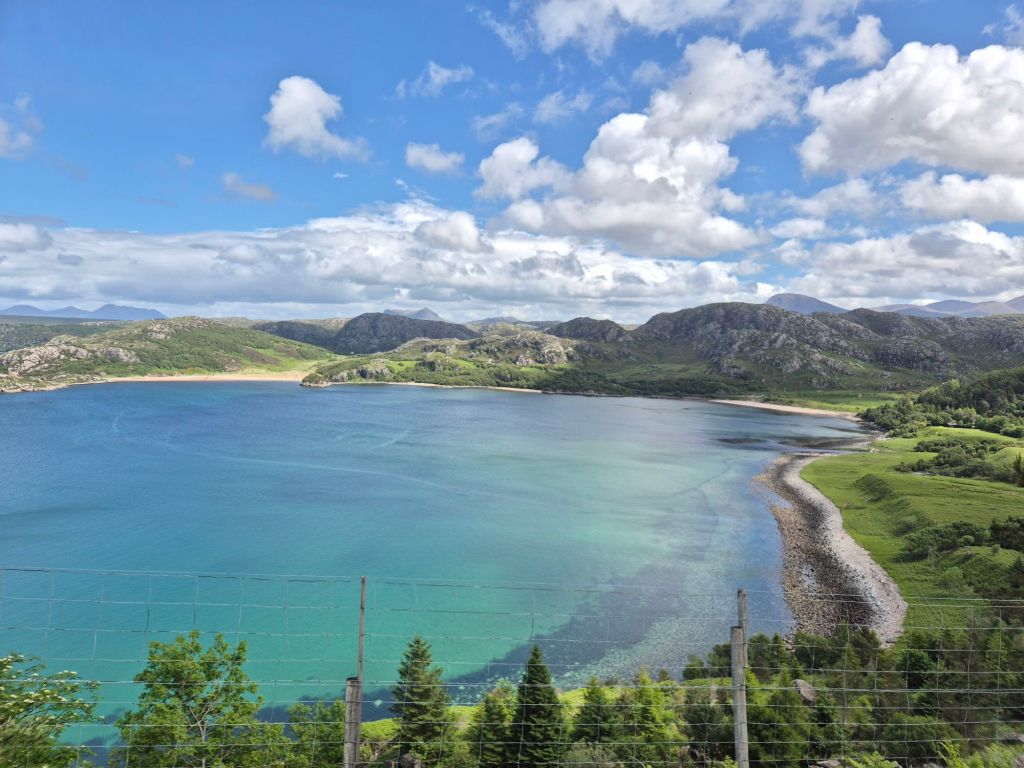
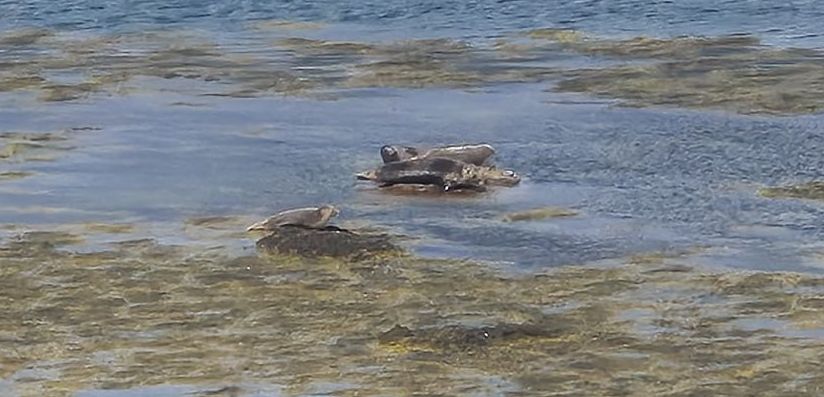
Leaving there Kevin pulled over quickly. He’d spotted seals on some rocks near the road. (No idea how, when his eyes should have been on the road!) So we got out to watch then for a bit.
We stopped at two waterfalls, one a small one near the road
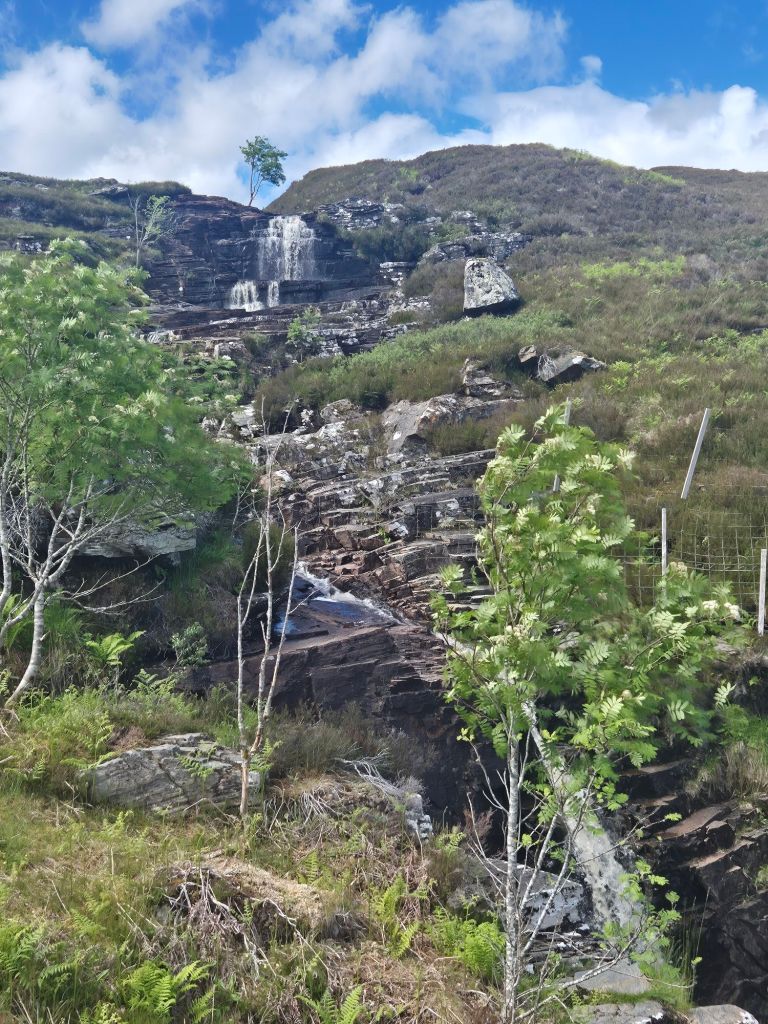
and the other much more significant, located in a deep gorge with a suspension bridge over it.
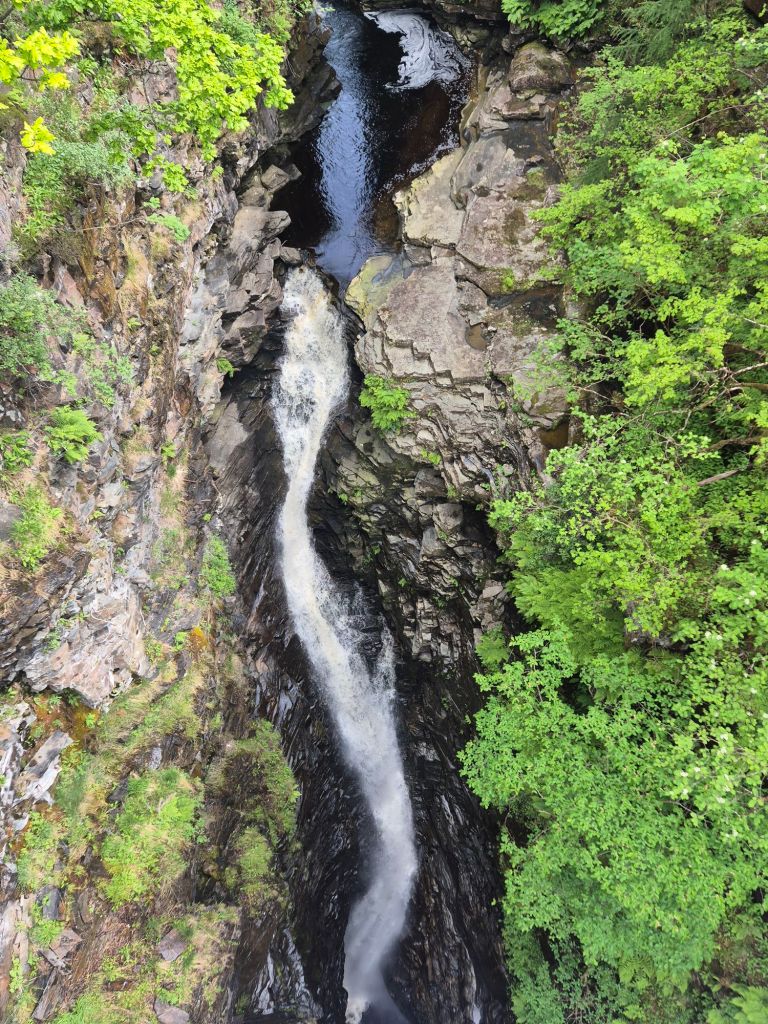
Continuing on, we stopped at Ullapool for a quick drink.
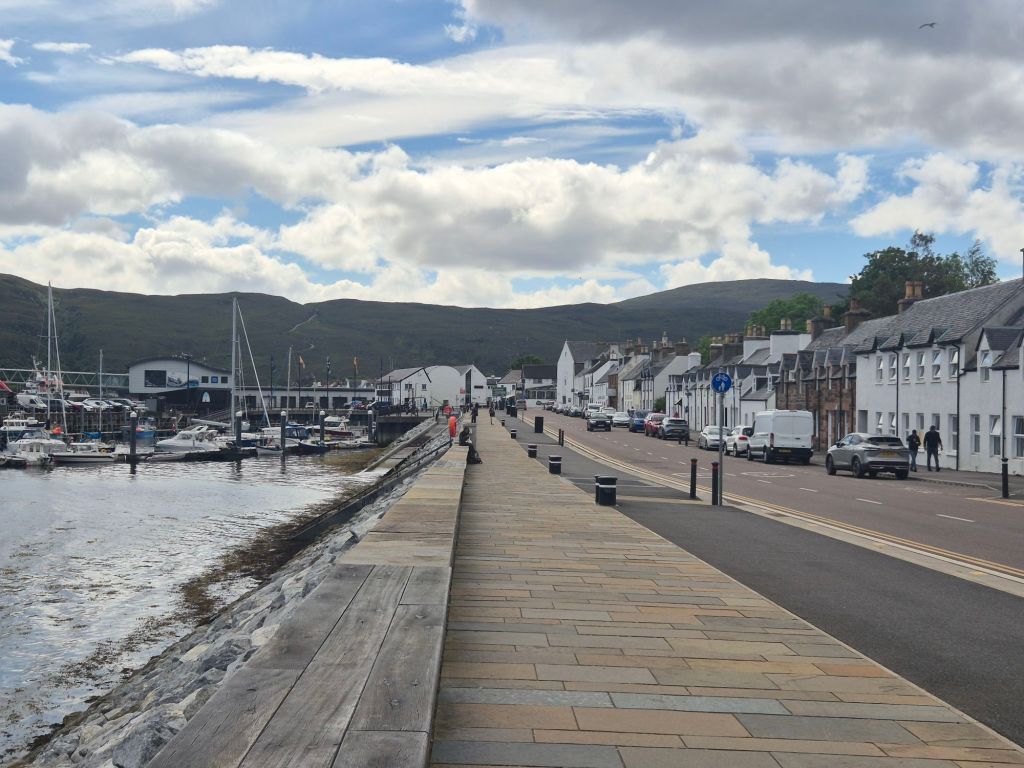
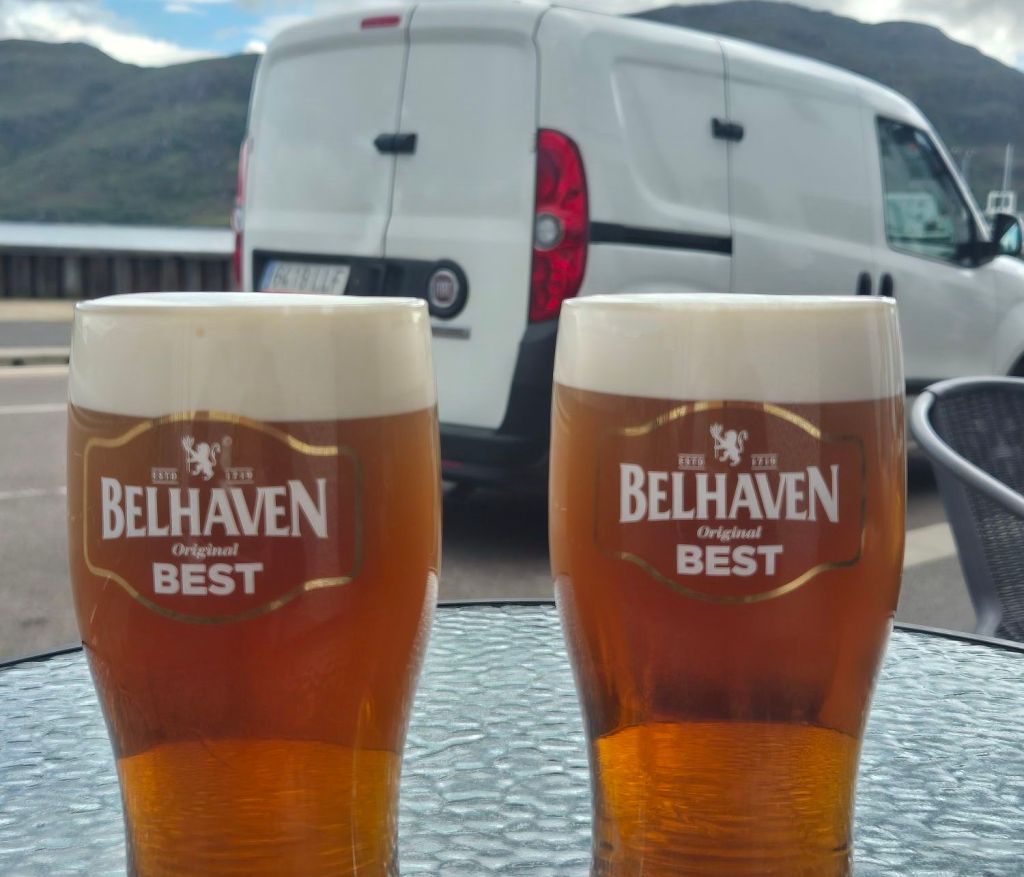
Visited a pottery gallery, passed some castle ruins, more amazing scenery and eventually arrived in Lochinver for the night.
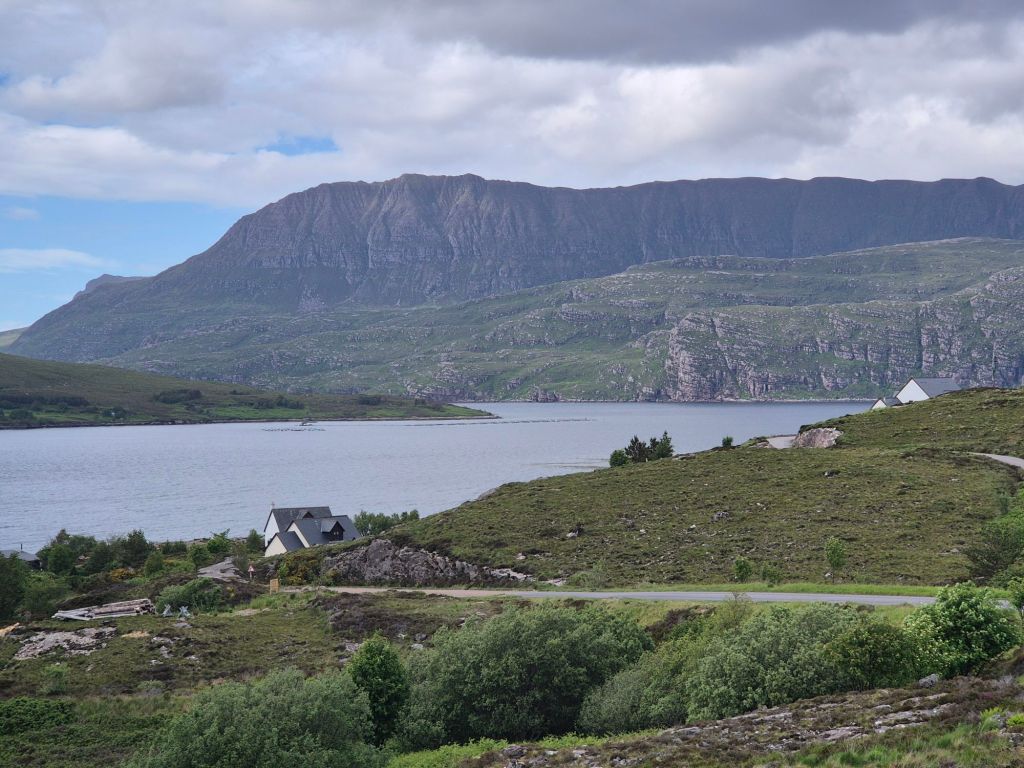
NC500 Day 4: Lochinver to Melvich – 171km
Today’s drive from Lochinver to Melvich was probably the longest stage of the 7 that will take us from Inverness to Inverness.
The sun was out for most of the day and the wind was blowing. We were up and away reasonably early after a hearty breakfast at our excellent accommodation.
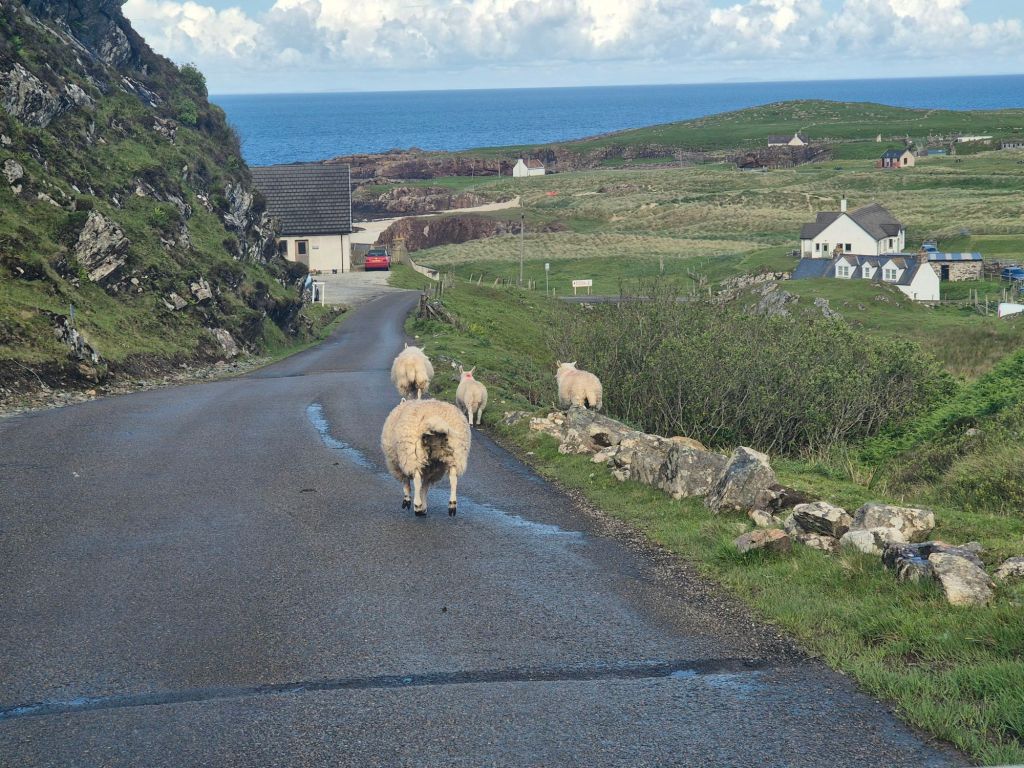
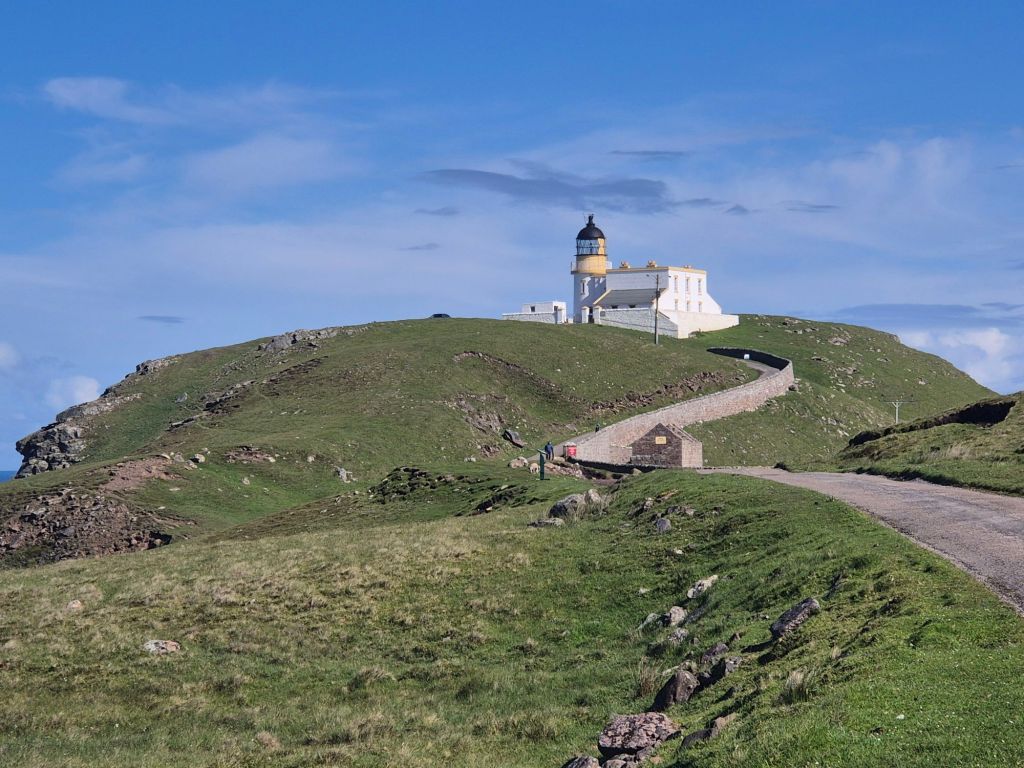
We’d planned a couple of stops but as ever that went astray as our 1st stop wasn’t planned. We saw a sign for a lighthouse and turned left. Stoer Lighthouse was at the end of a very narrow road, but with great views over the cliffs and coastline.
With the use of binoculars we spotted some Osprey out looking for their breakfast.
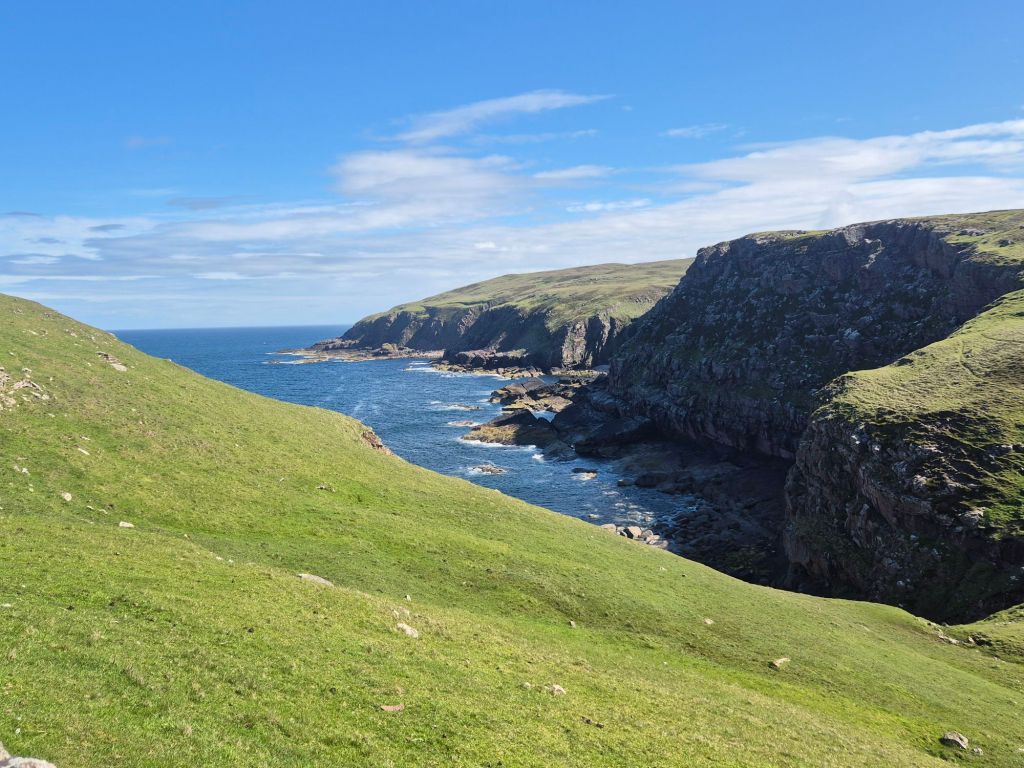
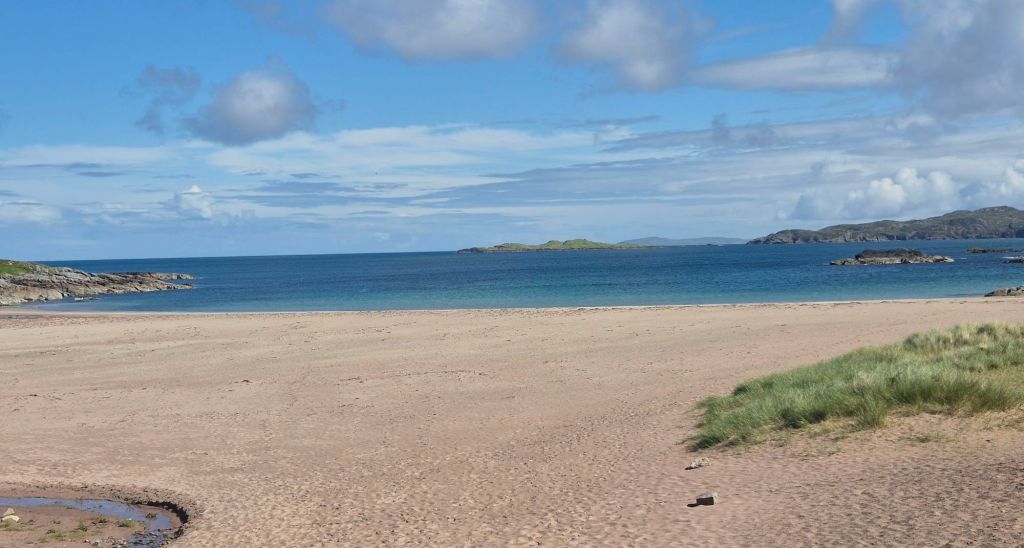
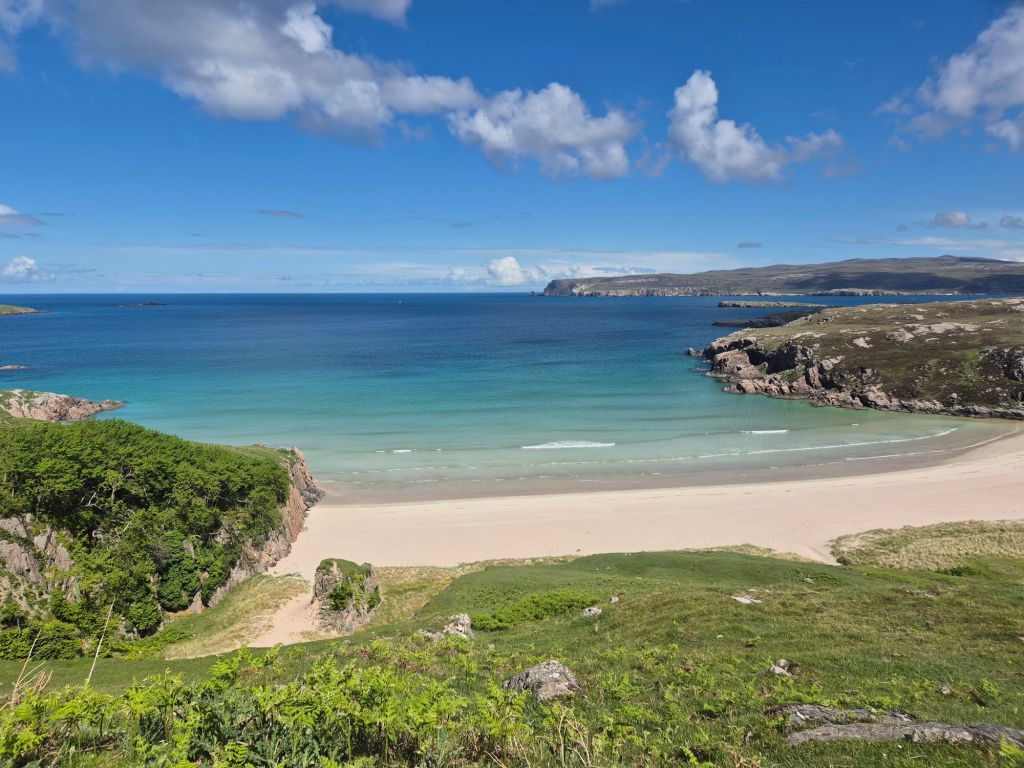
We returned to our planned path and continued, at a moderate pace, stopping frequently to admire the rocky undulating terrain and stunning, turquoise beaches.
We made an obligatory stop at a croft craft store and bought some wool that the owner spins from her sheep. I’ll find a project for it! We could also have bought some vacuum sealed lamb meat (fresh from her fields) also if we’d been cooking this week.
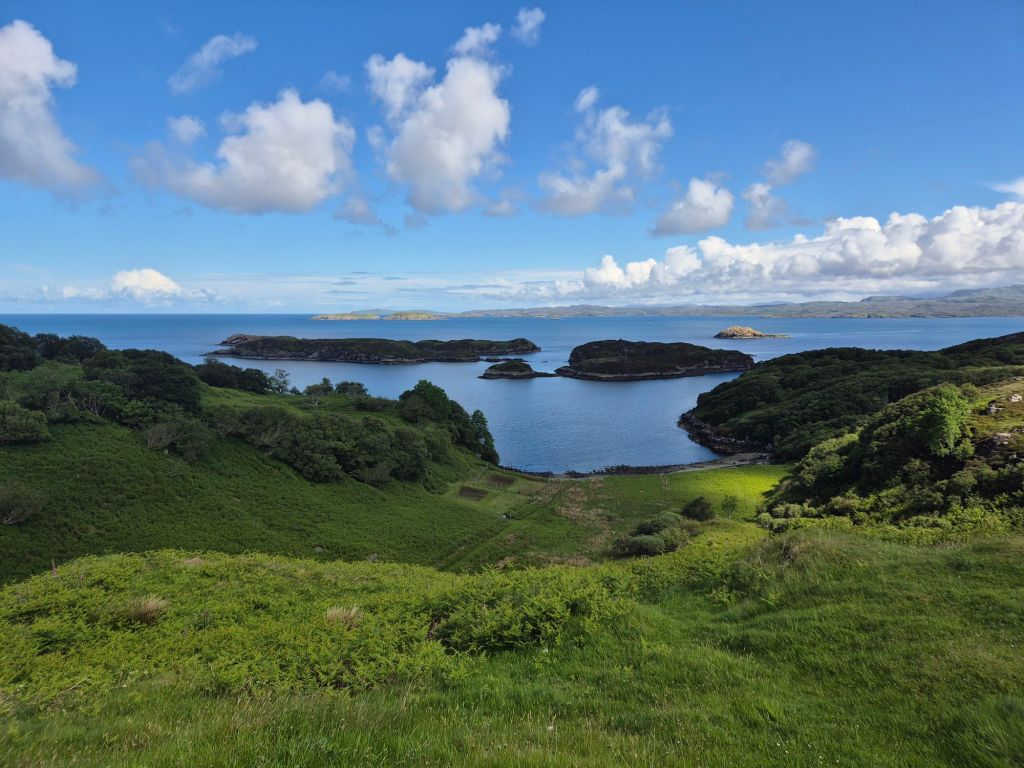
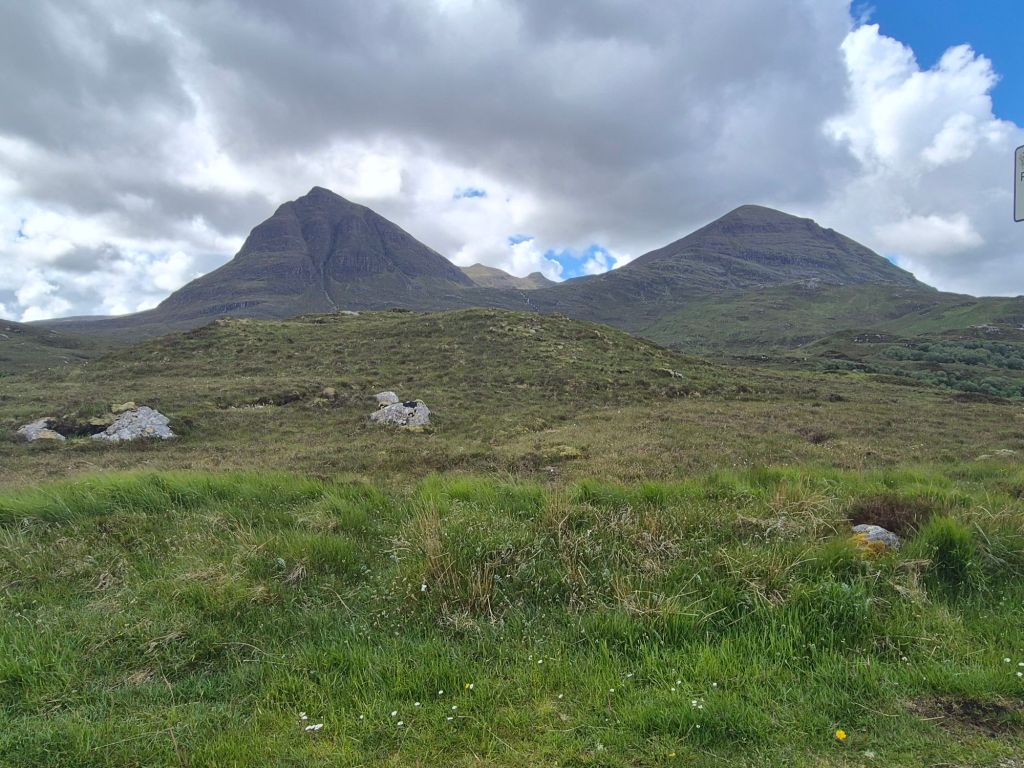
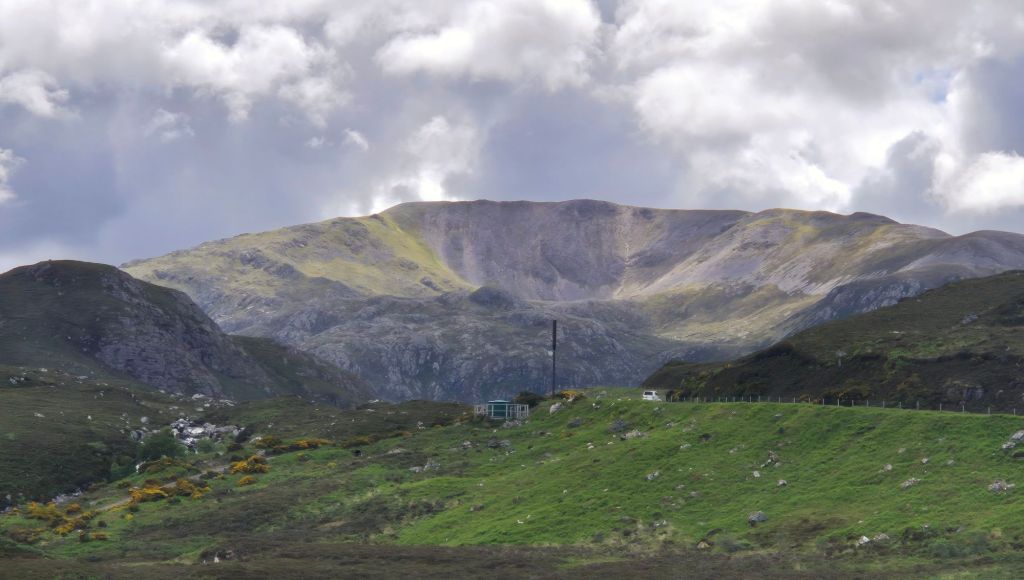
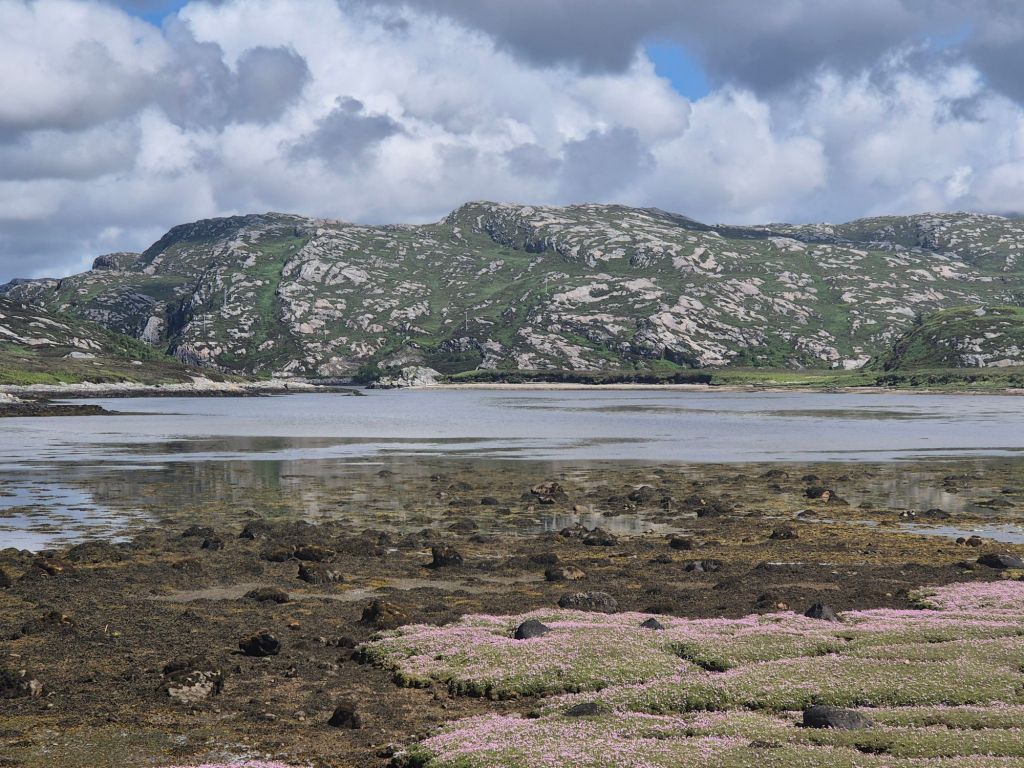
The terrain changed again and again from rocky hills, to granite & green hills, to some that looked exactly like the Faroe Islands last week, to wide valleys.
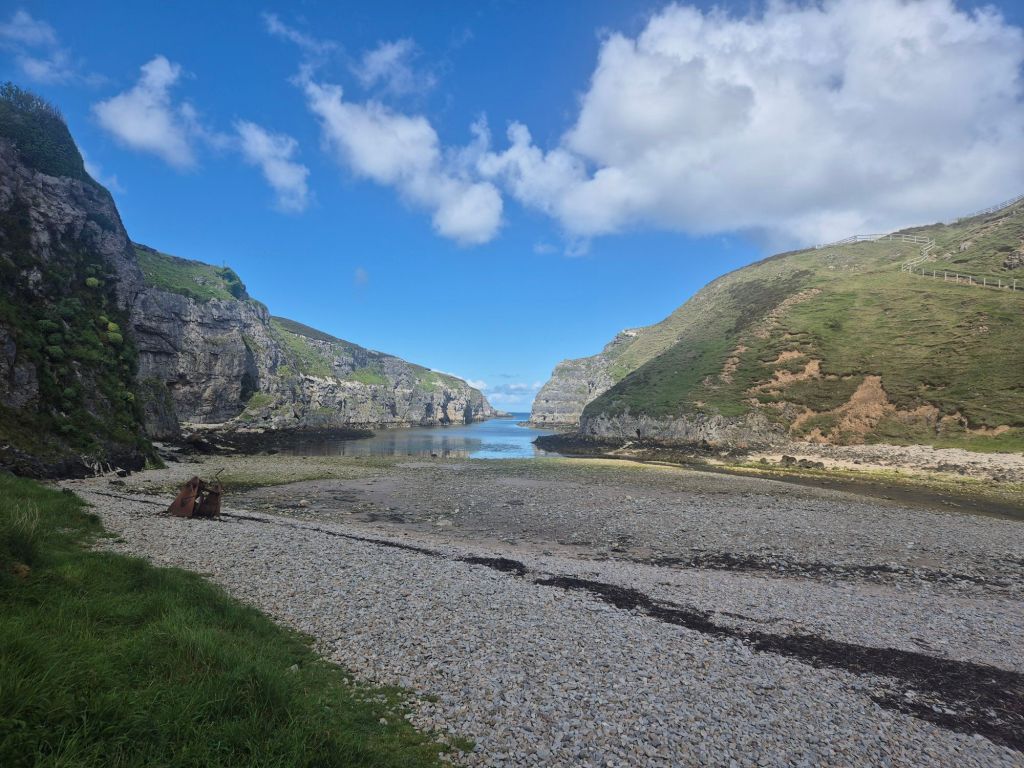
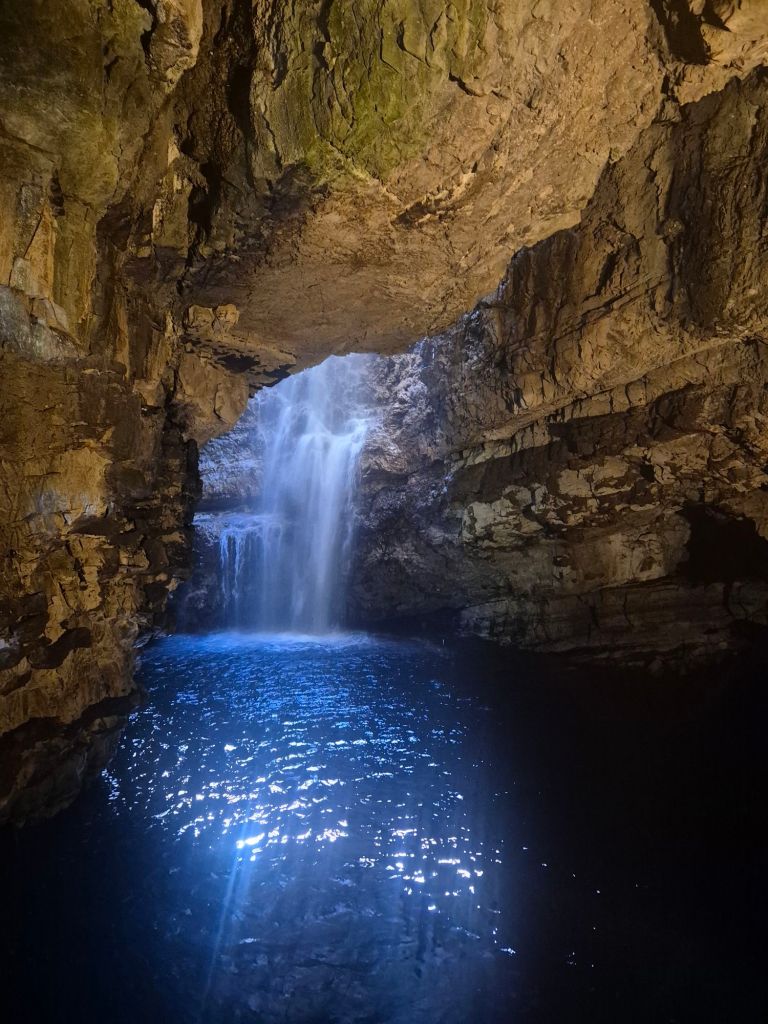
We stopped at Smoo Cave and descended the stairs to enter it and see the waterfall inside.
We’ve now arrived at our accommodation which is replete with darts and karaoke if we want to use it!
NC500 Day 5: Melvich to John O’Groats 58km
A short driving day today, Melvich to John O’ Groats. It started with a spot of rain, but cleared to a gorgeous sunny day, so clear that eventually you could see the cliffs of the Orkney Islands.
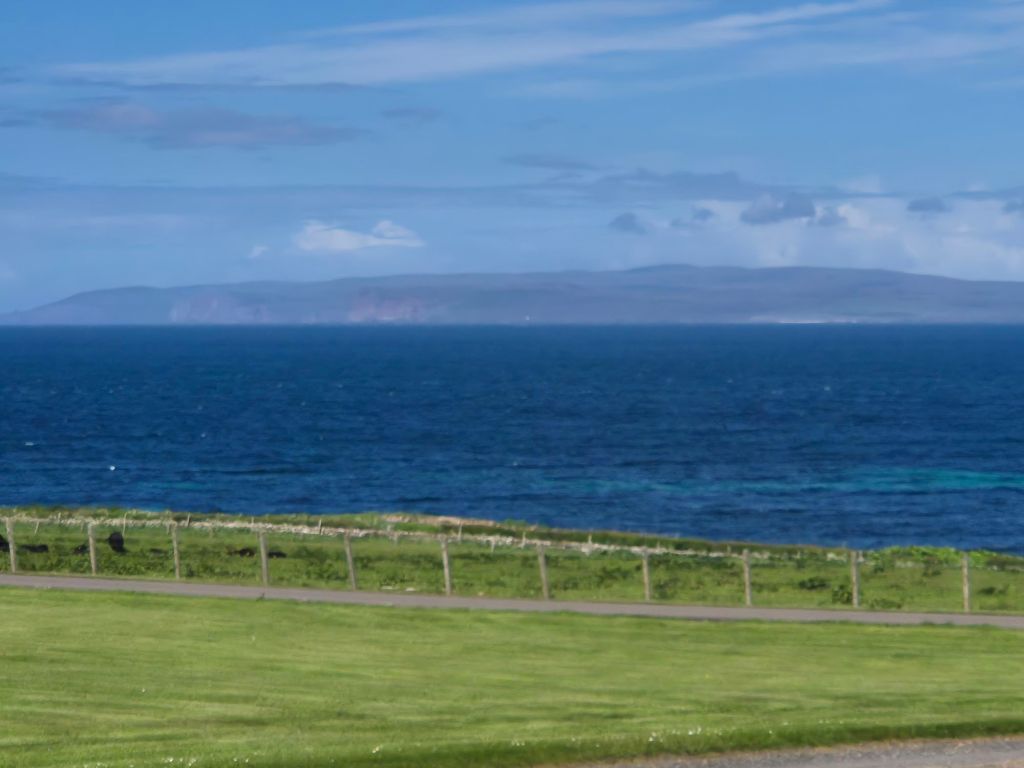
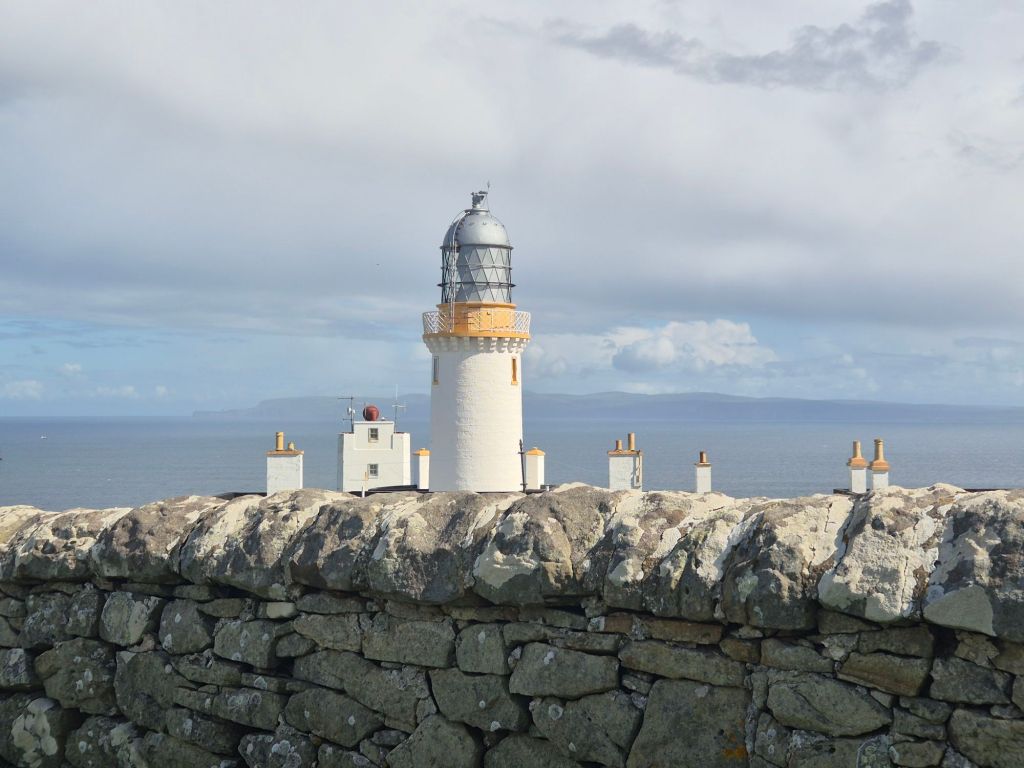
After another yummy breakfast we headed to Dunnet Head, the most northerly point on mainland UK. Dunnet Head is famous for it’s birdlife and lighthouse. The lighthouse is one of over 200 that are scattered around the Scottish shoreline.
The birdlife that everyone was there for today, including us, were the puffins. We struck gold, puffins galore.
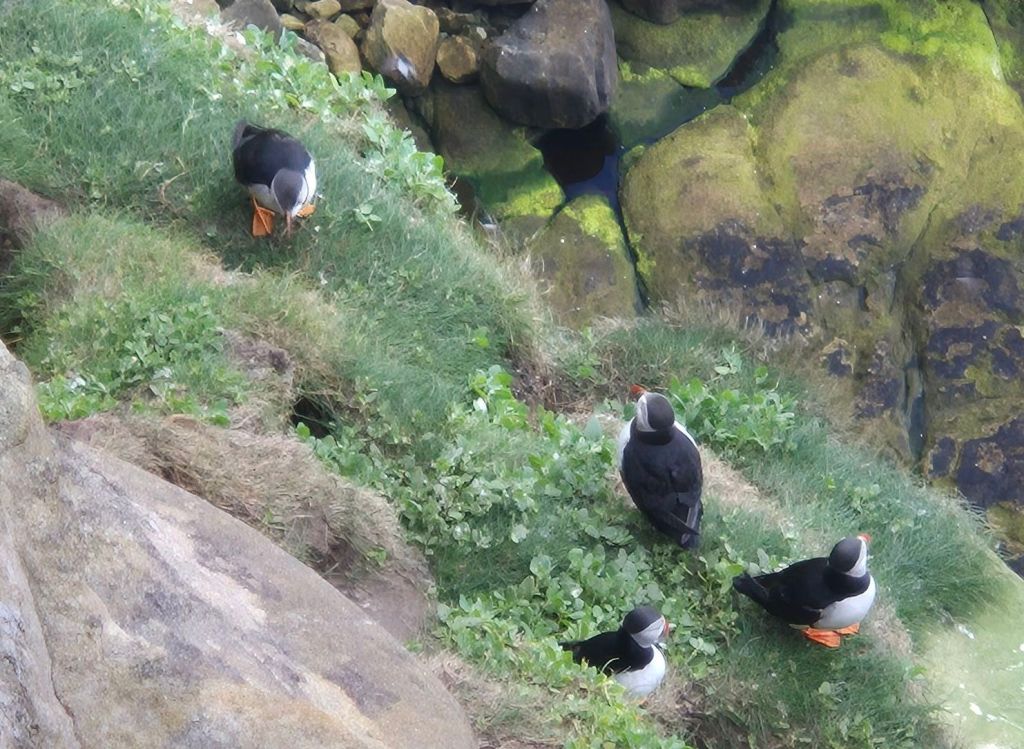
We laid down at the edge of the cliff to watch them on a ledge just below us. One of them landed on top of the cliff and wandered around on the ground right near Kevin.
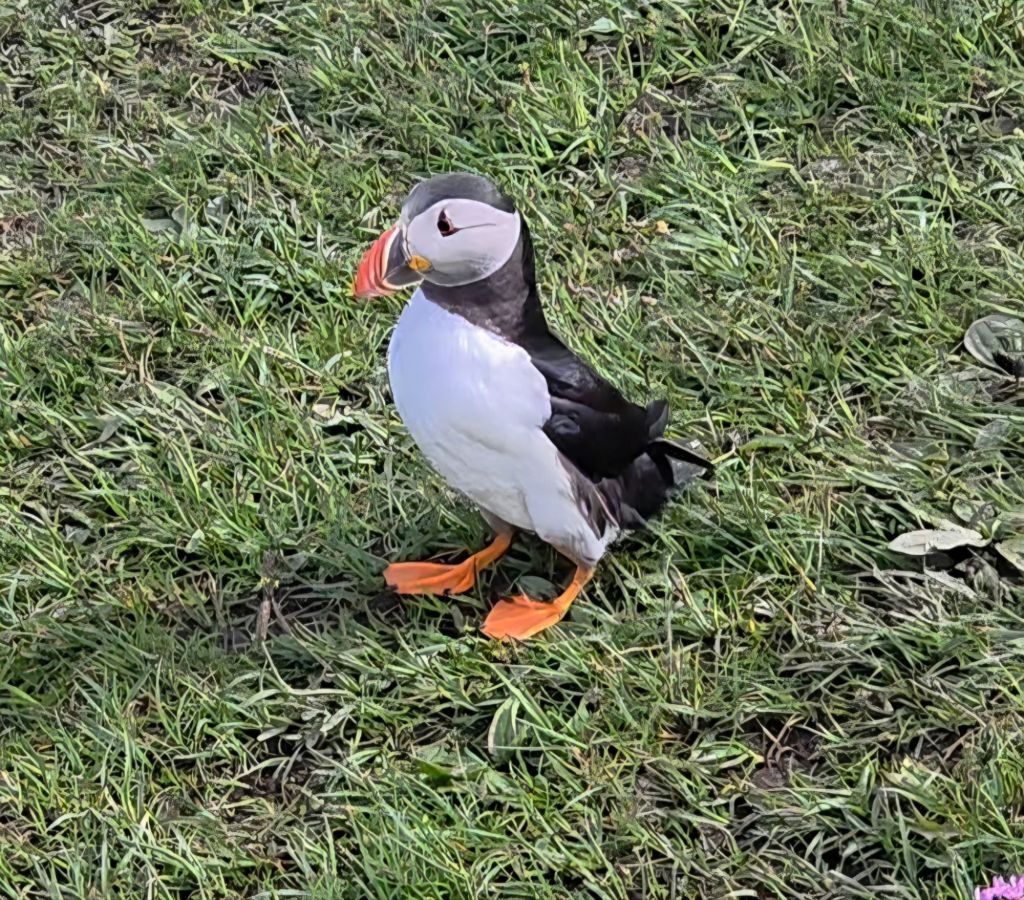
There were other birds, but… puffins.
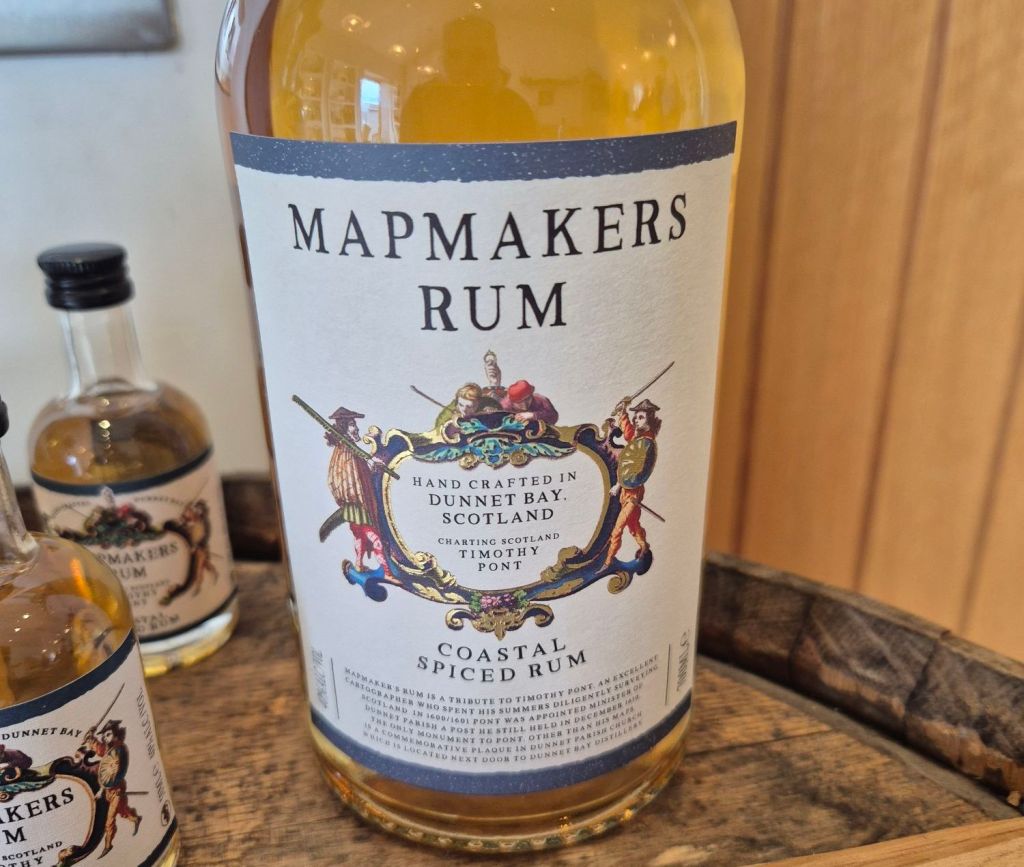
From there we went to Dunnet Bay distillery, a local business that uses local botanicals in their products, to see if we liked Gin & Vodka. Although they did really interesting concoctions, and we thought it was better than the whisky tasting in Ireland, we don’t; but the guide was very enthusiastic showing us around. They also make Rum and have just bought the Whiskey distillery down the road!
Up the road we stopped at Castle of Mey, the home of The Queen Mother; the only property she ever owned in her own name. It’s now run by a trust, open to the public, but does close in the Autumn when King Charles comes to stay.
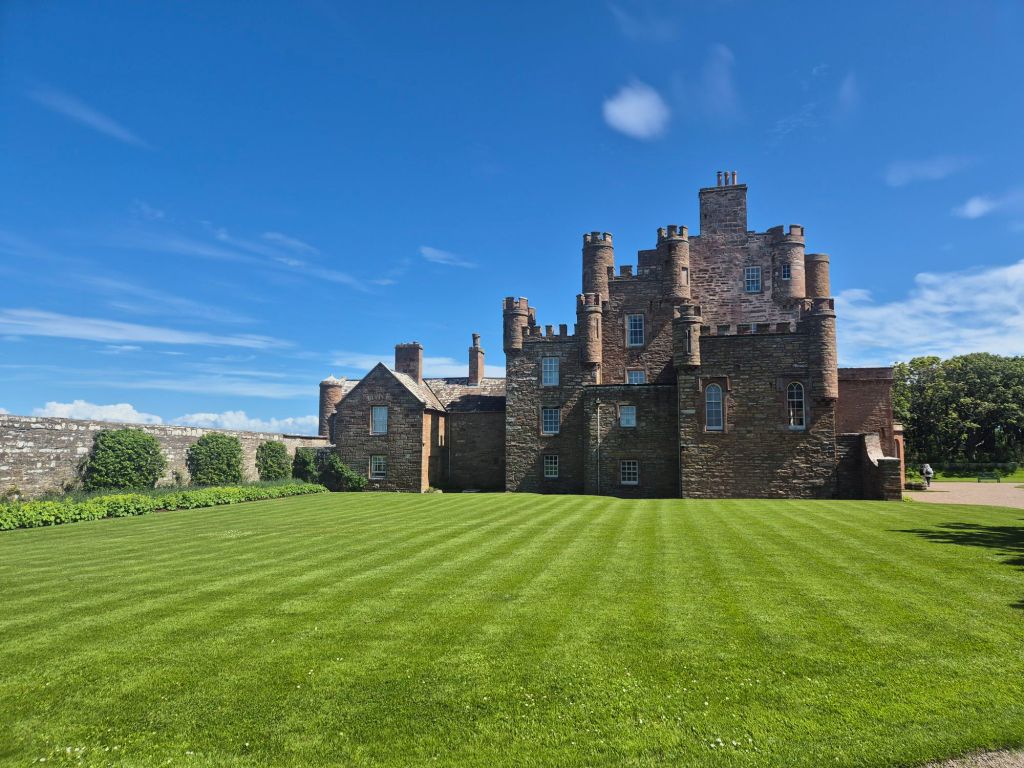
The tour was short, but interesting, with a guide in each room telling a story about how each room was used by the Queen Mother.
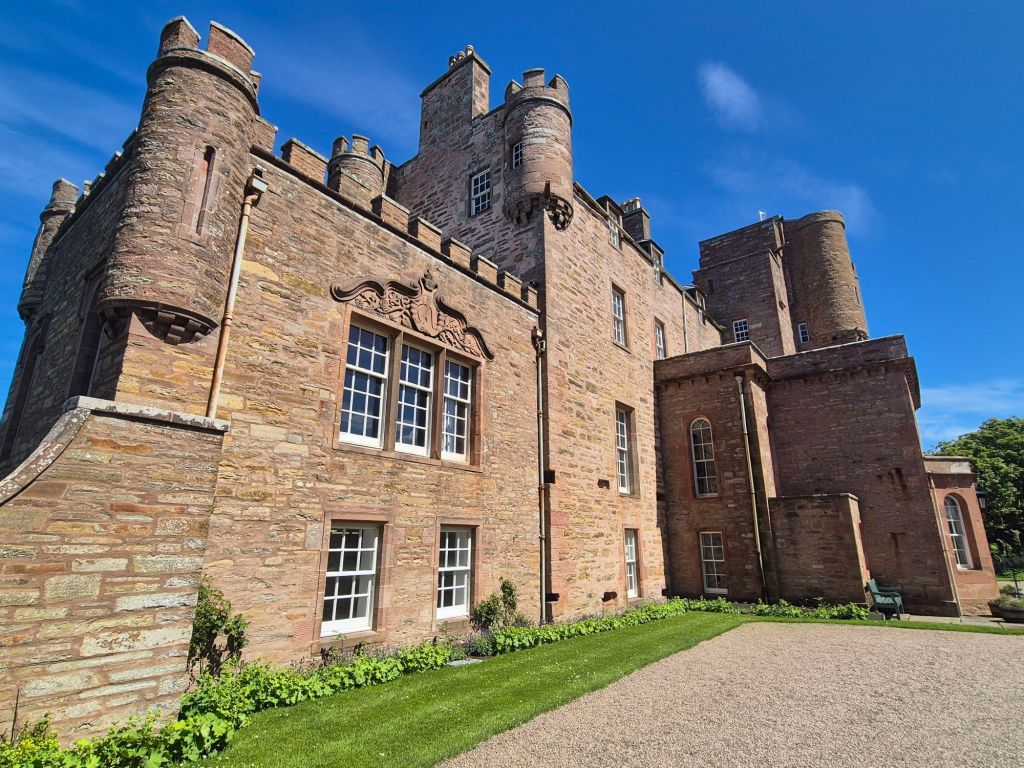
The garden was lovely too. A mix of flowering plants and vegetables/herbs.
From here we went to John O’Groats, our stop for the night. Wandered around the touristy area then called an early mark.
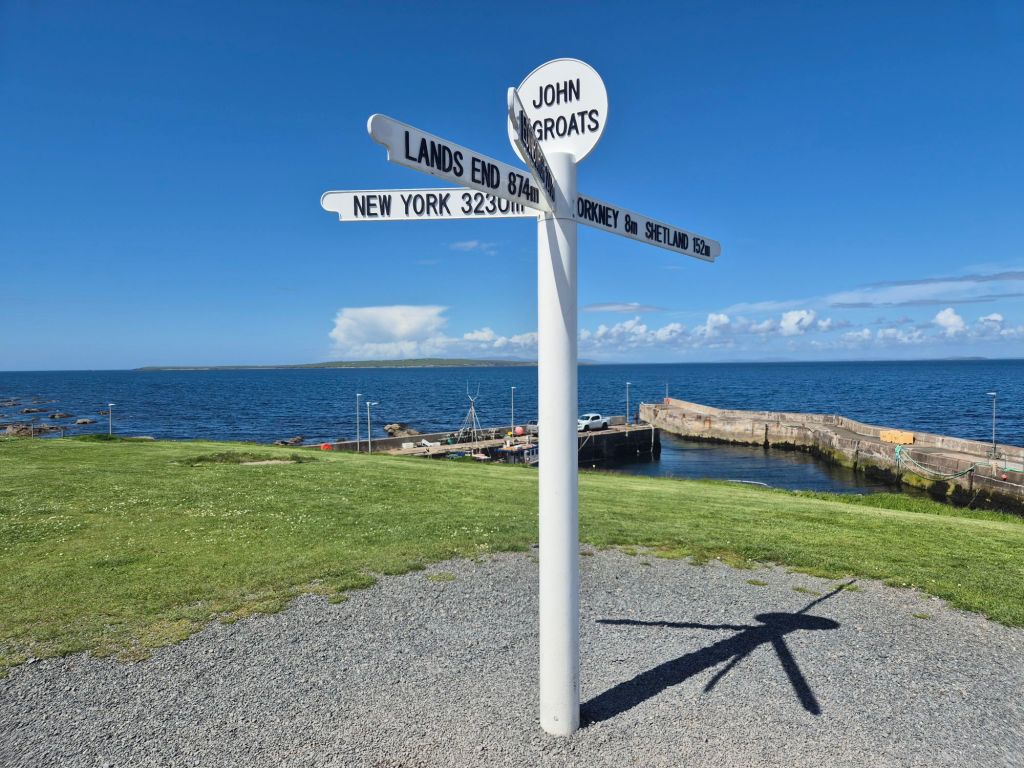
NC500 Day 6: John O’Groats to Helmsdale – 83km
This morning we headed straight to Duncan’s Head Lighthouse. Partly in the hopes of seeing more puffins -we think we saw one, just one – but more to see the sea stacks.
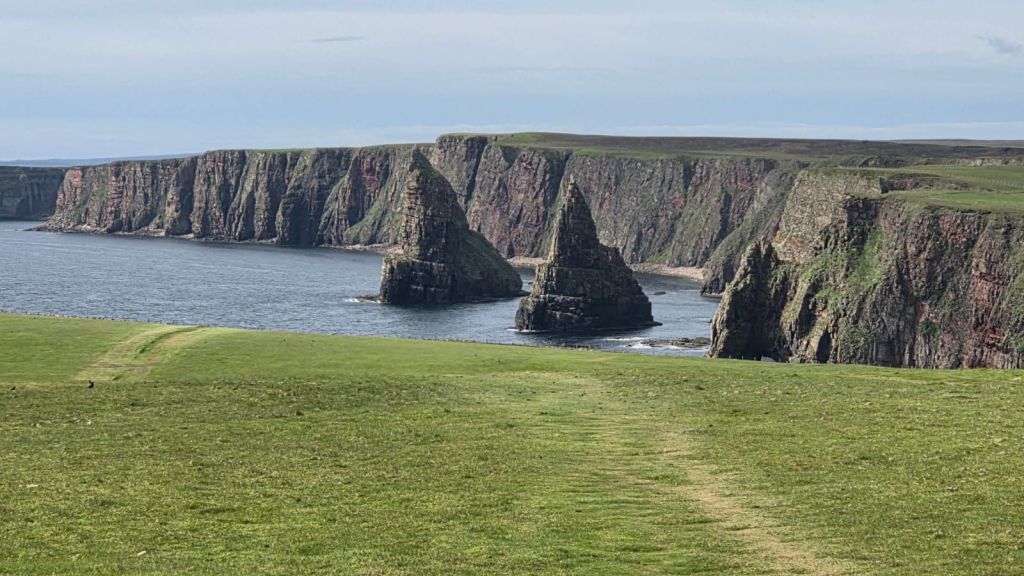
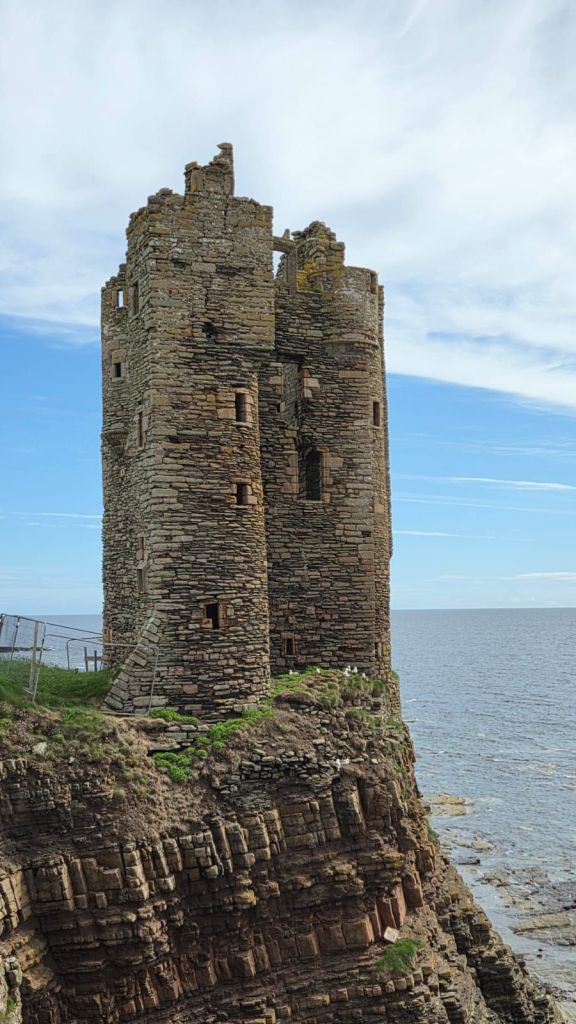
From there we went to Keiss for a walk along the ocean path to Old Keiss Castle. While Kevin went and explored the castle, I sat and painted.
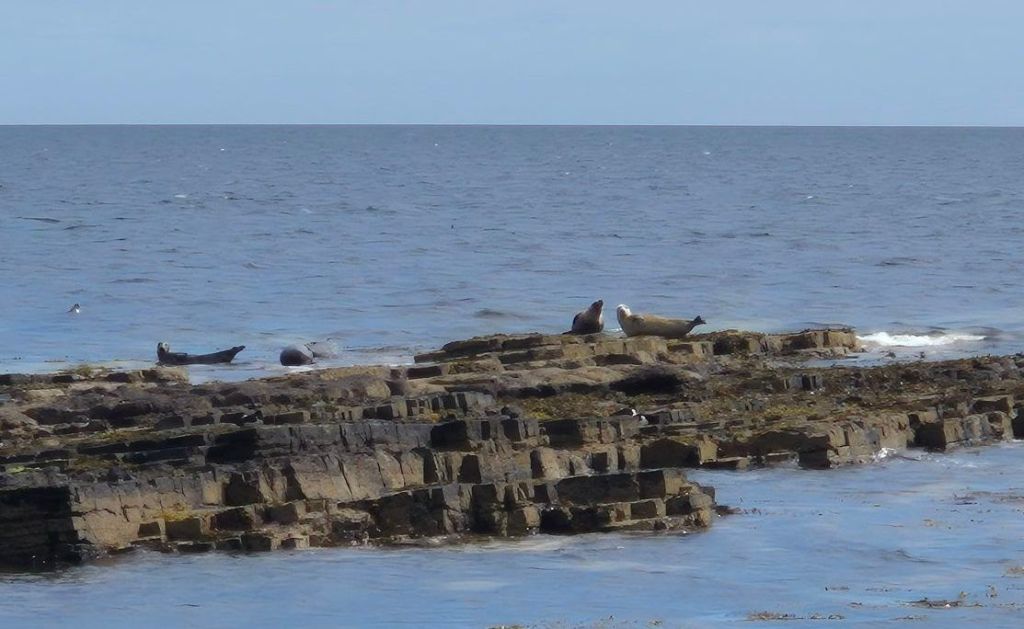
We were quite excited to see at least ten seals, some on the rocks and some in the water.
From here we went to Wick to see the world’s shortest street, Ebenezer Place.
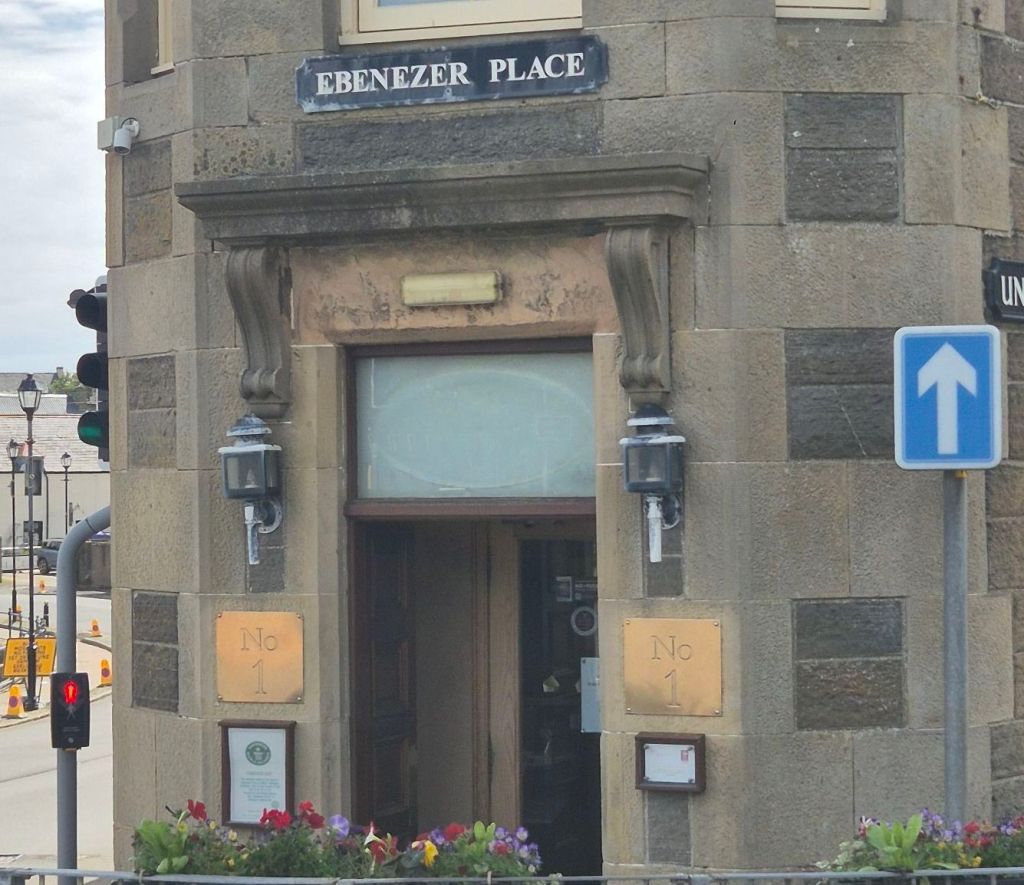
The only address on the street.
Then Noss Head Lighthouse and Castle Sinclair Gornigoe-originally owned by the same family who own Rosslyn Chapel that we visited near Edinburgh.
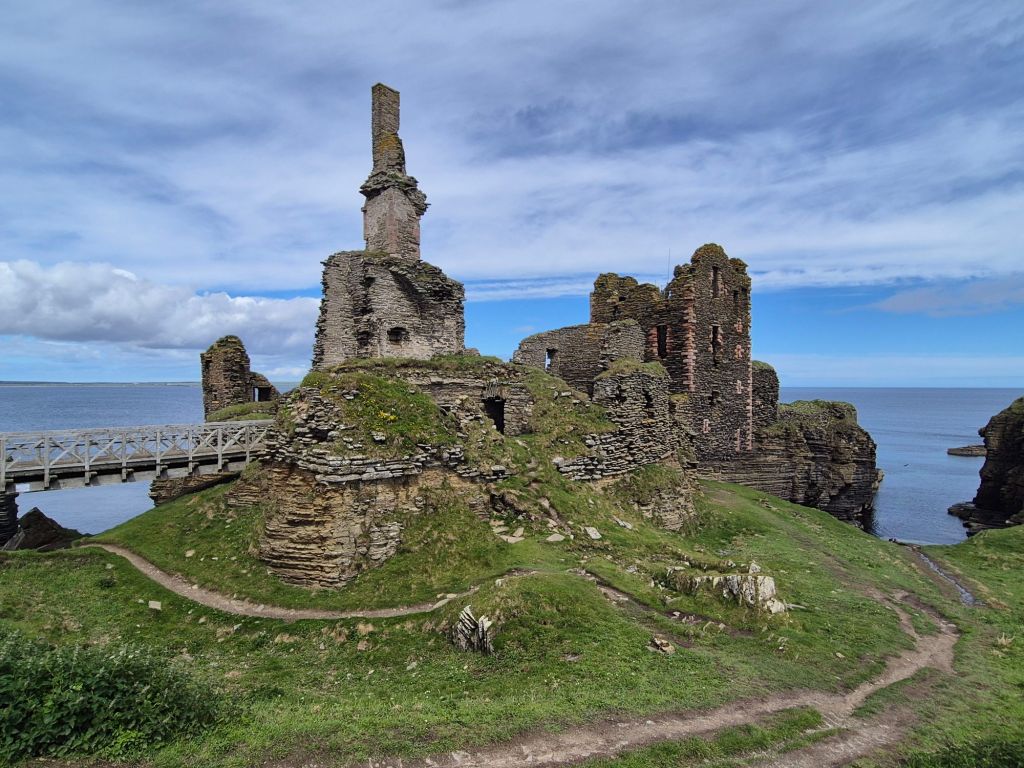
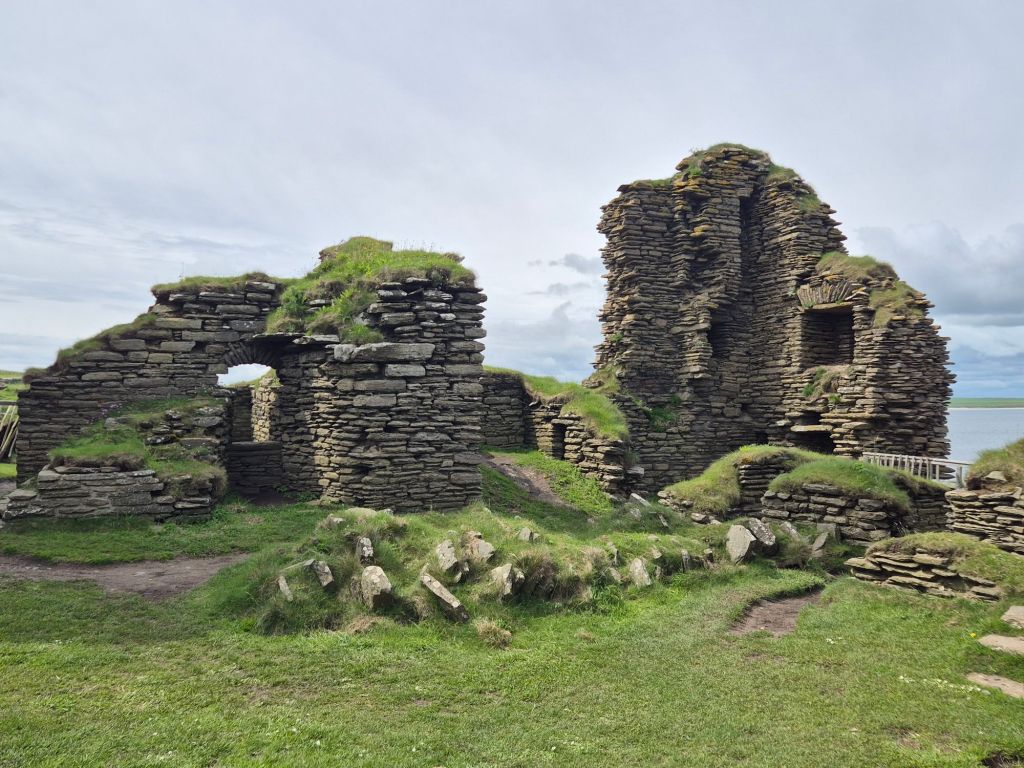
Leaving there we drove to Castle of Old Wick and Brig O’ Stack, before continuing to our destination for the night.
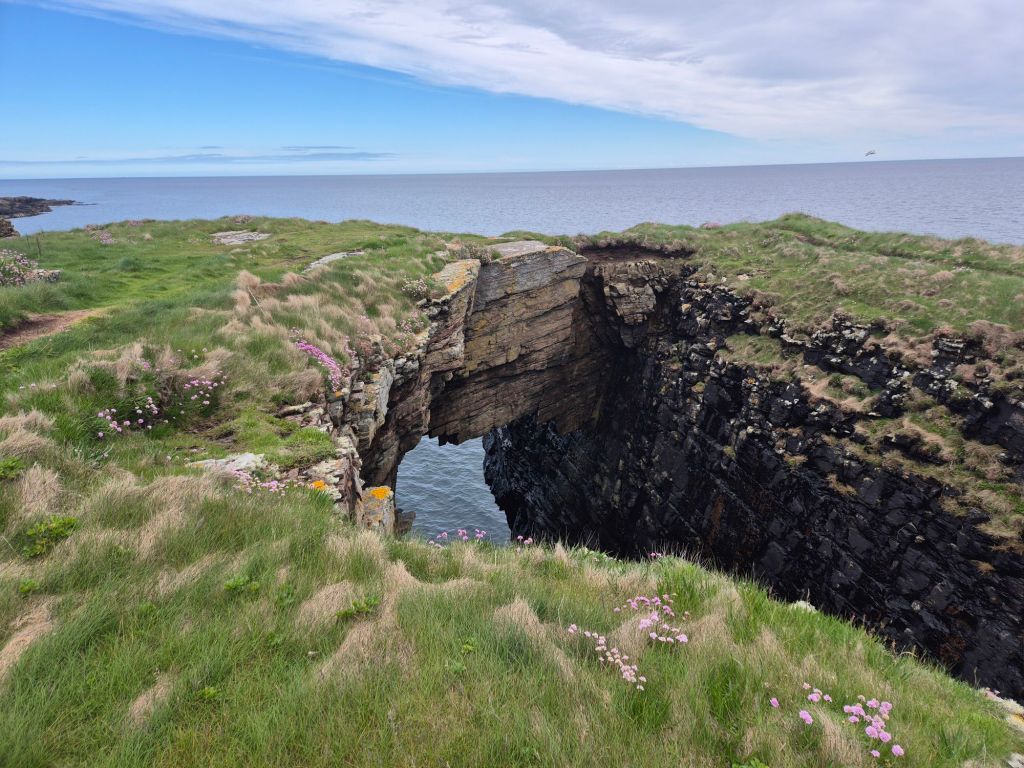
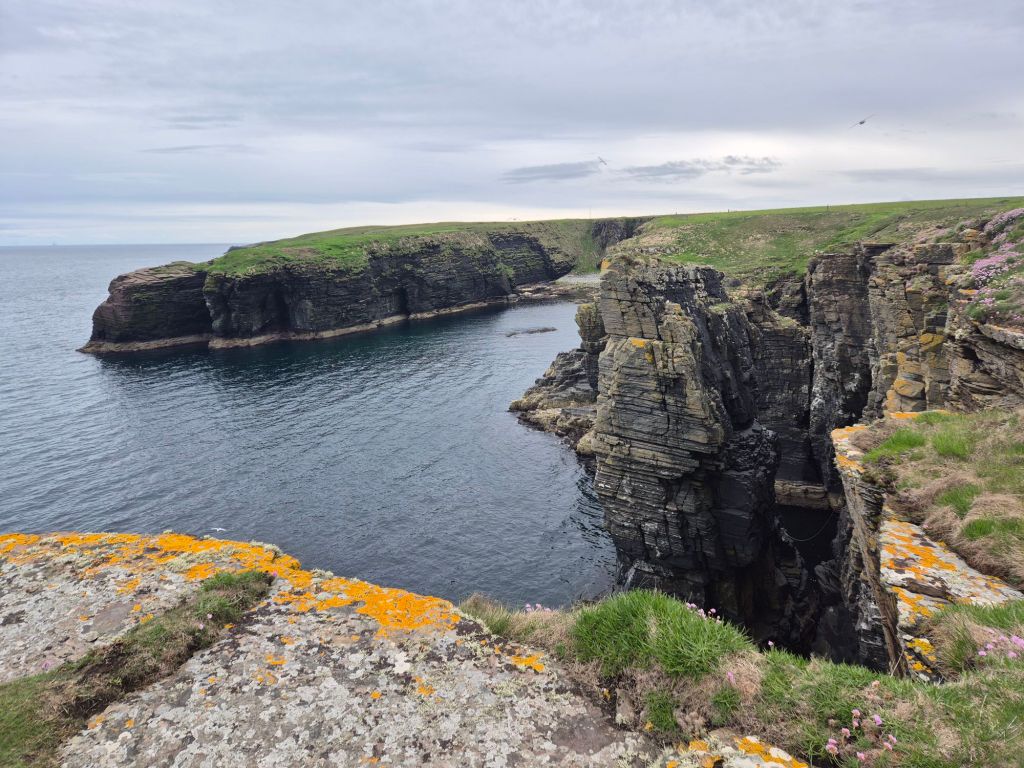
The landscape today has changed from farmland and cliffs, back to highland hills and gorse.
NC500 Day 7: Helsdale to Inverness – 110km
Finishing the North Coast 500 was a bit anti-climactic! The last hour of the trip was largely uneventful.
After viewing the emigration monument in Helmsdale, the other monuments and points of interest we had marked were all roadside with no pull ins, so we saw them at 60 miles an hour!
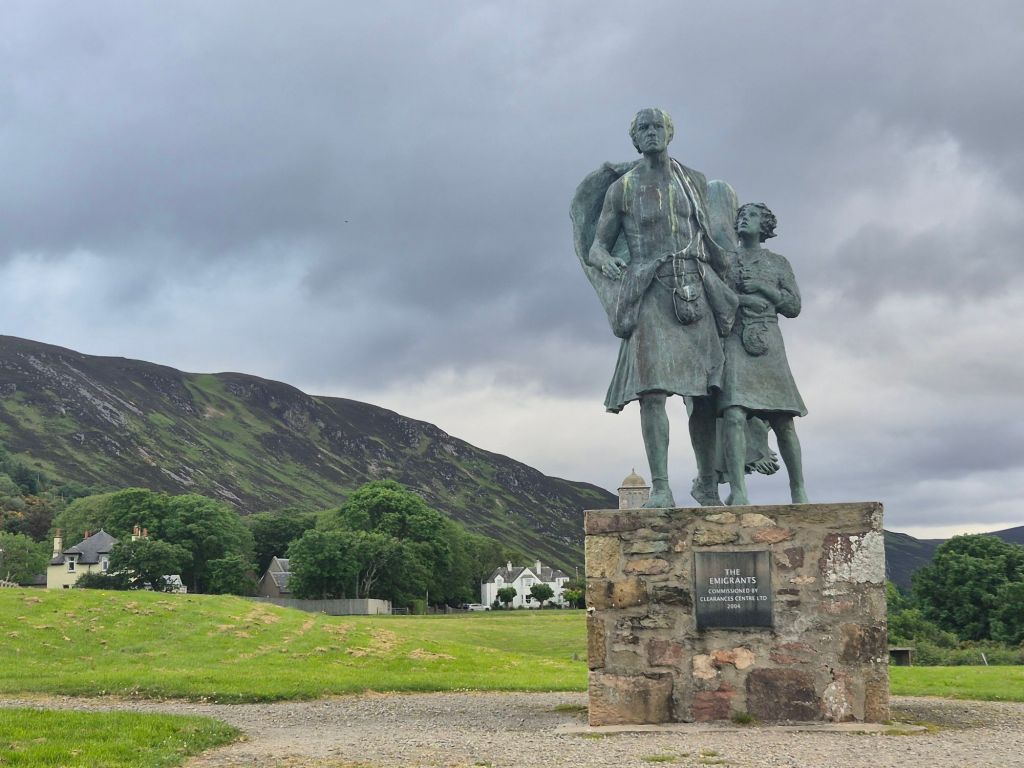
From Inverness we continued south.
Whilst driving we discussed the past week and any recommendations we’d make to anyone else doing this drive. Our ideal itinerary would be this:
- Day 1: Inverness to Kyle of Locaish
- Day 2: Day trip on Isle of Skye
- Day 3: Kyle of Locaish to Gairloch
- Day 4: Gairloch to Lochinver
- Day 5: Lochinver to Scrabster
- Day 6: Day trip to Orkney Isles
- Day 7: Thurso/Scrabster to Helmsdale
- Day 8: Drive around the Black Isle to Inverness
We both agree that the west coast and north west corner were STUNNING and the highlight of the week.
Continuing our day we repeated the road between Inverness and Edinburgh
We eventually made it to Stirling to see the Kelpies.
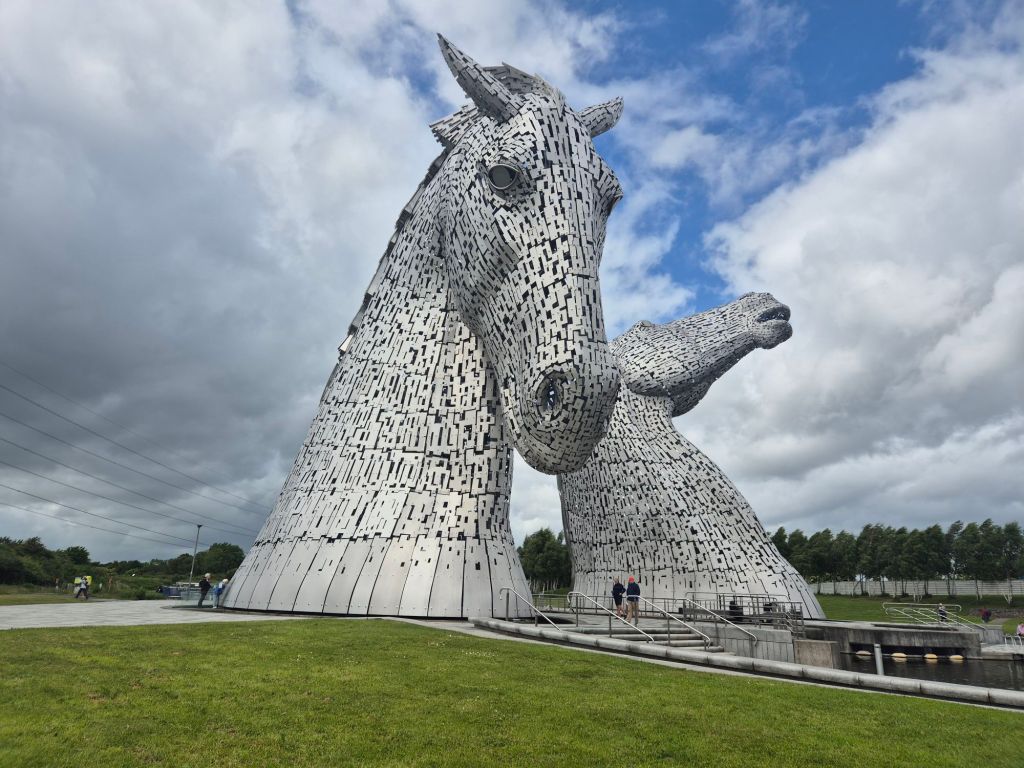
These super-sized horses are quite amazing really and are situated either side of a canal lock. Here, a kelpie is a mythical horse.
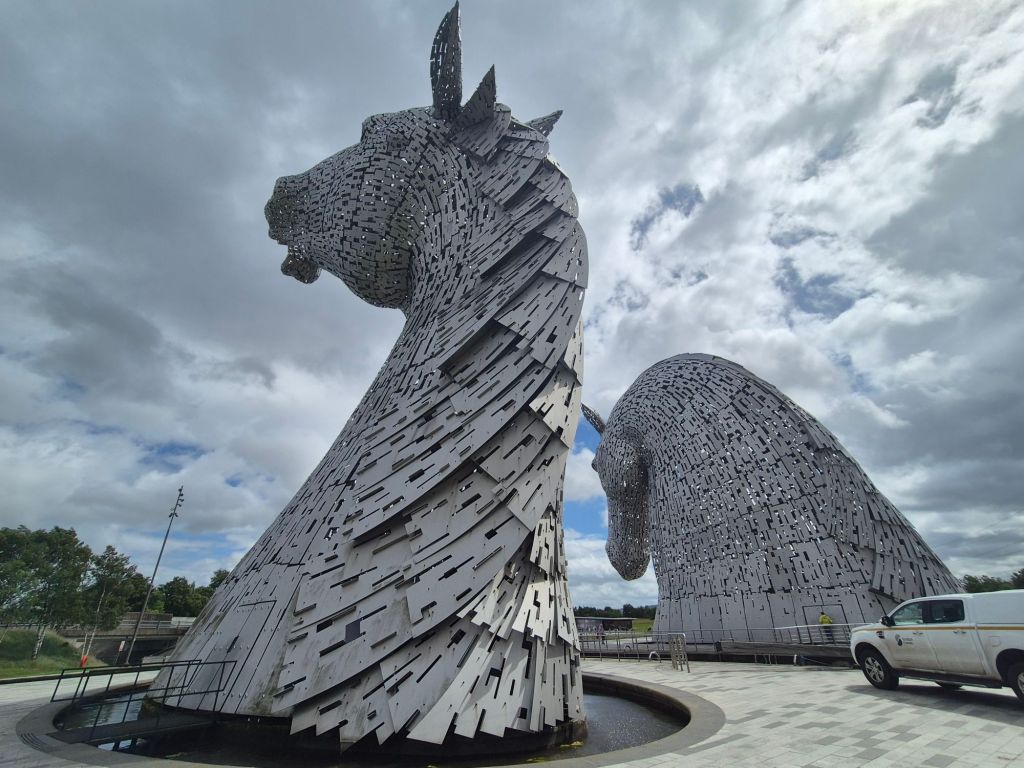
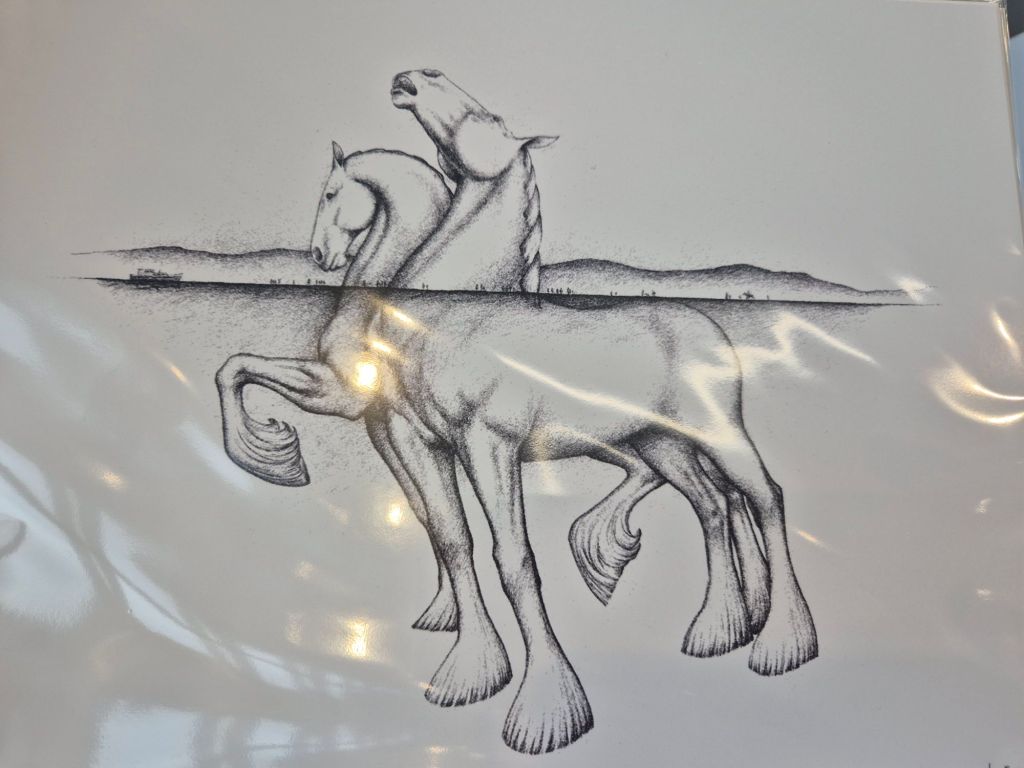
The heads make sense when you see one of the concept designs.
We then went to the Falkirk Wheel and watched a couple of long boats go up and down between the canals.
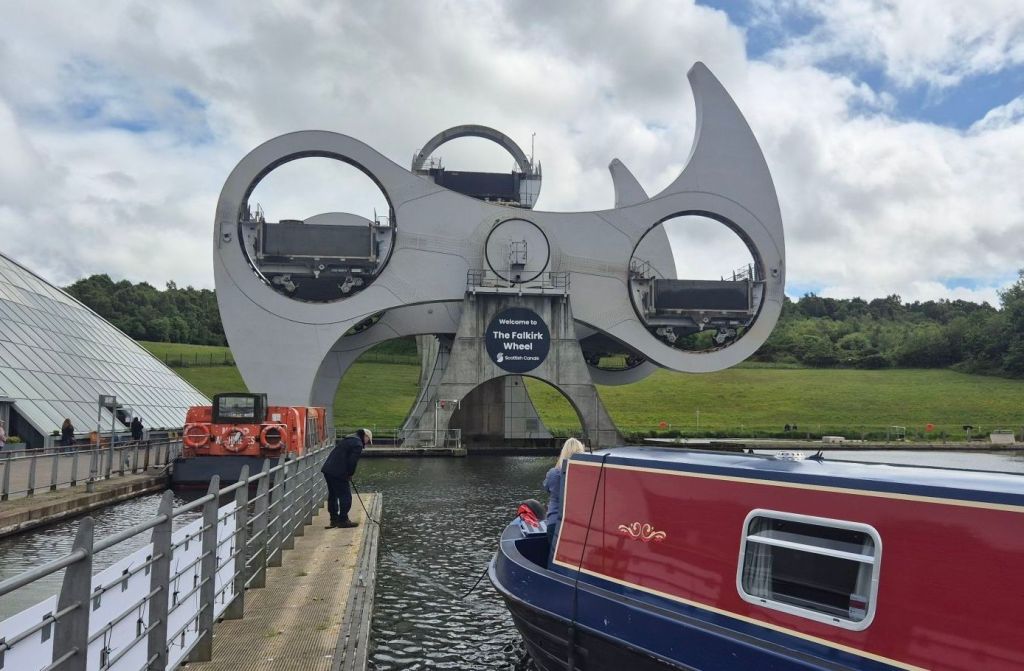
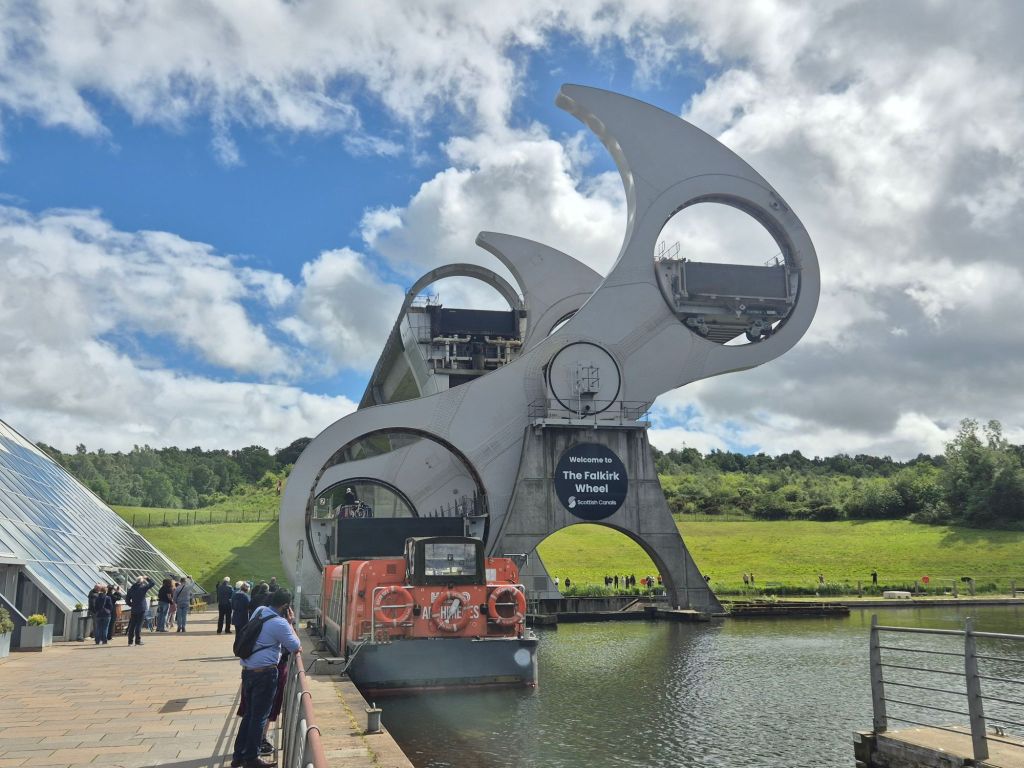
It’s quite an amazing piece of engineering.




Leave a comment…