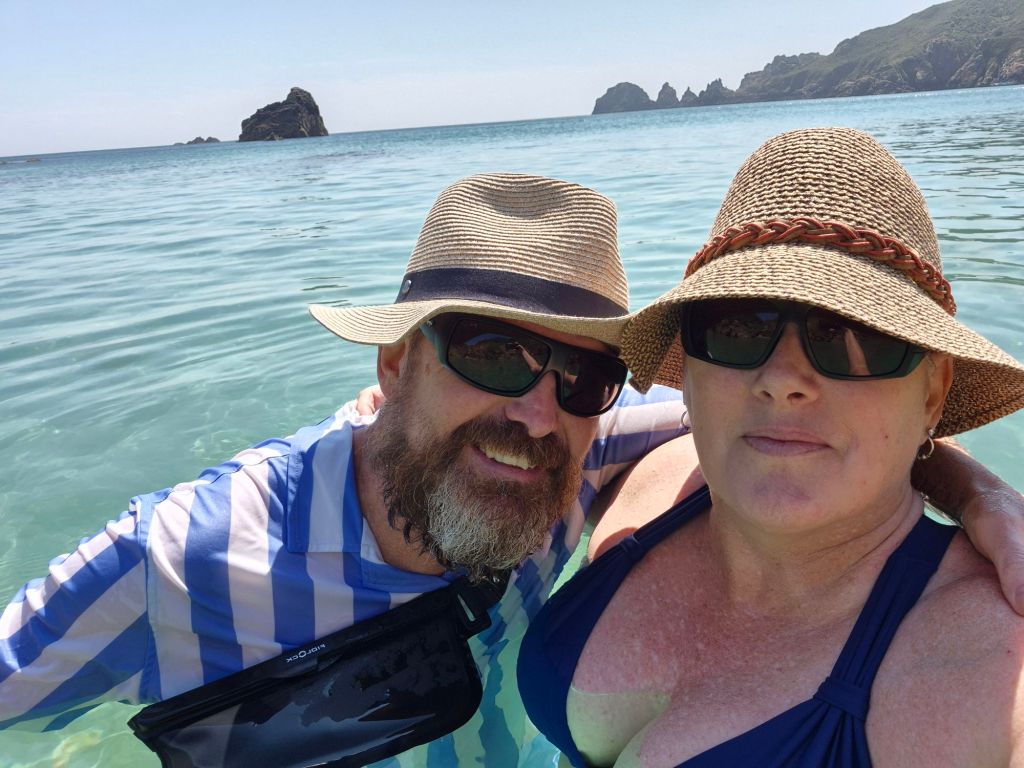
Day 1 on Guernsey was a day to visit a couple of bays to get in the water.
Guernsey does a charity thing in July “30 bays in 30 days” each year, we swam at Moulin Huet Bay (#20) and Saints Bay (#22).
The roads down to the bays we visited are narrow to say the least with minimal passing places. To be fair, most roads on Guernsey feel like they are someone’s driveway, but are two-way roads.
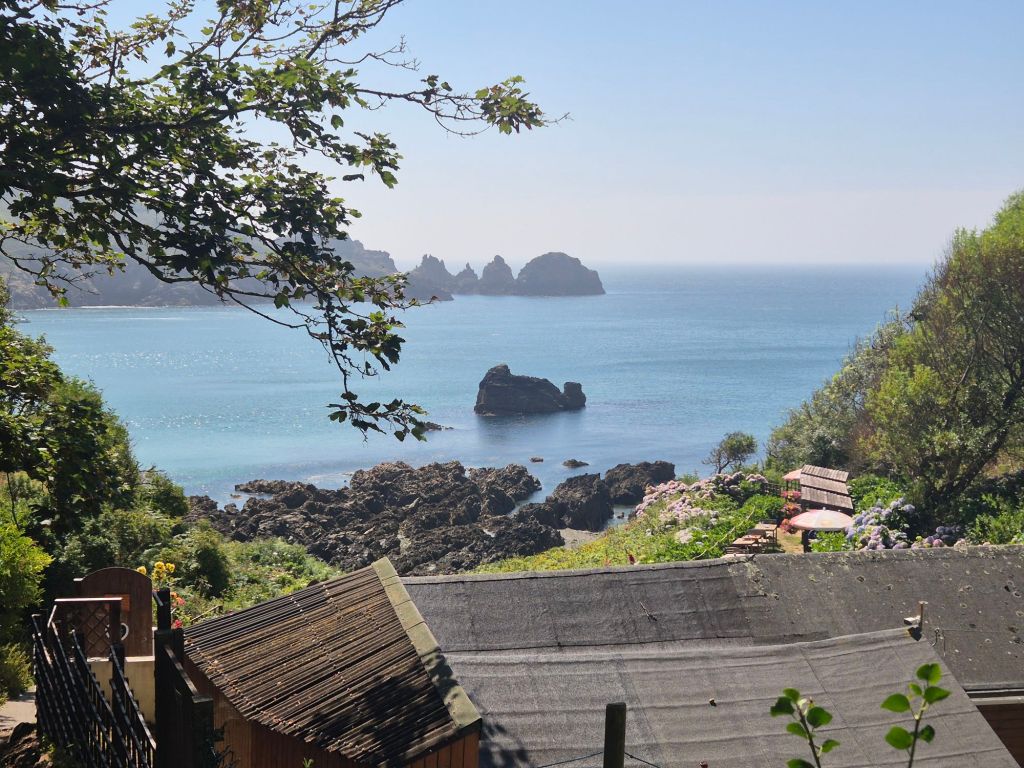
At Moulin Huet we walked down a hill path to reach the beach. The colour of the water was stunning, the temperature less so, though it was warmer than Wales and we stayed in about 10-15 minutes. It was good to be in the water, relaxing muscles and cooling down.
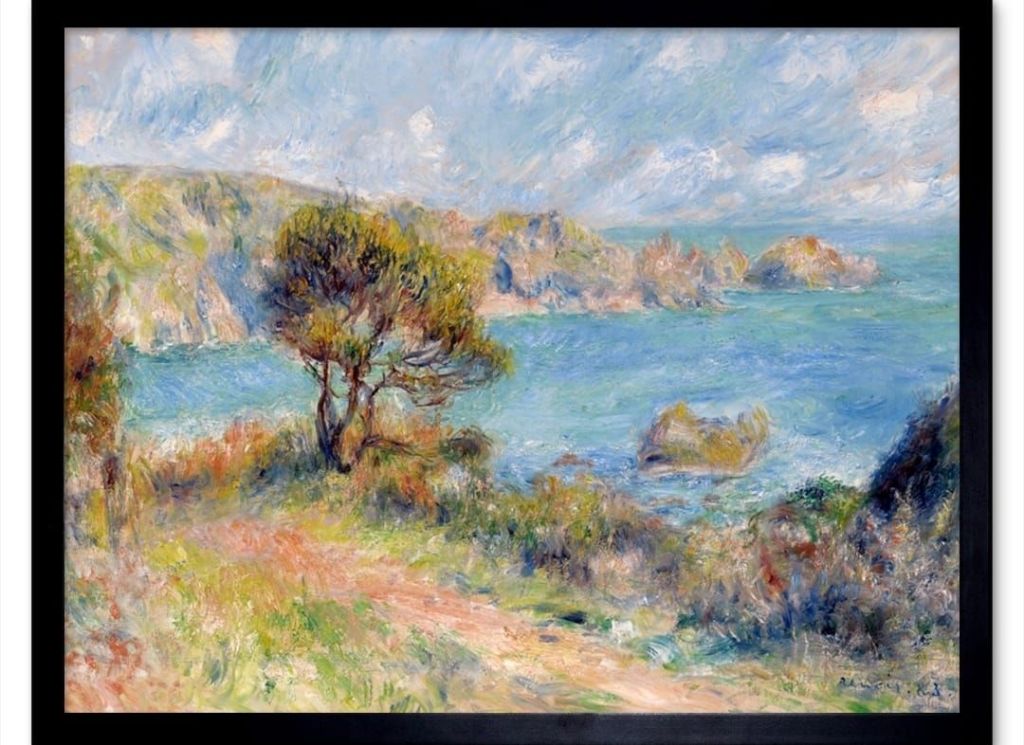
Renoir spent 5 weeks on Guernsey and painted this bay.
Next bay, Saints Bay was also a big downhill walk to the beach, this was less rocky, smaller and if possible the water was colder than the first bay.
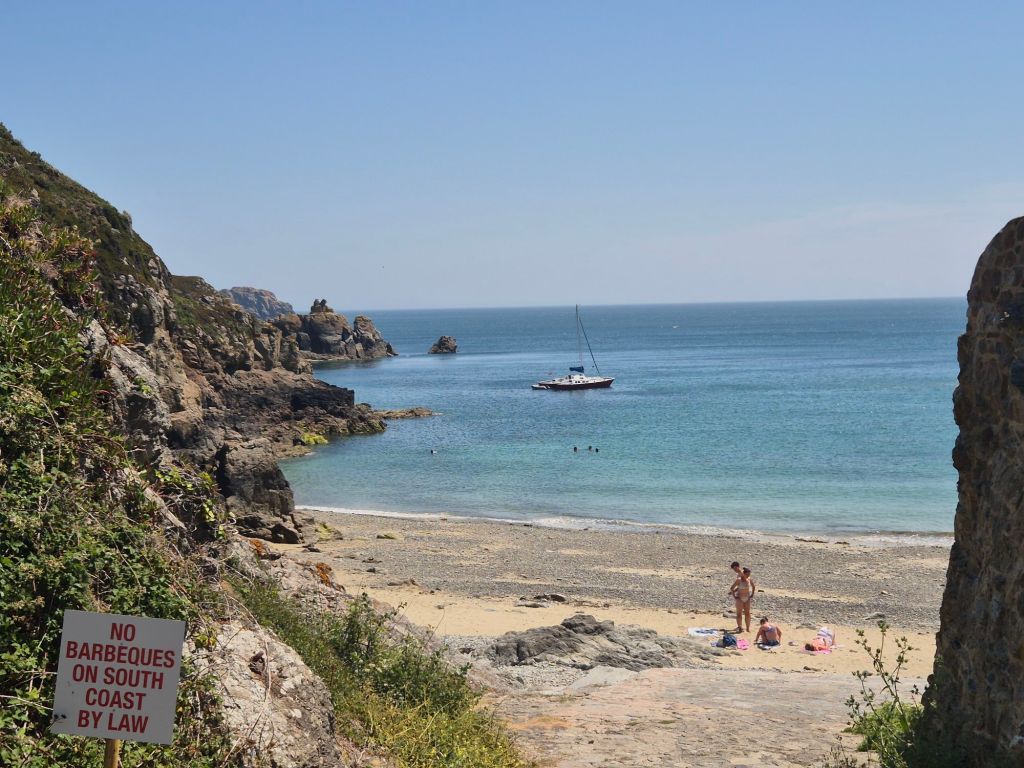
After another refreshing dip we had lunch at the bay cafe – Guernsey Crab sandwich and a goats cheese salad, both tasty.
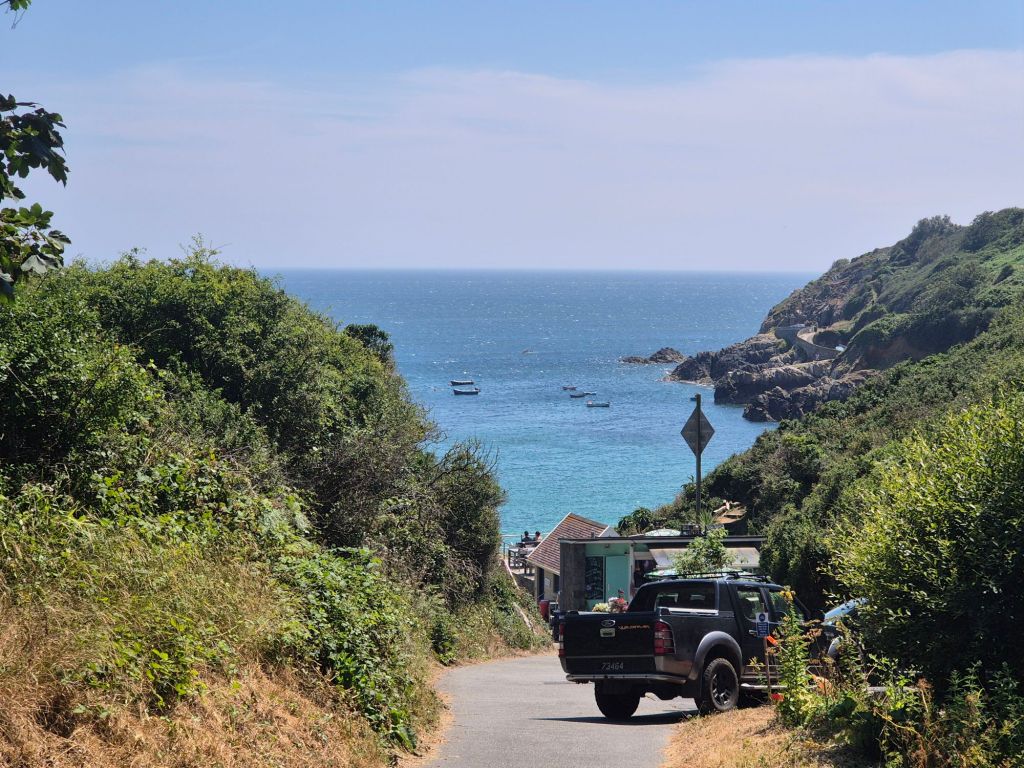
Heading back to our accommodation we encountered a few junctions where the signs instruct you to “filter in turn”. So at a crossroads, the first car crosses, then the first from the other direction, then the next from the first direction and so on. It’s a little odd, but seems to work well.
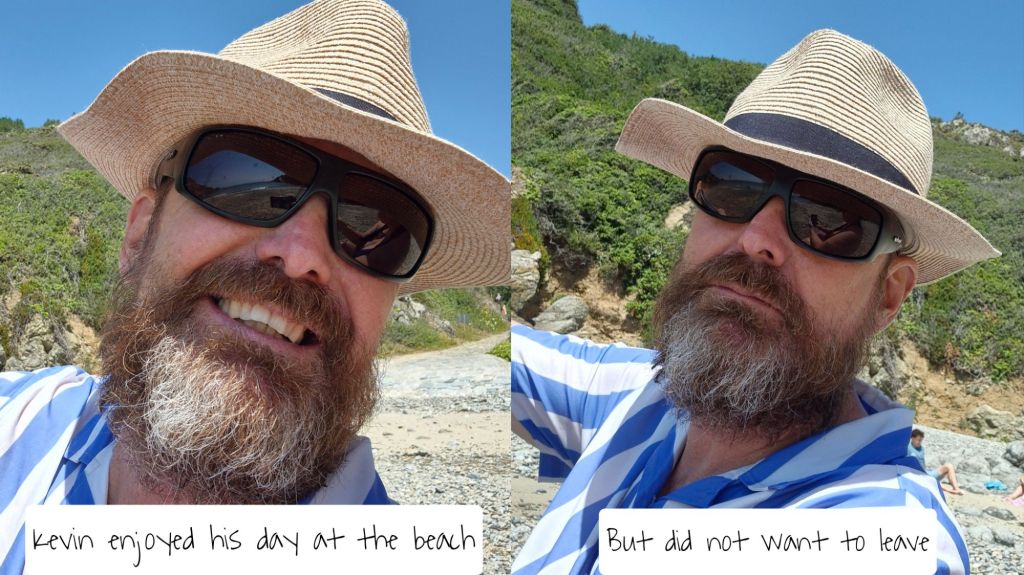
Had a lazy afternoon of catching up with laundry, reading and napping.
Today was a day about Germans and WW2. Guernsey was occupied by Germany during WW2 from June 1940, until liberation day, 9th May 1945 so it’s a fairly important part of their history.
We started at the German Underground Hospital, a maze of tunnels covering an area of 75000 square feet/6950 square metres. It is invisible from above/outside aside from the 2 entrances.
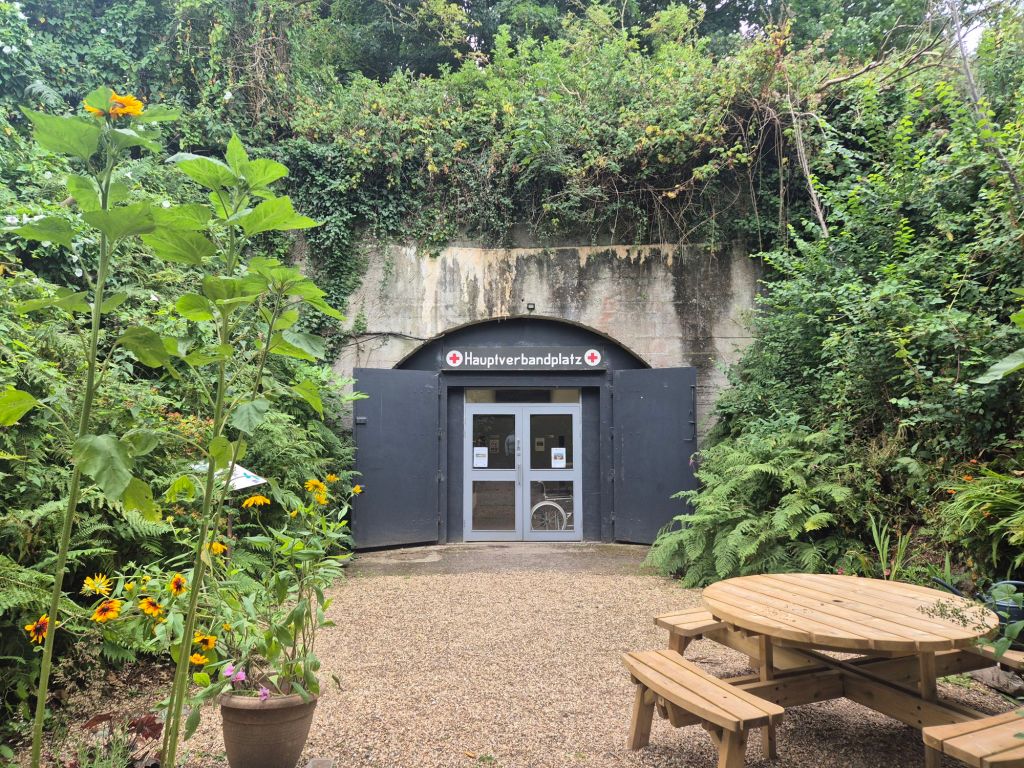
The complex has multiple tunnels, some 5m wide and high, others 2.5m wide and high and 5 escape hatched, the heighest was 75ft above the floor.
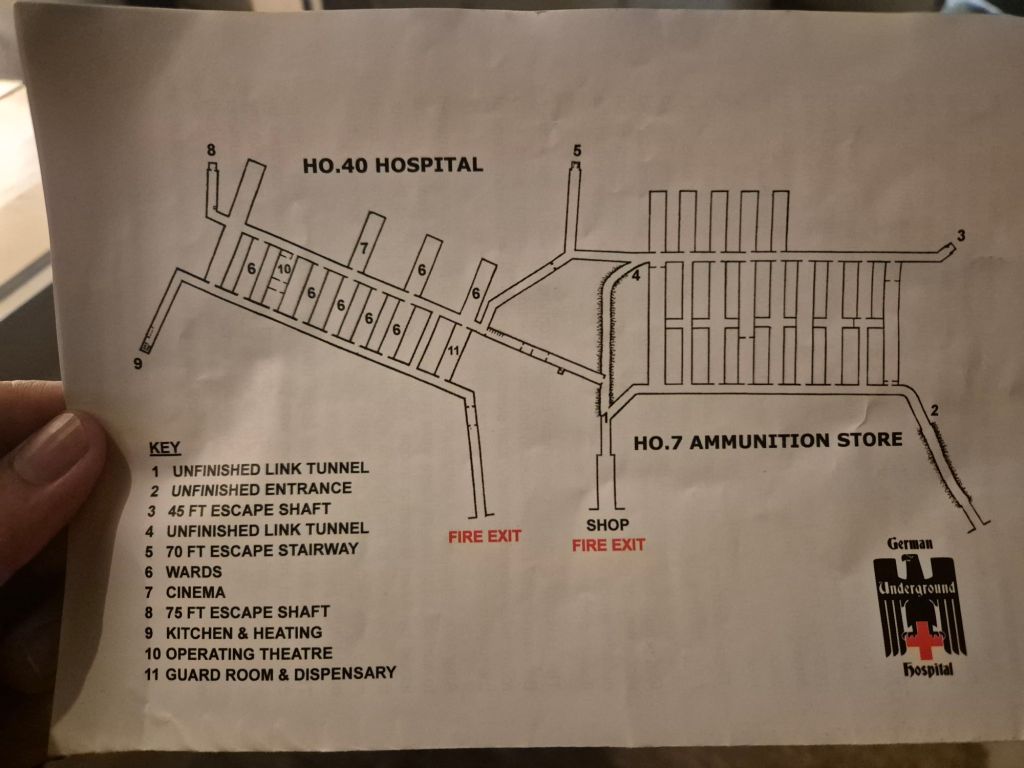
The tunnels also included information about political prisoners and the small resistance movement on the island. The local population apparently didn’t want any resistance activites, so they often reported them to the Germans.
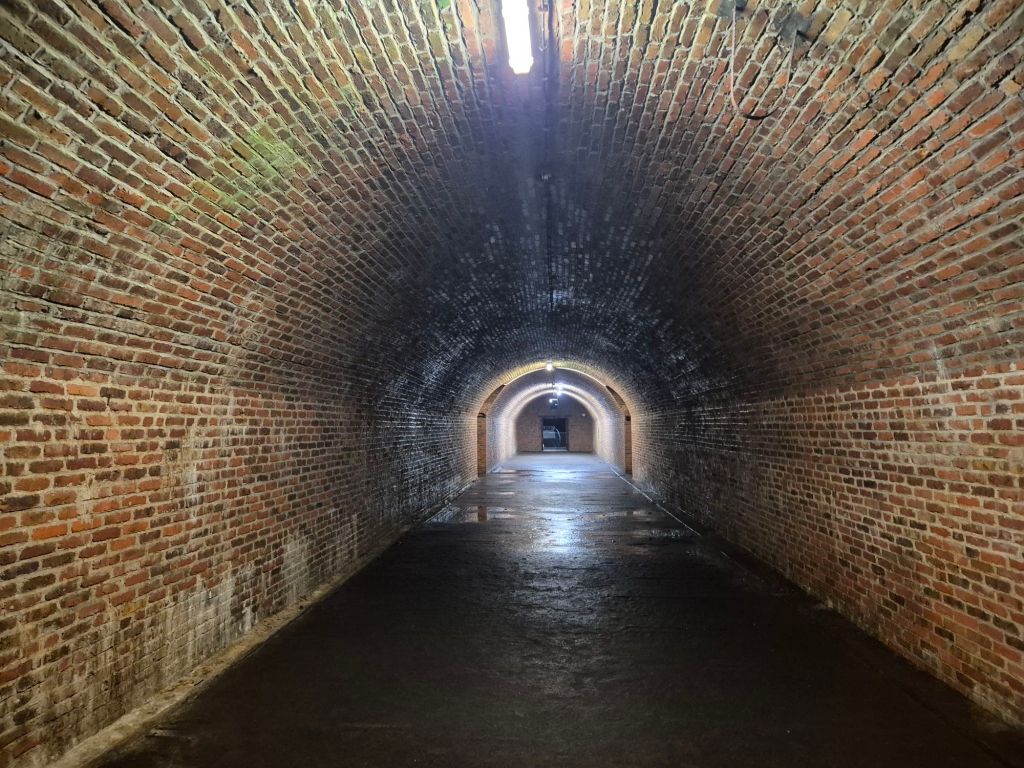
It was an interesting museum, but a bit creepy, and cold, 10 – 12°C inside. The Germans soon realised that underground was not the most sanitary place for a hospital so it ended up being an ammunition storage area.
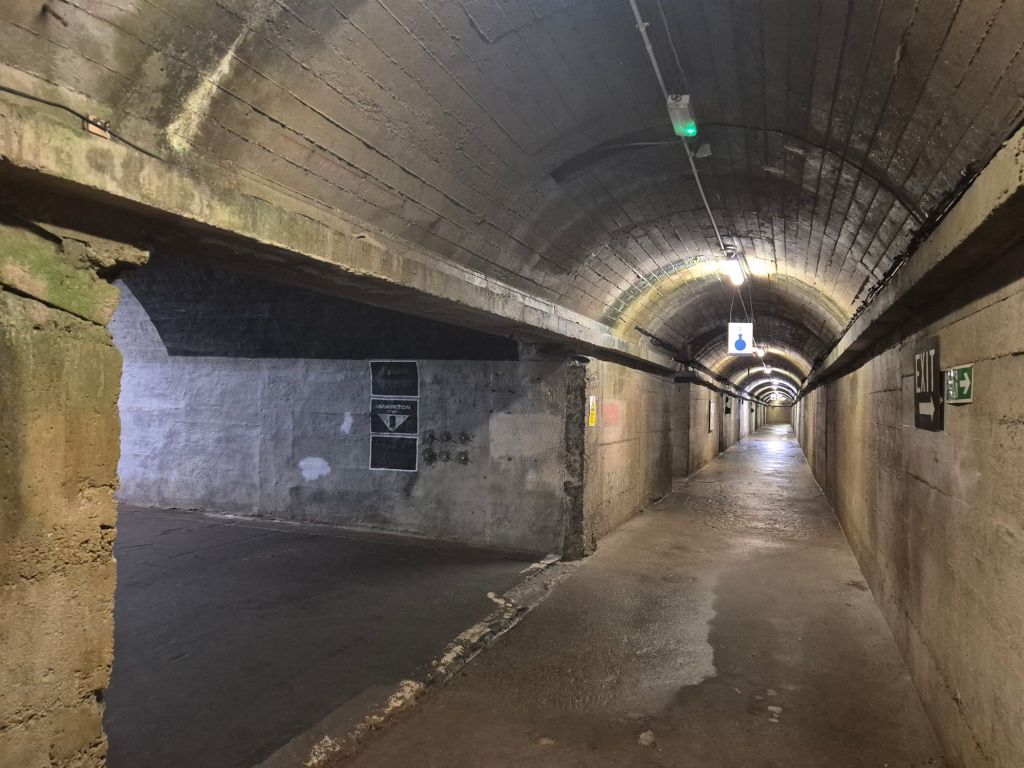
Walking in the tunnels created such an echo, even if you stood still, then tried to walk really, really quietly, it still echoed loudly through the chambers.
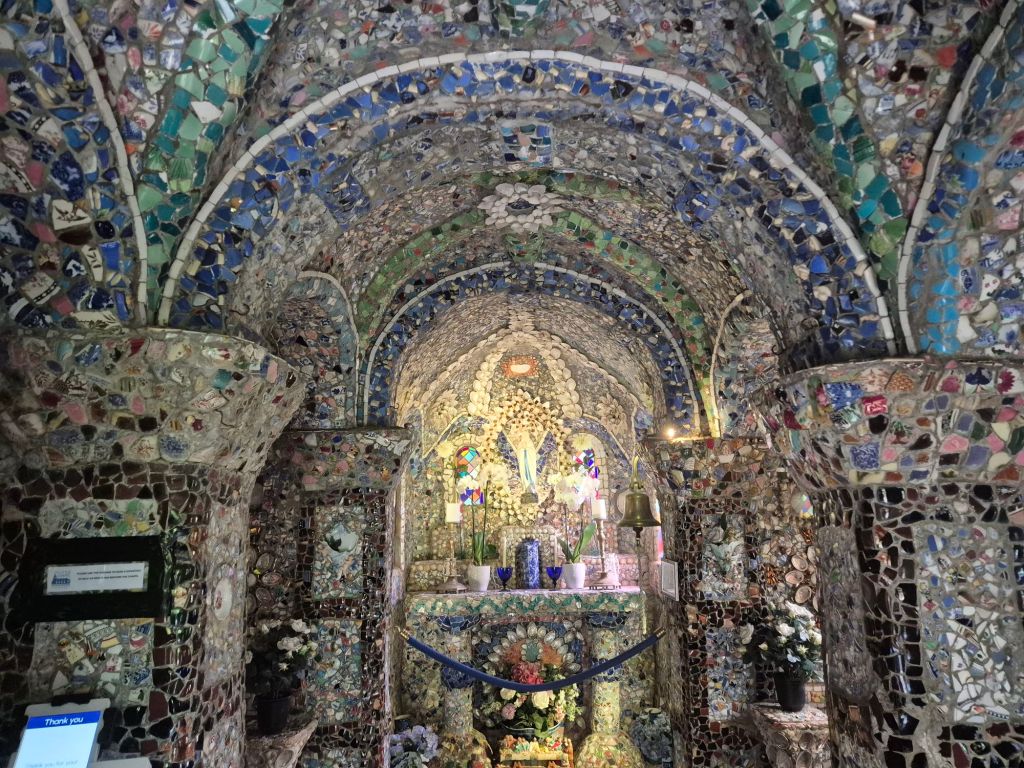
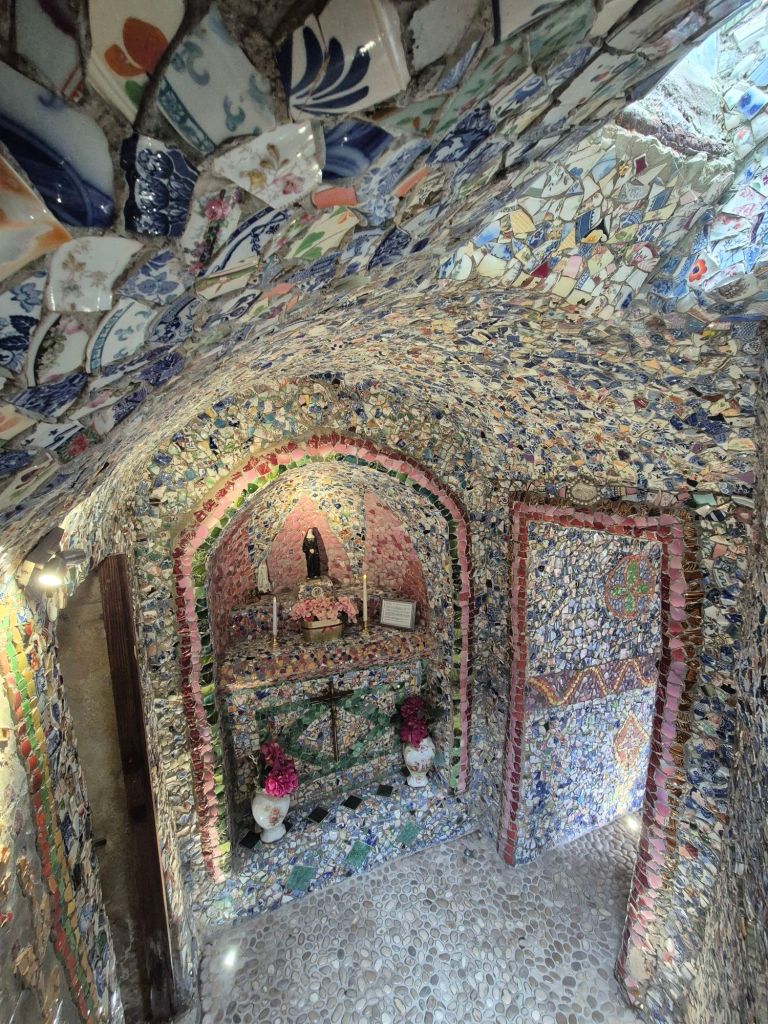
Next we went to the Little Chapel.
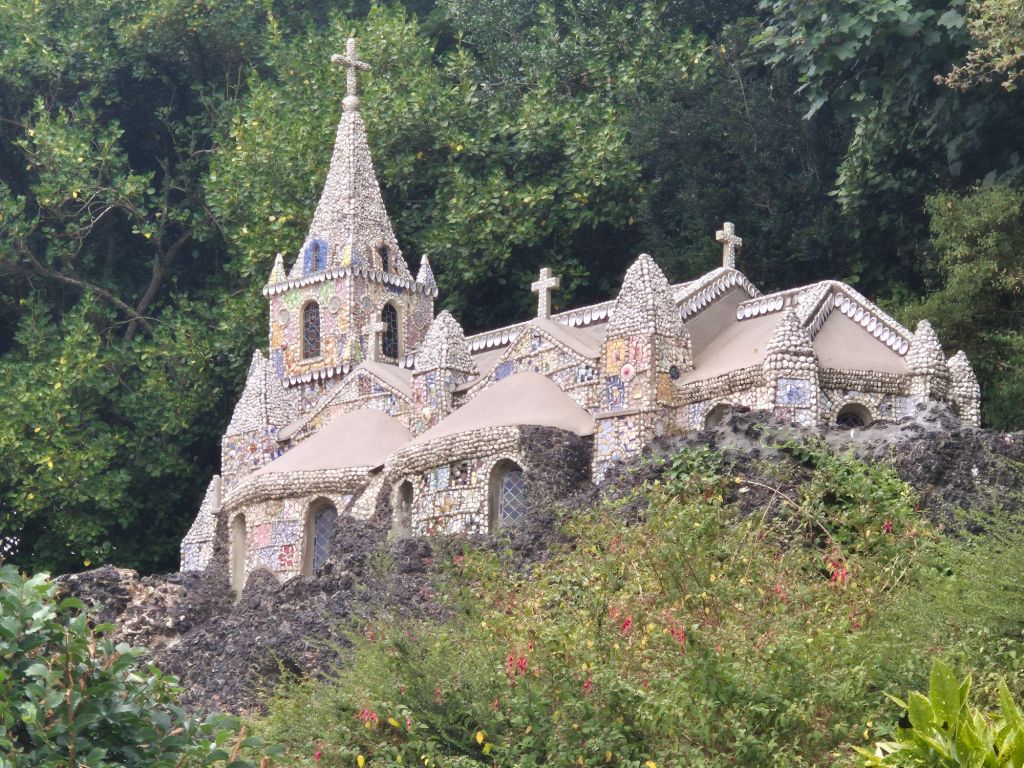
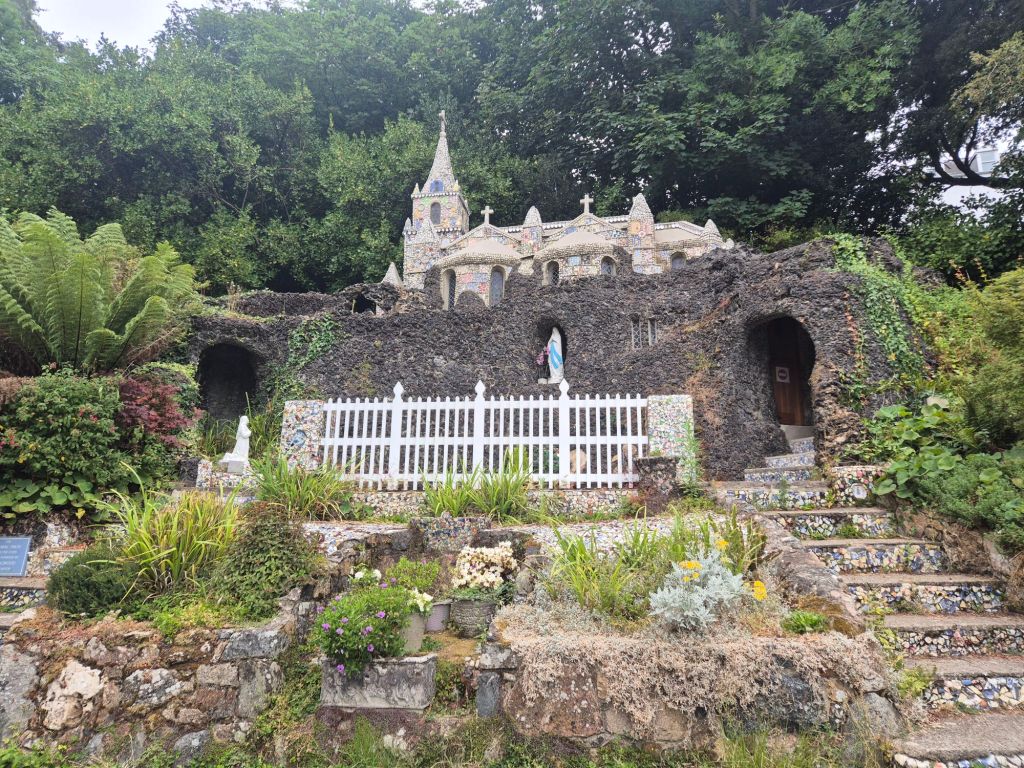
The Little Chapel was substantially the work of one man, Brother Deodat Antoine who arrived in Guernsey in December 1913.
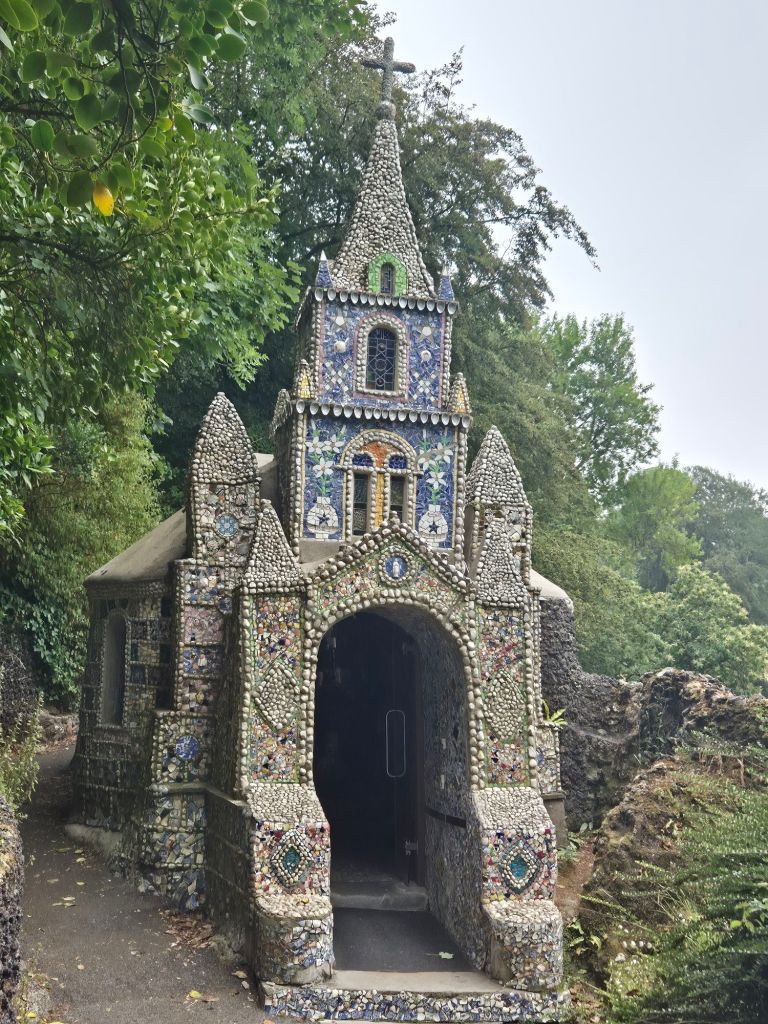
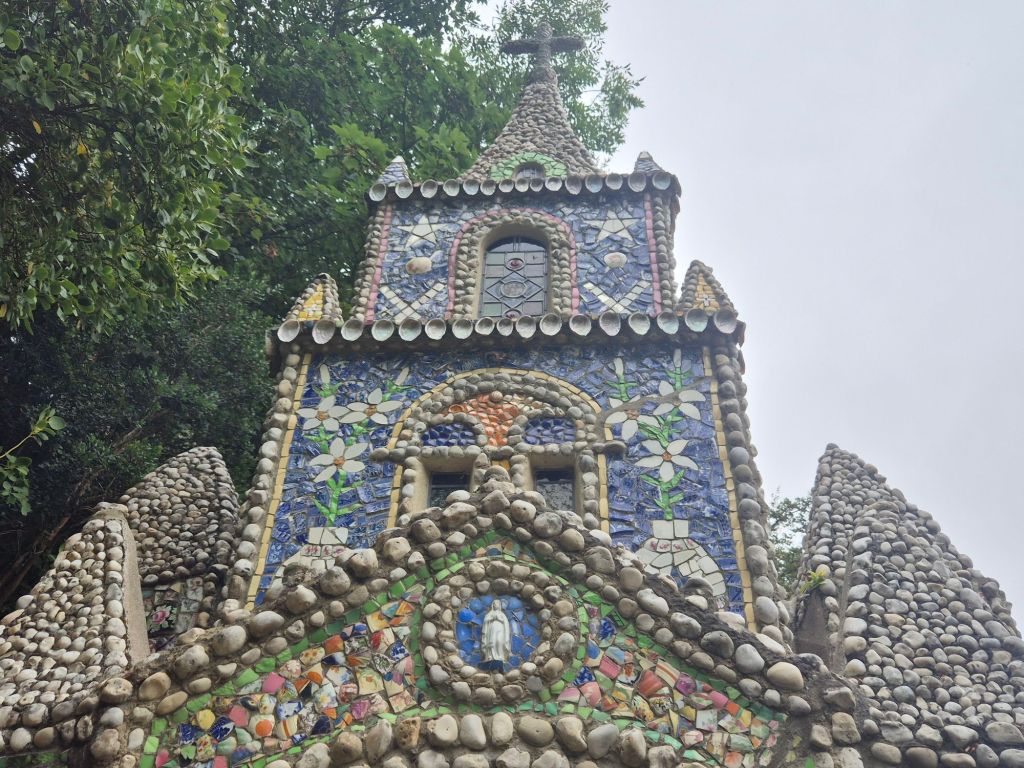
The one we saw is version 2, it was rebuilt bigger after the Catholic Bishop of Portsmouth couldn’t get through the door. It is so pretty, almost like from a fairy tale adorned with shells, pebbles and pieces of coloured glass.
Lunch was a very large portioned sunday roast, possibly our real final roast until December. The server was either deaf or just didn’t care when we said “that’s enough”- he piled the plate high.
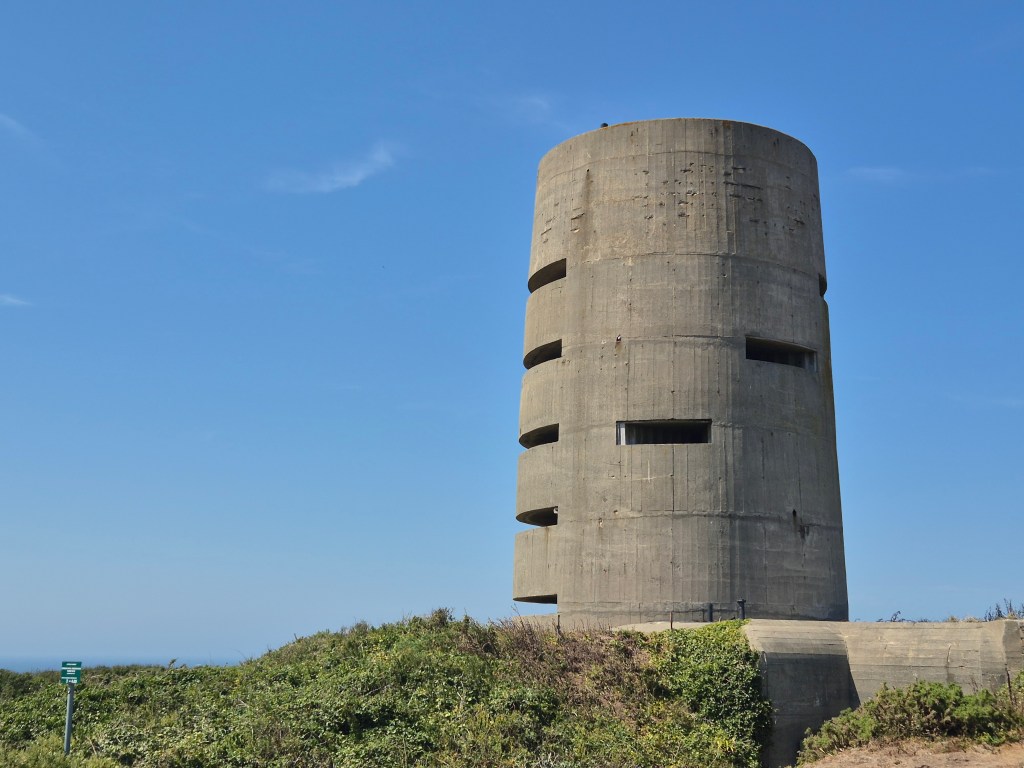
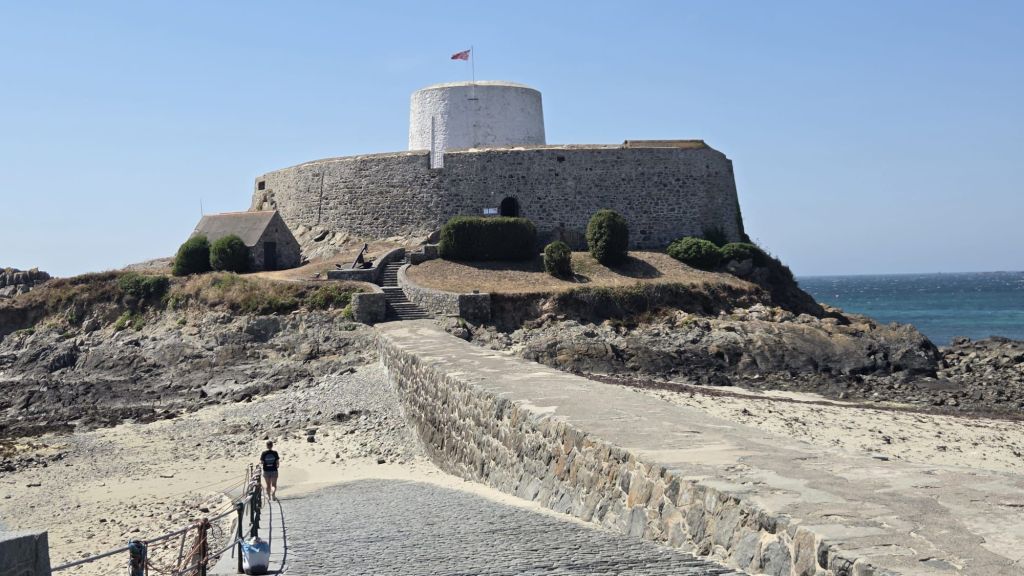
From there we headed to Pleinmont Tower, which was part of Hitler’s Atlantic Wall.
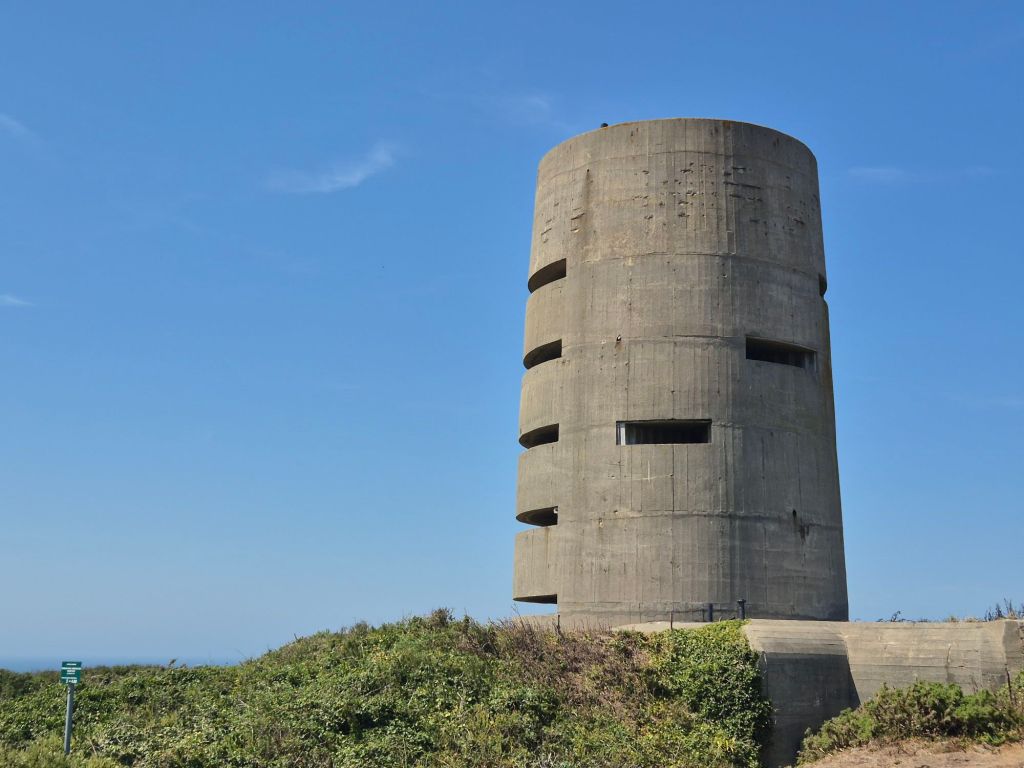
Here soldiers had a great view from the south west corner of Guernsey of any potential enemy ships getting too close from 5 floors and the roof deck.
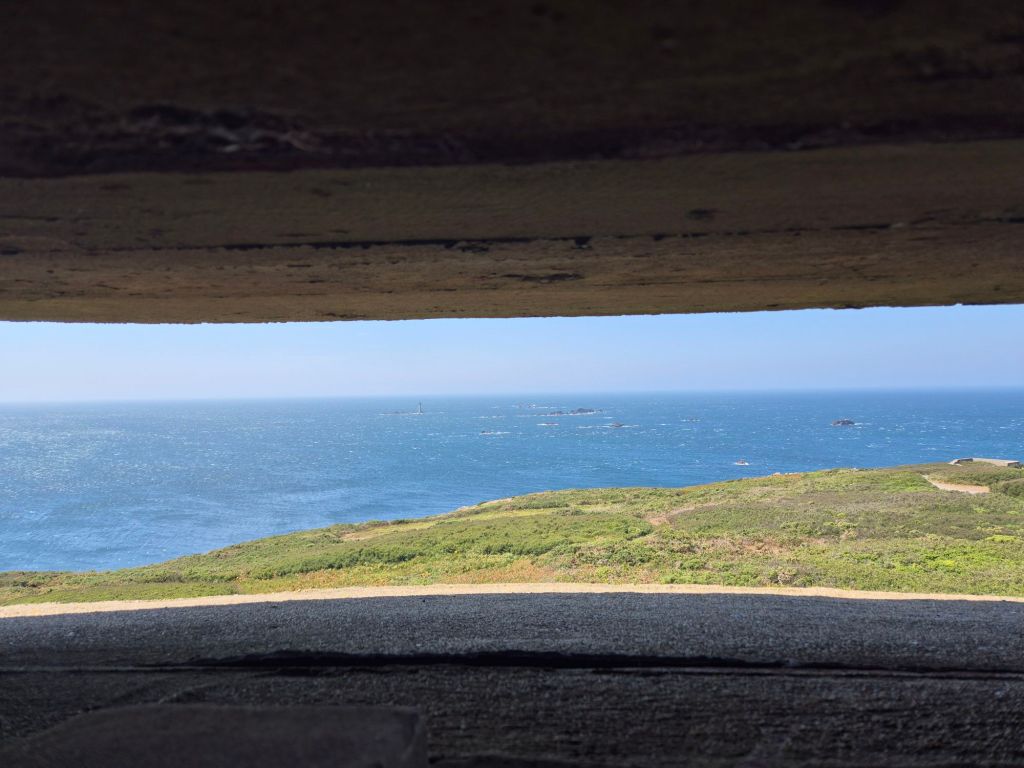
It was interesting in that it still had some original binoculars in situ and also was equipped with hand grenade drop holes for repelling attack. It was really windy today, so the roof deck was a challenge!
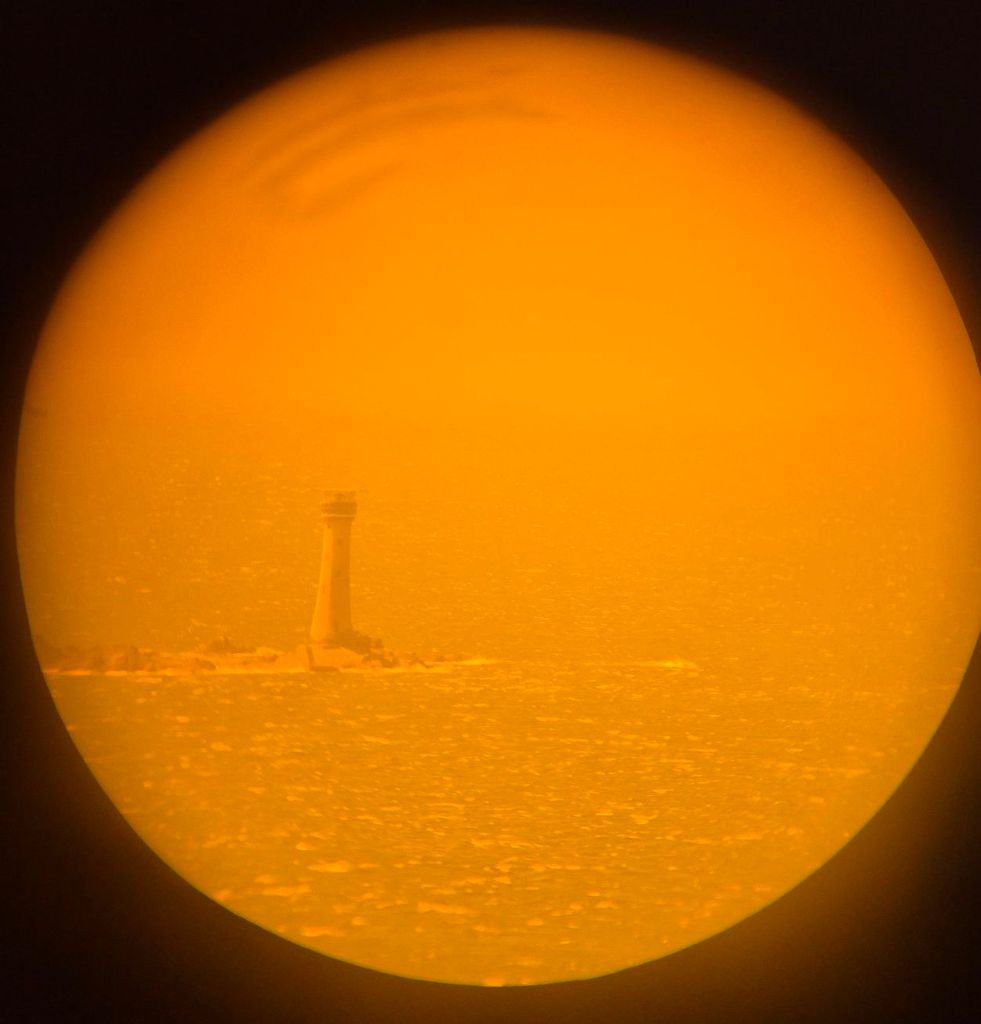
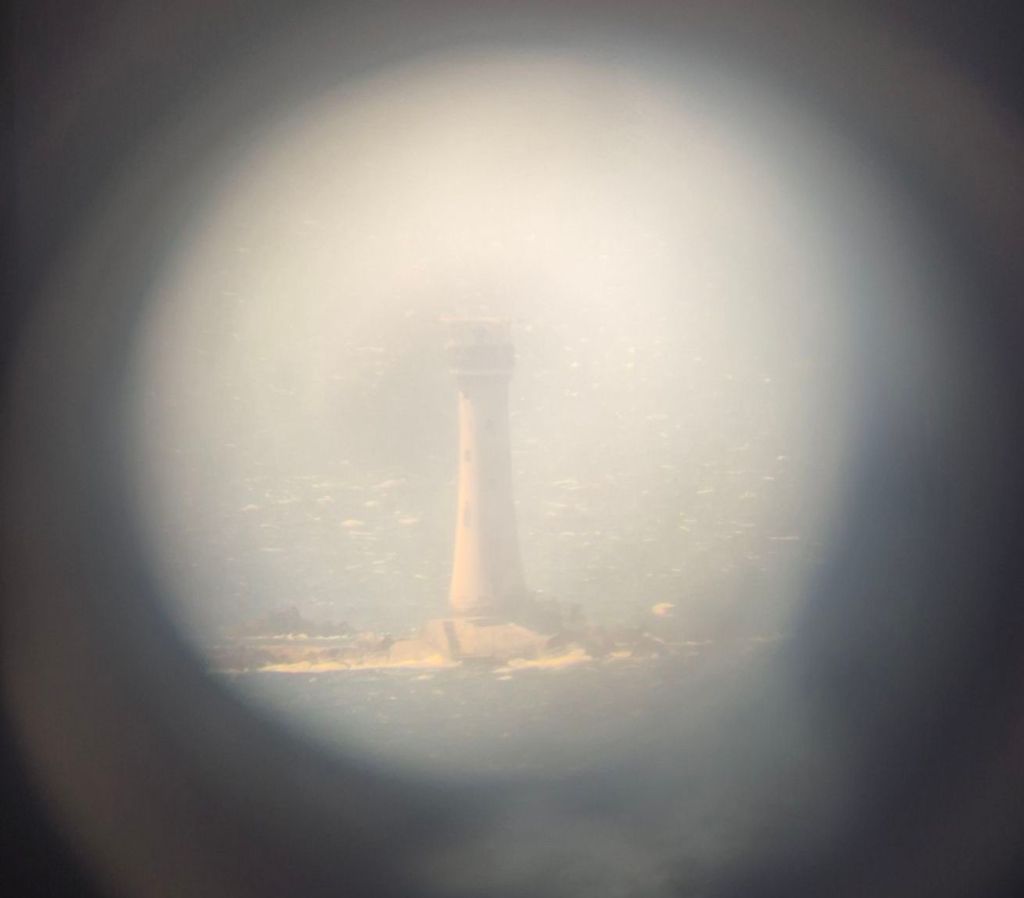
There was to be no swimming today, the strong wind was our deterrent.
Today we had planned to visit one of the islands off Guernsey, but awoke to 60km/h winds which greatly reduced the attraction of travelling in a small boat. It was also a bit rainy, so we thought we’d look for indoor activities.
We started at the Guernsey Museum at Candie. The museum is a mixture of Guernsey history, art and folklore.
It answered some key questions we had about Guernsey’s history prior to 1940 – prehistoric, Roman and Norman. There was some really interesting art including one painting we loved The Tree of Life by Peter Le Vasseur . The detail up close is amazing.
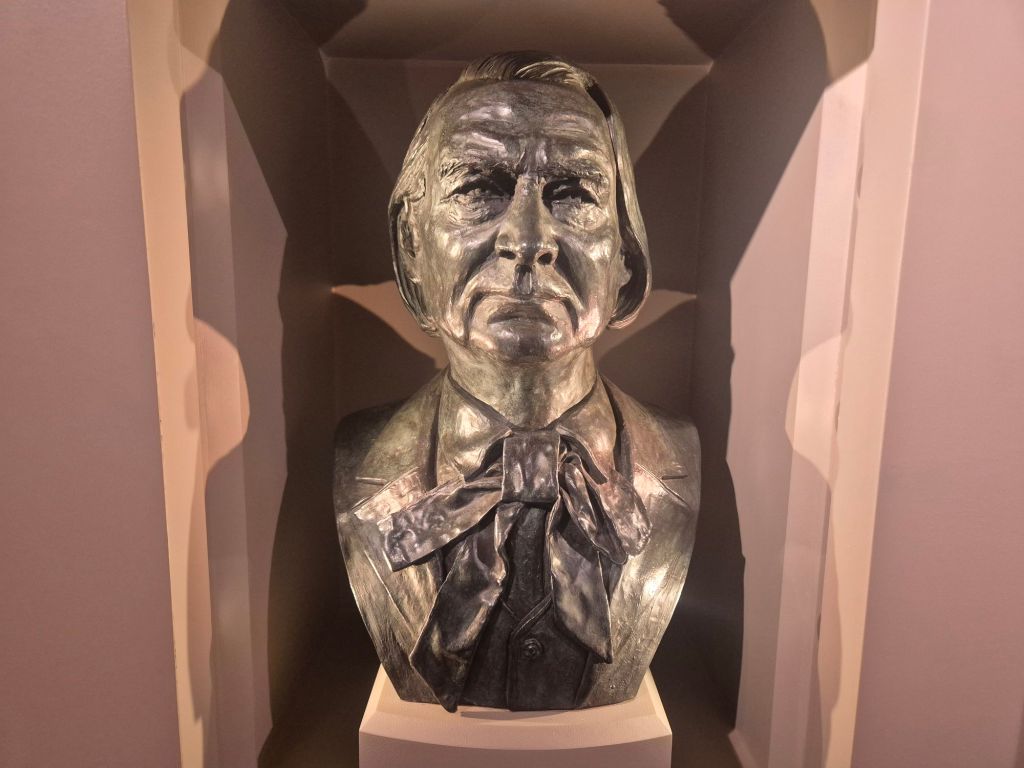
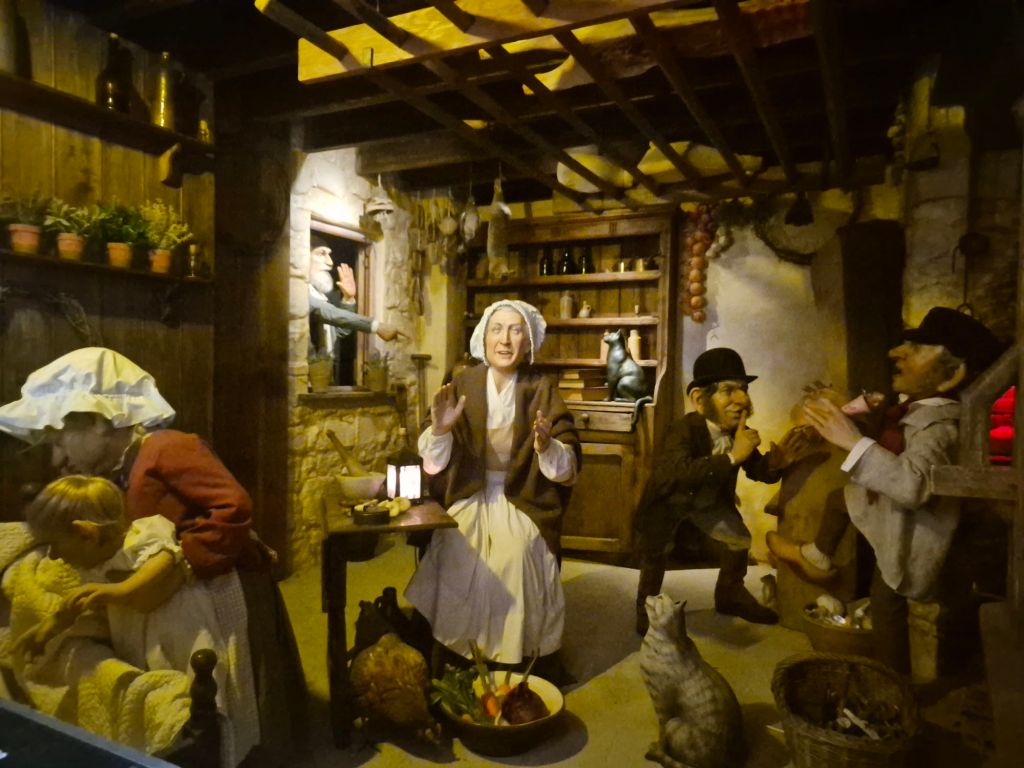
There was also a section where you could listen to some local fairy tales.
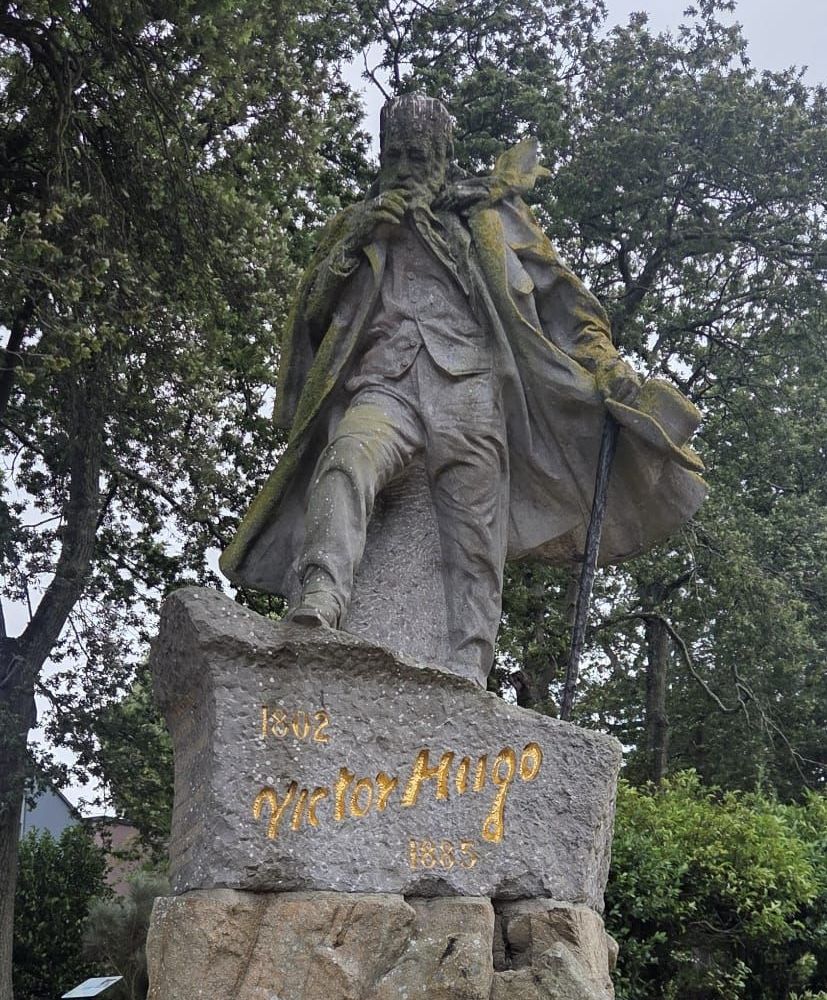
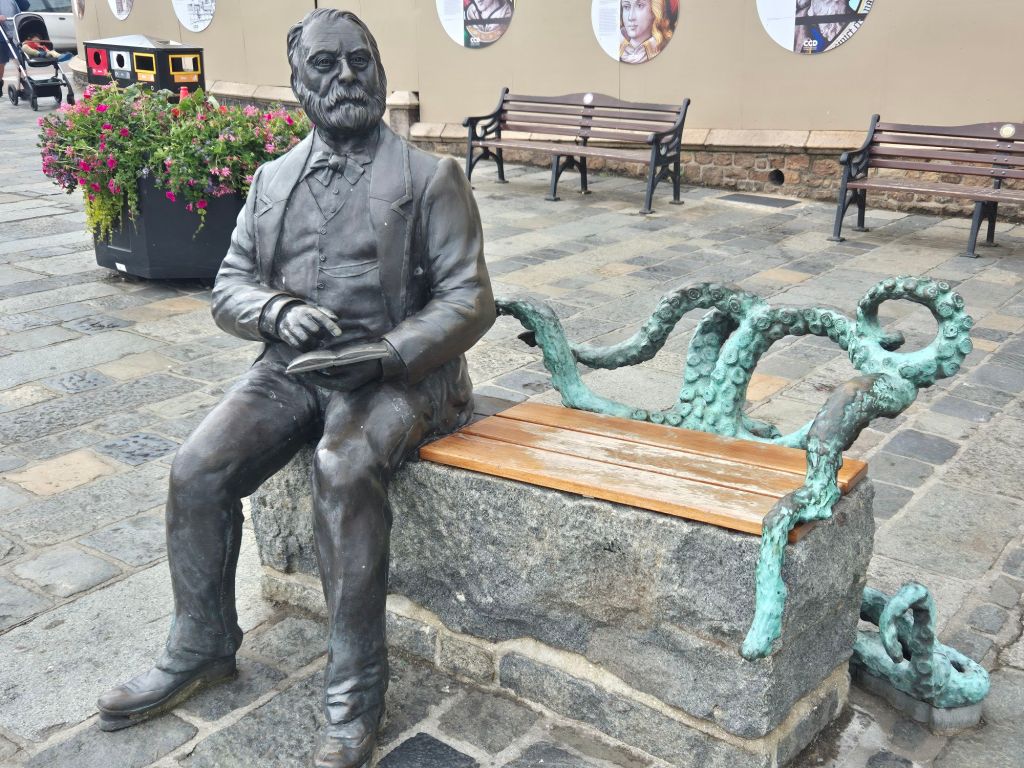
Outside was another Victor Hugo statue.
It was still raining when we left so we went to the German Signals Museum. This was in a bunker that has a house built on top of it!
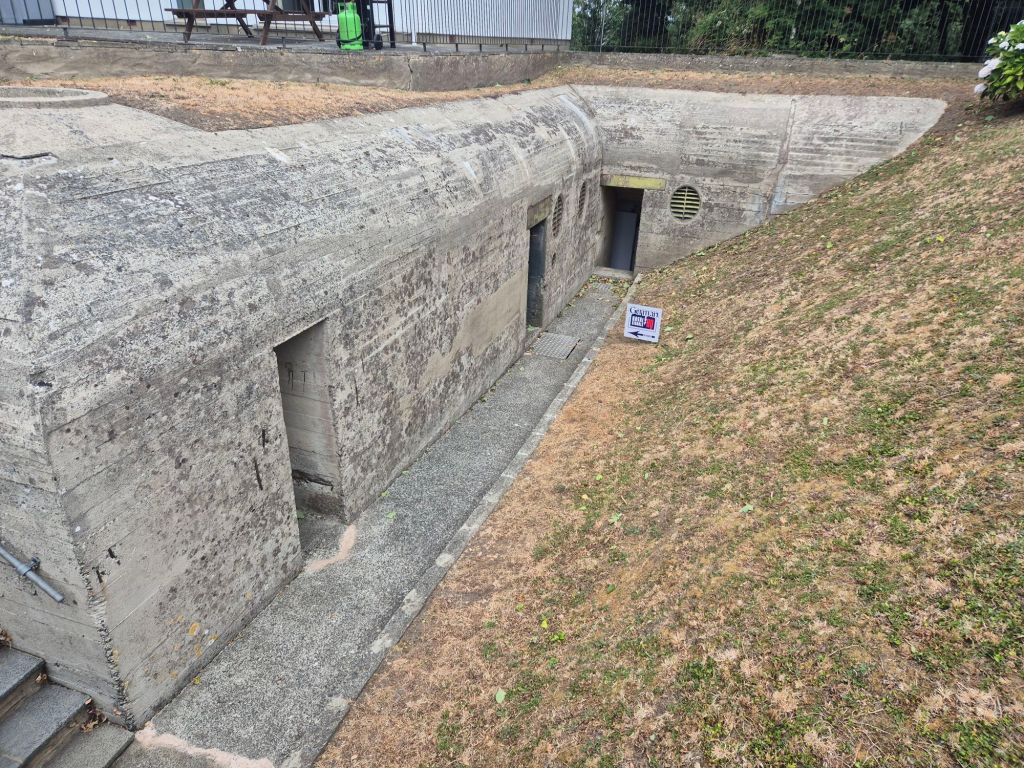
The museum was interesting, but the guy running it added so much more information and context. There was a video of the German Commander of the bunker who came to visit it in the 1970s/80s and provided a lot of details that were used to restore the bunker. They also suspect he came back to try to recover a pistol he had taken from a French Officer before he was assigned to Guernsey. They (not he) eventually found the pistol hidden in a drain, it is now on display in the museum!
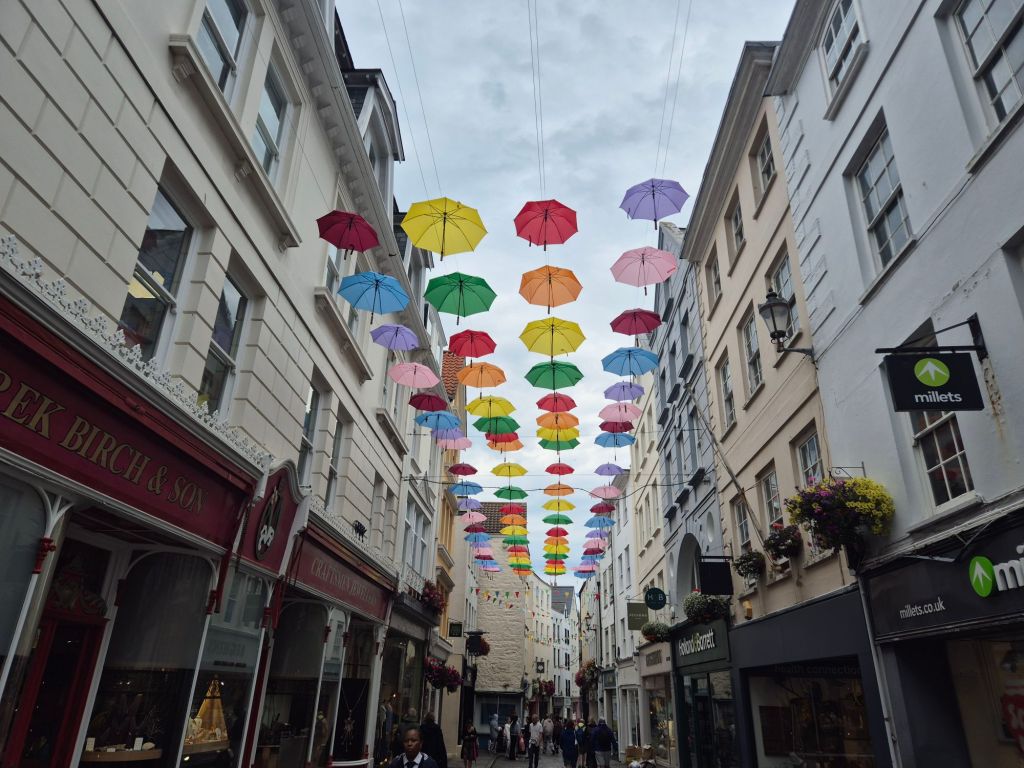
From there we drove to another bunker tower, then visited the Guernsey Woollens shop before having a very late lunch and a stroll down the main street of St.Peter Port just as the shops were closing.
We saw our third Victor Hugo statue of the day there.
Today, after a slow start, we headed to the German Occupation Museum. This was all about life during the occupation and explored things like ration cards, rules, and the ways people deceived the Germans.
It is an incredibly well equipped museum with a large range of items left behind after liberation.
(As the man explained yesterday, most things have stayed on the island due to the difficulty of actually getting them off the island!) It seems that anyone having a clear out of war things, brings them to this museum.
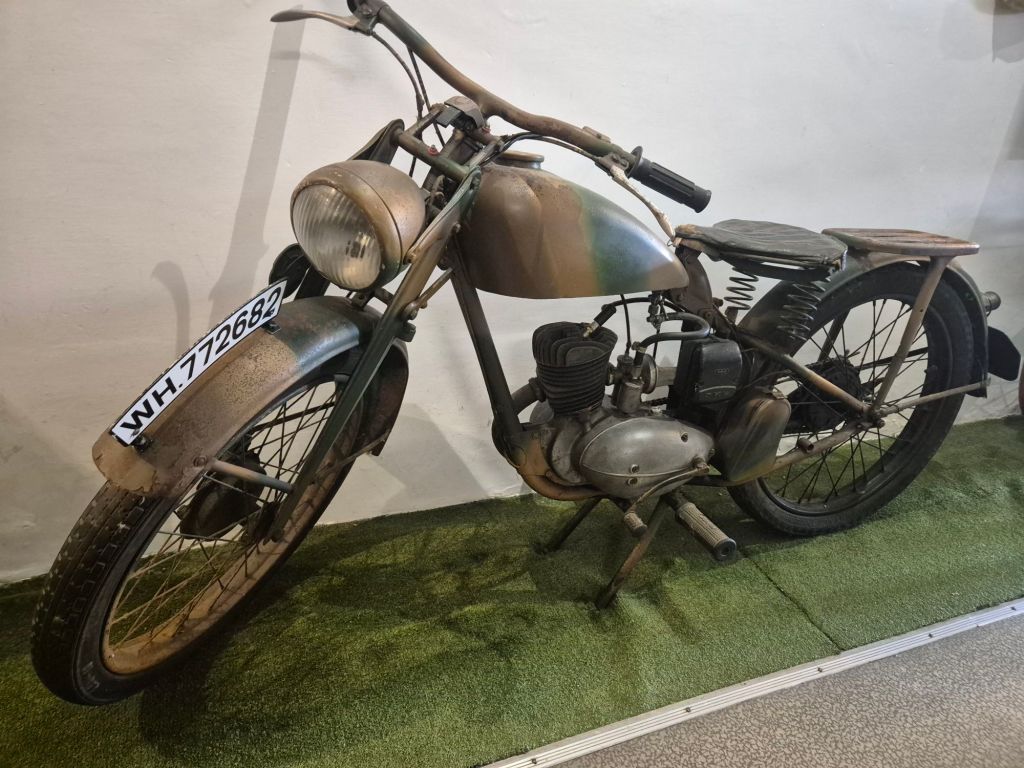
They have soldiers’ uniforms, hats and helmets, motorcycles, artillery guns, jeeps, weapons and Red Cross packages.
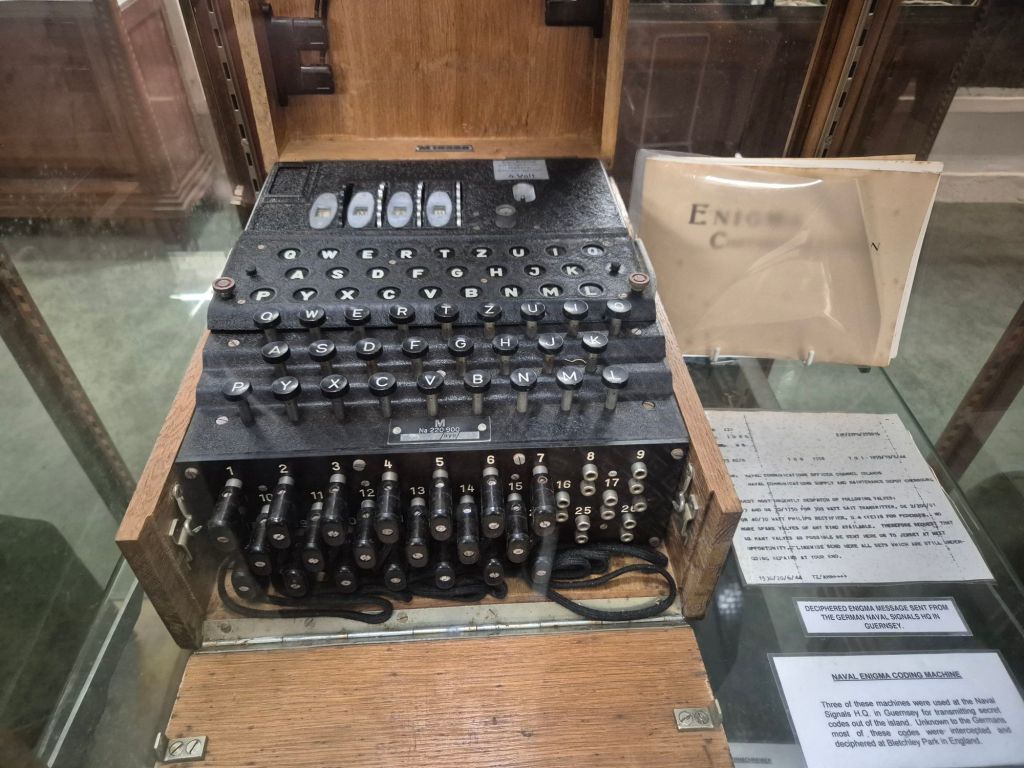
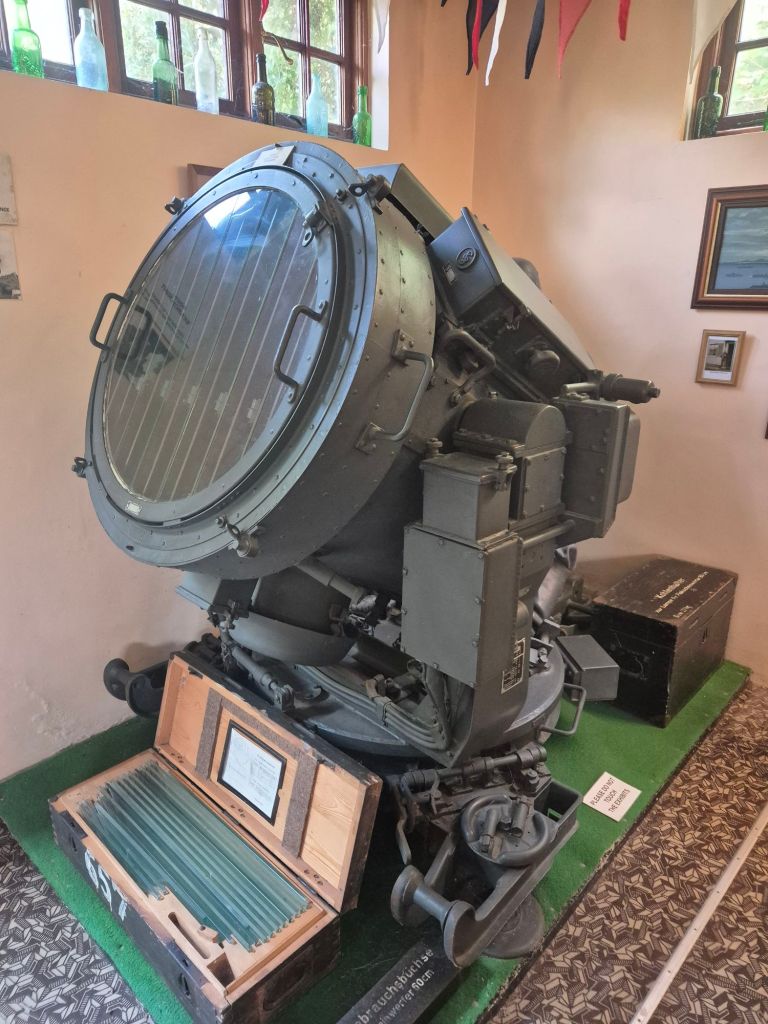
They even have an Enigma machine and a searchlight!
From here we stopped at a pub for lunch, the headed to Le Jaonnet Bay. Kevin went for a walk to the bay, I sat and painted the scene.
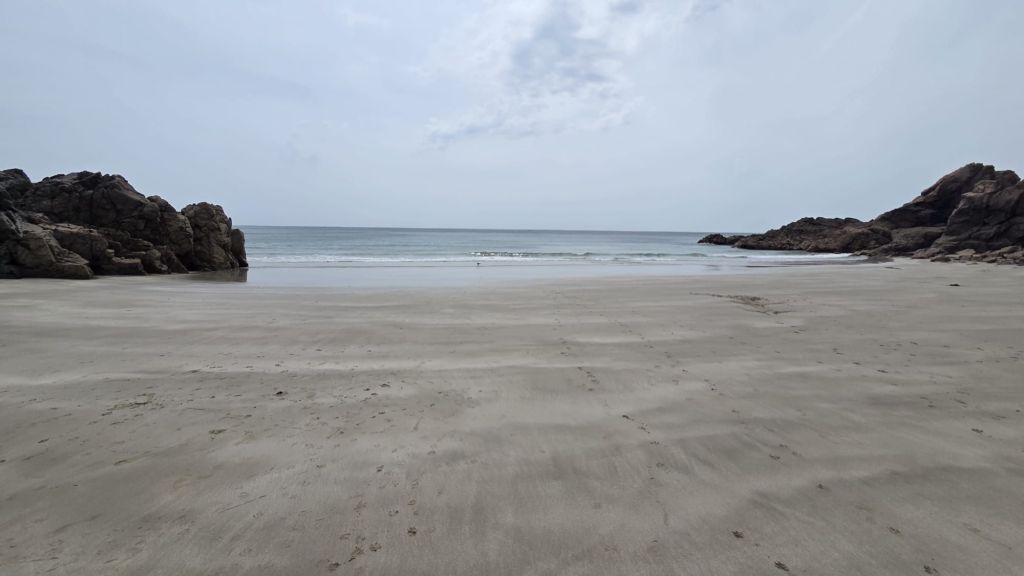
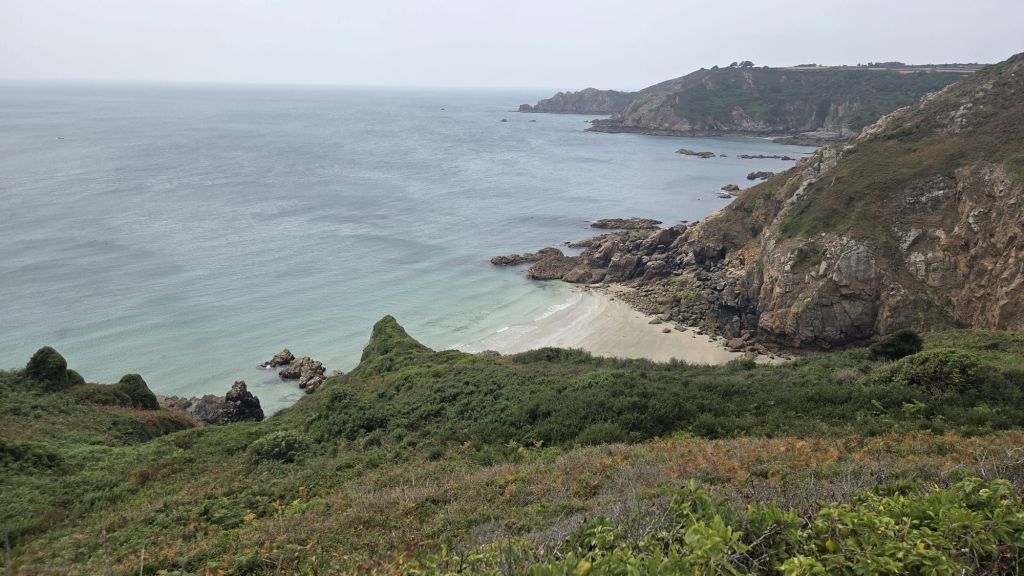
We then returned to our accommodation and spent some time planning a couple of weeks in August.
Regarding bunkers, Germany apparently planned 12000 of them to defend Europe. They built 6000 before being beaten. 900 of those are on Guernsey, apparently. Driving around, at times, you can count up to 10 bunkers within a 1km.
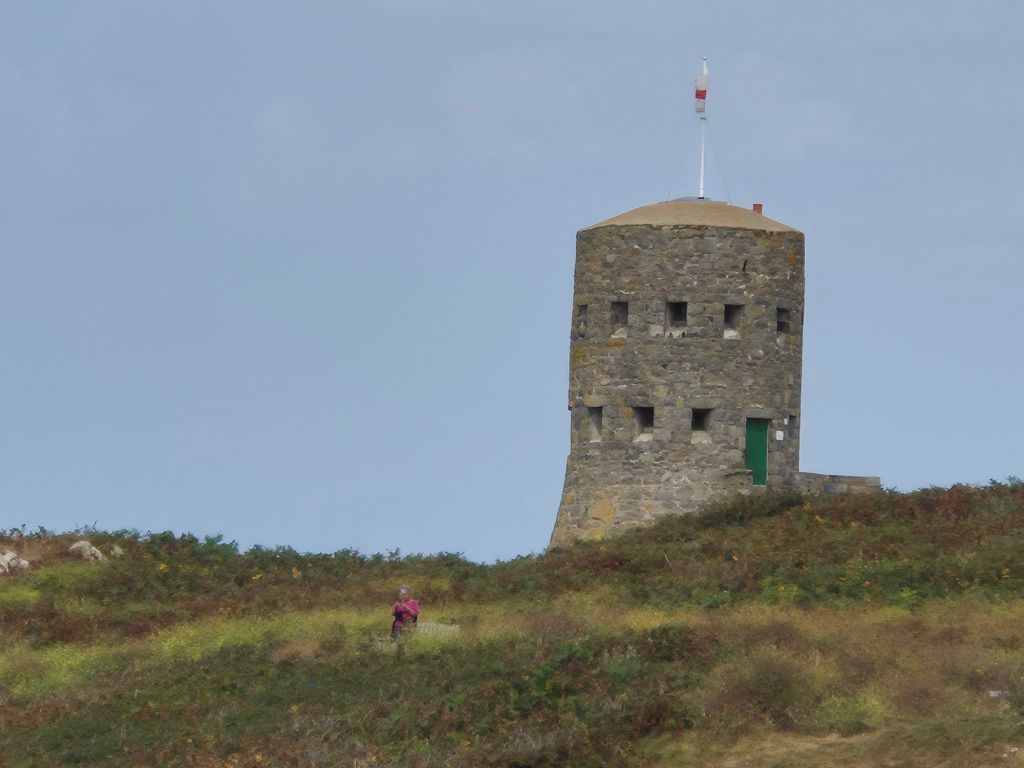
When you add the other towers and old castles, there are lots of defensive structures on the island!
Time in Guernsey has come to an end, heading to Jersey this morning.



Leave a comment…