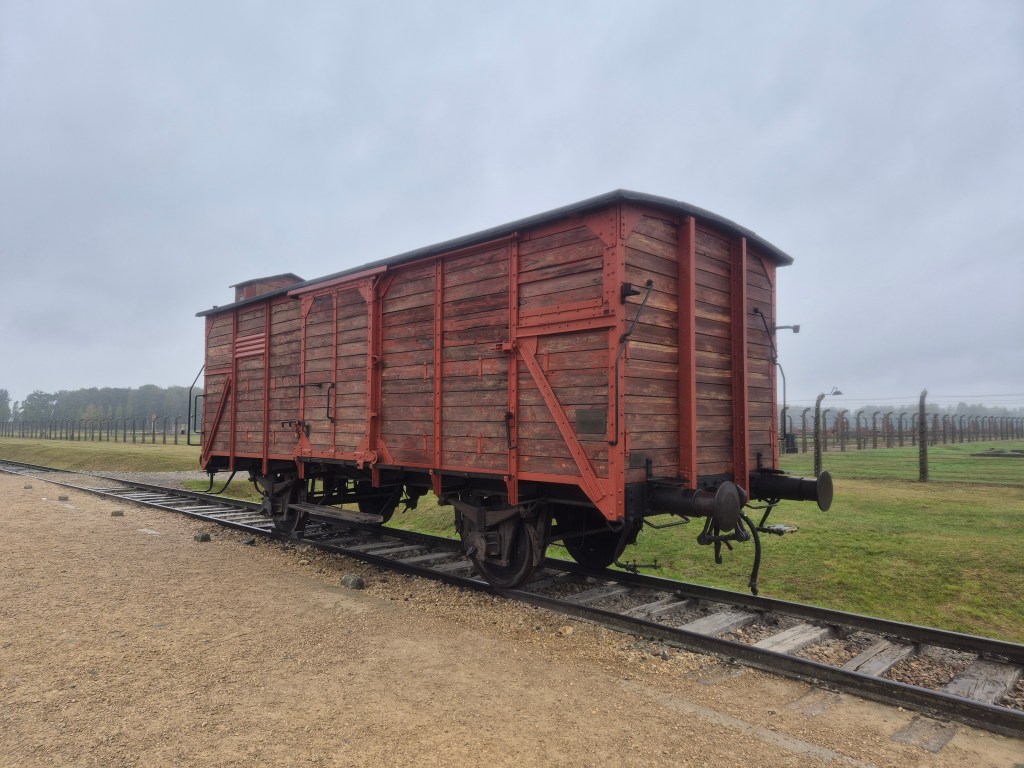
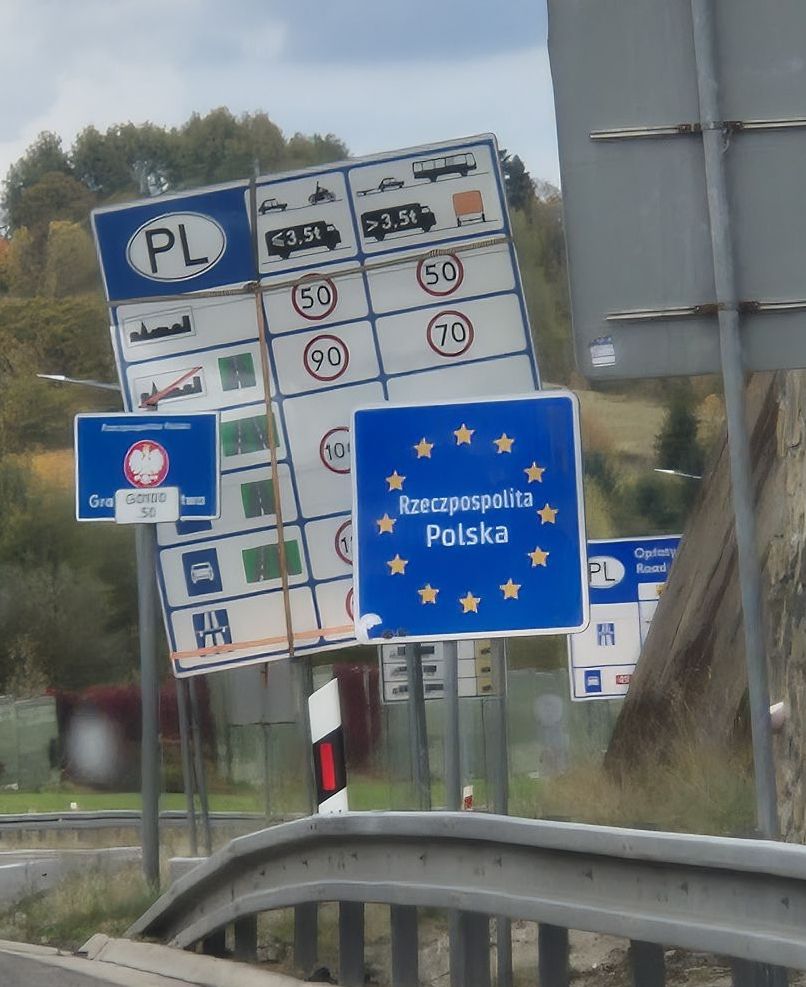
Today was a driving day from Vienna to Oświęcim, Poland.
We took the slightly more scenic route back through Slovakia, we also still have a valid vignette for Slovakia so we could use the toll roads there.
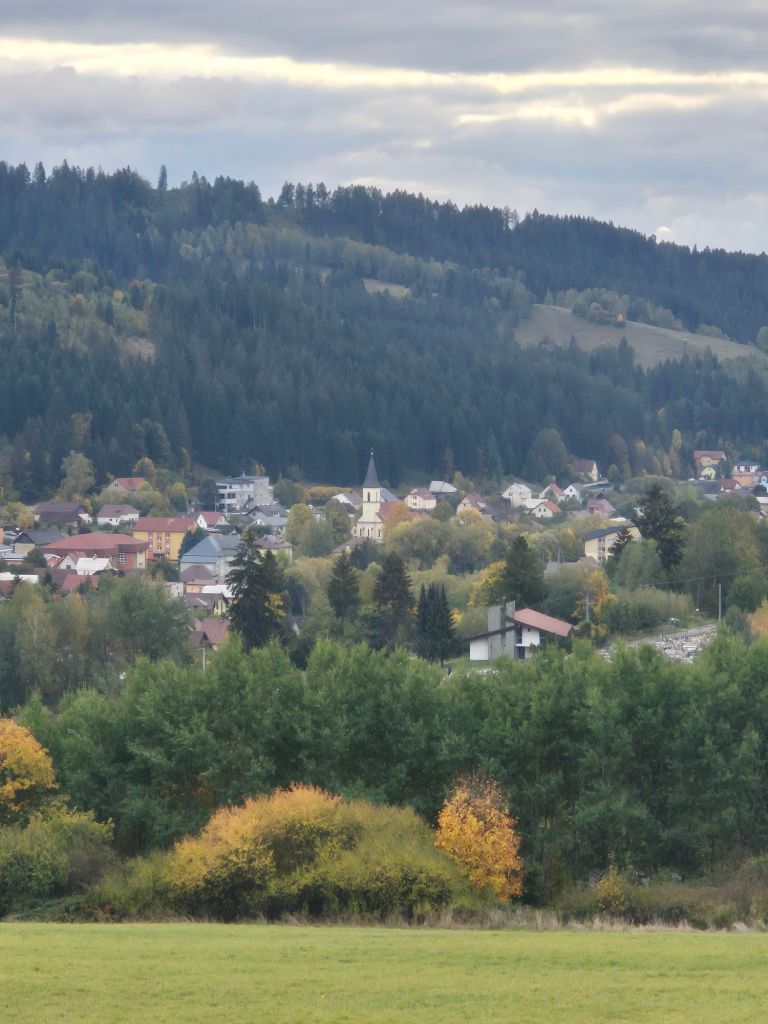
When we arrived in Oświęcim we first went to the Muzeum Pamięci Mieszkańców Ziemi Oświęcimskiej (The Remembrance Museum of Land of Oświęcim Residents).
This museum described life in Oświęcim before the SS arrived to convert a Polish army camp into the concentration camp Auschwitz. It was an interesting museum. Some things we learned that we did not know were that many of the people of Oświęcim were deported at the time of the camp building; prisoners from.the camp were used to rebuild Oświęcim into what was planned to be a “model German town”; Bata shoes originated here (does anyone else remember wearing Bata ‘Ponytail’ school shoes?); many people in the town provided assistance to Auschwitz prisoners as much as they were able.
We were still engrossed in the displays when suddenly everything turned off. We thought maybe a power failure? Apparently the museum closes at 4pm and everything switches off automatically. Pity, we were really enjoying it. No staff came looking for us, we had images of being shut in for the night!
We are now at our accommodation, dinner is cooking and as someone else left their Netflix account logged in, so we’ve started watching The Empress.
As foretold recently, the complaining about cold weather will officially begin now. We have left the “it’s not hot so it’s lovely” weather behind, and woke up to 1° this morning. It rose to 5° by the time we arrived at the Auschwitz-Birkenau Museum at 9am. It was suitably cold, damp and dreary for a tour of this place. We joined our tour and entered through the main camp gate, walking among the two story brick buildings that were previously Polish Army Barracks.
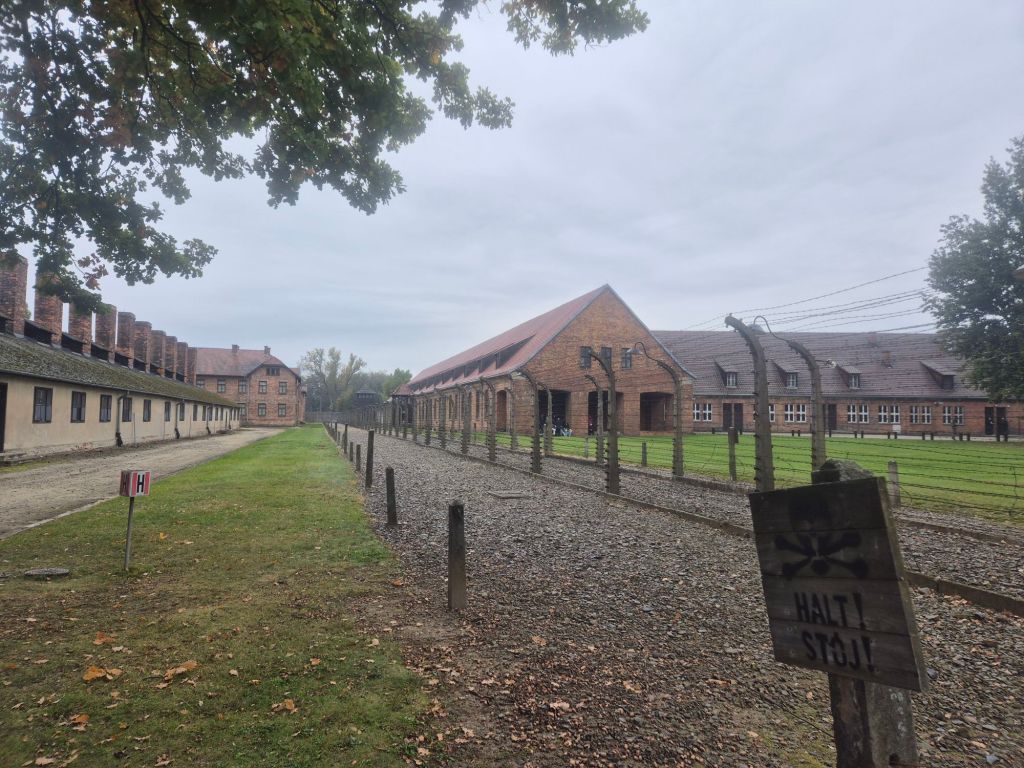
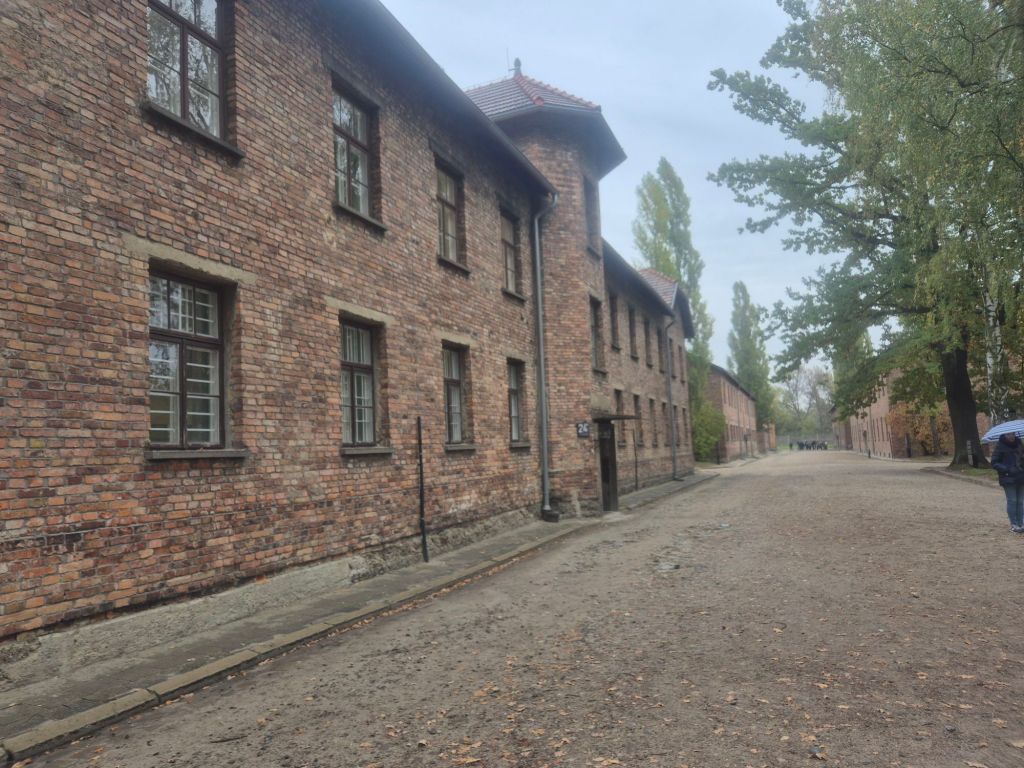
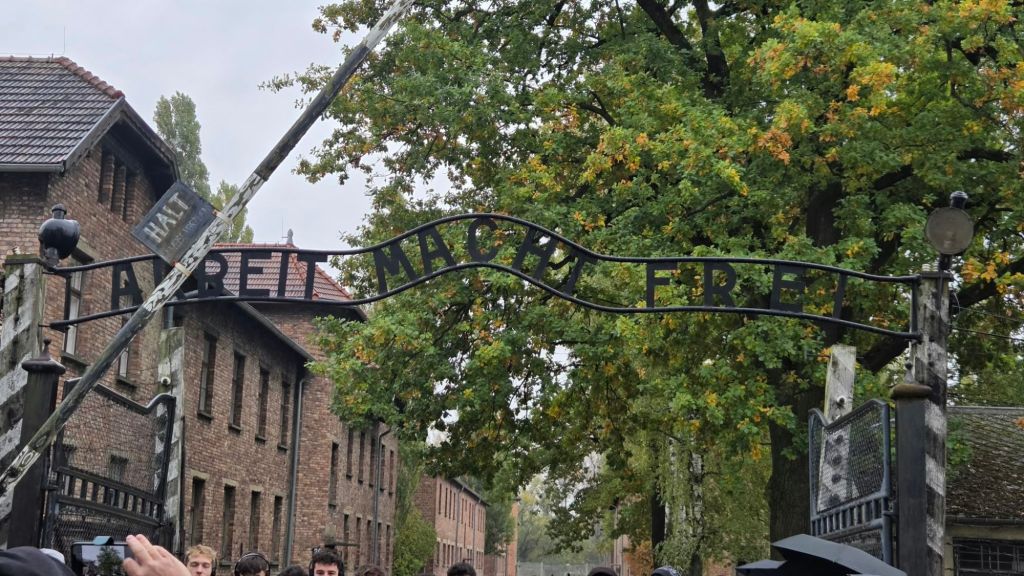
Initially, from the late 1930s, the camp held prisoners of war, political prisoners, and Poles but expanded to house Jewish people, primarily from Hungary (450k), but from all over Europe. 1.1 million people were killed here of which 216,000 were children.
The tour took us through the barracks building which have been converted to museums. We toured a room full of shoes, another full of hair cut from the heads of both living and dead prisoners, another with empty suitcases.
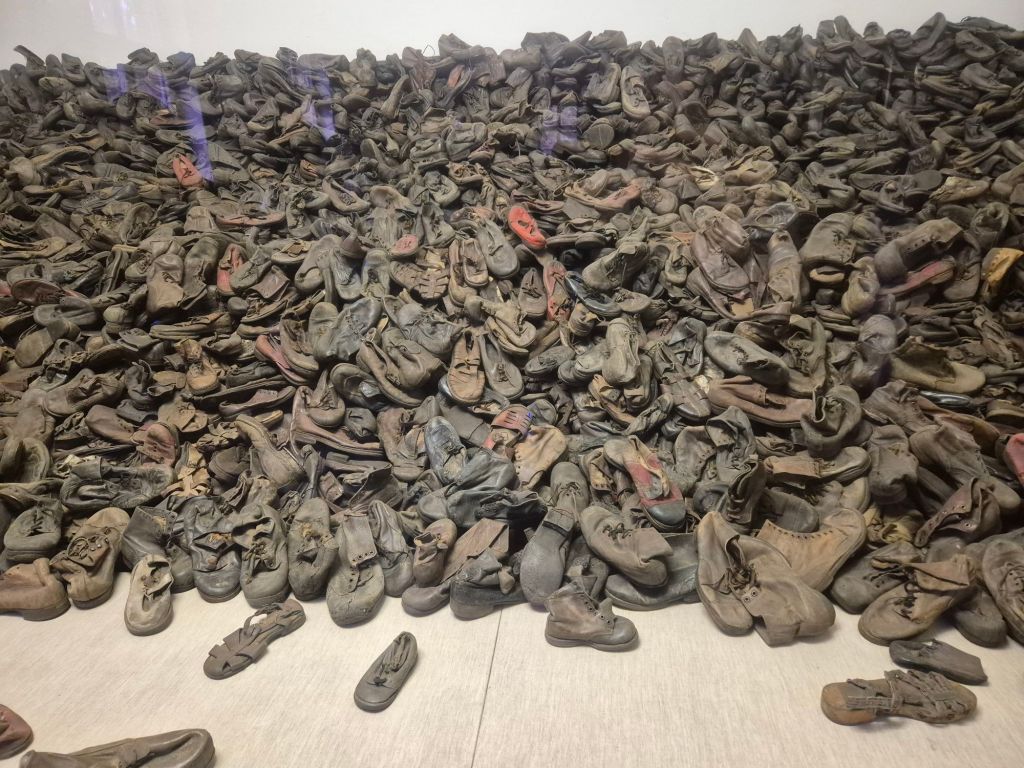
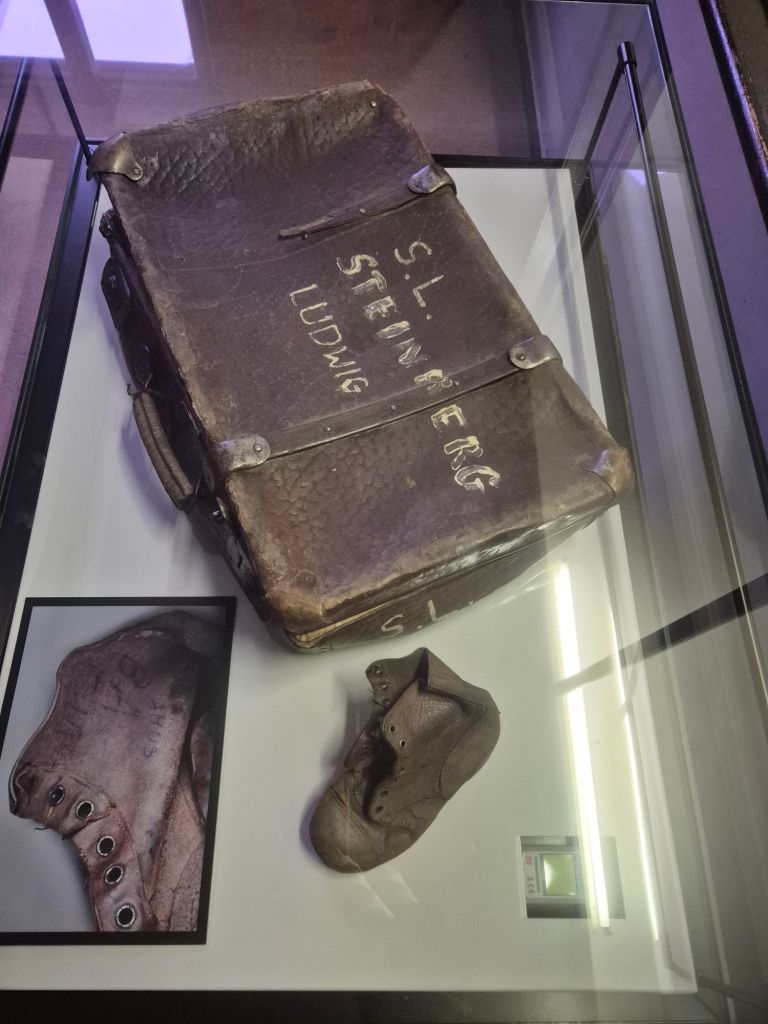
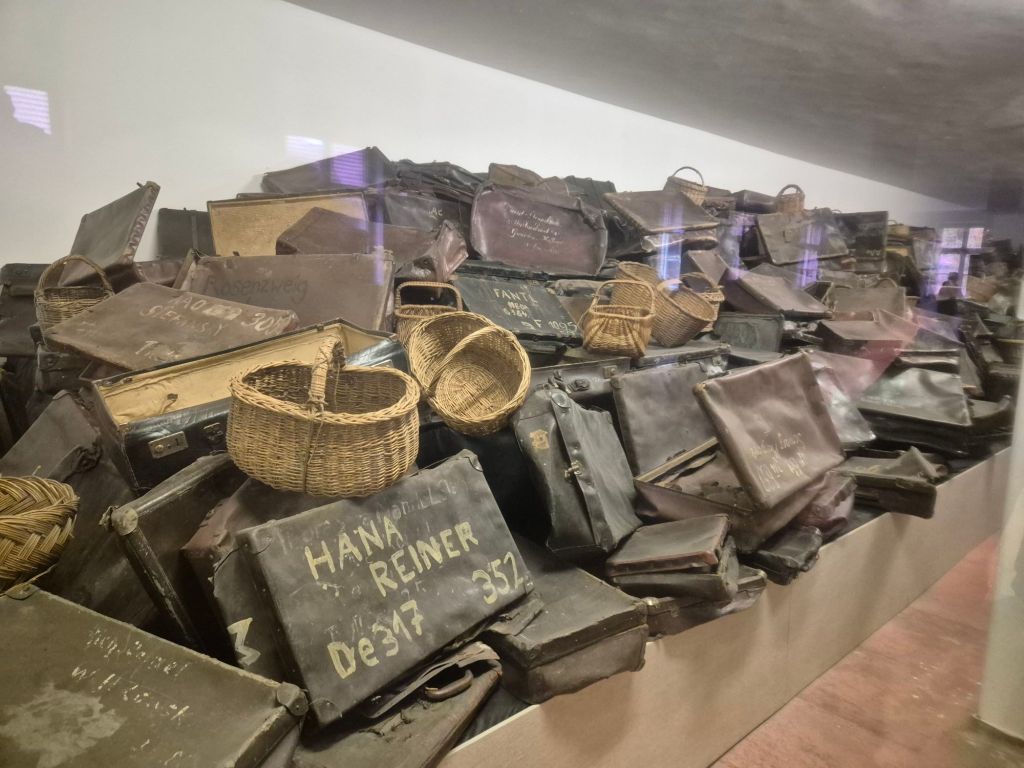
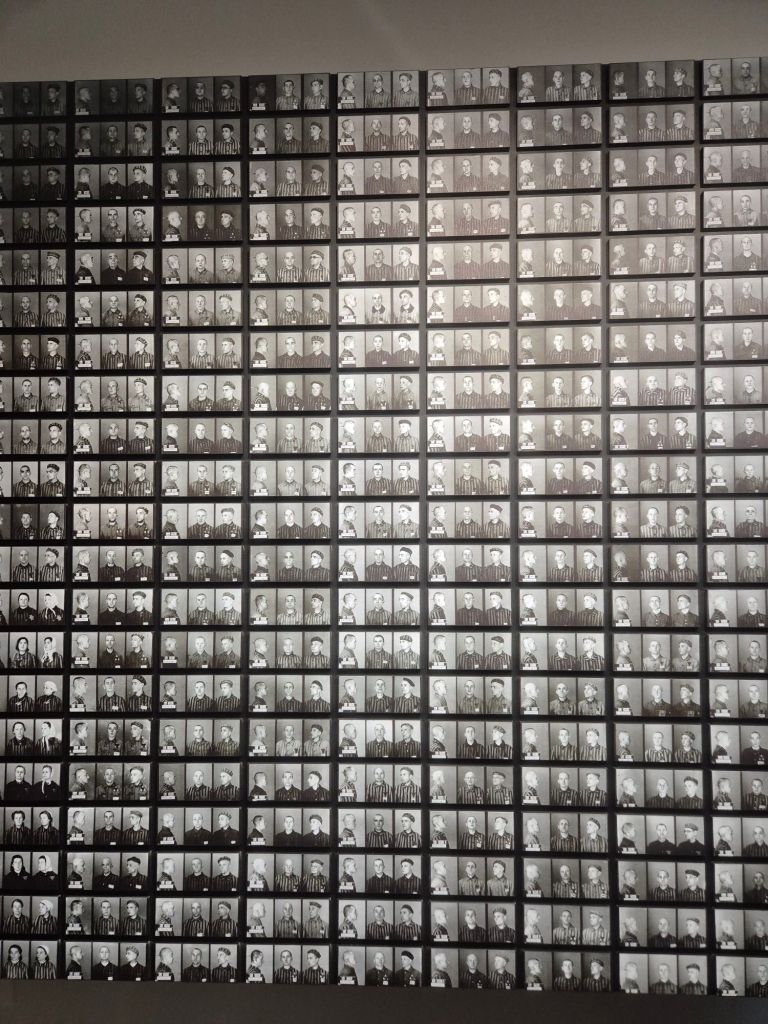
We learned about the daily routines of prisoners including twice daily roll call which included those who died during the night or day, who had to be brought to roll call by fellow prisoners.
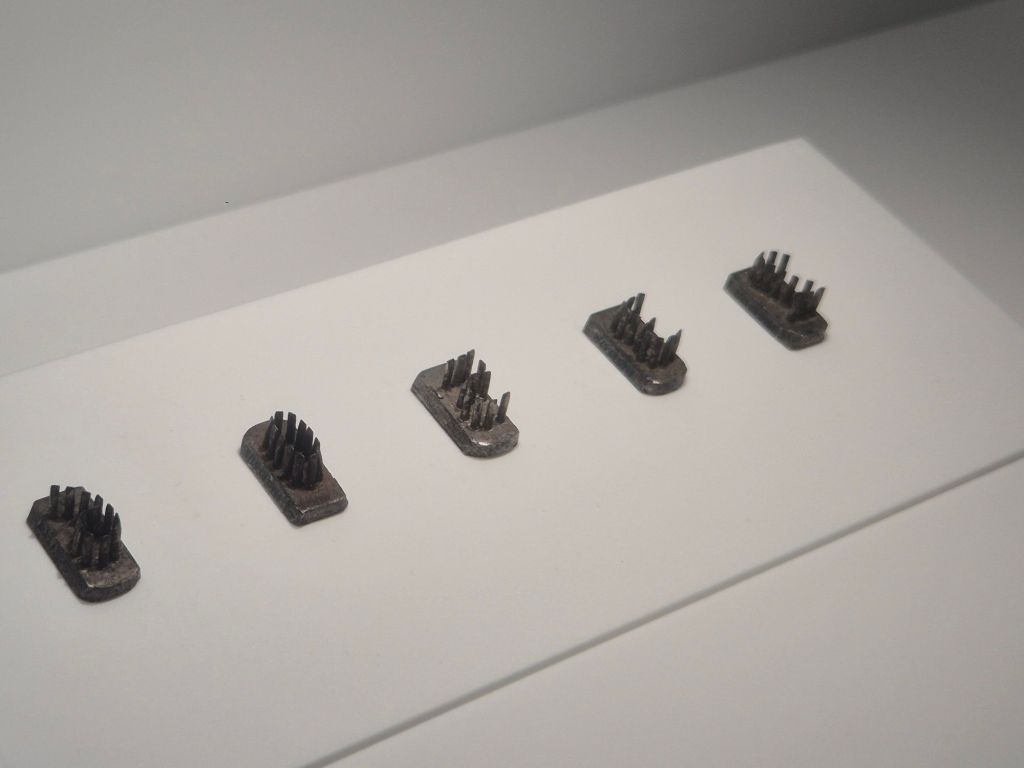
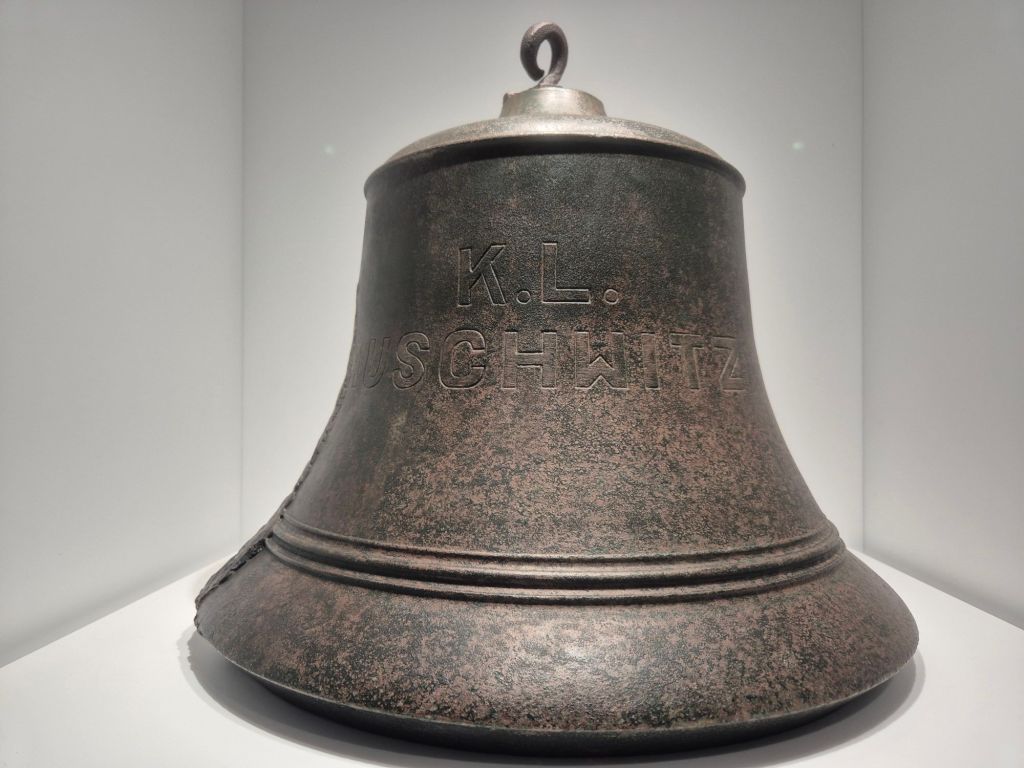
We toured the basements of building 11 where punishments and tortures were common, and where they tested mass extermination methods until settling on ‘Zyklon B’ a pesticide that activated at 25° to become a lethal gas.
We saw (through some trees) where Rudolf Höss and his family lived – that reminded us of a really odd but acclaimed movie we watched a few years ago. It was called ‘The Zone of Interest’ if you wanted to watch it.
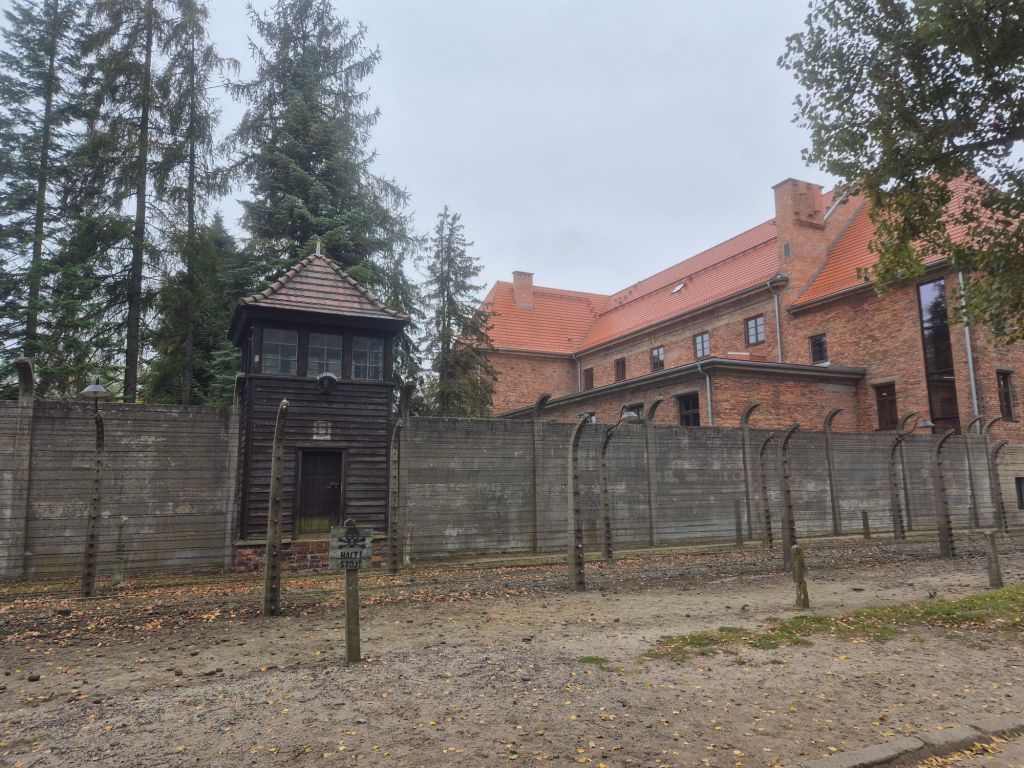
In the years it operated, there were several escapes and escape attempts, 900 tried to escape, 200 were successful. Punishment of prisoners for escapes and escape attempts was harsh. One Punishment was everyone had to stand at roll call for 19 hours. If a prisoner fell, moved or collapsed they were beaten and/or killed.
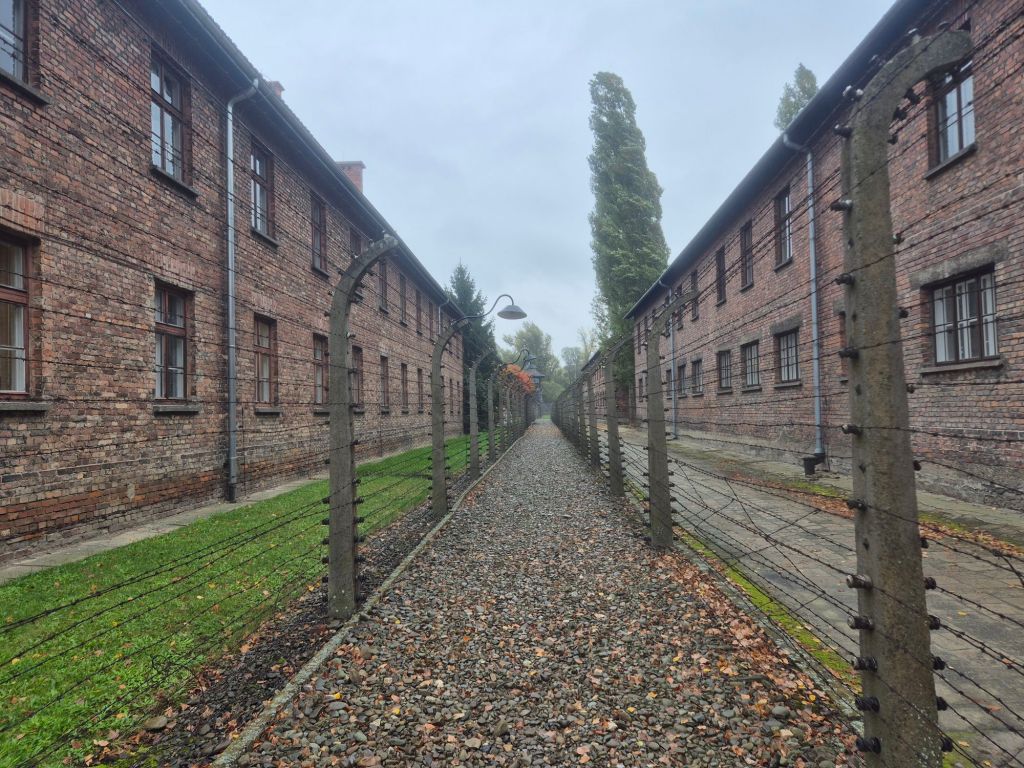
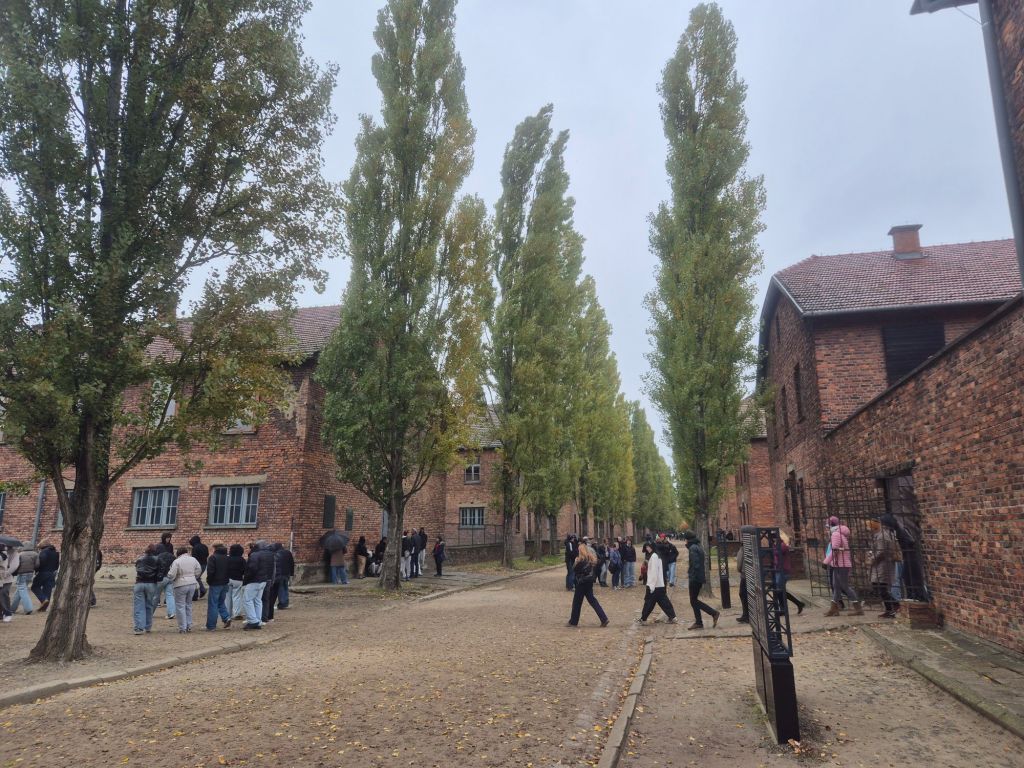
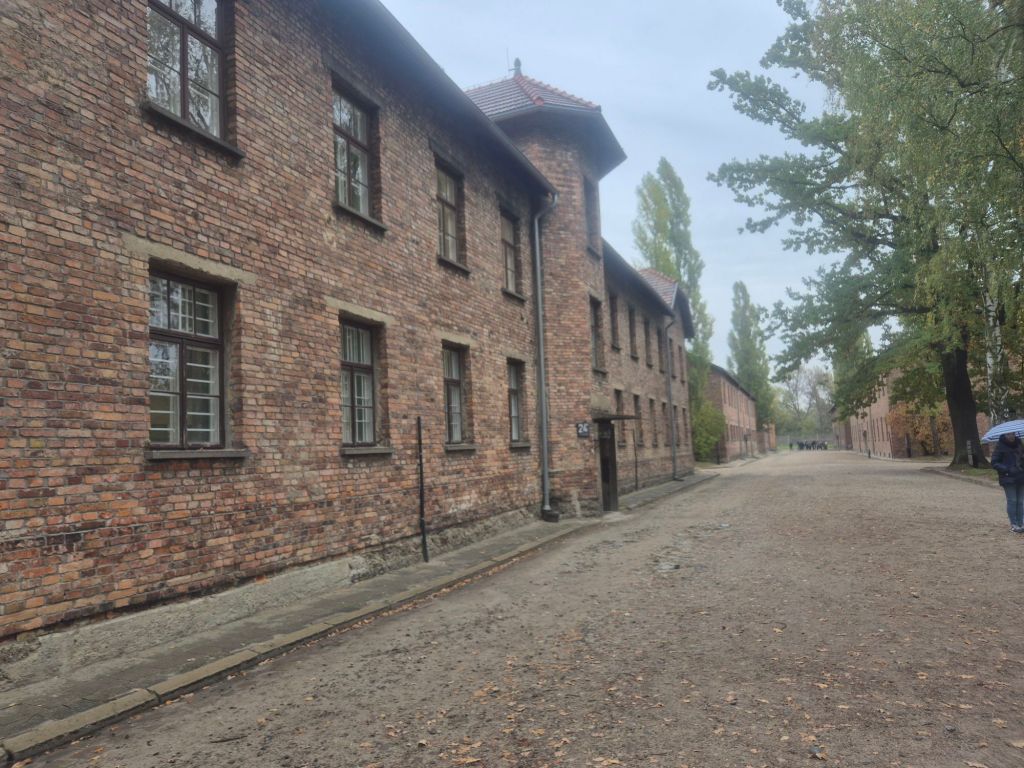
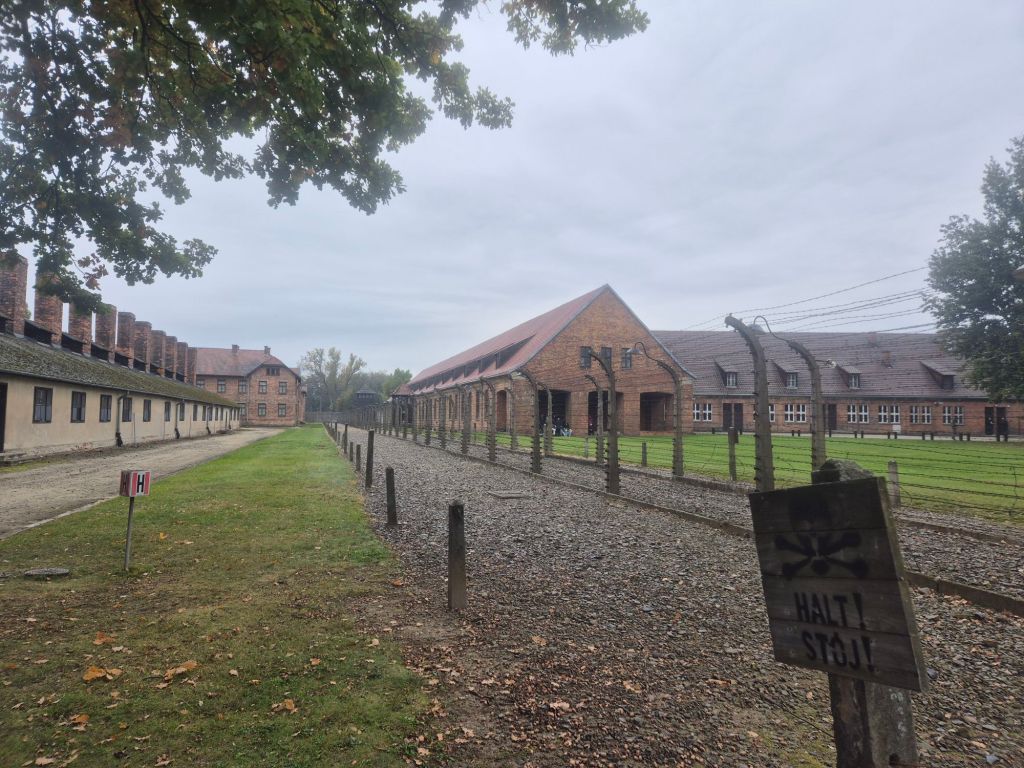
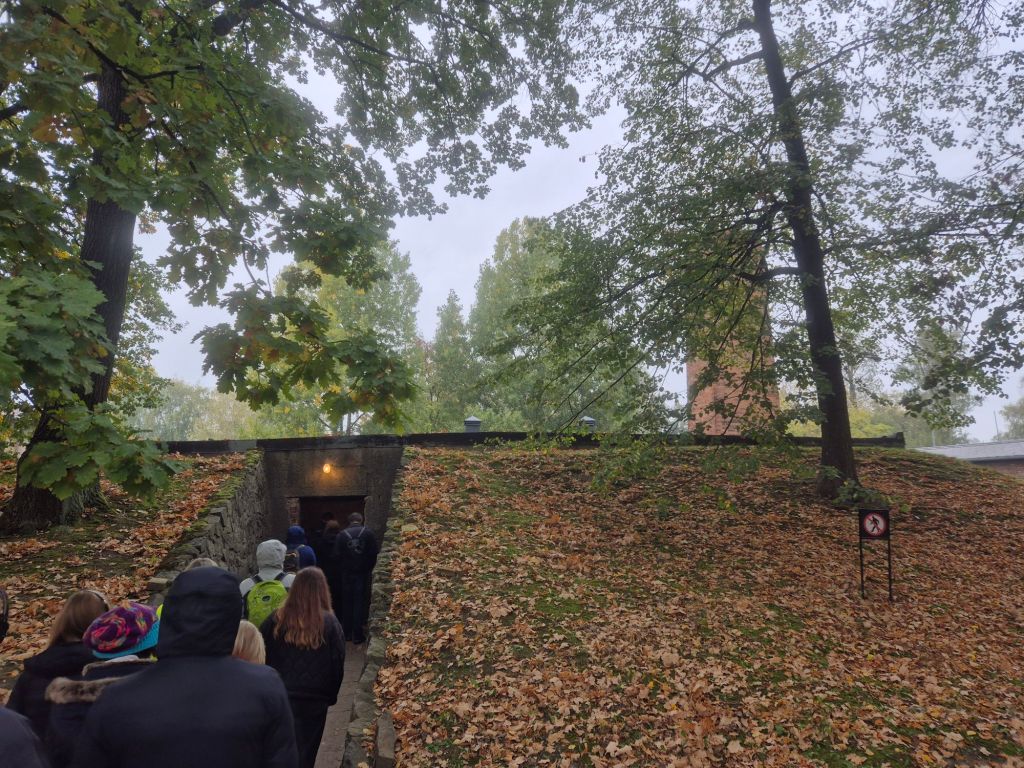
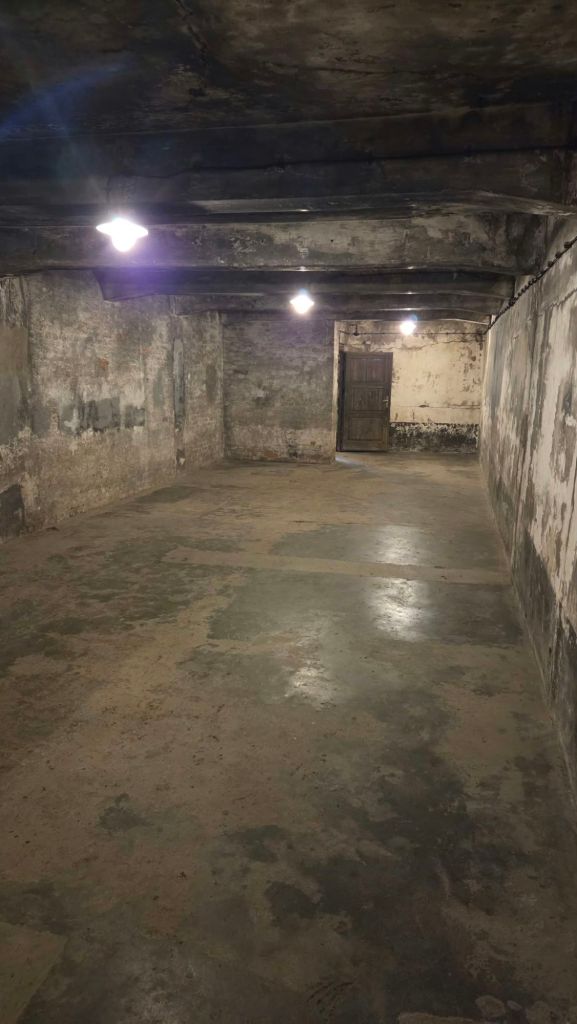
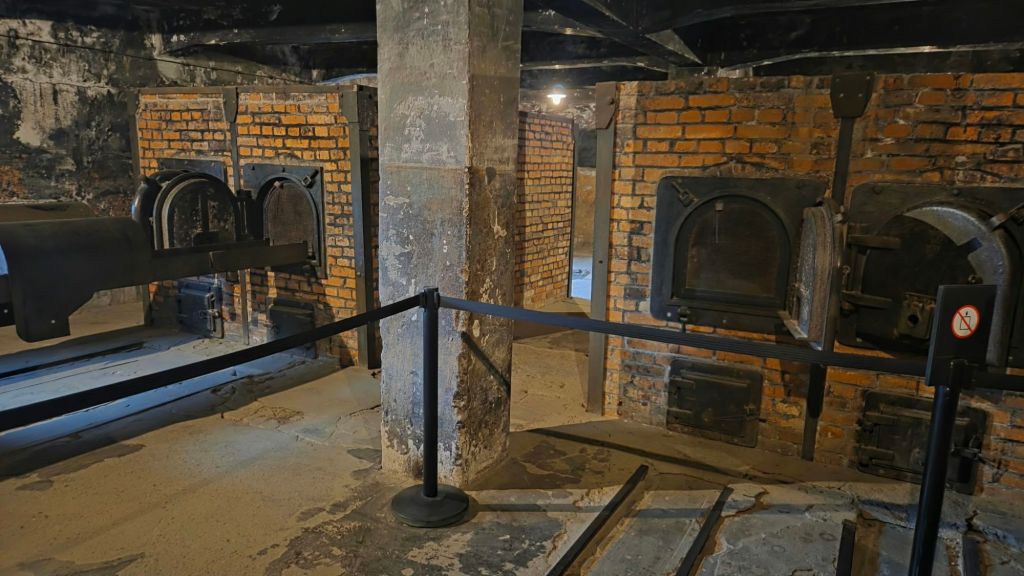
Part one of the tour finished with a walk through the only remaining gas chamber, all the others were destroyed before the Germans abandoned the camp, this one only survived because it was used as an air raid shelter by the guards. Rudolf Höss was hung on gallows outside this facility.
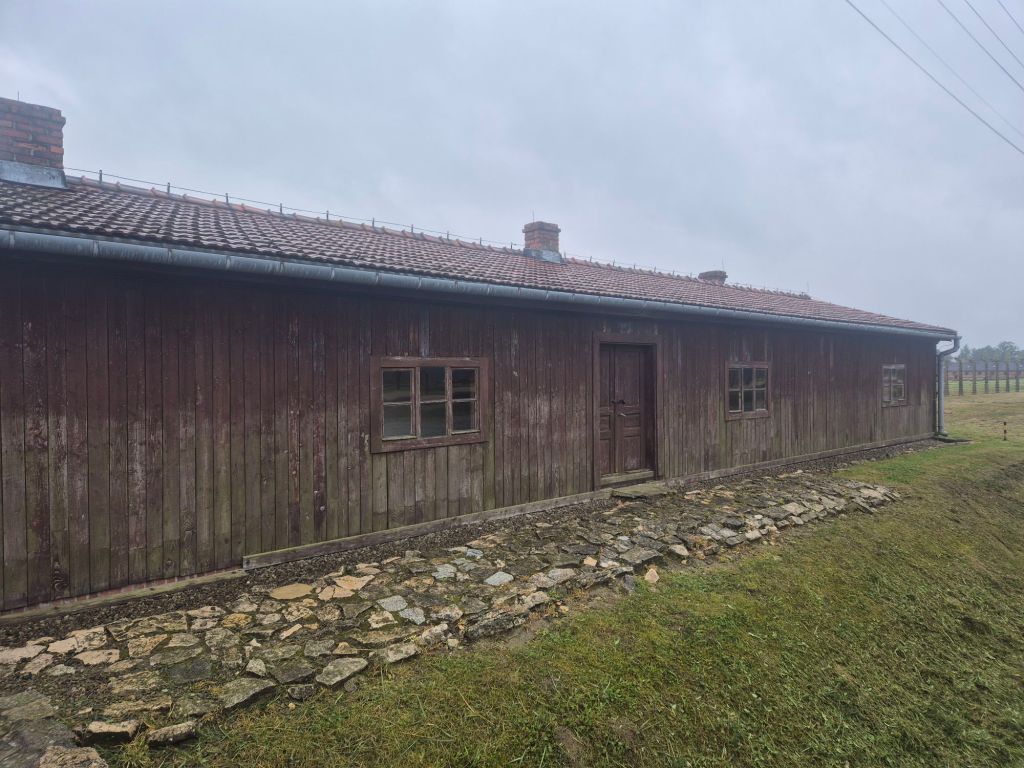
Our tour then moved to Aushwitz II- Birkenau by bus. Here we entered through the distinctive brick entry building. Bricks from the houses demolished to make way for this camp were used to build the barracks, when the bricks ran out, they switched to wooden barracks.
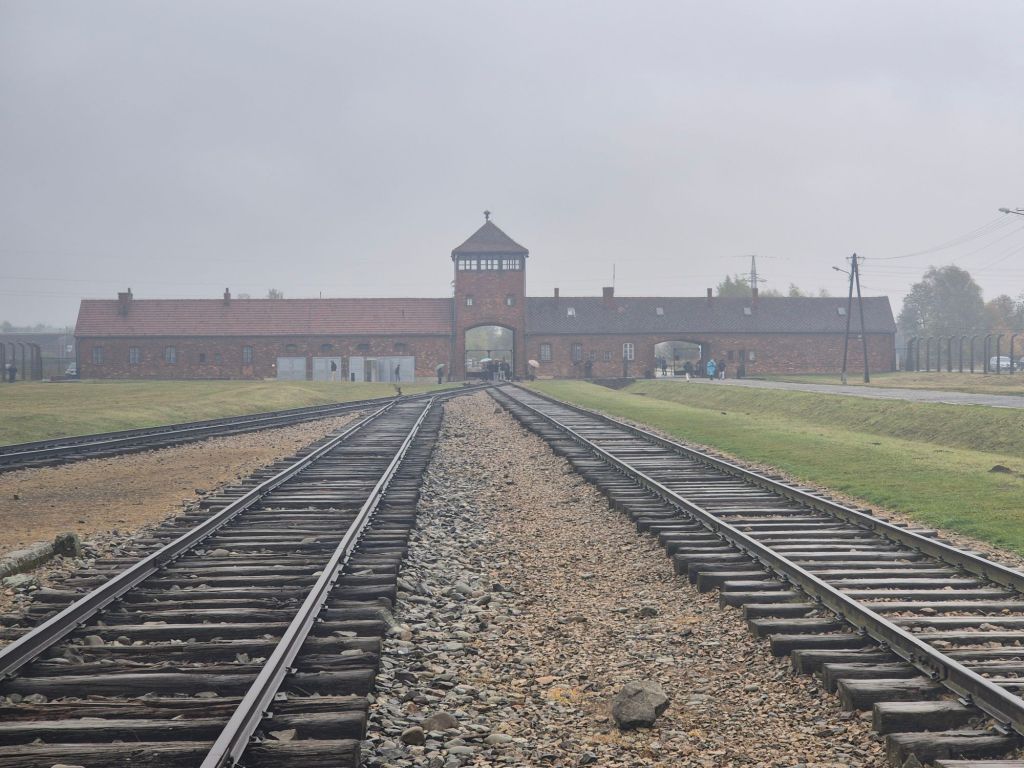
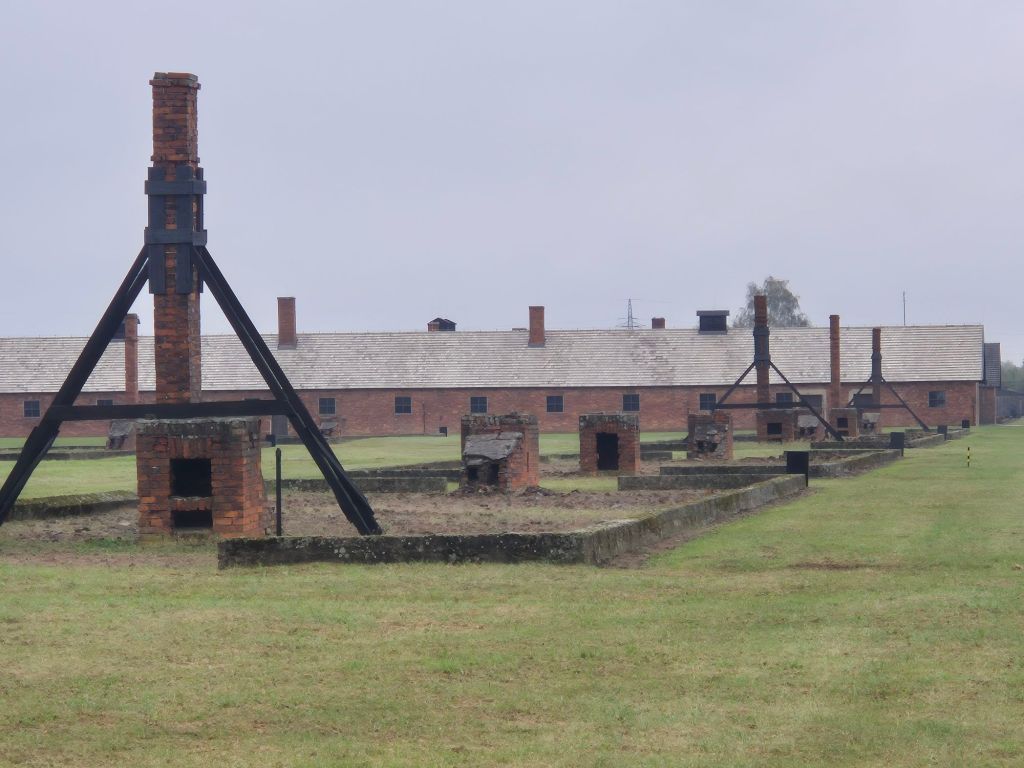
This camp too is as it was found at liberation. Many buildings had been burned down by the Germans before departure.
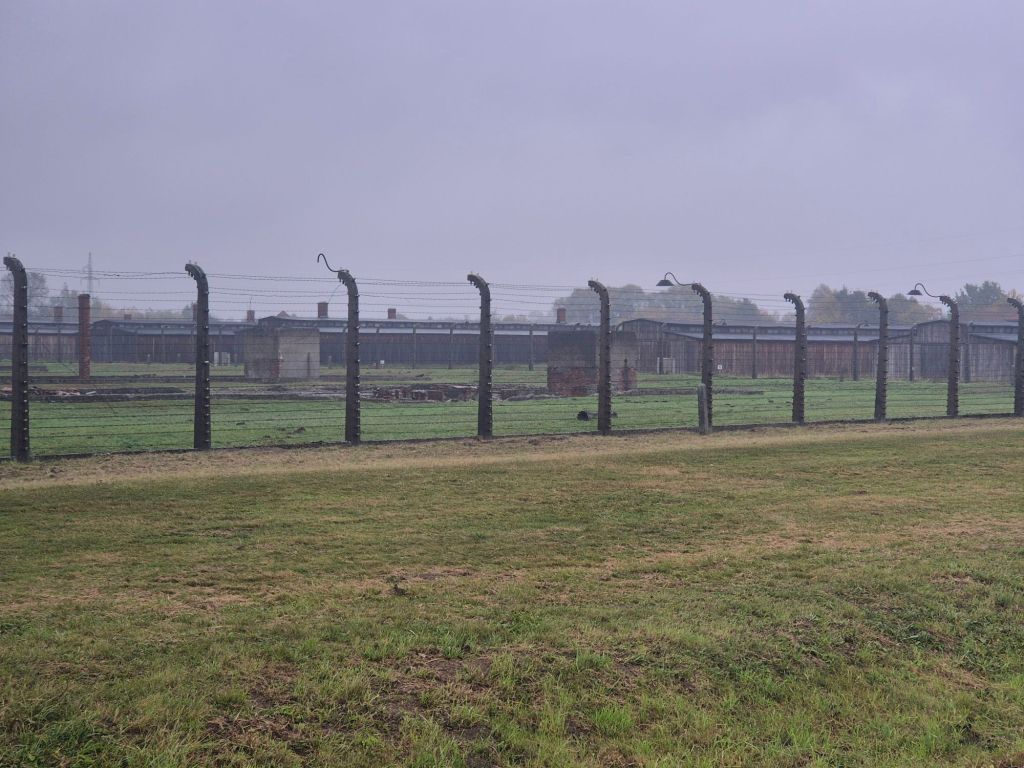
We stood on the train platform where trains arrived and new arrivals were separated by sex then assessed in 5 seconds, by the doctor for work suitability, or death.
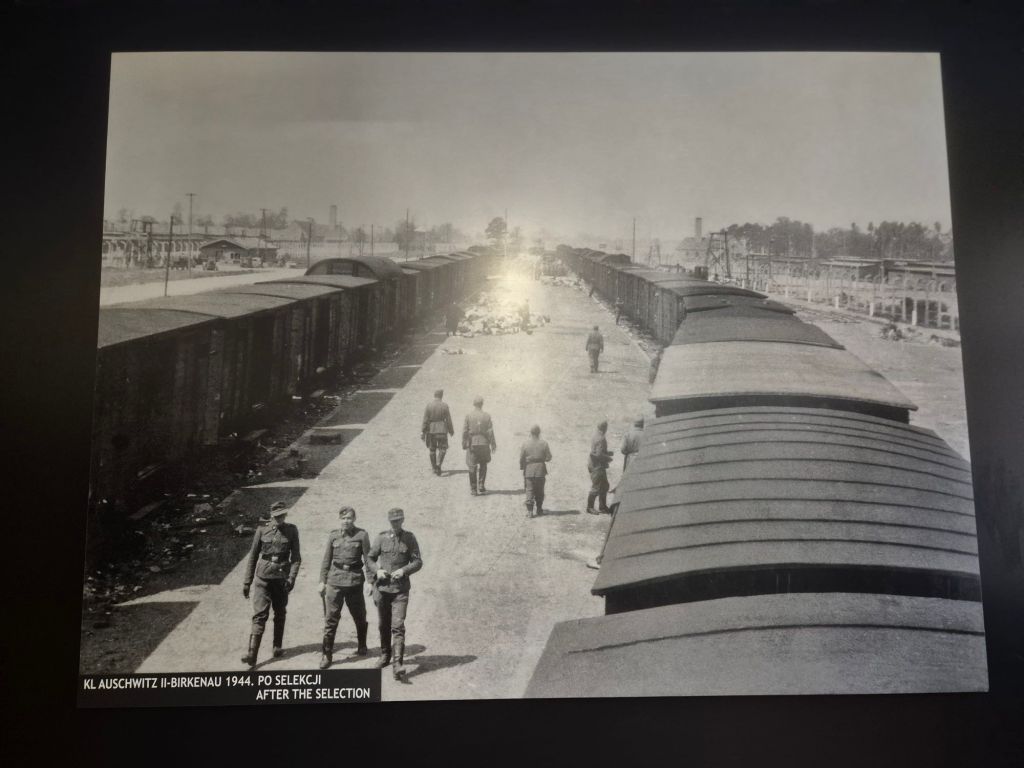
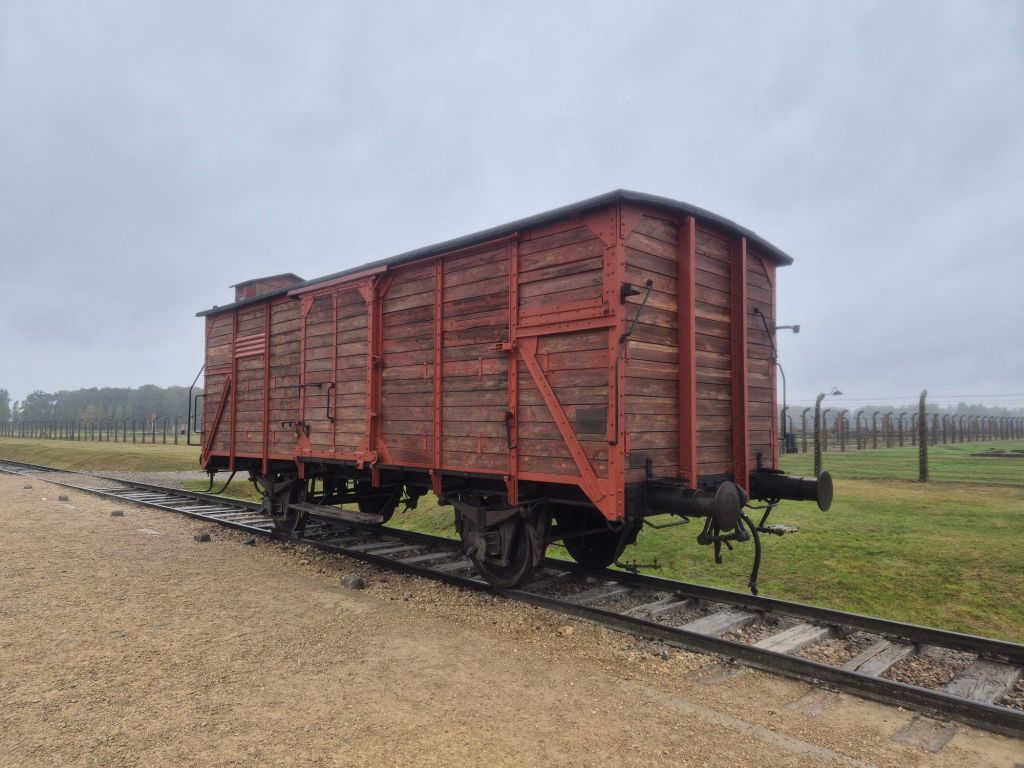
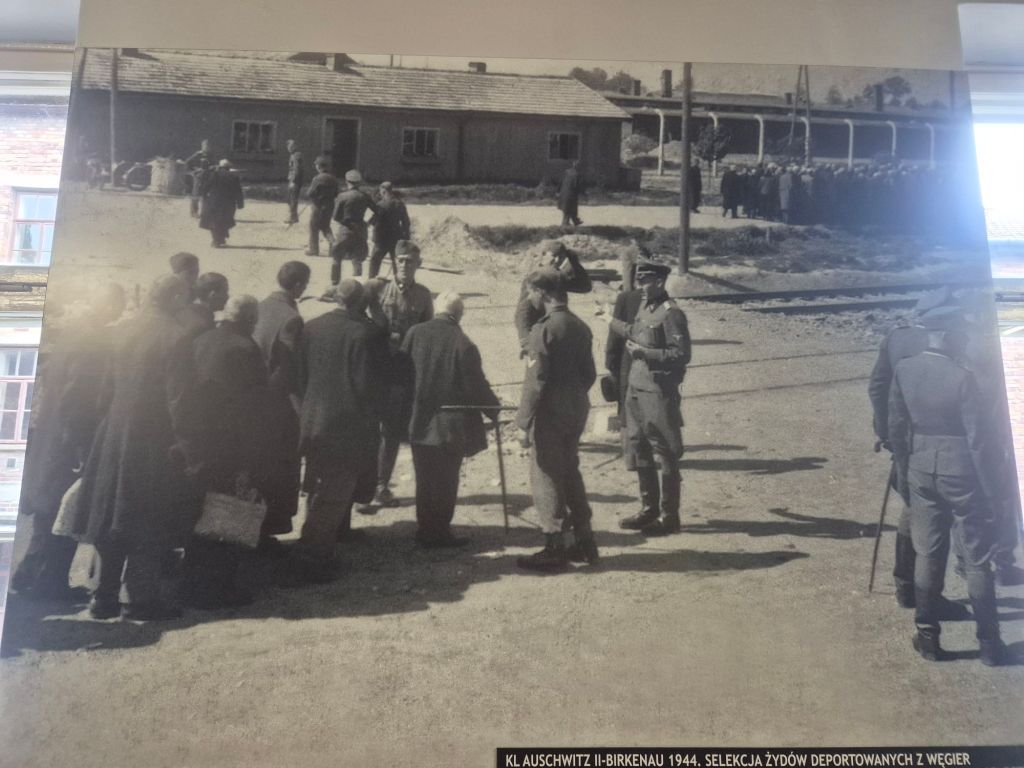
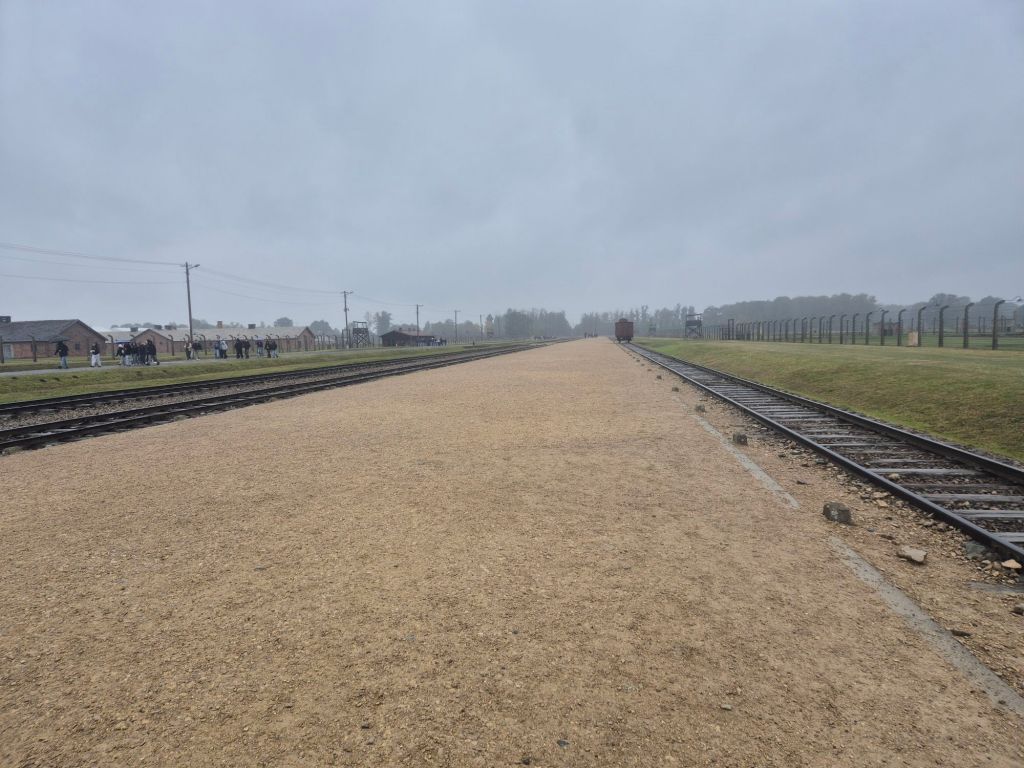
We walked the path of the condemned to the “showers”. They were told to remember the number of the hook they hung their clothes on so they could find them afterwards. But there was no afterwards for the 2000 people ushered into the gas chamber each time, most only realising something was wrong when the room became crowded and the door shut.
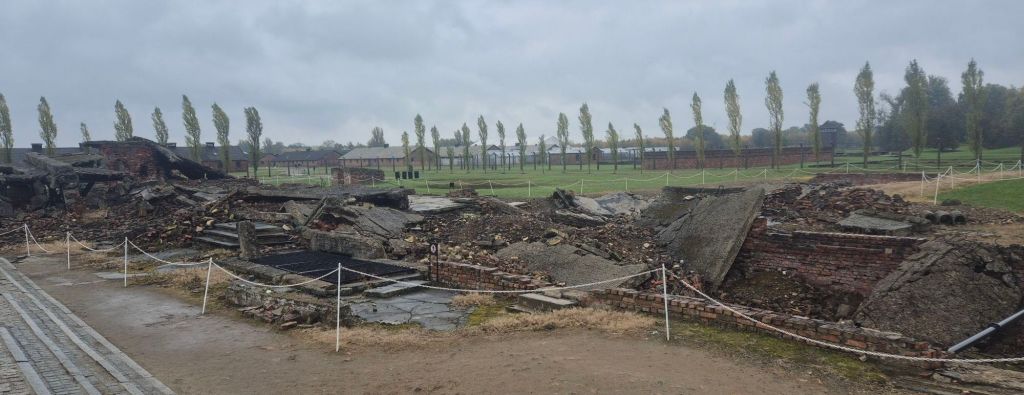
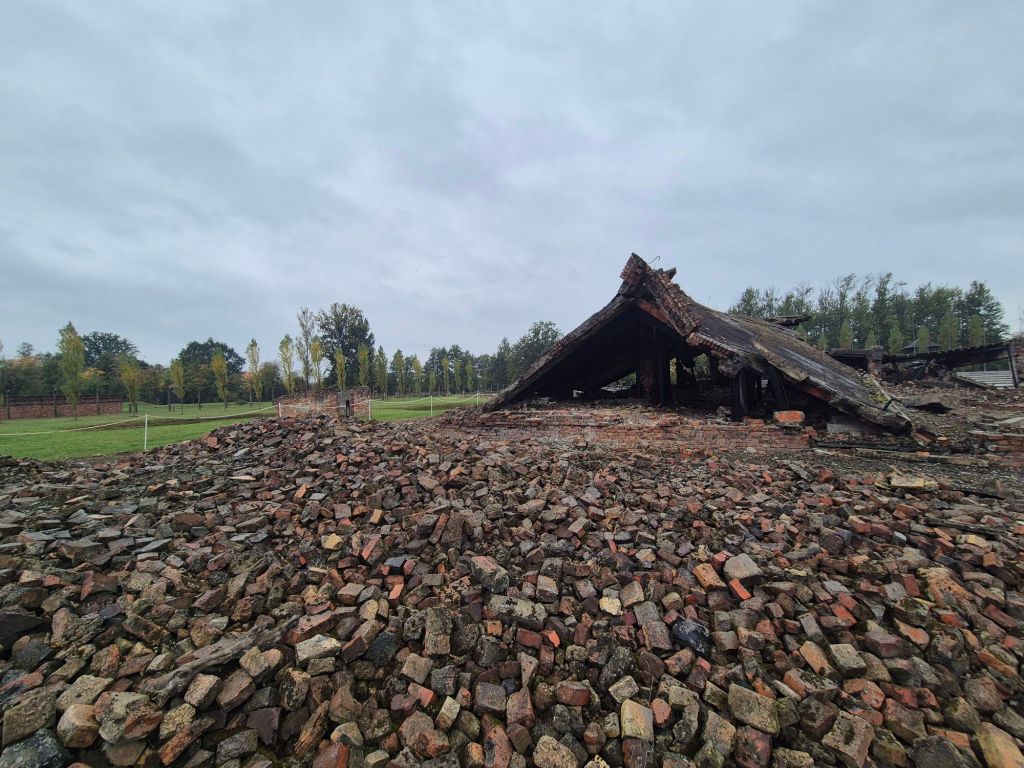
The gas chamber complexes here were blown up. The rubble is as it was left, with large depressions alongside where the ashes of those gassed and burned were dumped when ash wagons were full.
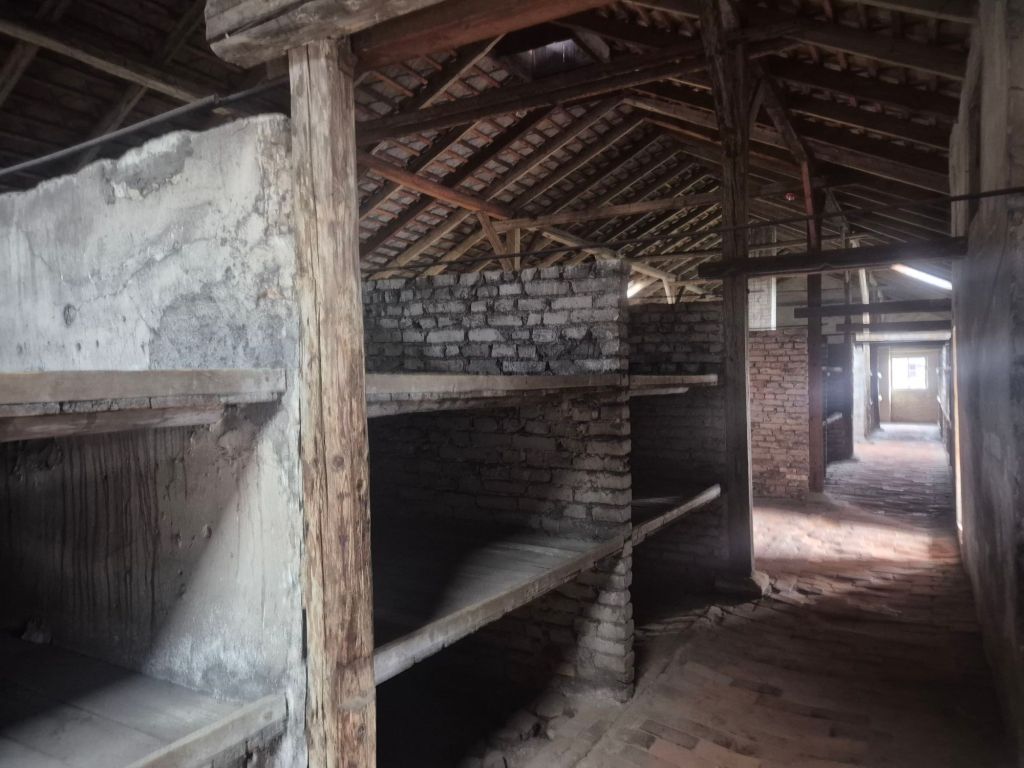
We then walked through a one building with bunk beds still in situ. One brick building would have held 700 to 1000 people at a time.
When the Soviet Army front line was approaching, the Germans took 56,000 prisoners on a forced march to other camps in Germany. 9000-15000 died during this march.
When Auschwitz was liberated by the Soviet army in January 1945, they found 7,500 emaciated prisoners still there.
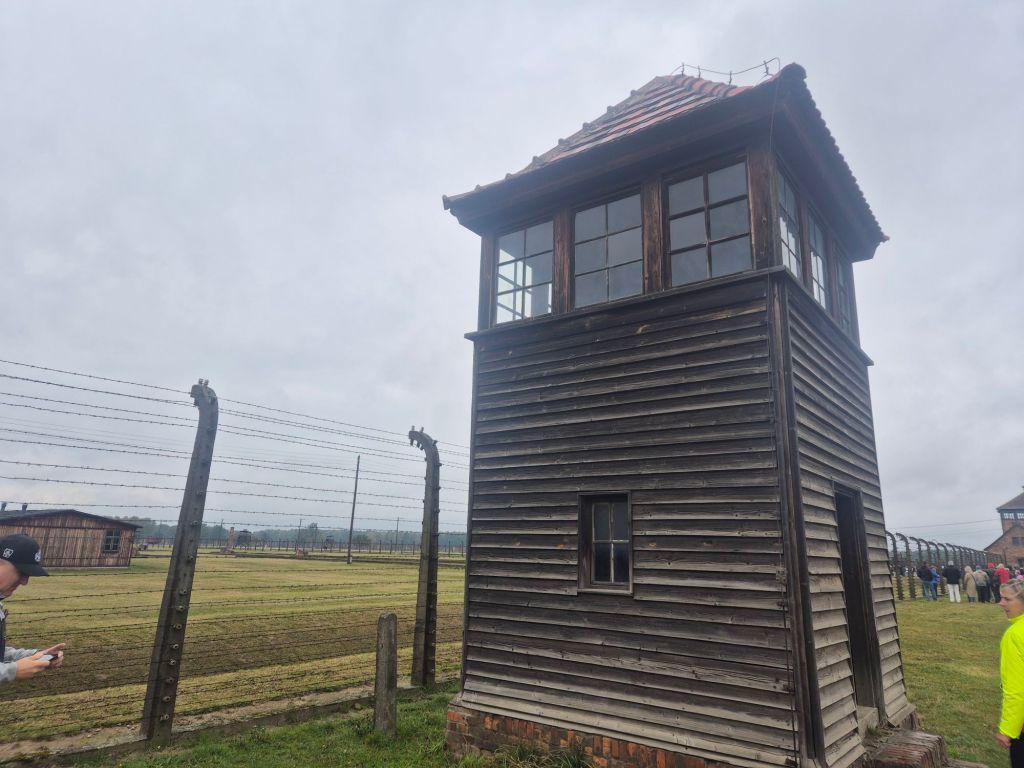
Although a sombre tour, it was interesting to visit somewhere we’ve both heard and read much about.
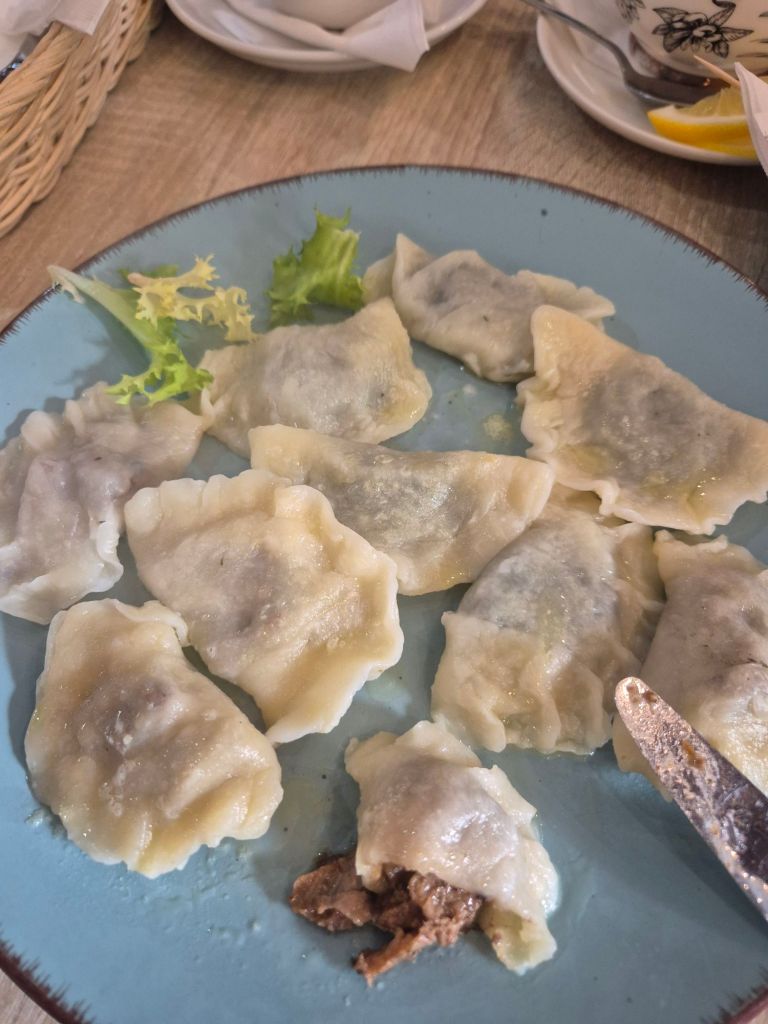
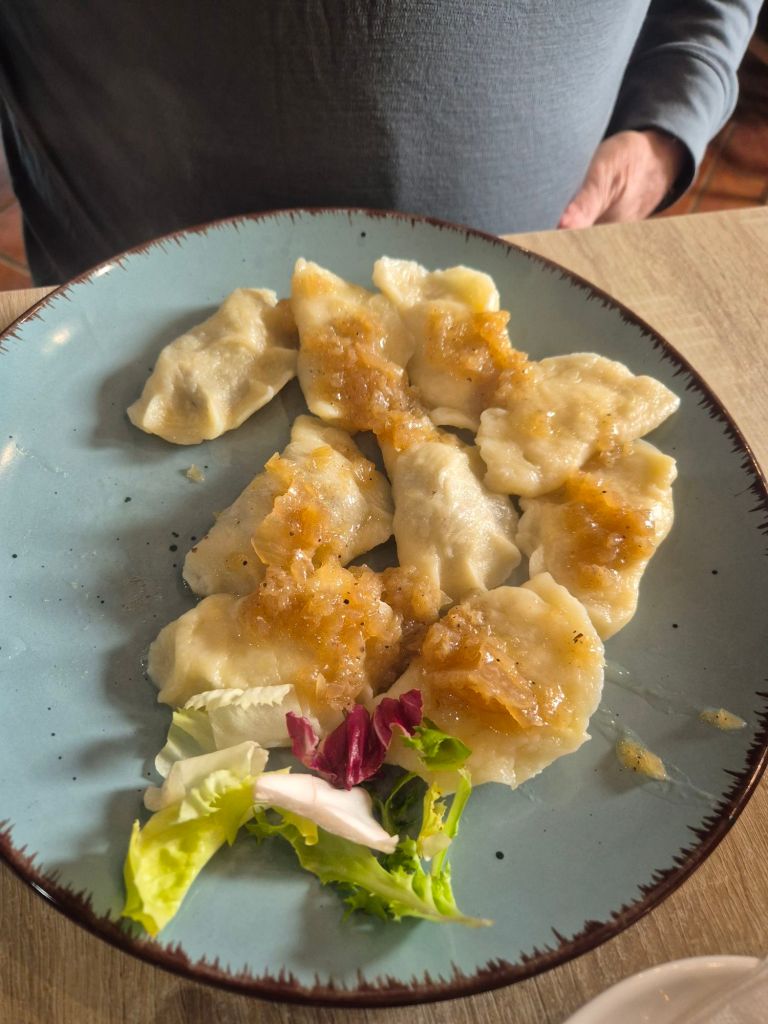
When the tour was over we went to a nearby Pierogi restaurant and had some delicious Pierogi and a hot drink to warm up.
We then drove to Krakow where we’re staying, walked to a supermarket for some groceries and did a major repack of bags, swapping our summer and winter clothes.
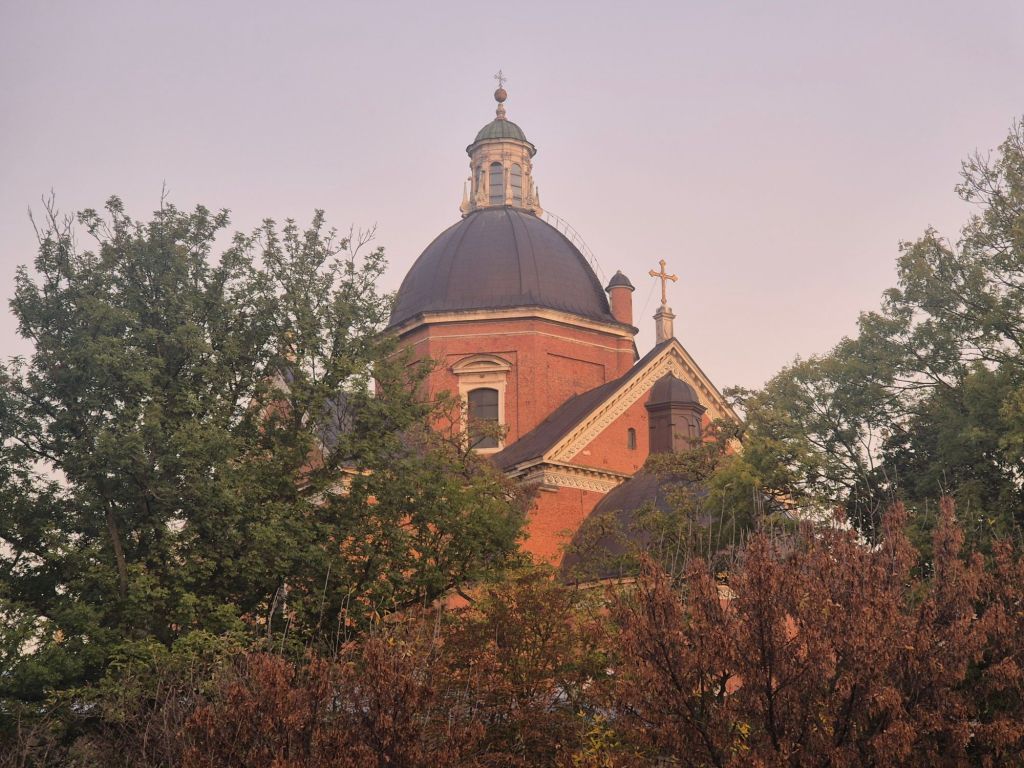
Today we headed to the Oskar Schindler Enamel Factory Museum and the ghettos of Krakow for a tour. The museum, despite it’s name, focussed mostly about the German occupation of Krakow from the very start of WW2 until January 1945, with a small portion of information about Schindler. The museum seemed really interesting and well worth a visit. Just not as part of a tour, we were rushed through it with limited chance to read any information.
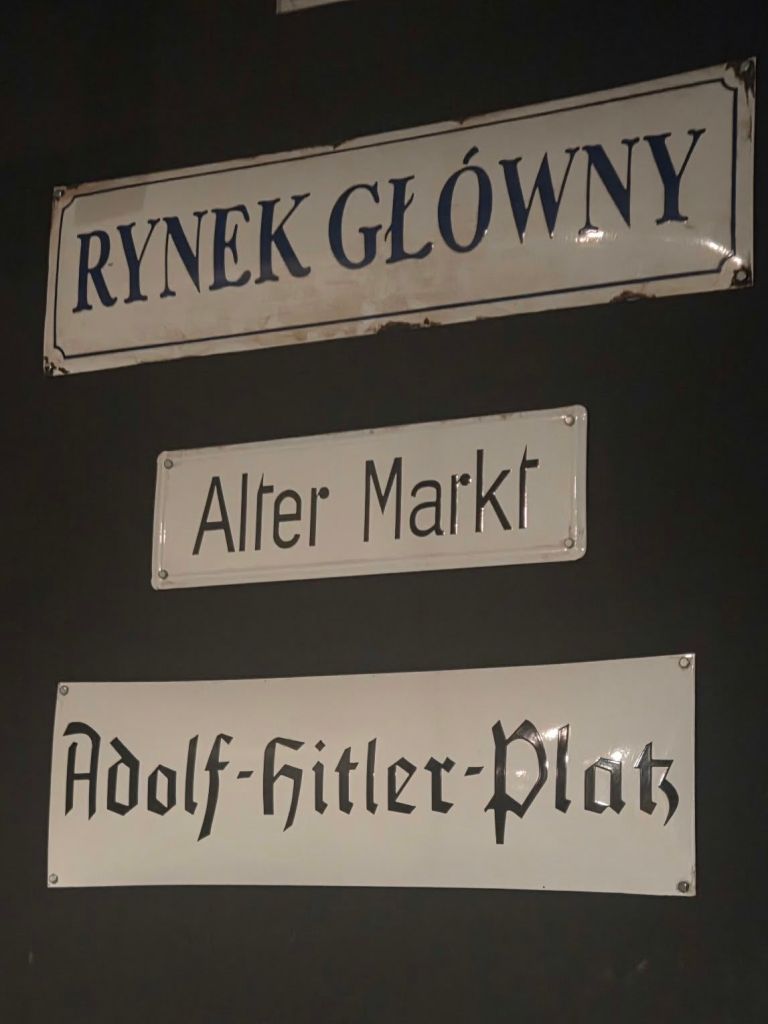
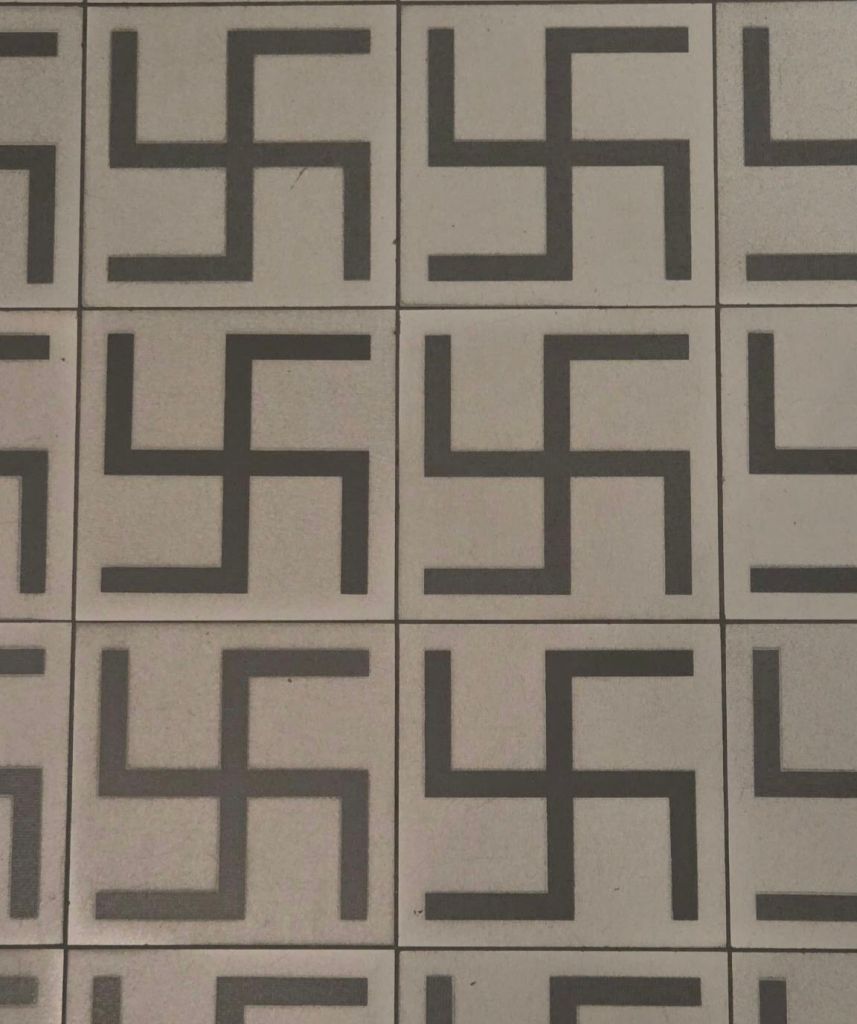
Our tour then continued to the Krakow Ghetto. The Jewish population of Krakow were eventually moved into the ‘Jewish Residential District’, aka the ghetto, and the people who lived in that area were forced out. The only person who refused to leave was a Pharmacist.
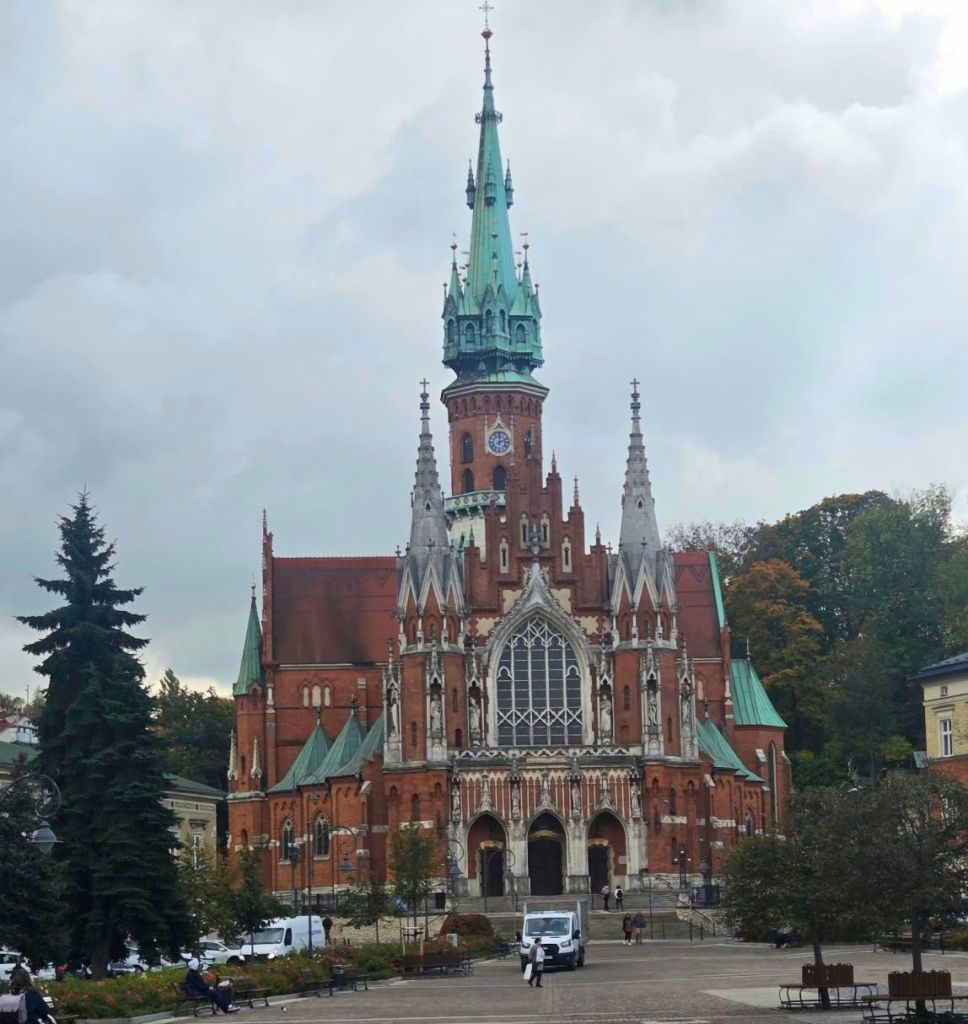
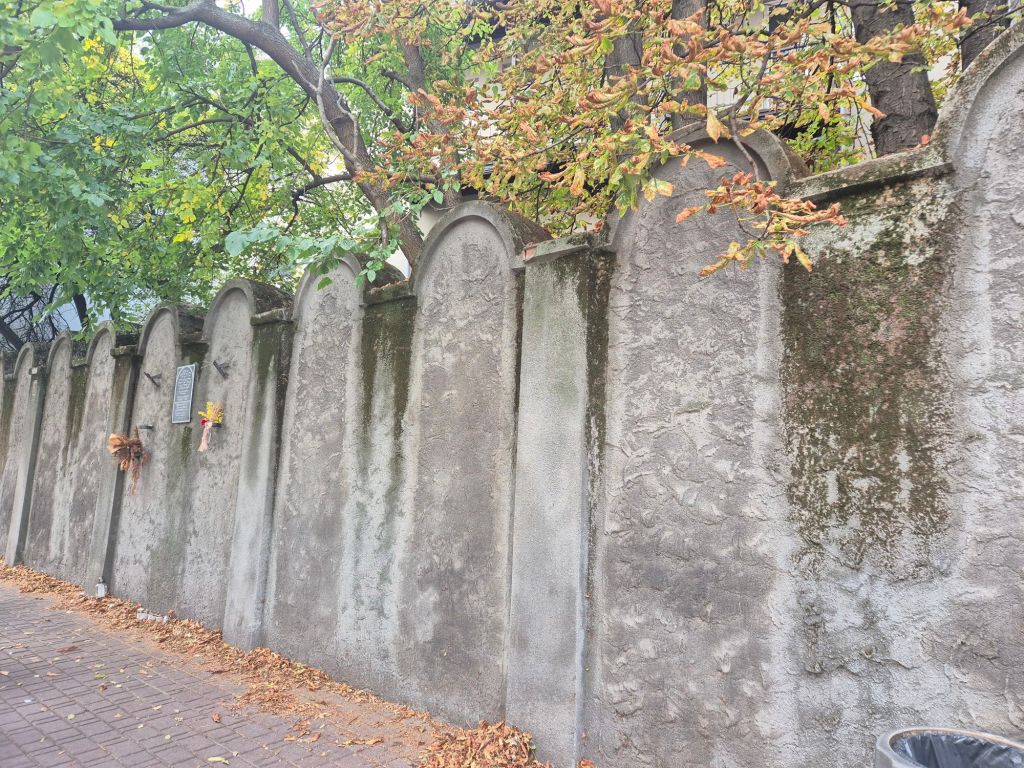
The Ghetto was liquidated in March 1943. Parts of the ghetto wall survive to this day, with plaques on many buildings identifying their previous use and events that occurred there.
Our tour ended at Heroes of the Ghetto Square, where an art installation of 70 bronze chairs represent the 70,000 Jewish people killed and deported to extermination camps.
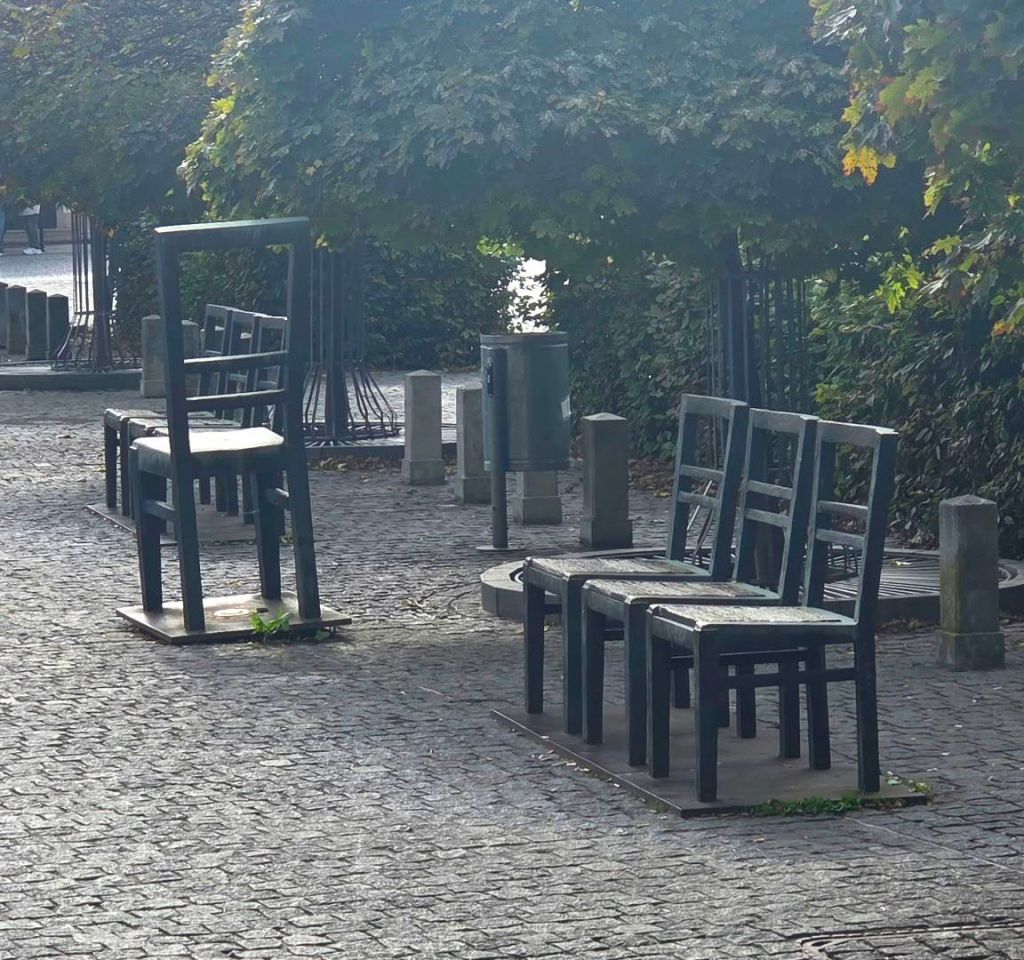
Walking around the ghetto we noted many buildings in a bad state of repair. Apparently they are not owned by the state so repairs can’t be forced and the owners either can’t be located, or won’t return to do the repairs.
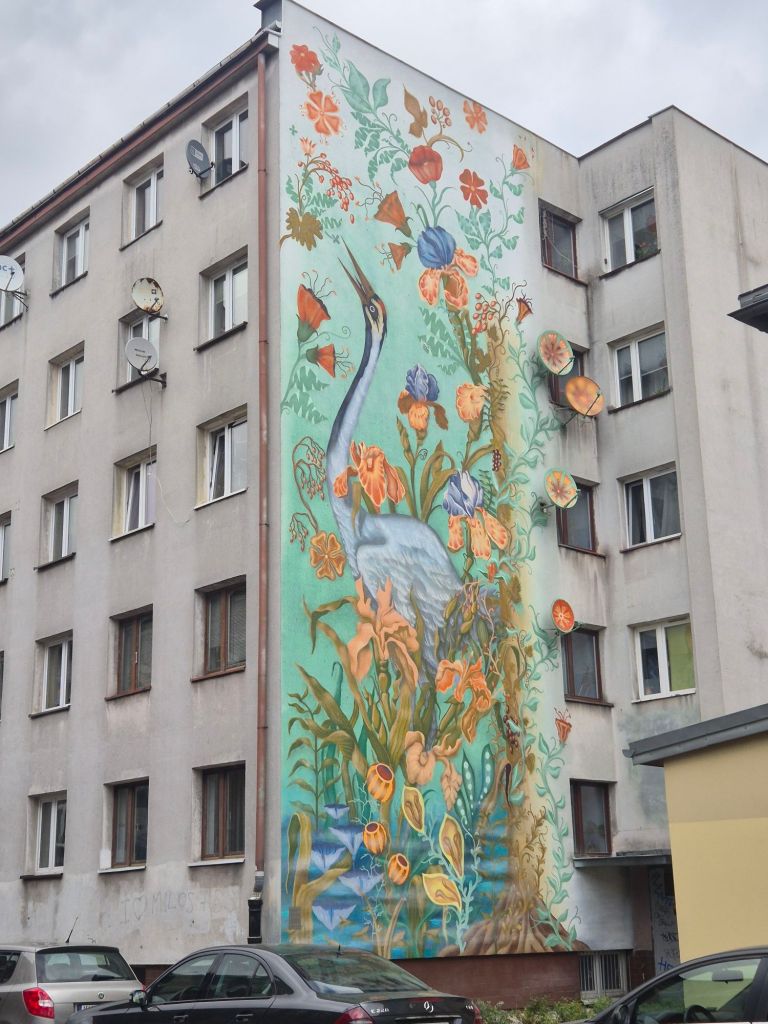
This afternoon we walked through the old town of Krakow.
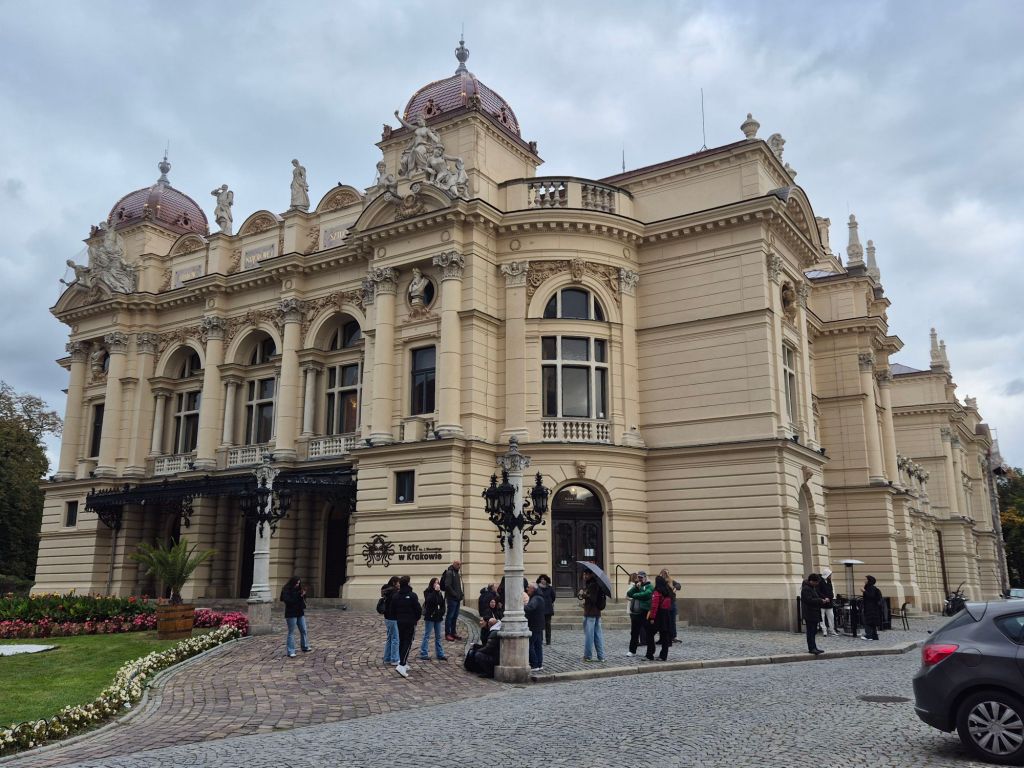
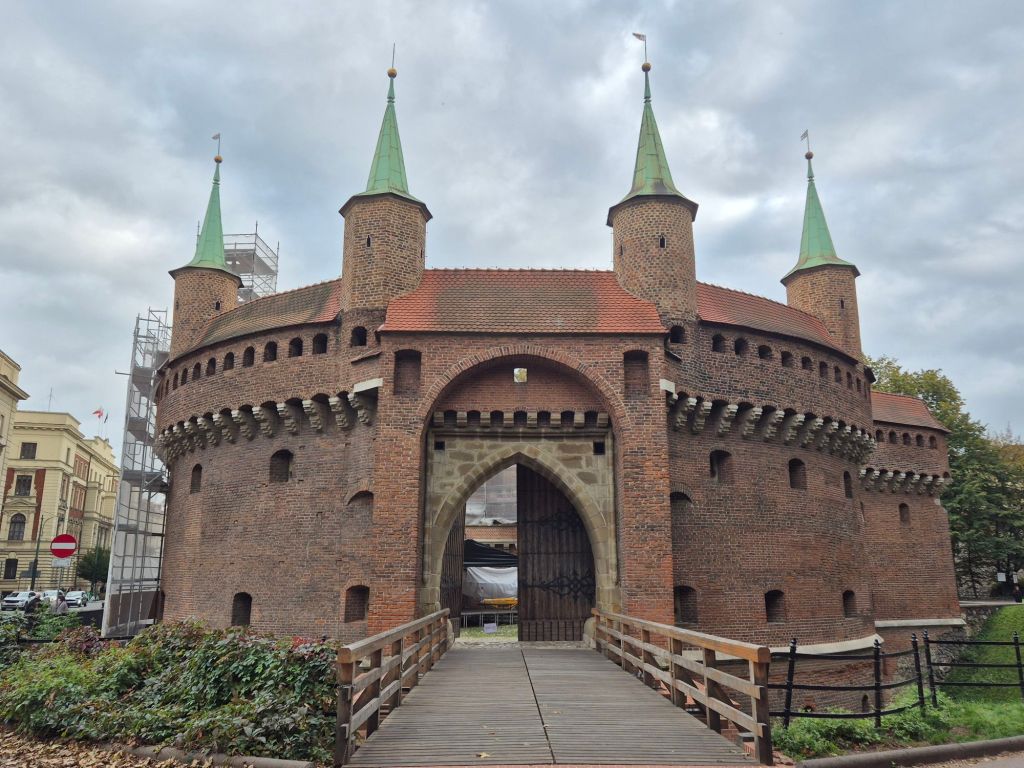
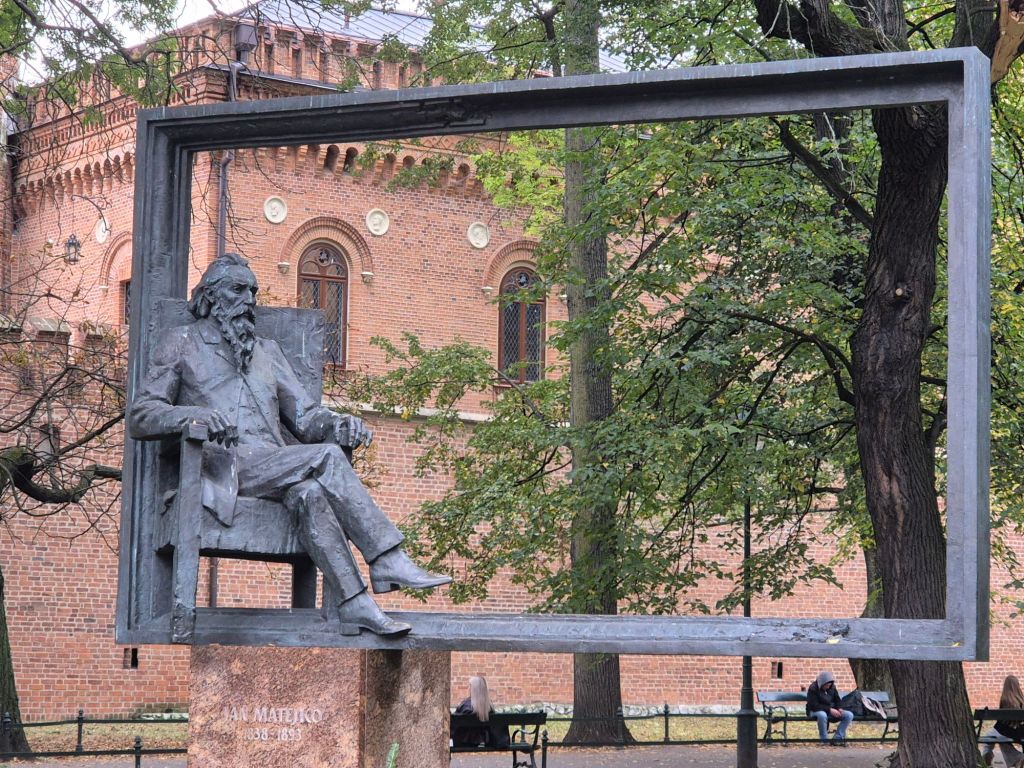
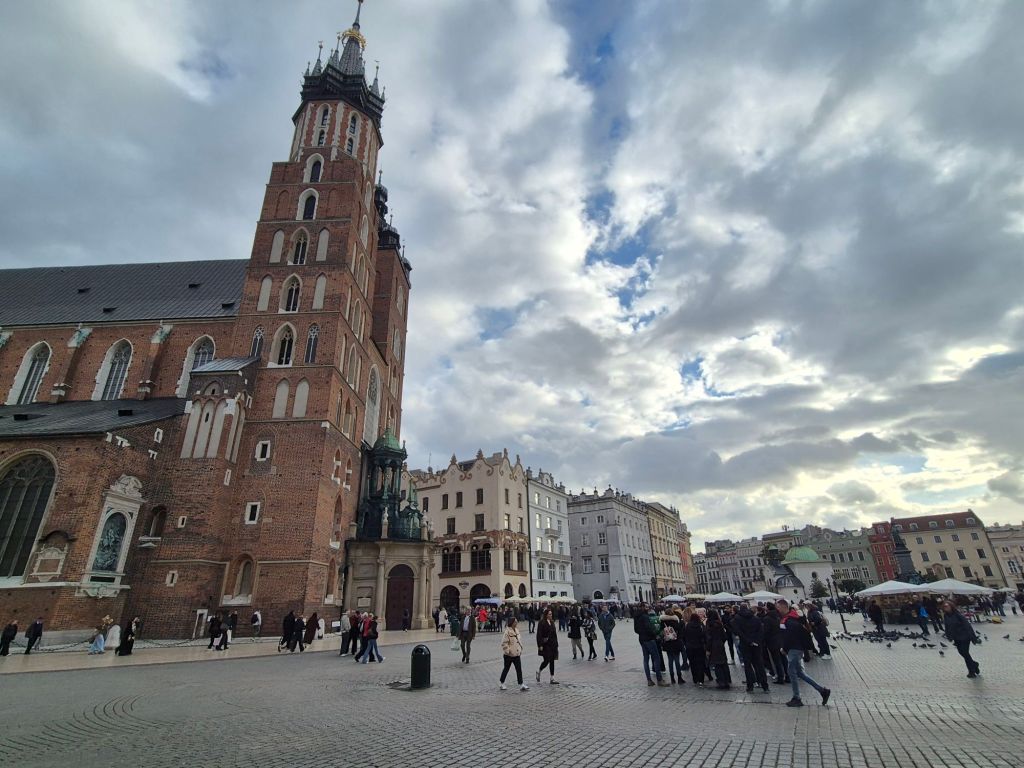
It is beautiful, and probably has the prettiest town/market square of the places we’ve been this year.
Krakow was barely damaged, according to our guide this morning, as the Polish army withdrew without fighting. This preserved the city. The Germans in retreat only blew up the bridges as the Russians arrived in January 1945.
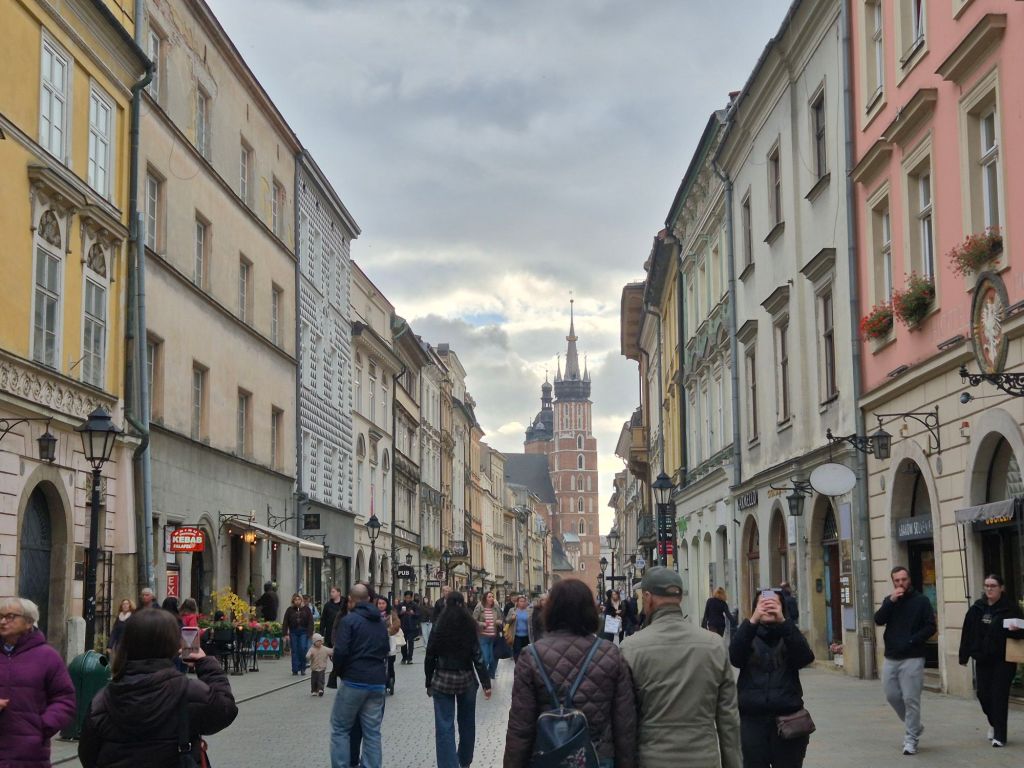
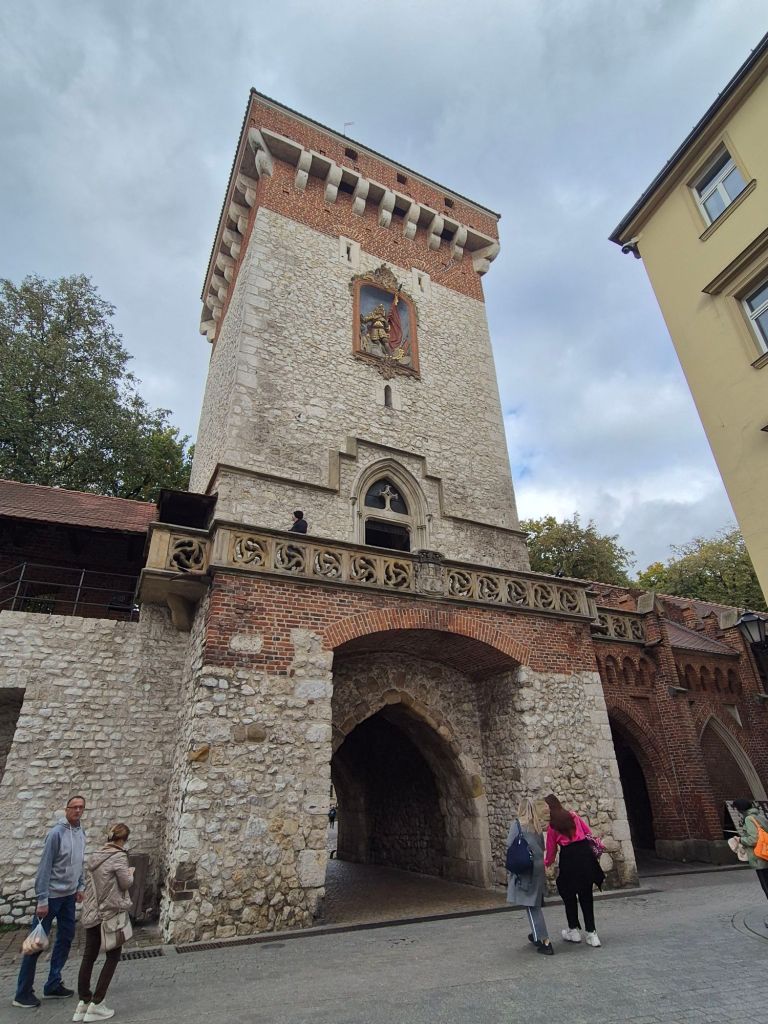
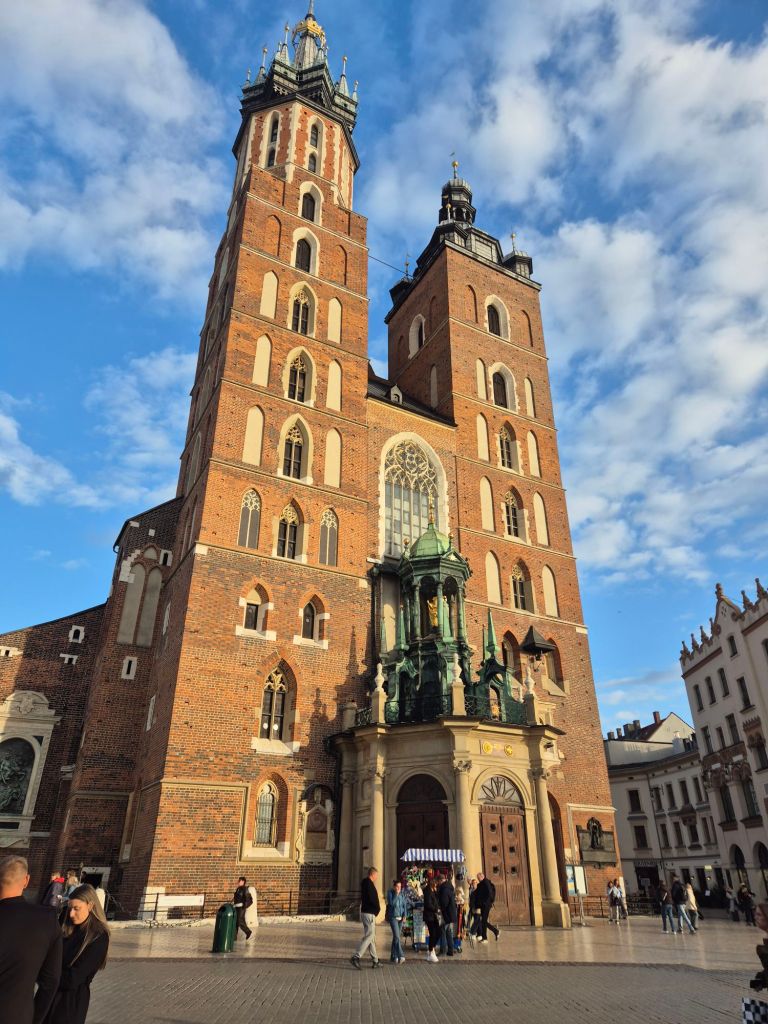
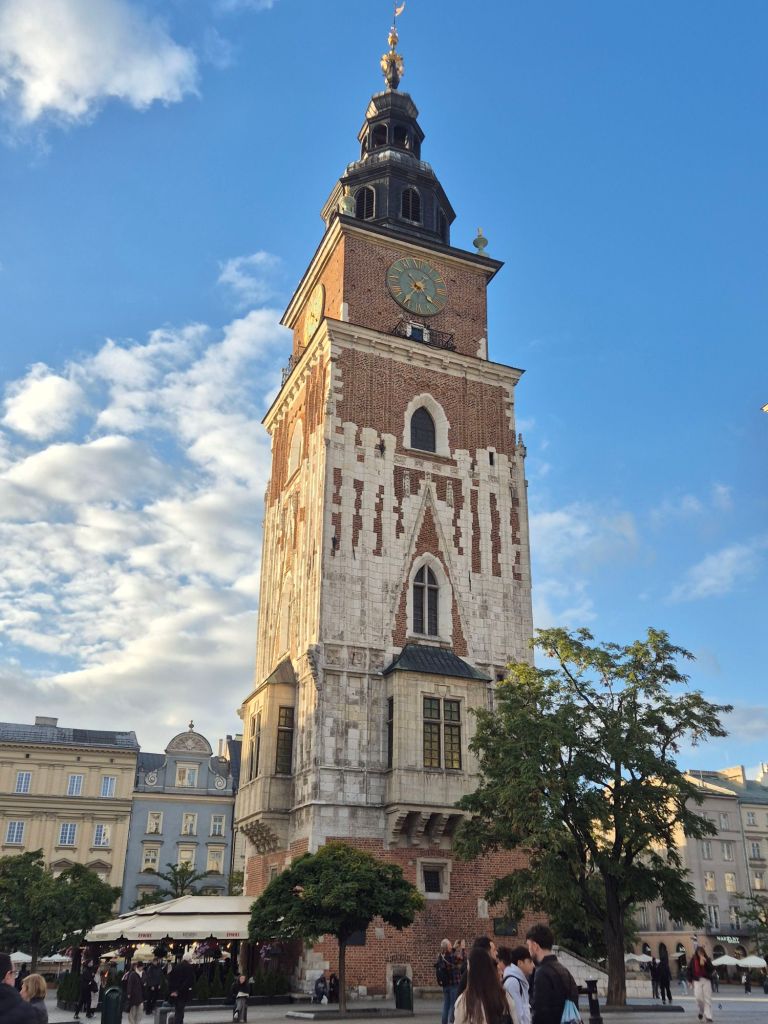
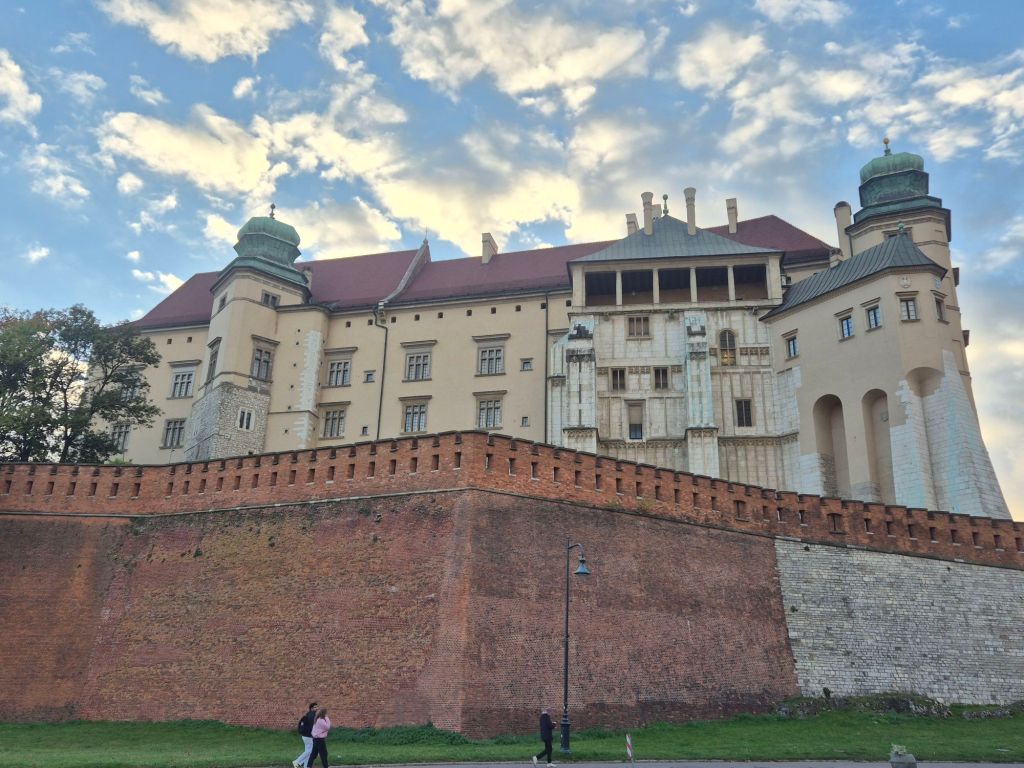
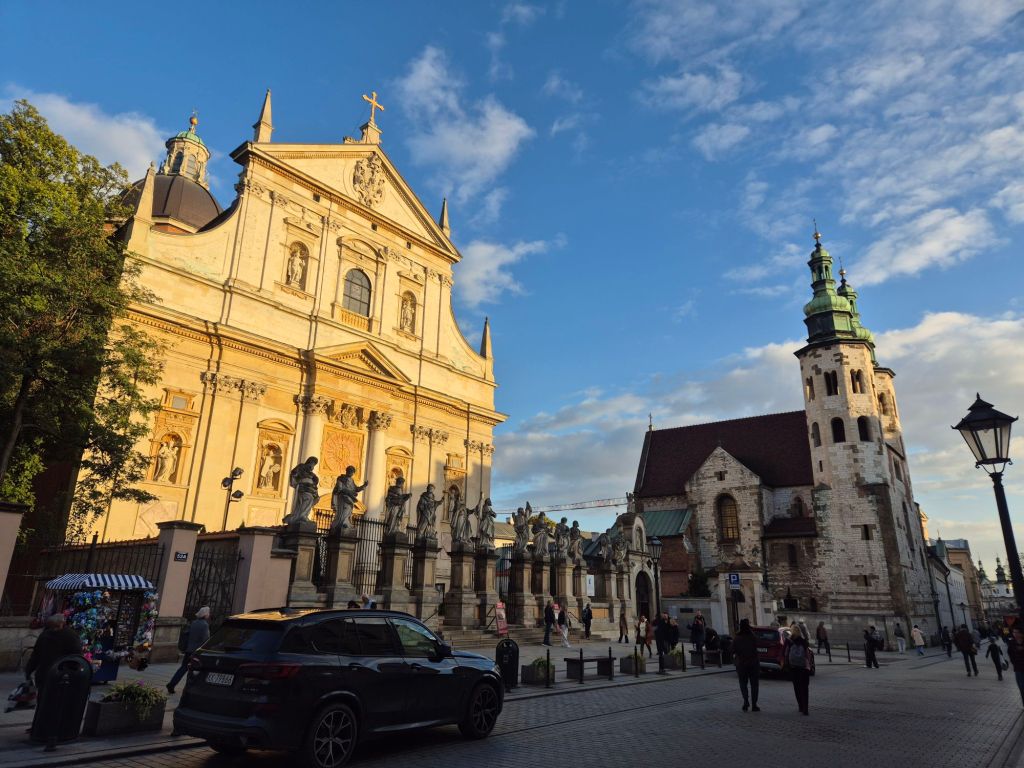
Our walk took us through St.Florian’s gate, down Florianska, a 13th century street, past Bugle Tower at St.Mary’s Basilica, where a bugler performs every hour, through Rynek Główny, the main square, then further to Wawel Royal Castle.
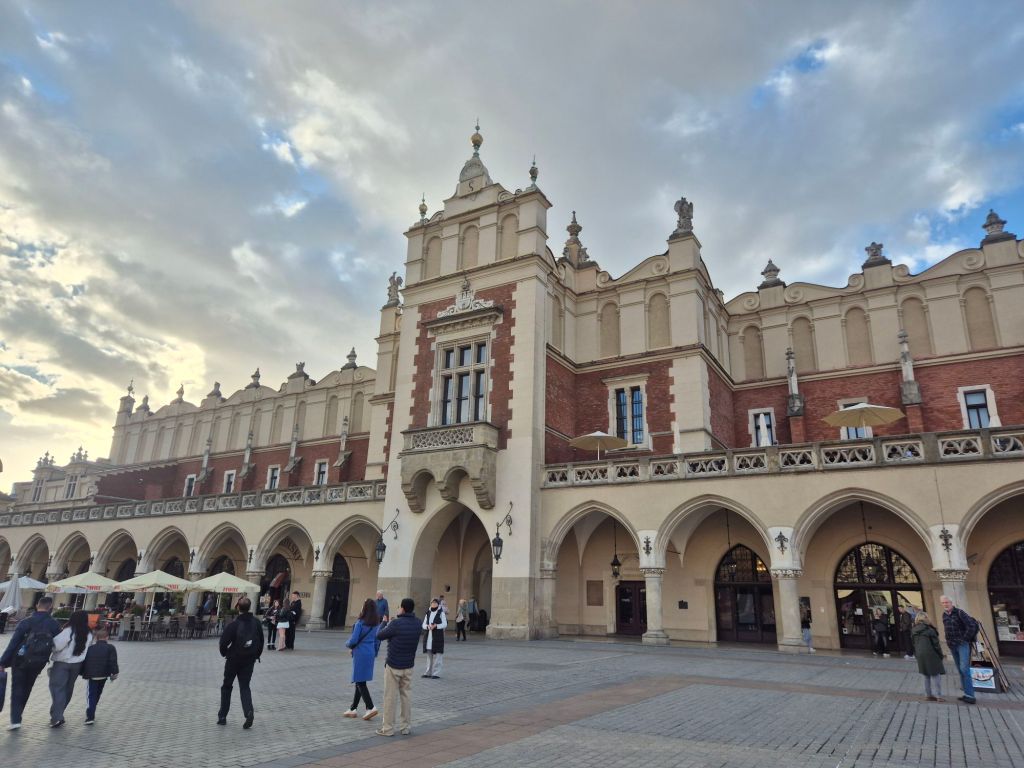
We drove to Warsaw yesterday and had a lazy evening.
Having caught Kevin’s cold and wanting to shake it as quickly as possible, Sarah stayed at the apartment today whilst Kevin went out.
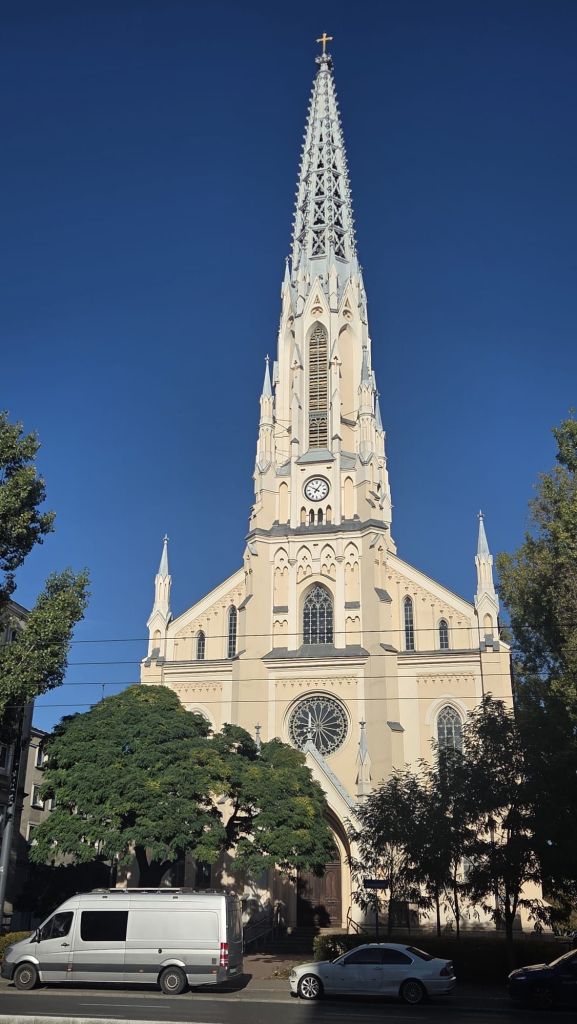
He went to the Warsaw Uprising Museum. It gave a thorough account of not just the uprising but of life in general for Poland and in particular Warsaw.
At the start of WW2 Poland was attacked initially by Germany from the west and just over two weeks later by Russia from the east. Poland surrendered in October 1936. Germany and Russia divided the country in two.
In Warsaw, Jews were rounded up and put in the ghetto, the Poles had to move into homes vacated by the Jews. The Germans introduced rationing, education ceased, Poles suffered malnutrition causing the birth rate to drop. This was Warsaw’s fate during WW2.
Despite this the Poles had a resistance movement underground, papers were printed and distributed, Gestapo informers murdered. The population did not stand by doing nothing.
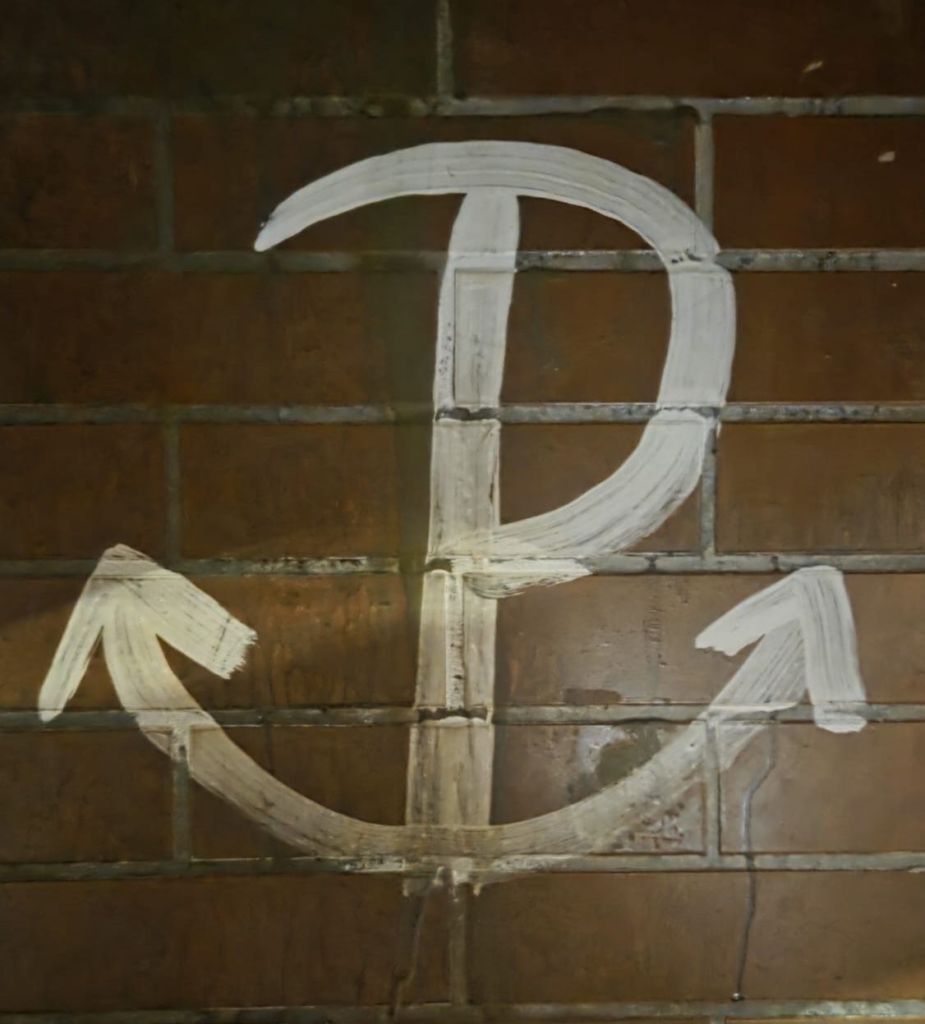
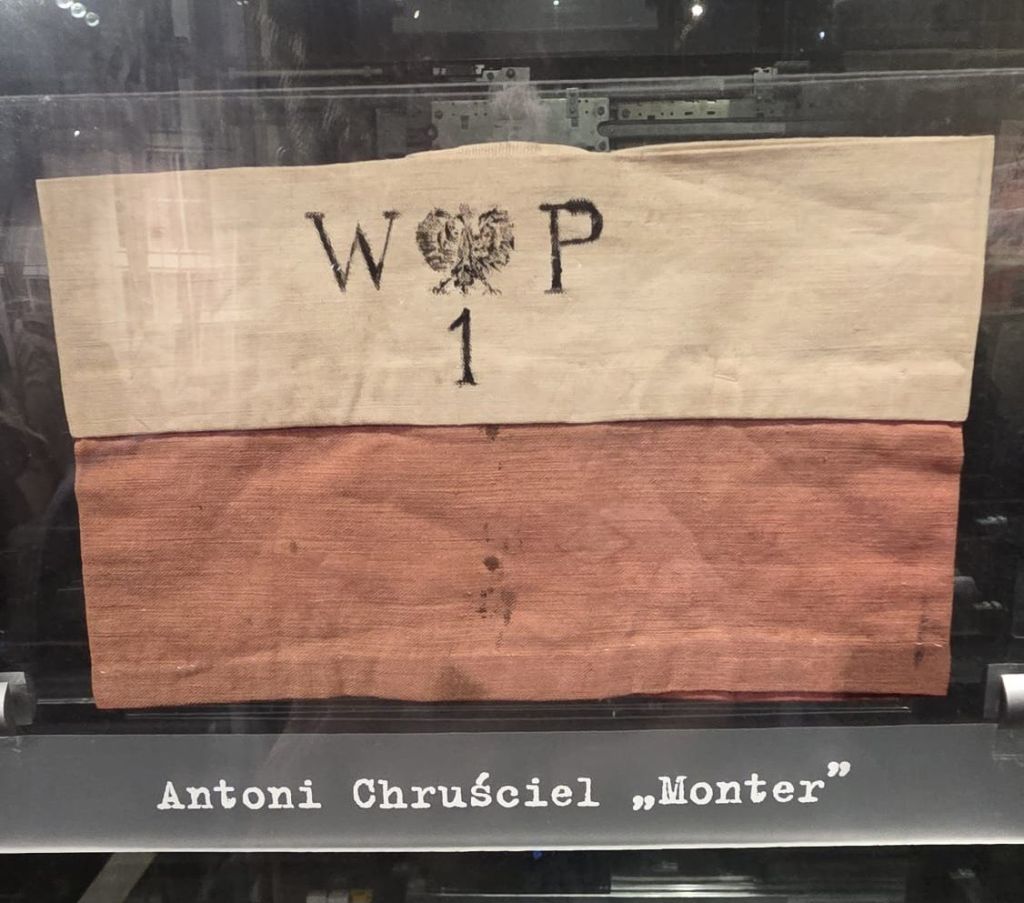
During the German occupation there were two uprisings. The first was in 1943, the Jewish population rose up when the Germans were trying to liquidate the ghetto, the uprising was quashed after 4 weeks. The Warsaw uprising of 1944, was the second uprising, led by Poles and lasted almost two months. Thousands died, in excess of 130,000 civilians. The insurgents (the Polish resistance) lost 18,000.
One massacre stood out, in Wola, a district within Warsaw, in just a few days the Germans murdered up to 40,000 civilians. The leader of the Germans was not charged with any war crimes for this, he returned to Germany and became mayor of a small town.
After the uprising the insurgents expected to fight alongside the Russians, however this didn’t happen, the Russians stripped them of their weapons and many were sent to Russian labour camps.
Kevin found the museum incredibly interesting, with lots of information, to the point that after a few hours, only being 75% of the way through the audioguide, his brain was overloaded.
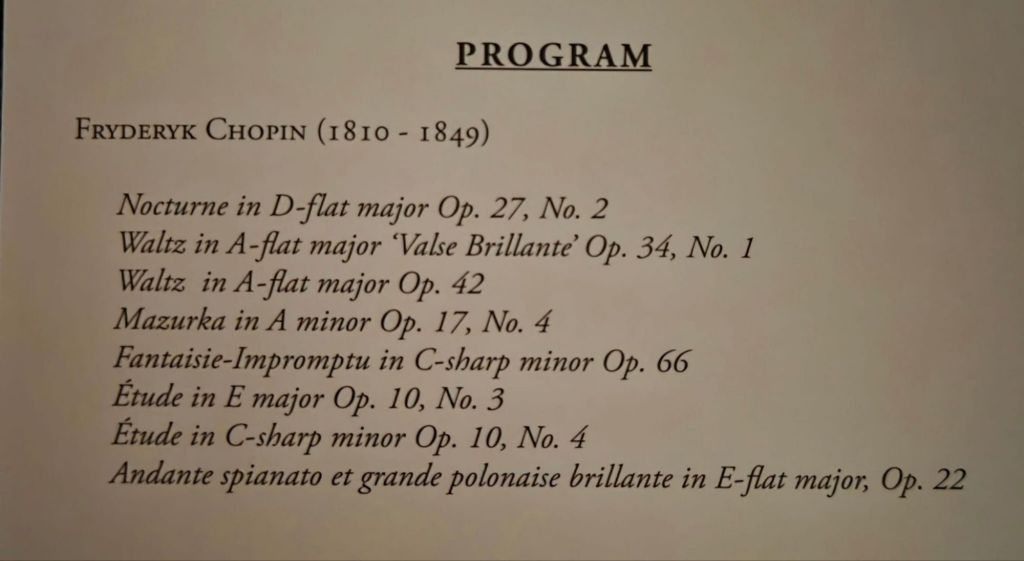
After a short break back at the apartment, we both rugged up and walked into the Old Town to attend a short performance of Chopin music by a Japanese pianist.
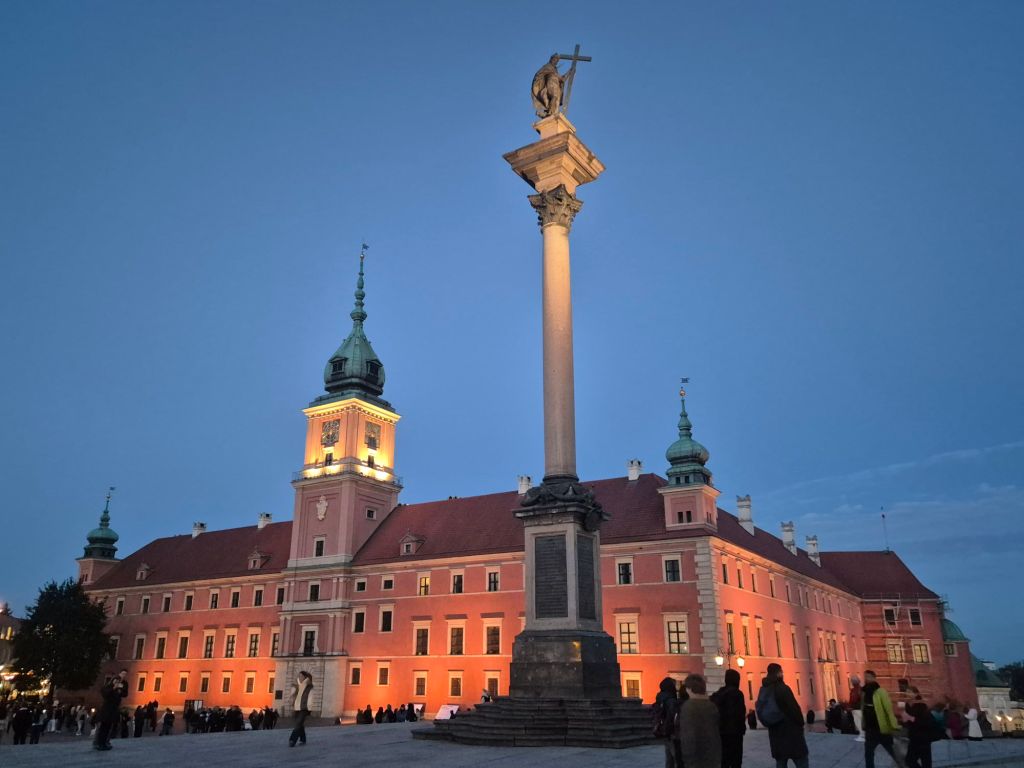
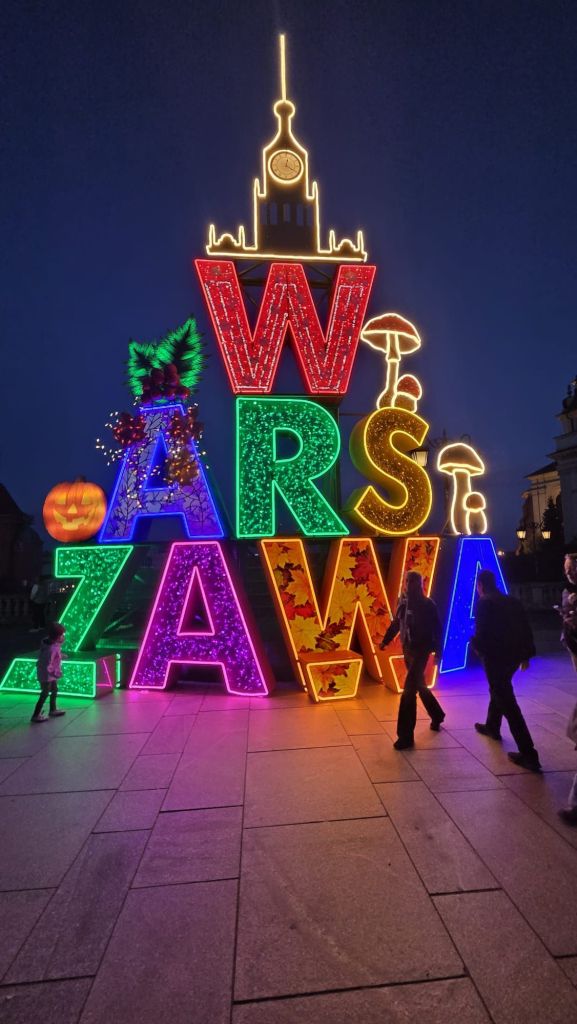
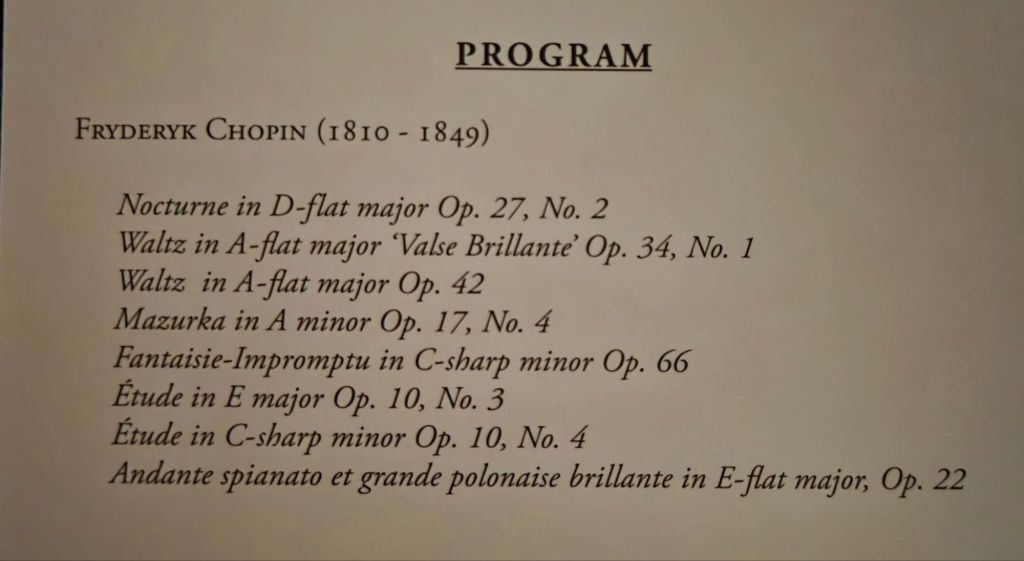
The concert was very pleasant.
Pierogi for dinner obviously!
We woke to a foggy day today, it was still foggy at 3pm! A sign of the weather to come for the next month.
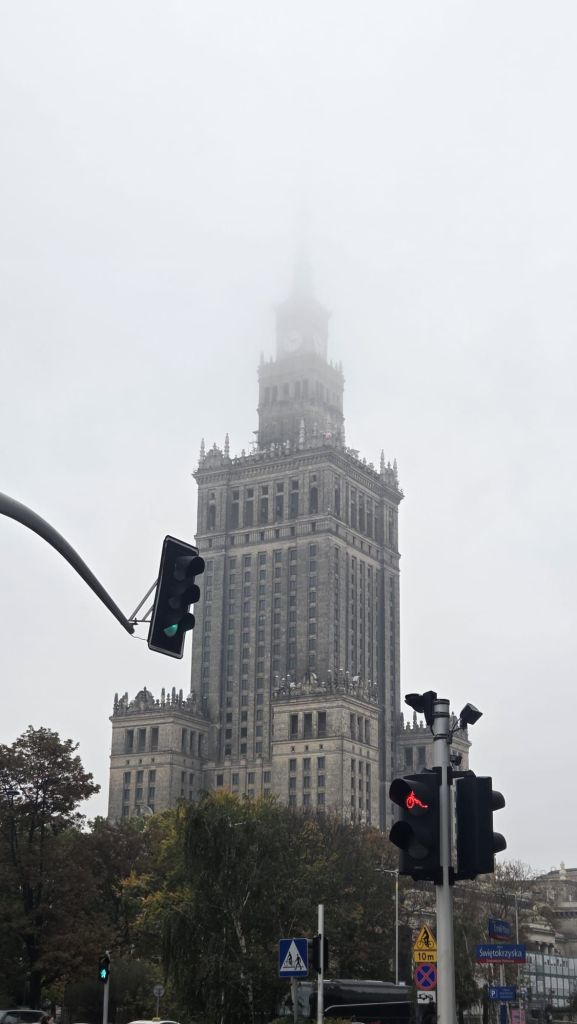
We headed to the Warsaw Palace.
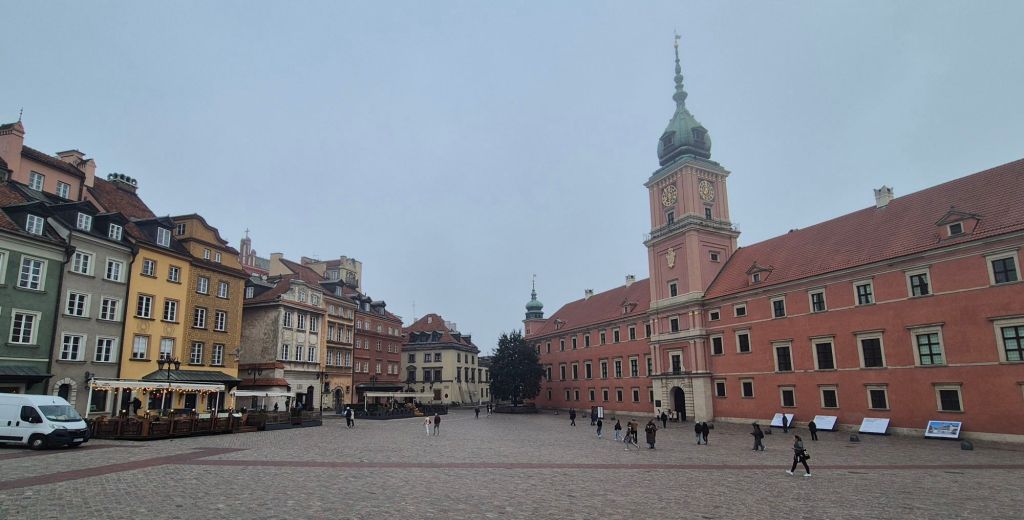
It was heavily damaged during WW2, bombed by the Luftwaffe in 1939 and then blown up during the Warsaw uprising in 1944. The remnants were used for rebuilding and restoration from 1971-1984. There are still some original features and artwork present – some artworks were moved in 1939 before the invasion. Photos and historic paintings were used to guide restoration.
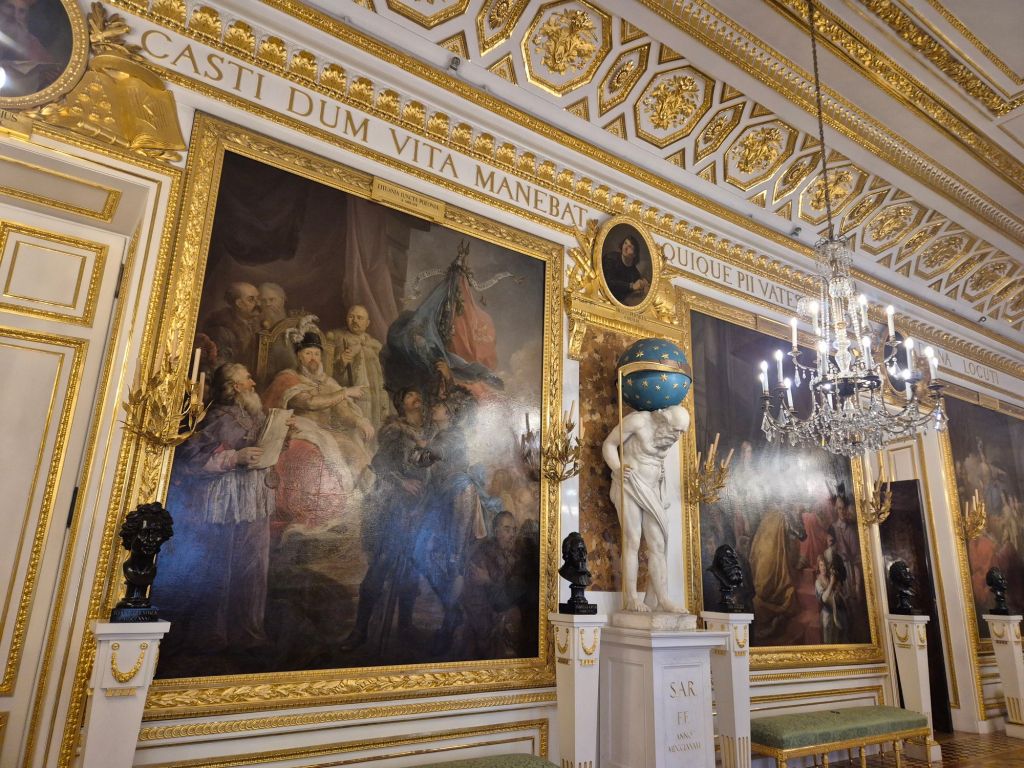
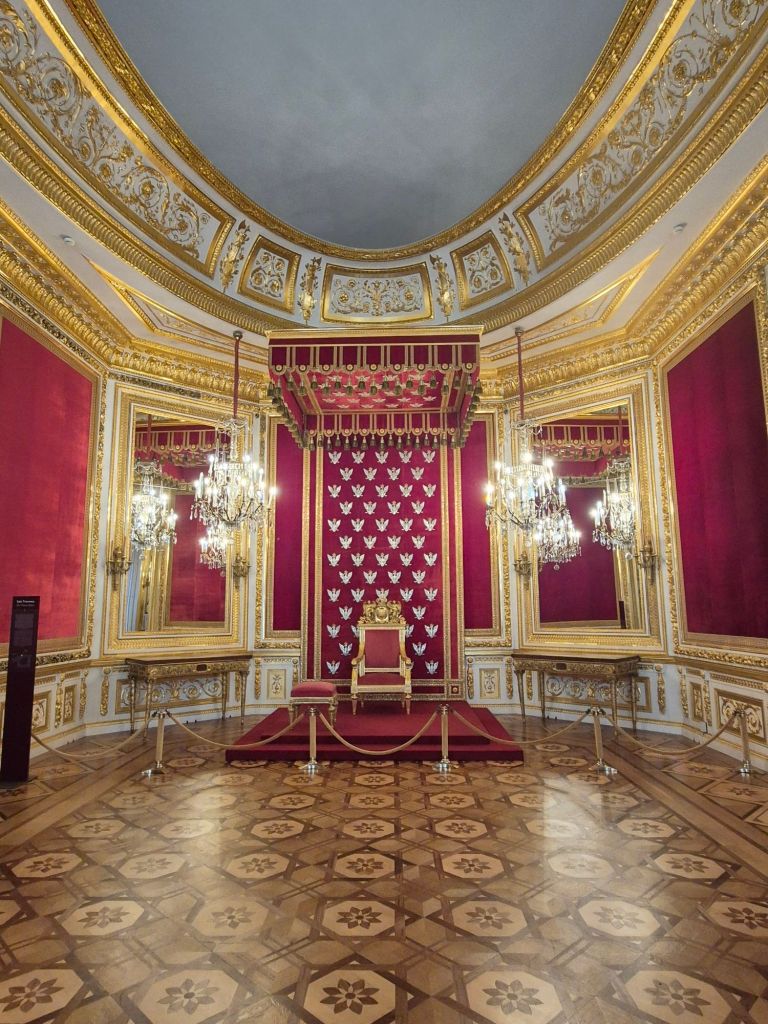
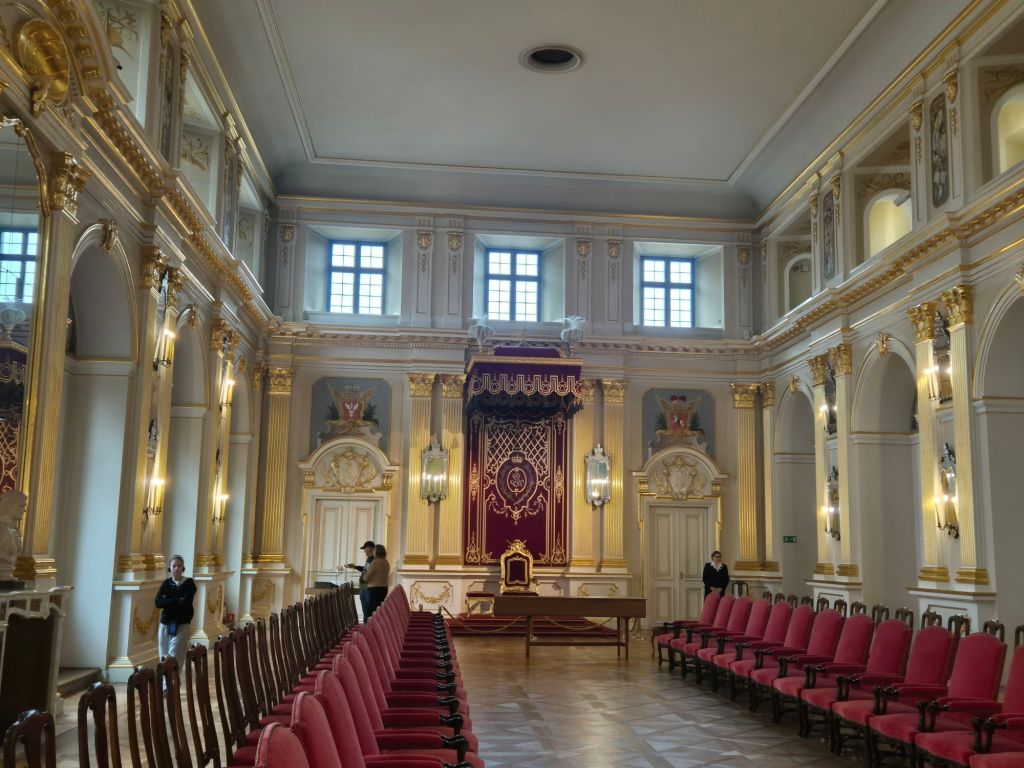
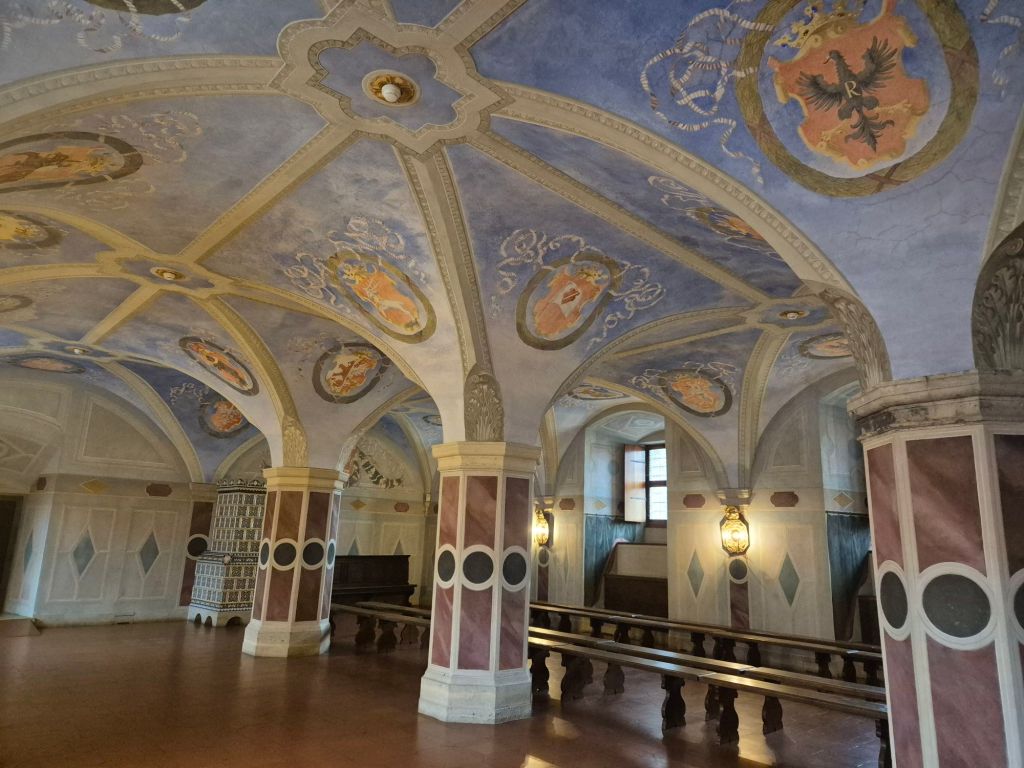
The castle was used by kings until just before WW1 and by presidents between the wars.
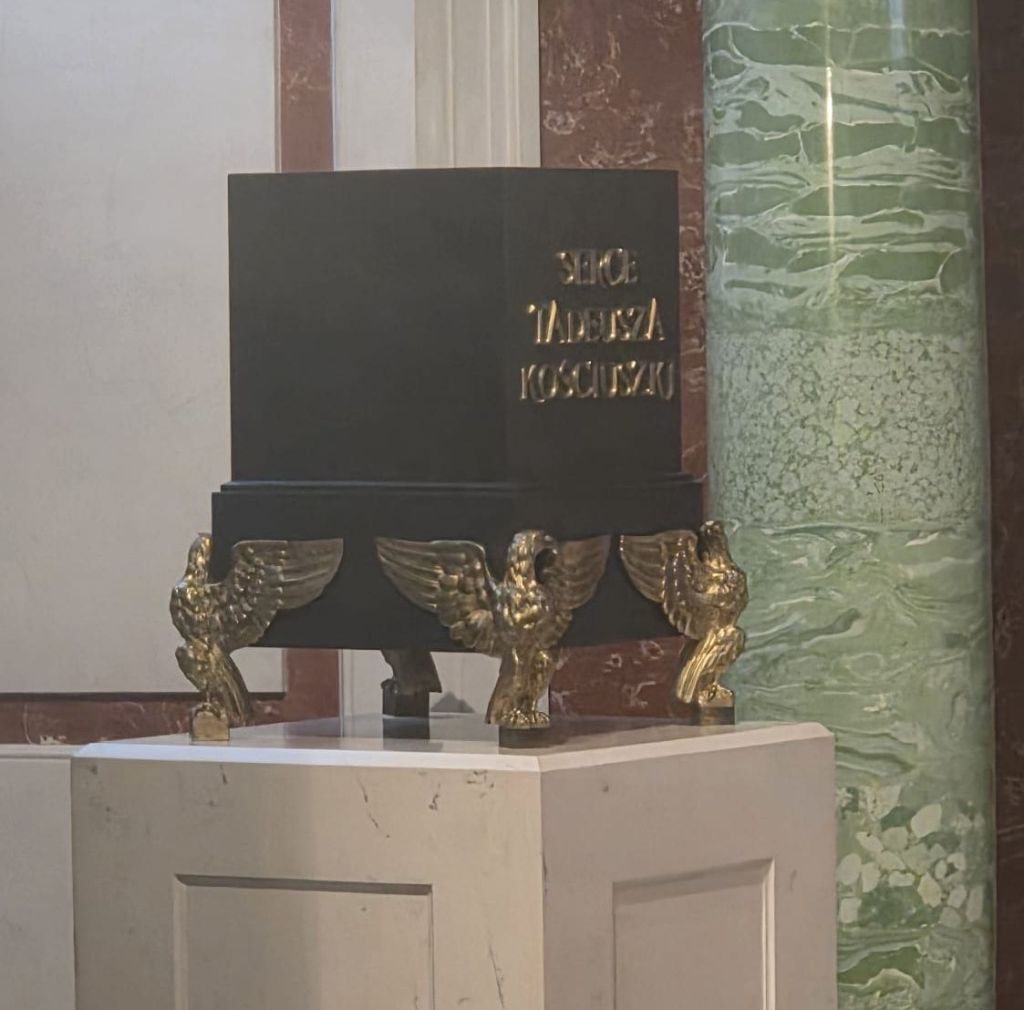
We saw the box that contains the heart of Tadeusz Kościuszko – of Mt.Kosciuszko fame, although he never actually set foot in Australia! It is pronounced completely differently here.
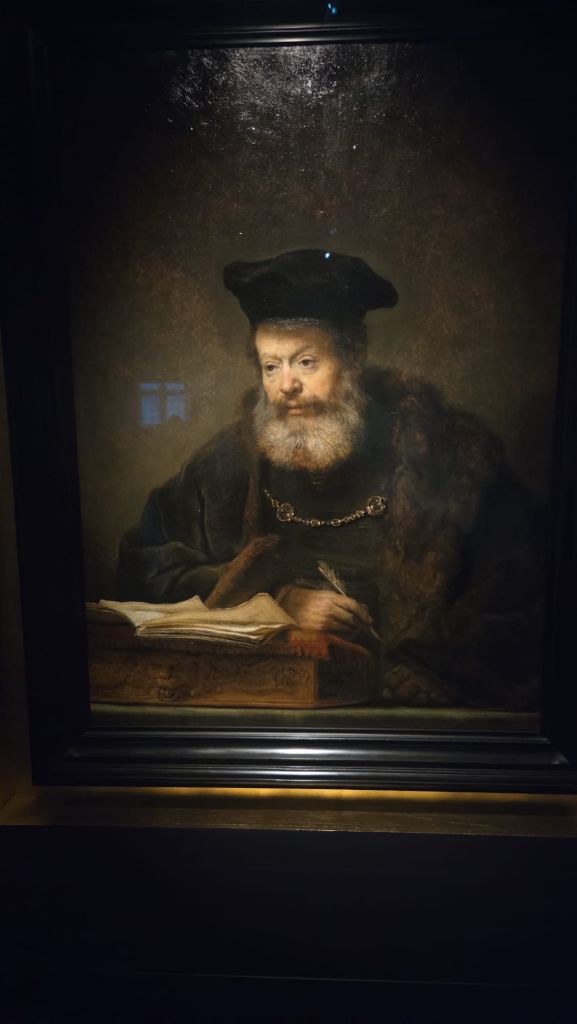
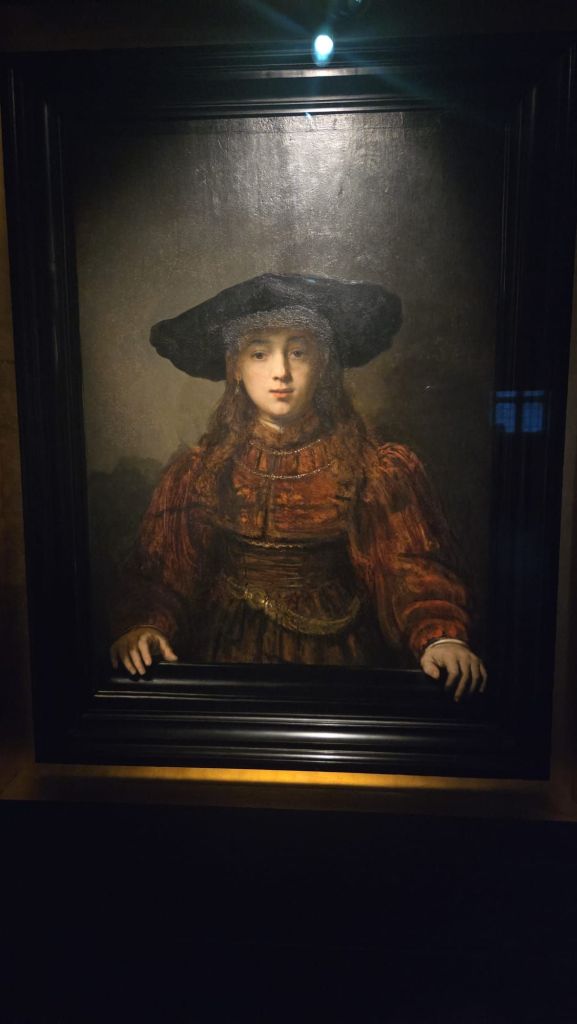
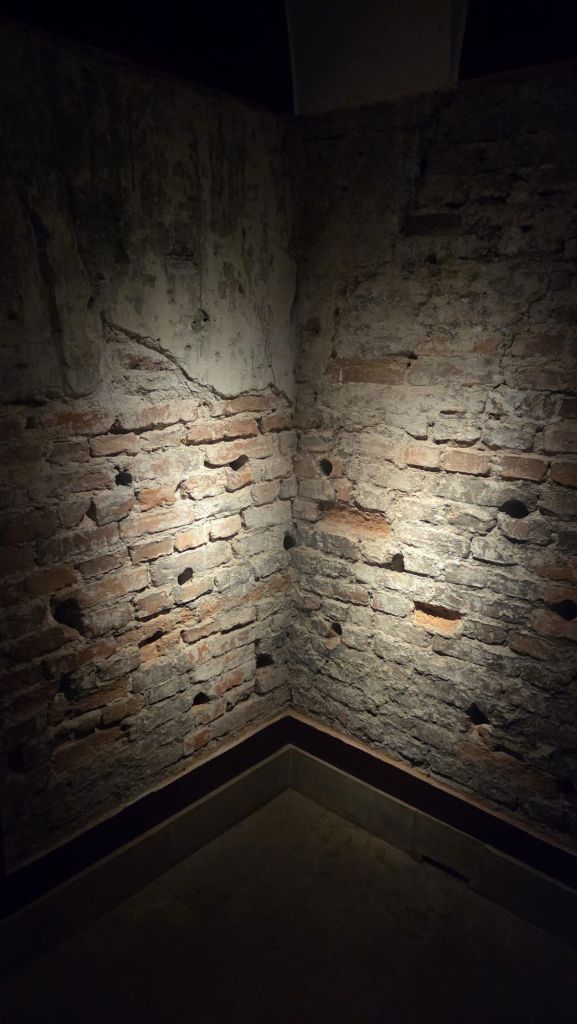
We also saw a Rembrandt painting and holes drilled into the castle foundations by the Nazis, that were not used for explosives.
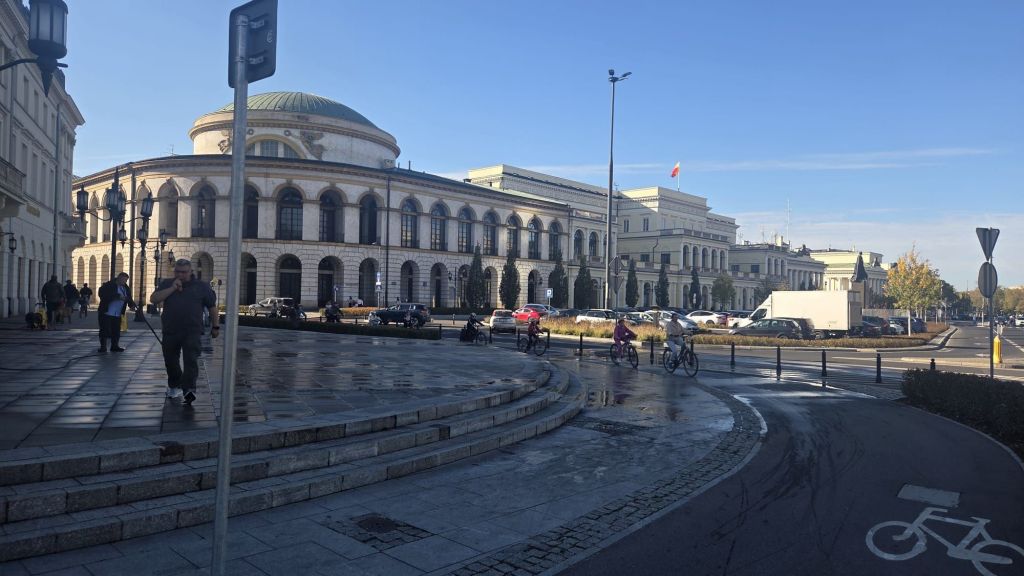
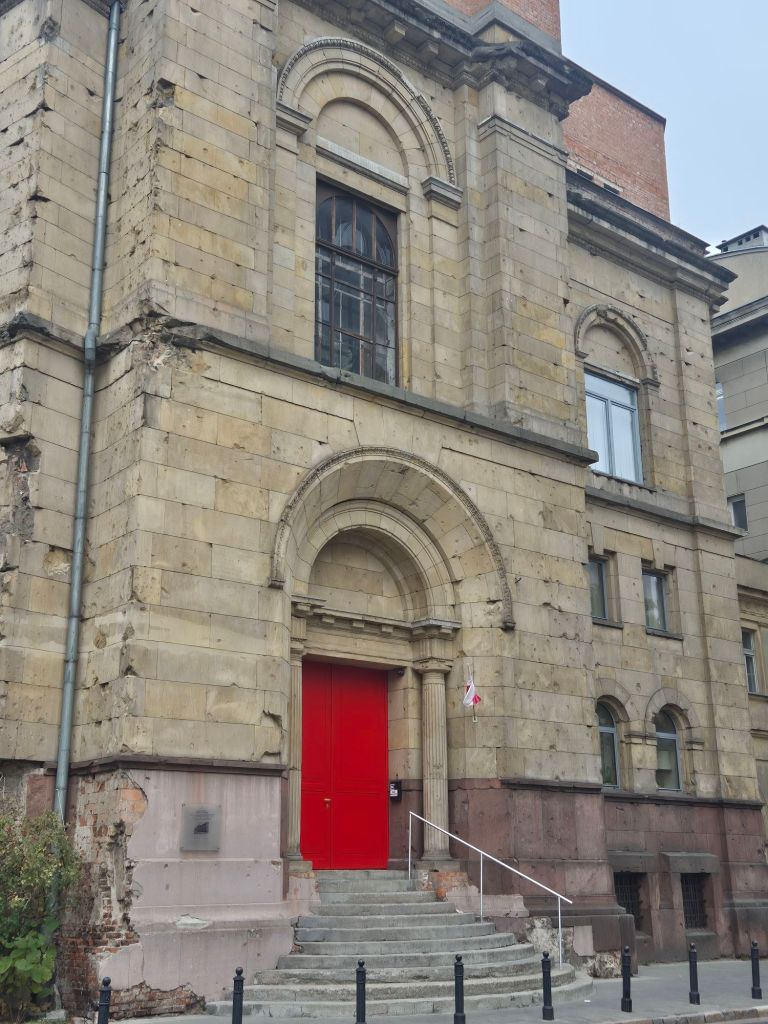
Just down from where we’ve been staying is a building, an old bank, that is one of the few buildings that survived WW2. It has many bullet and shell holes in the exterior, obviously intentionally not repaired.
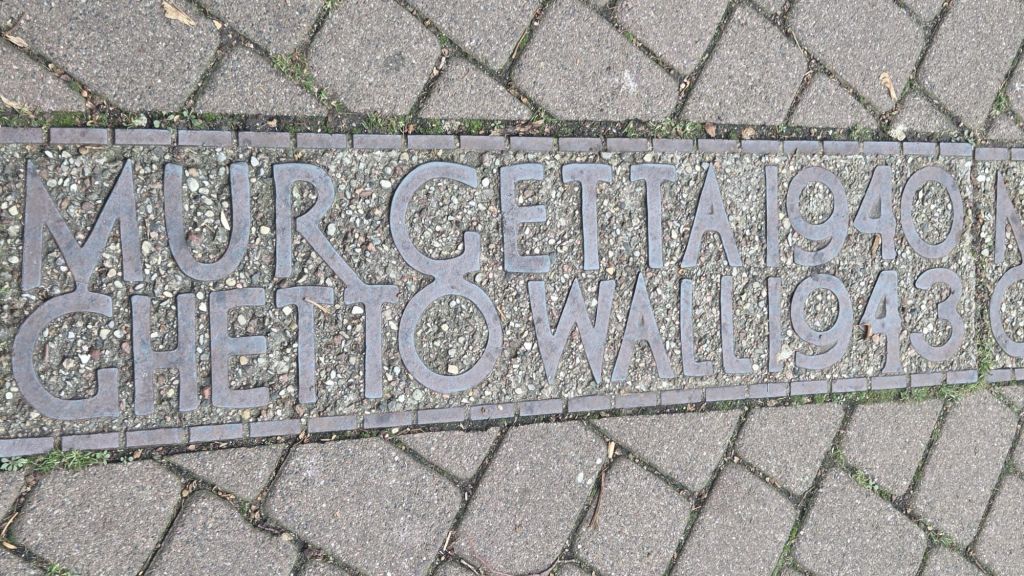
This afternoon Kevin walked to a pub to watch Leeds play, he passed one of the brass plaques in the ground that indicates where the ghetto walls were. Warsaw has been completely rebuilt, roads are where buildings used to be and vice versa.
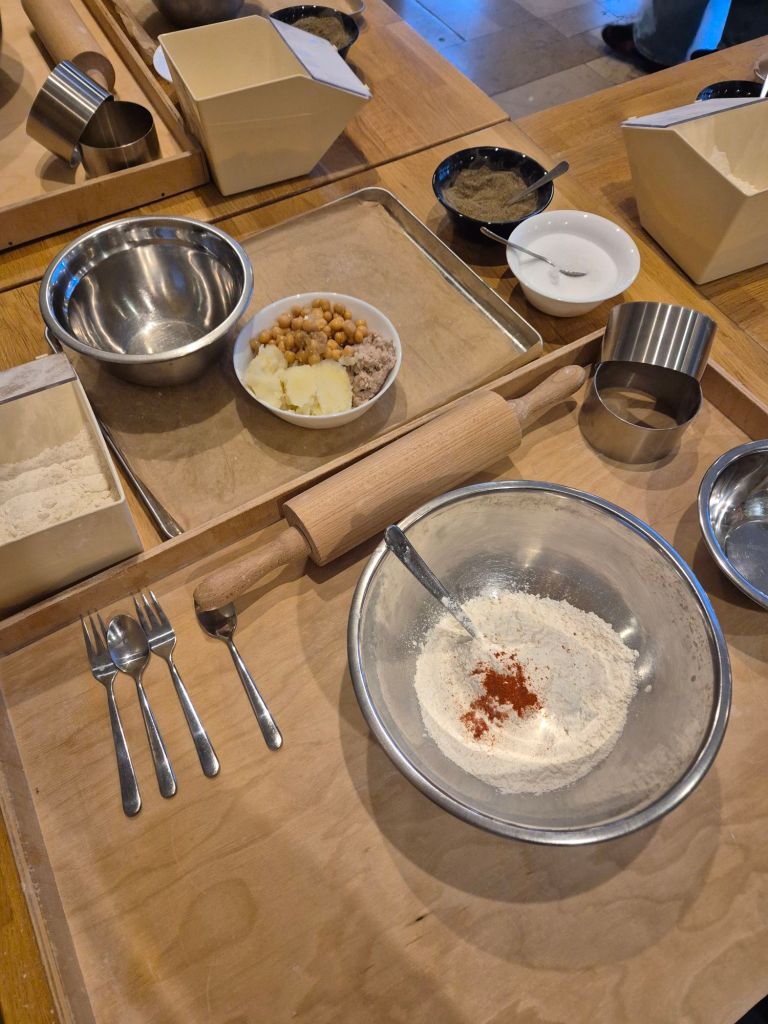
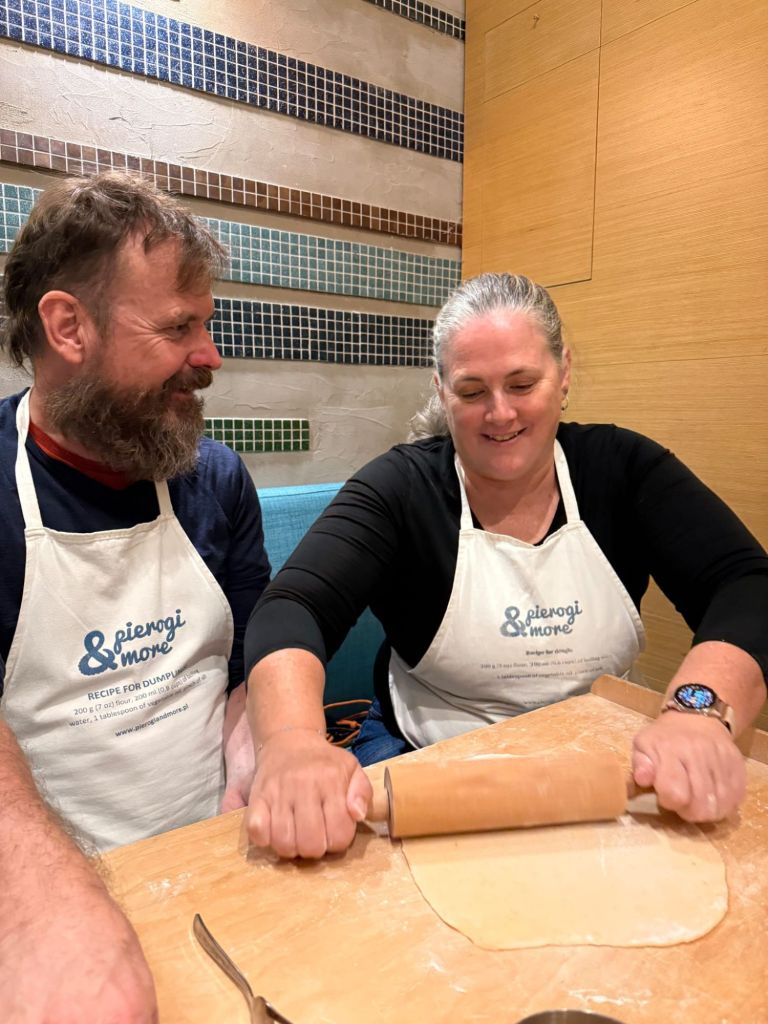
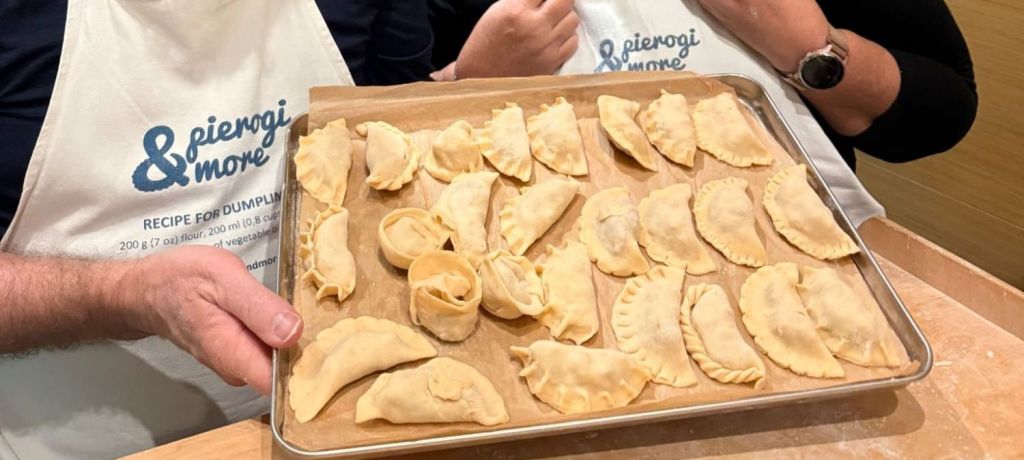
This evening we walked in the opposite direction than the old town, to go to a Pierogi cooking class. We figure with how many we’ve eaten, we should learn how to make them!



Leave a comment…