Today started with a couple of phone calls and quickly completing some paperwork associated with a box we have sent home. So we were a bit later leaving than we wanted.
On the road we drove through Ljubljana into the countryside, heading south to Bosnia and Herzegovina.
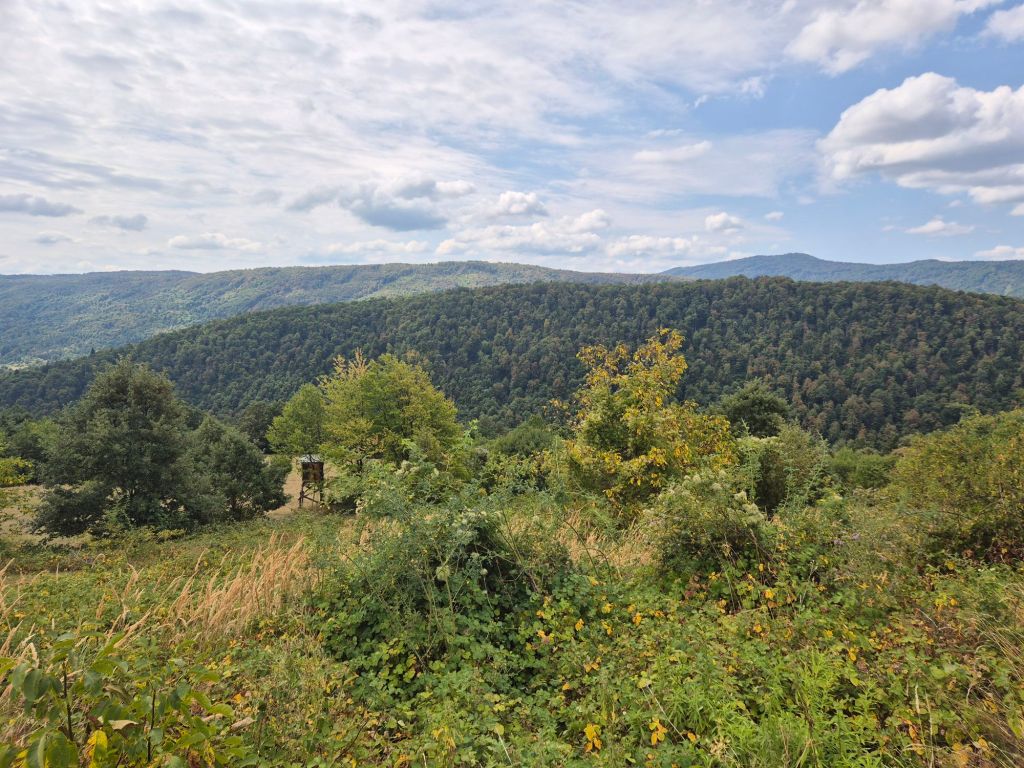
We drove through small village after small village, through forests, over mountains and past areas that appear to have received heavy shelling (during WW1 perhaps?) until we reached the border with Croatia.
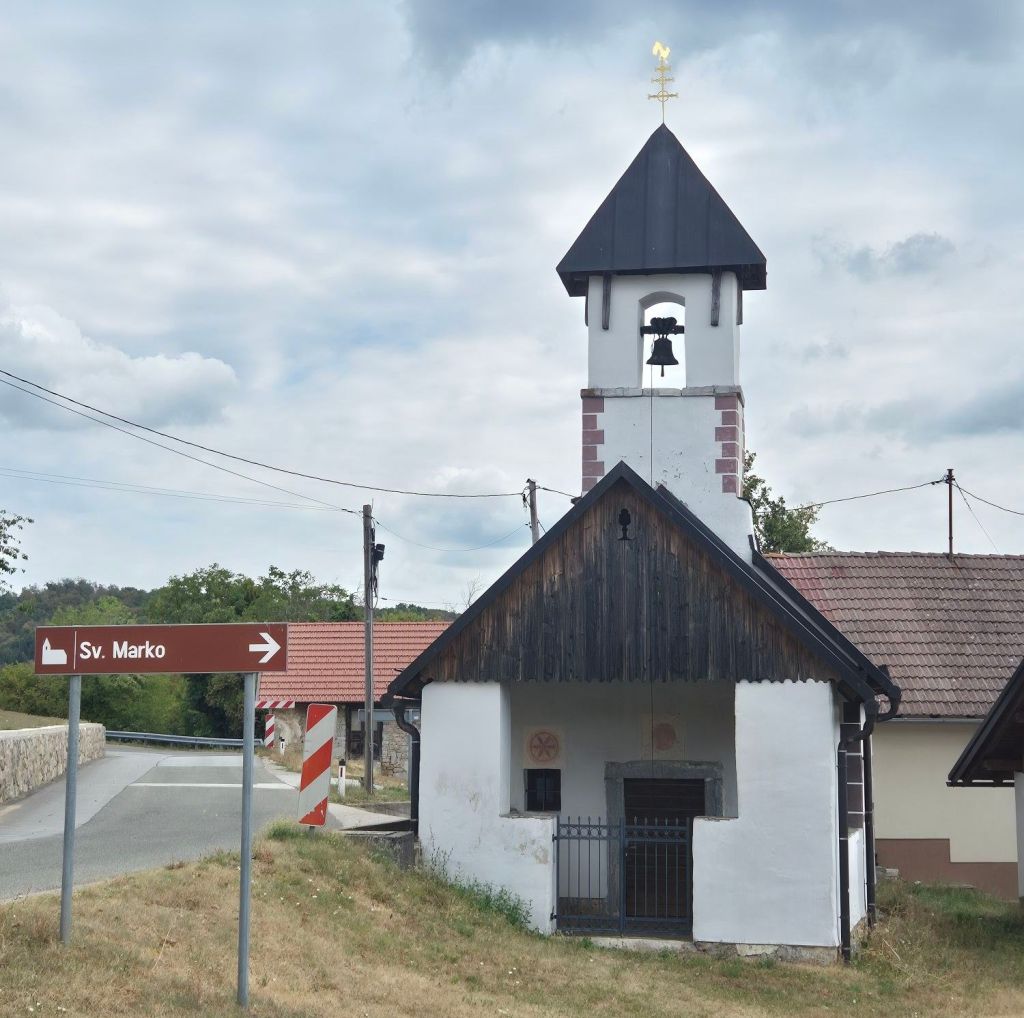
From there we continued across Croatia to the border with Bosnia & Herzegovina, passing through without delay.
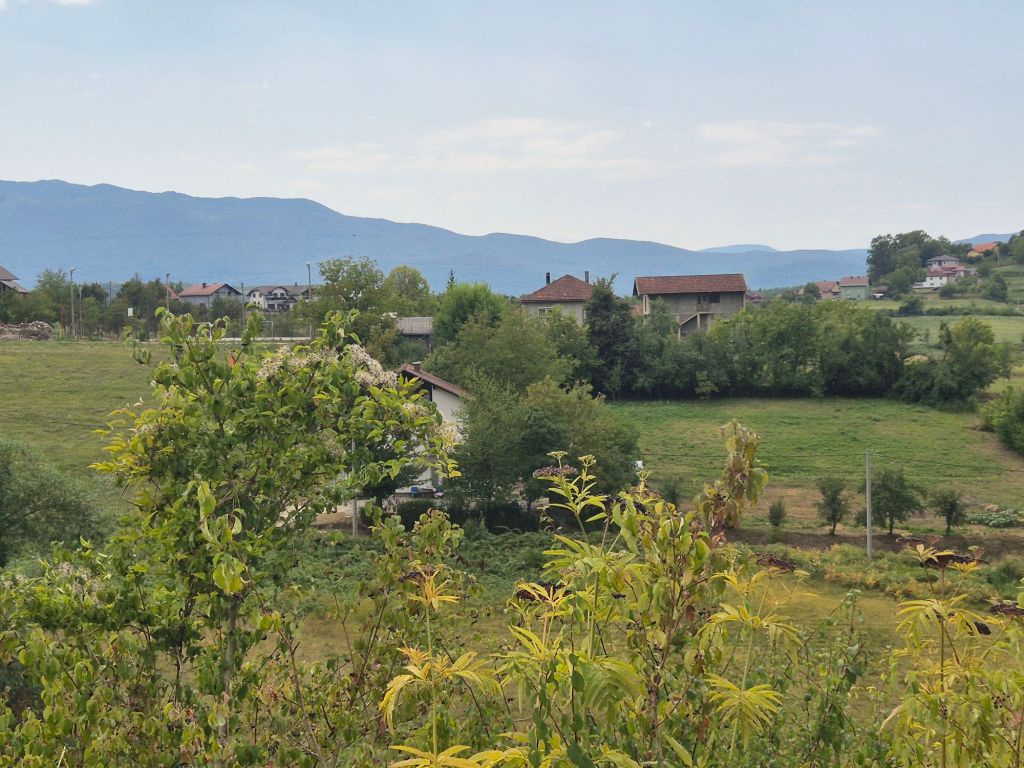
You may ask why we didn’t stop in Croatia. Primarily because of finding the balance between what we want to see and do, and how many Schengen days we have available, to ensure we have enough days to see us through the rest of the year. So now, we are out of the Schengen Zone for the next 2 months.
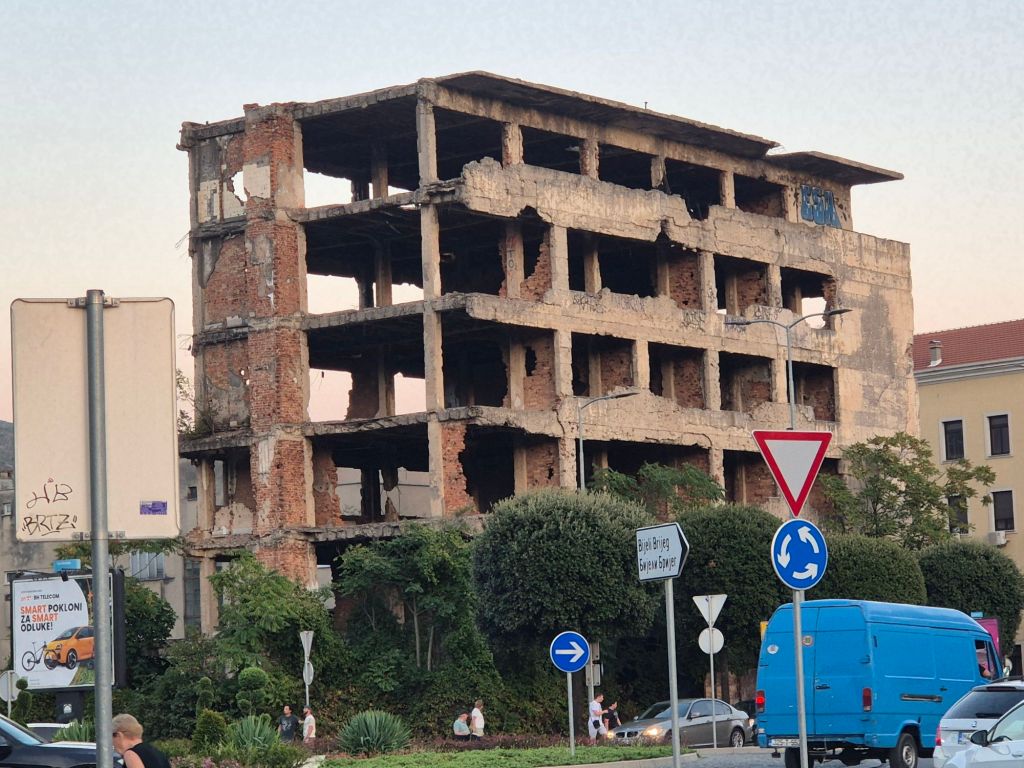
This is my first time to Bosnia & Herzegovina, however Kevin was here in 1998/99 as part of the UN Peacekeeping force after the Balkans war ceasefire. He is keen to see how the region has recovered and rebuilt, as he saw the ruins of war when he was last here. There has obviously been lots of rebuilding, but interestingly, the building next to our hotel tonight has multiple bullet holes in the facade.
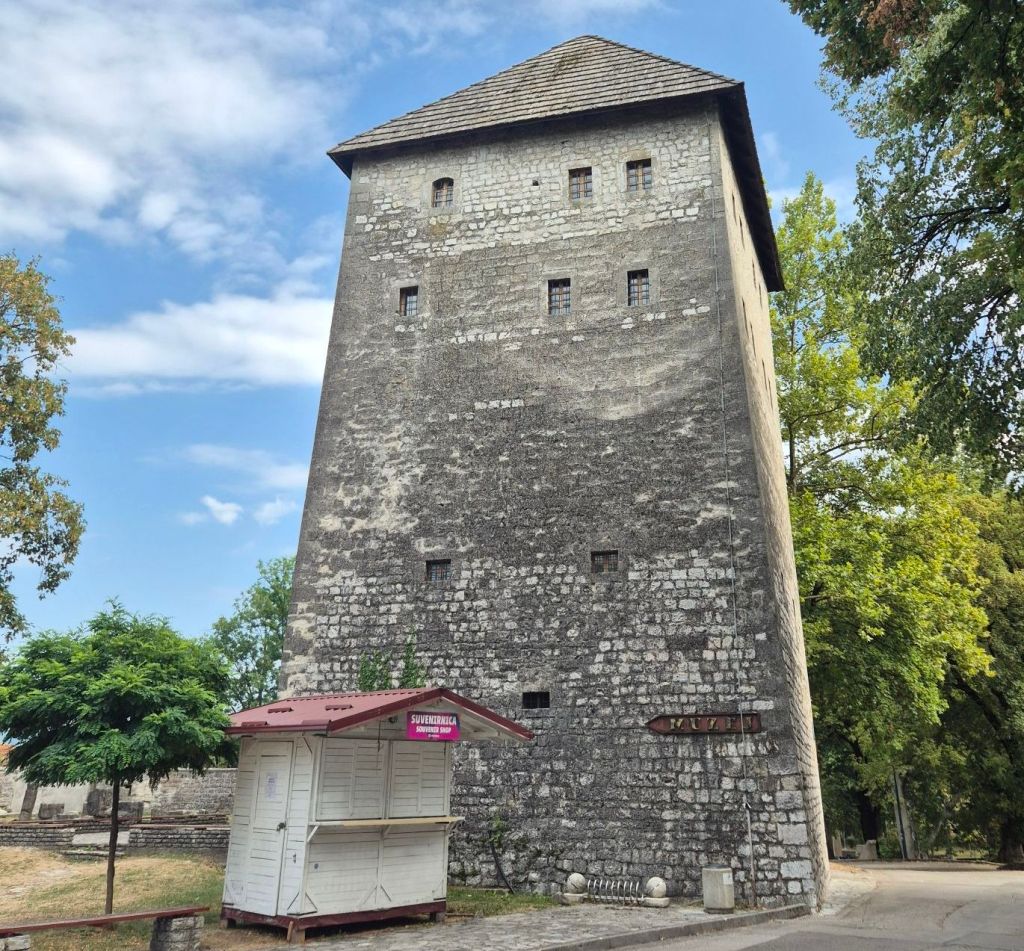
We’re stopping for the night in Bihać, a small town in the north west corner of Bosnia. After checking into the guest house we went for a walk around town to see the Captain’s tower,
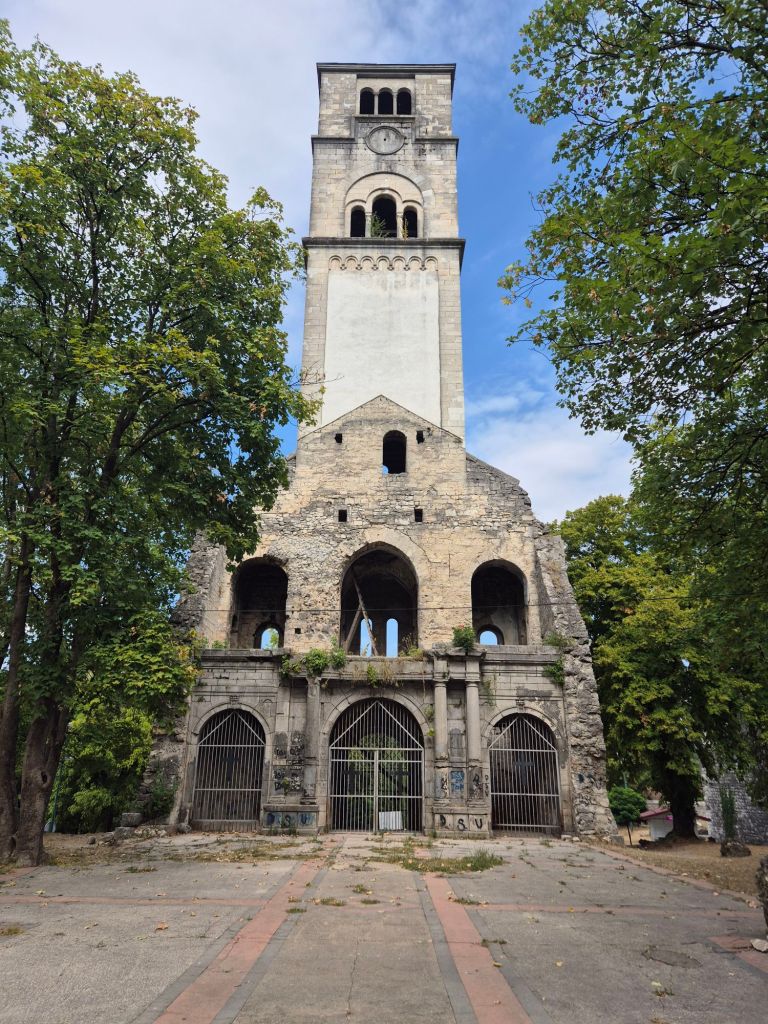
a ruined church, only the tower remains,
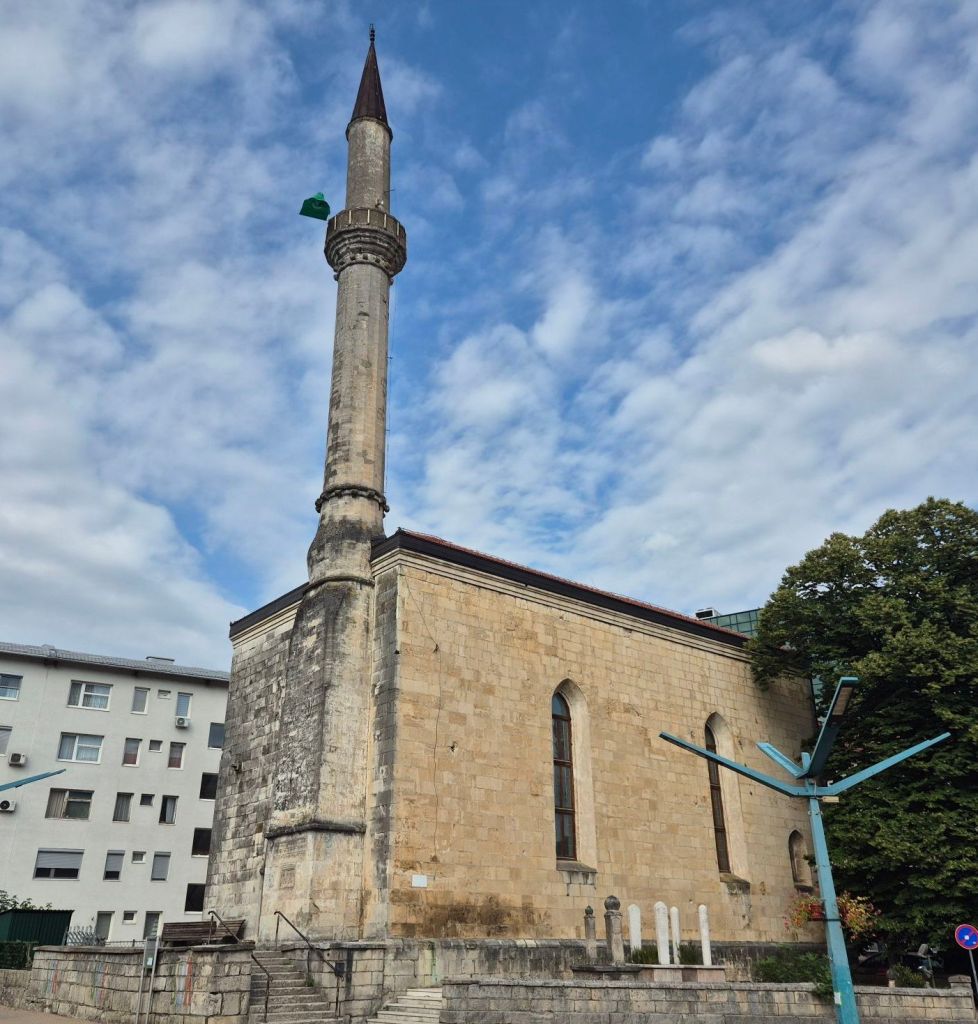
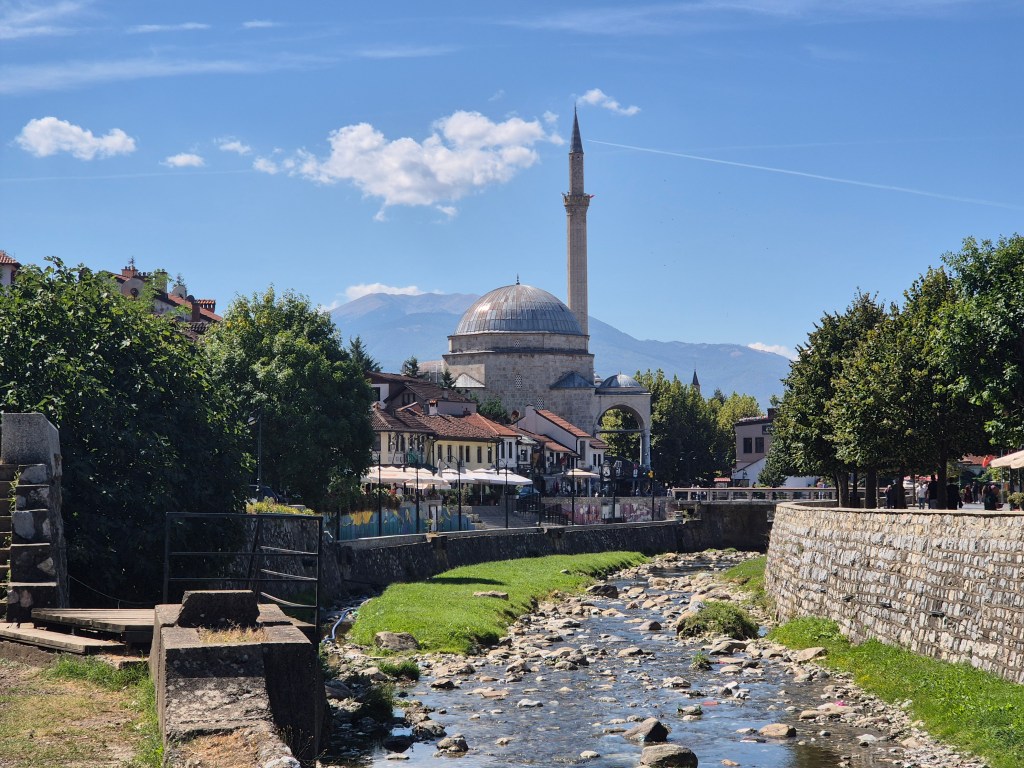
and a mosque from the 1200s. It’s apparently the only Gothic mosque in the country, obviously we’re not allowed to enter to look at it.
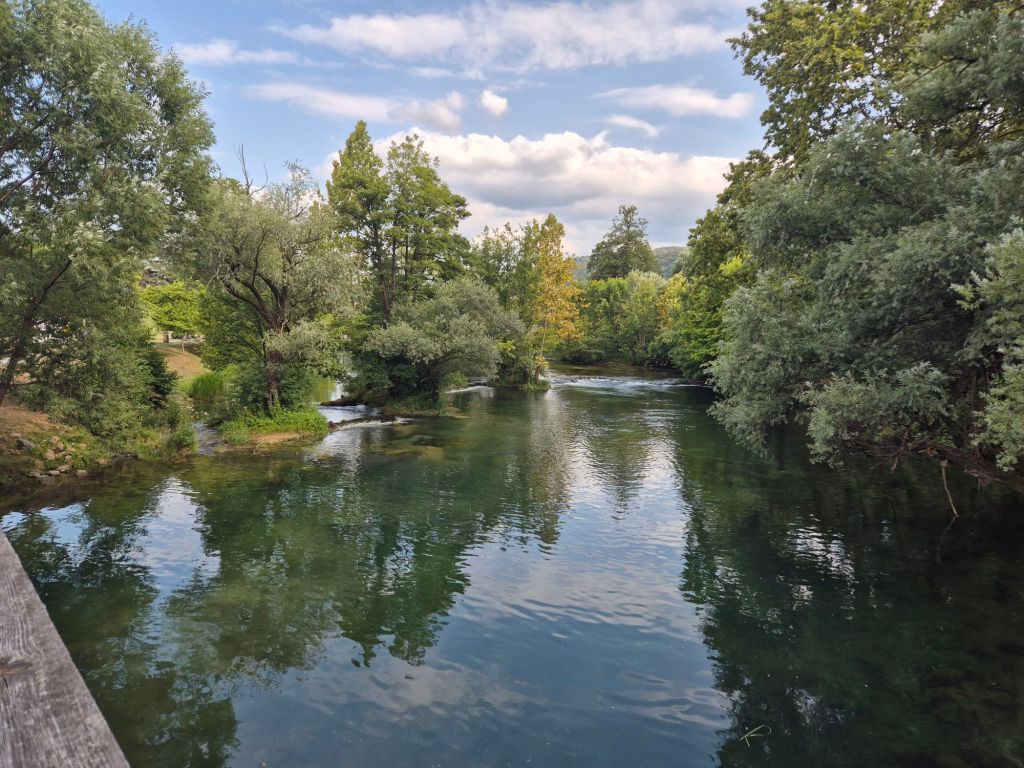
We grabbed an early dinner as the town looks like the type of place that shuts early! We’ve been caught before!
Today we drove from Bihać to Sarajevo, via Jajce (pronounced a bit like Yatcha).
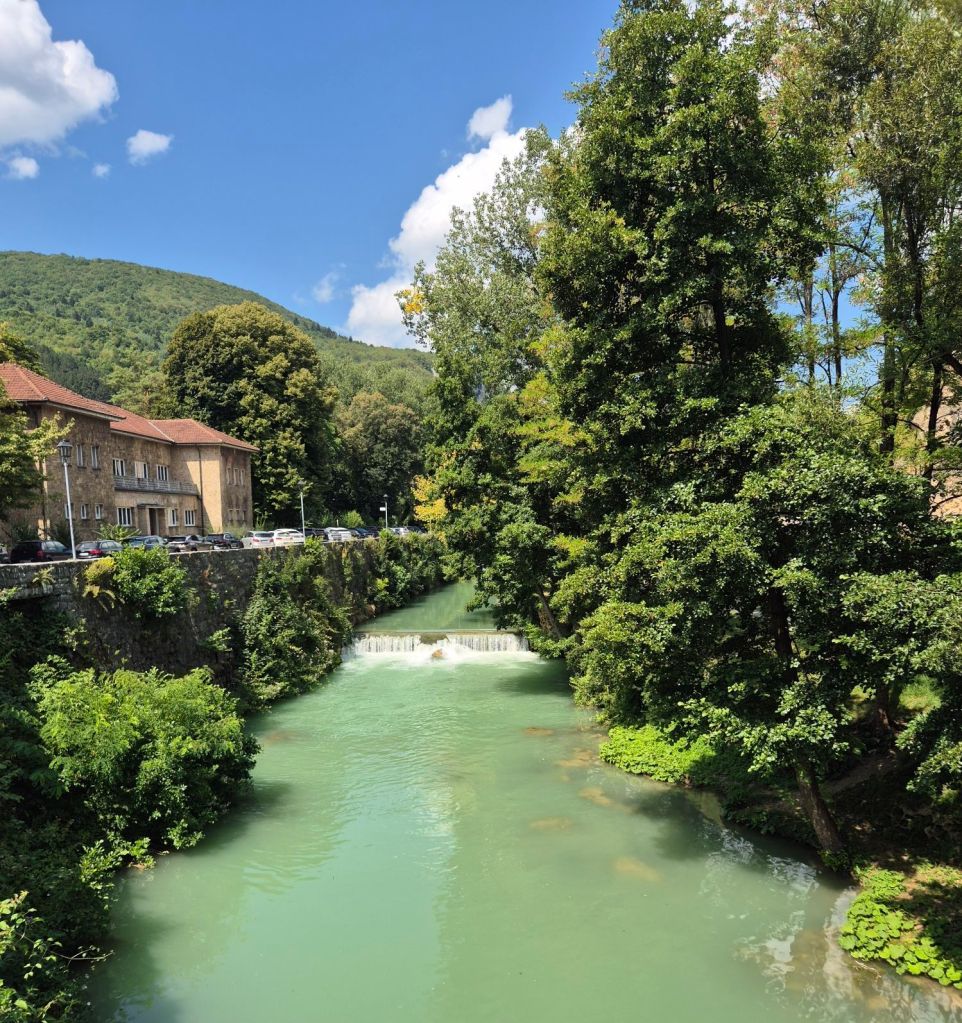
Our trip took us through mountains, valleys and villages. Kevin enjoyed driving in Bosnia without wearing a helmet and flak-jacket!
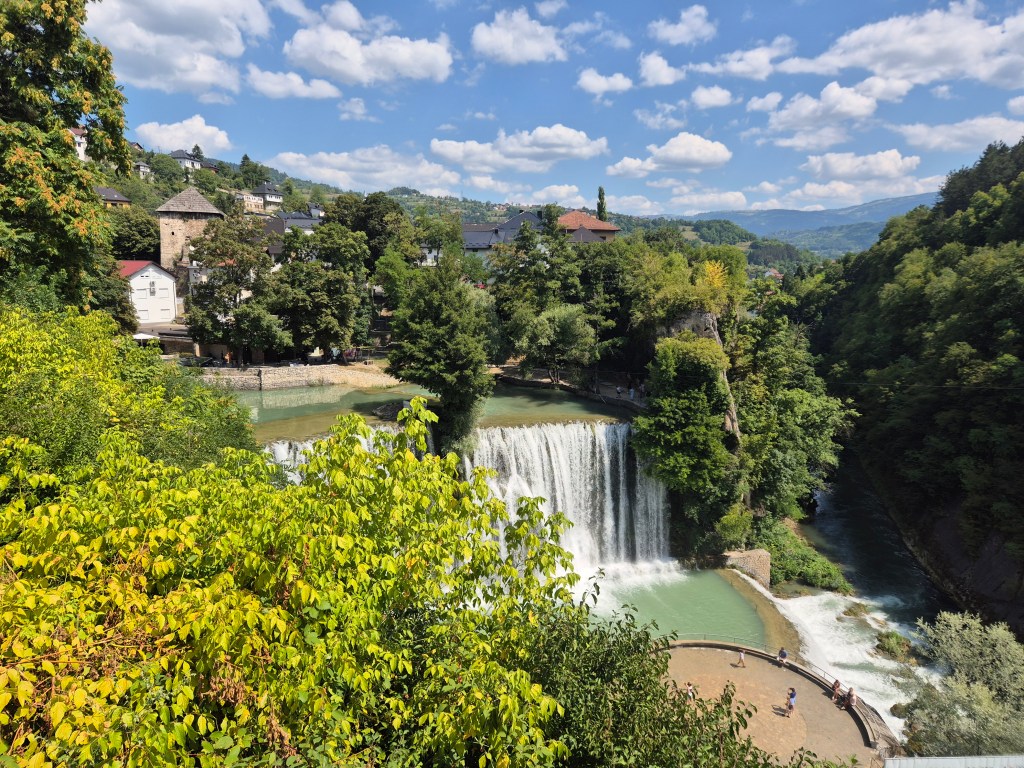
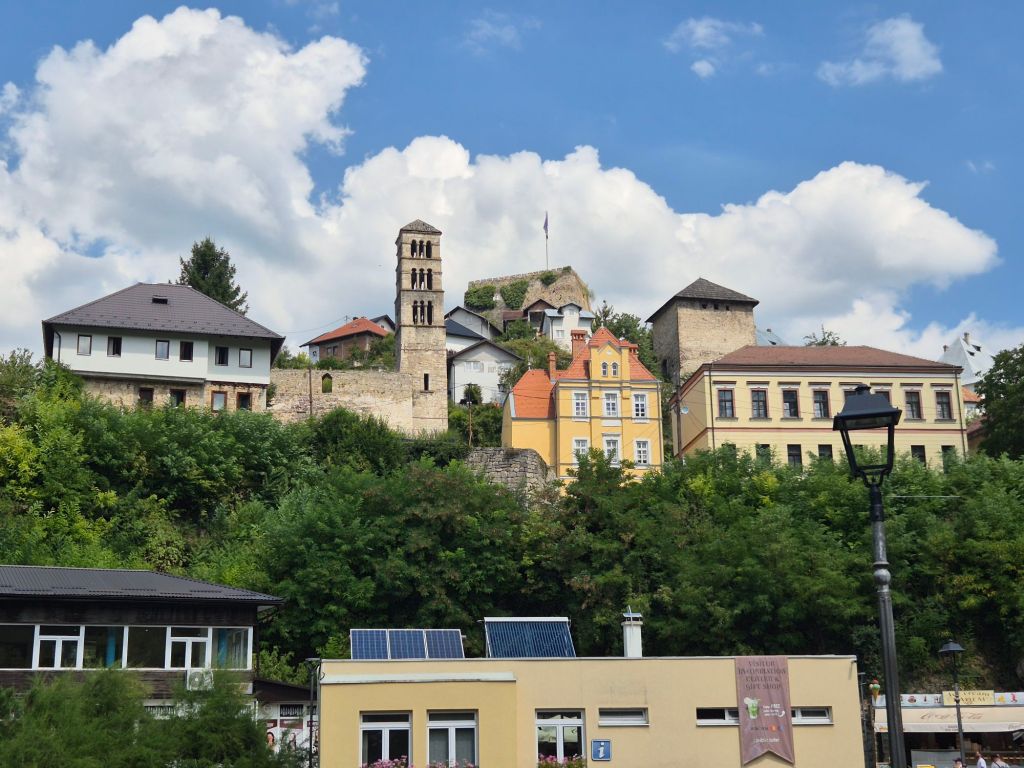
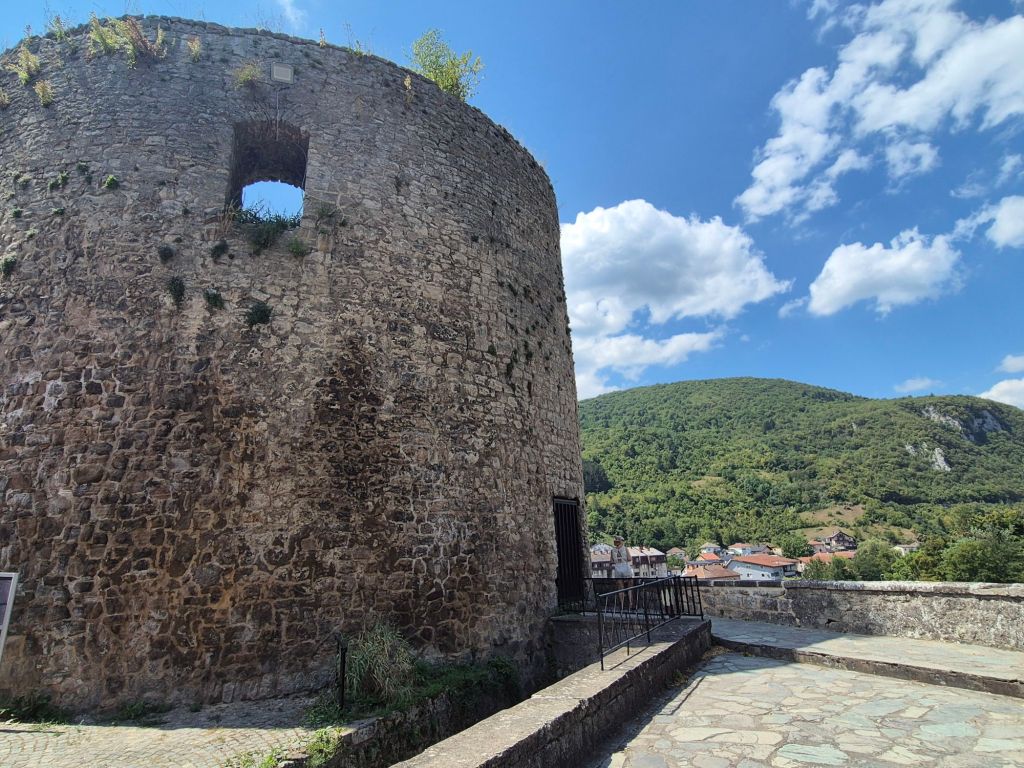
Jajce is a lovely little fortress town situated on a hill where two rivers meet.
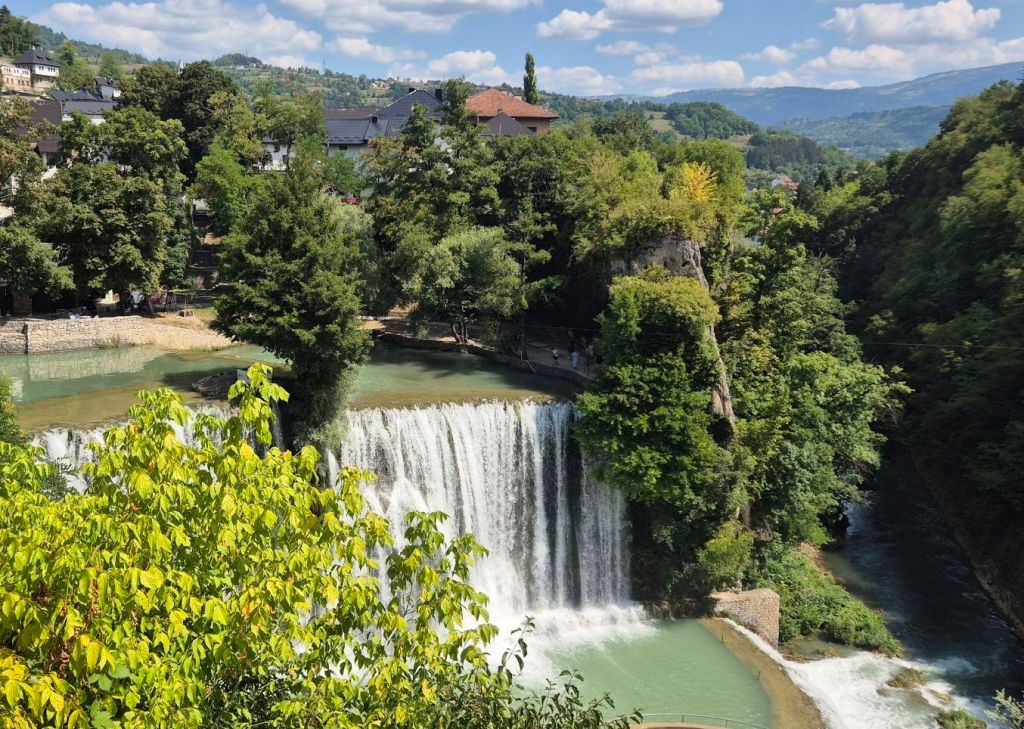
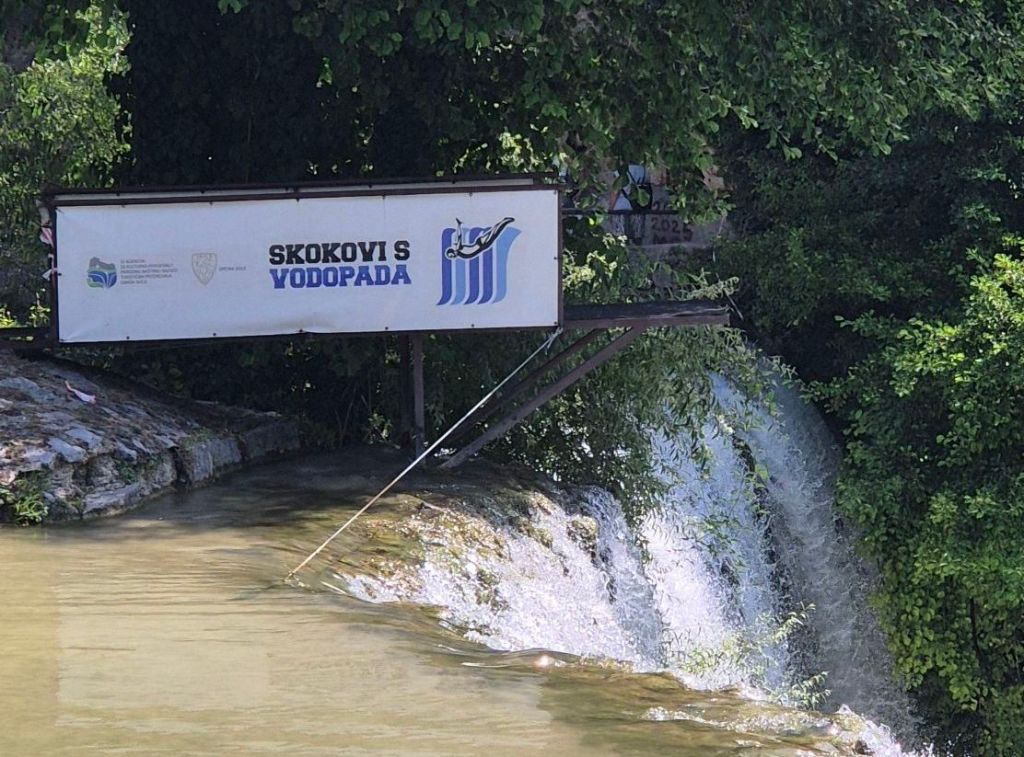
The prime attraction is the waterfall. Pliva waterfall is 22m high, apparently the only waterfall in the middle of a town centre and is in the top 12 beautiful waterfalls in the world. (According to a blog post, but nowhere else!)
From there we walked up into the old town
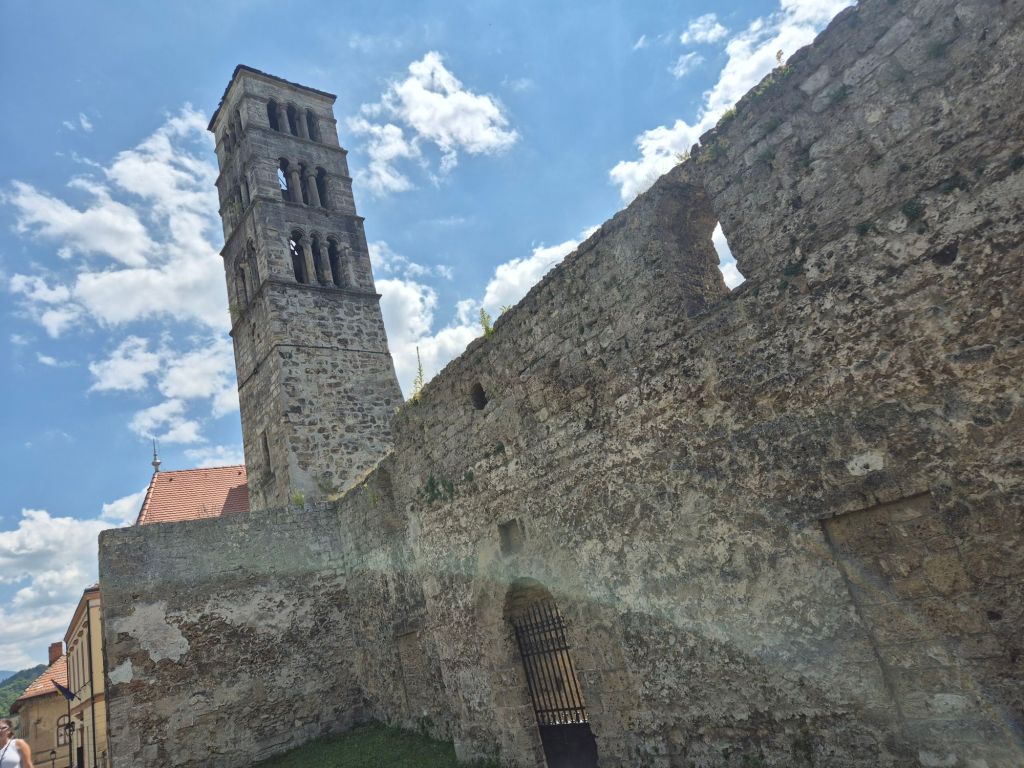
and visited the catacombs, which are also called an underground cave.
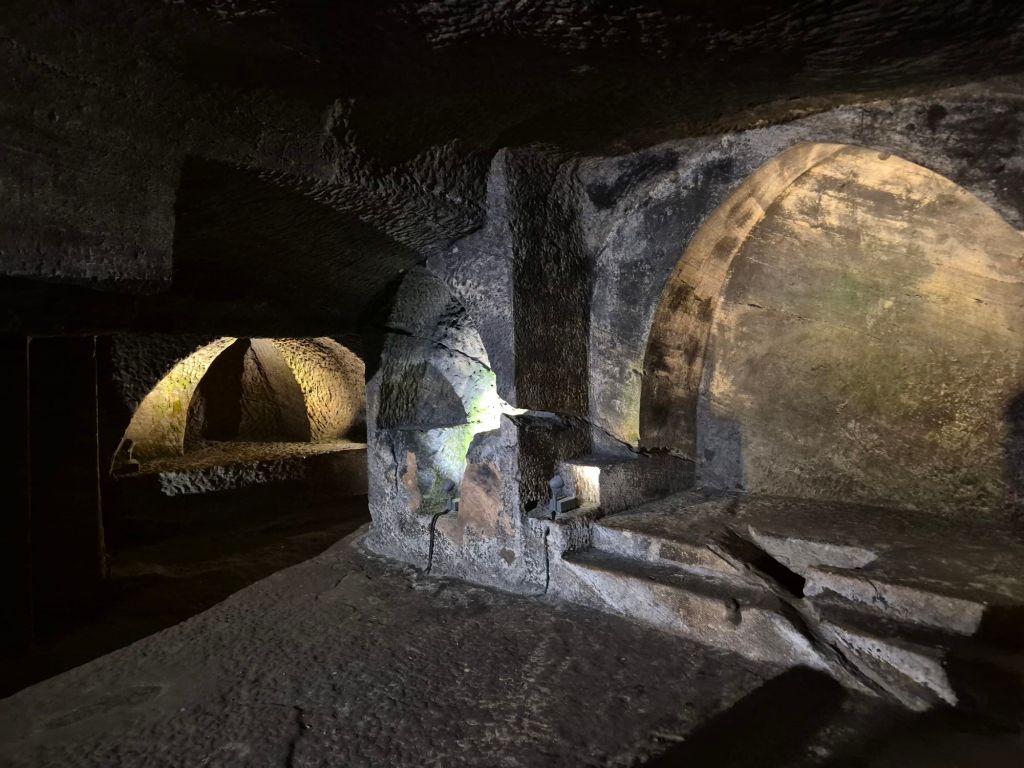
They’re carved into the rock that the town sits on.
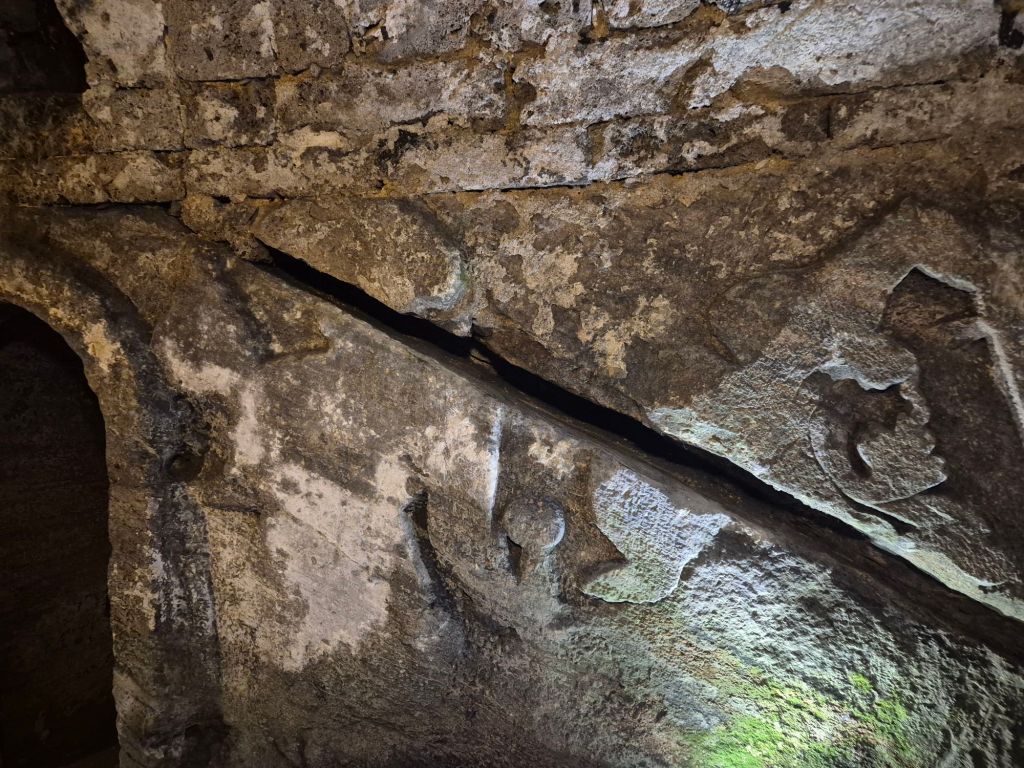
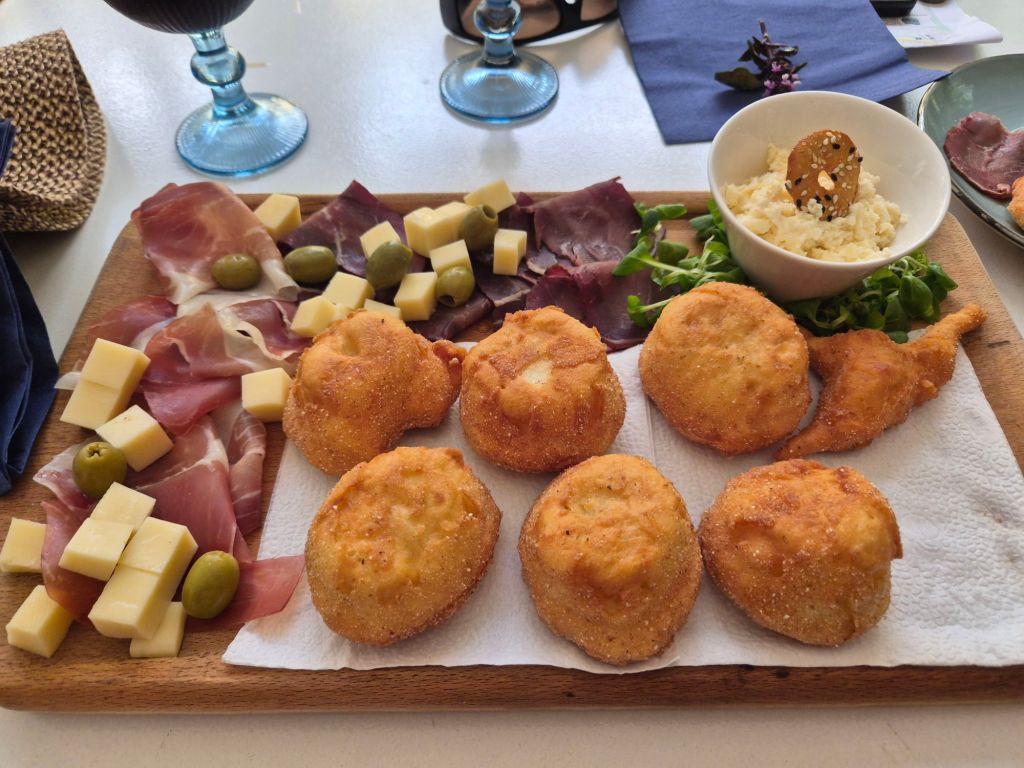
We then went to have a bite to eat – Uštipci. They’re like bread/donut balls served with a delicious cottage cheese, ham and beef slices.
We then continued our drive to Sarajevo, through more hills and valleys, eventually finding our guest house. The dodgy internet here is a real pain when you need to find a specific location!!
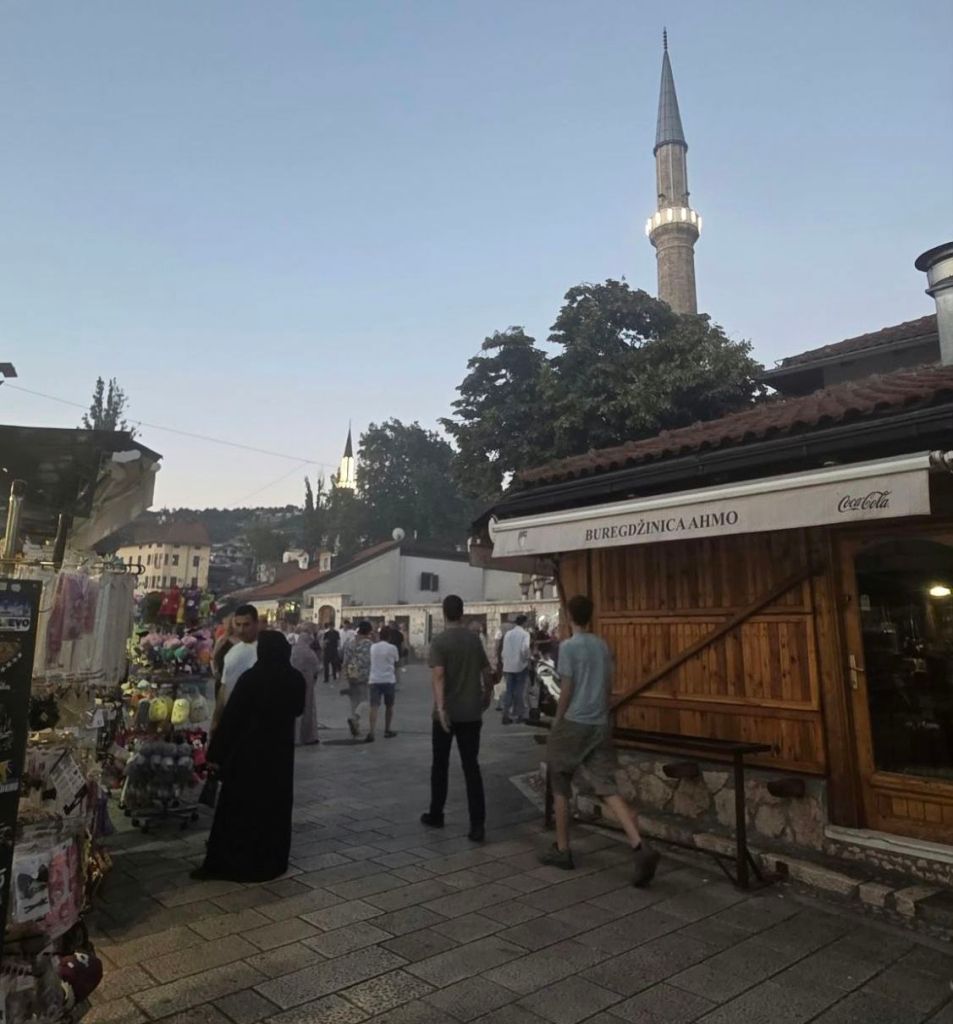
After a bit of a break we walked down the hill and across the river to get something to eat. The marketplace, that seemed to go for blocks was bustling! The air was thick with charcoal bbq smells and smoke.
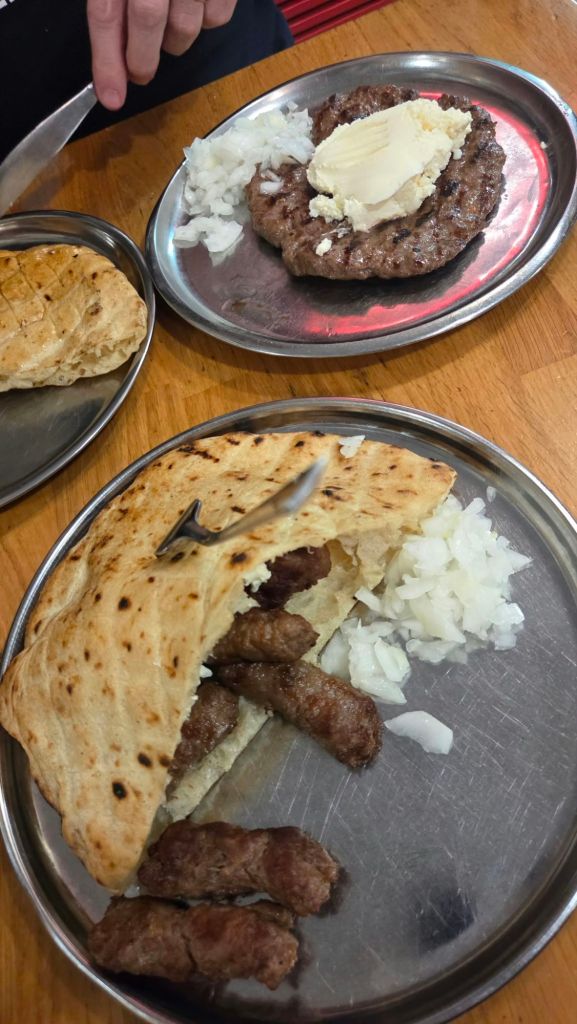
We went to a restaurant that has three things on it’s menu-ćevapi, pljeskavica (meat patties) and sudžuke (sausages), with or without cheese and onions. We ordered too much, but it was delicious.
Our first full day in Sarajevo was occupied by 2 tours.
This morning after breakfast on a terrace overlooking Sarajevo, we headed towards the old town for a walking tour. We were a bit early so grabbed a drink – Bosnian Coffee and tea – opposite our meeting point.
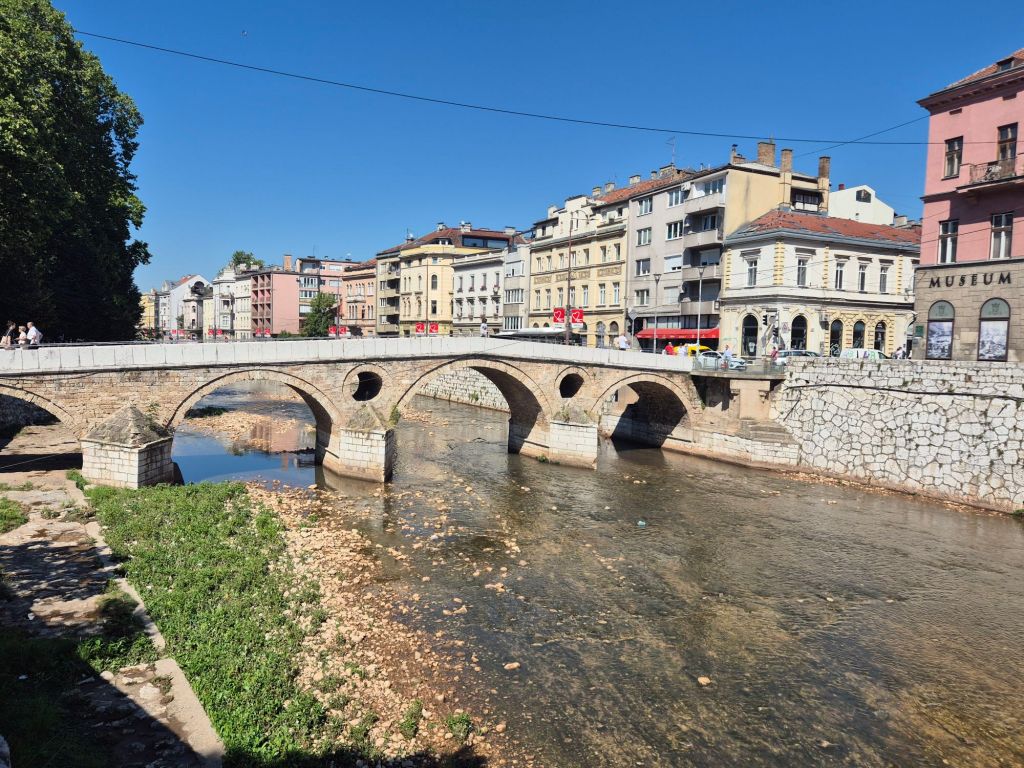
The cafe was on the junction where the Archduke Franz Ferdinand was assassinated in June 1914, the spark that eventually led to WW1. There is a replica of the car he was travelling in, the original is in Austria, footprints of where the assassin stood and a commerative plaque.
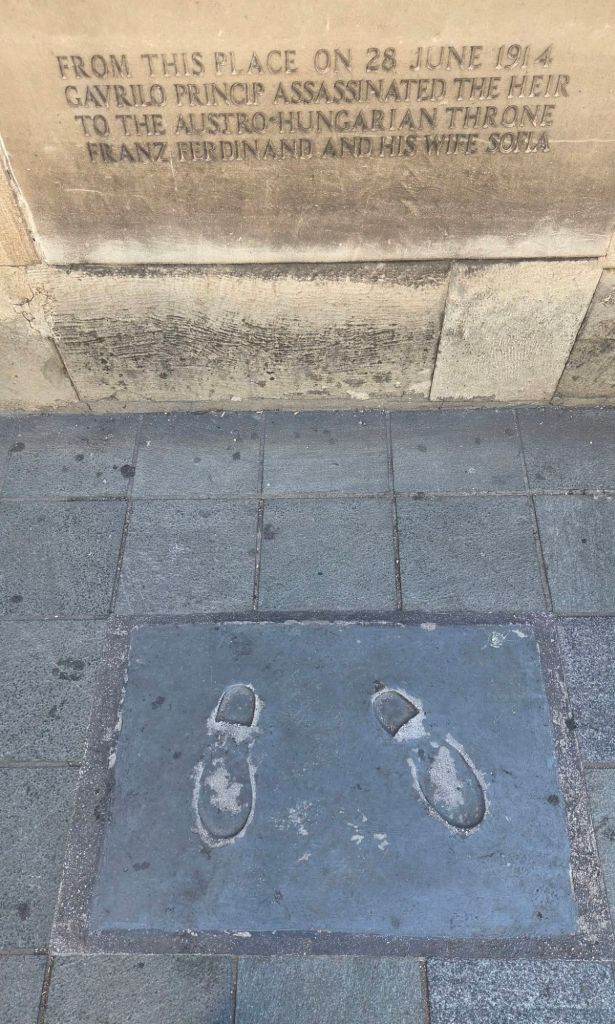
It is an important spot in world history. Fun Fact: the car’s number plate was “Alll 118” – some people believe this was predictive of Armistice Day – 11-11-18.
The walking tour took us around the old town, passing by a Muslim cemetery on the way, these were Muslim soldiers killed during the Balkans War in the early 1990s.
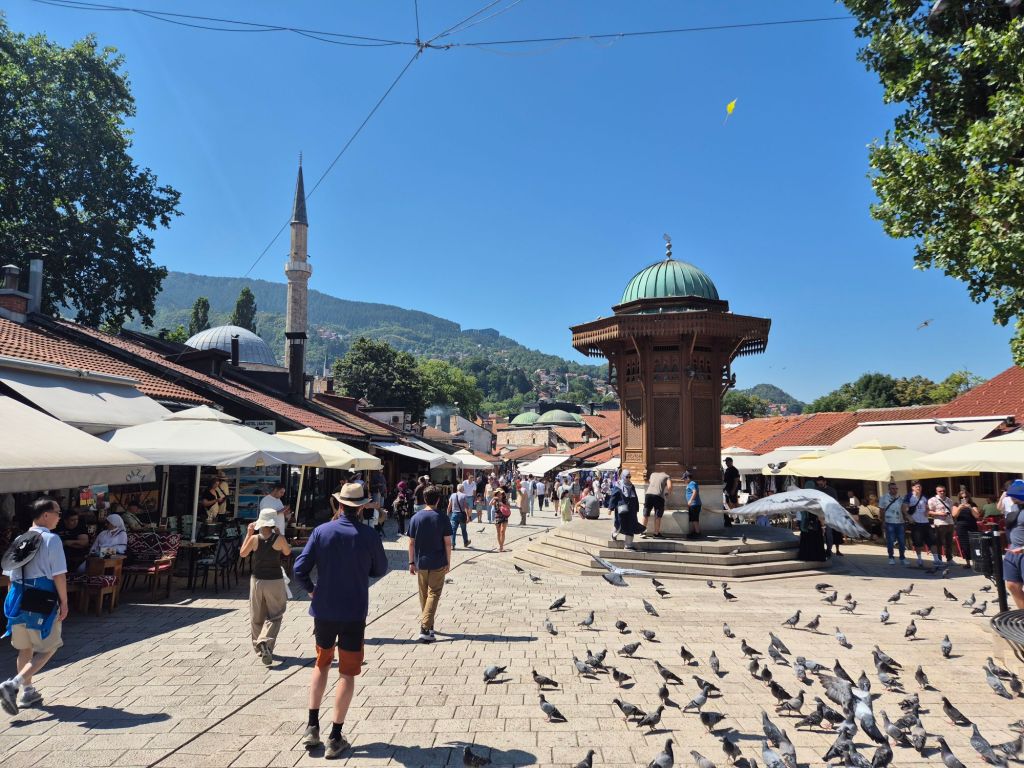
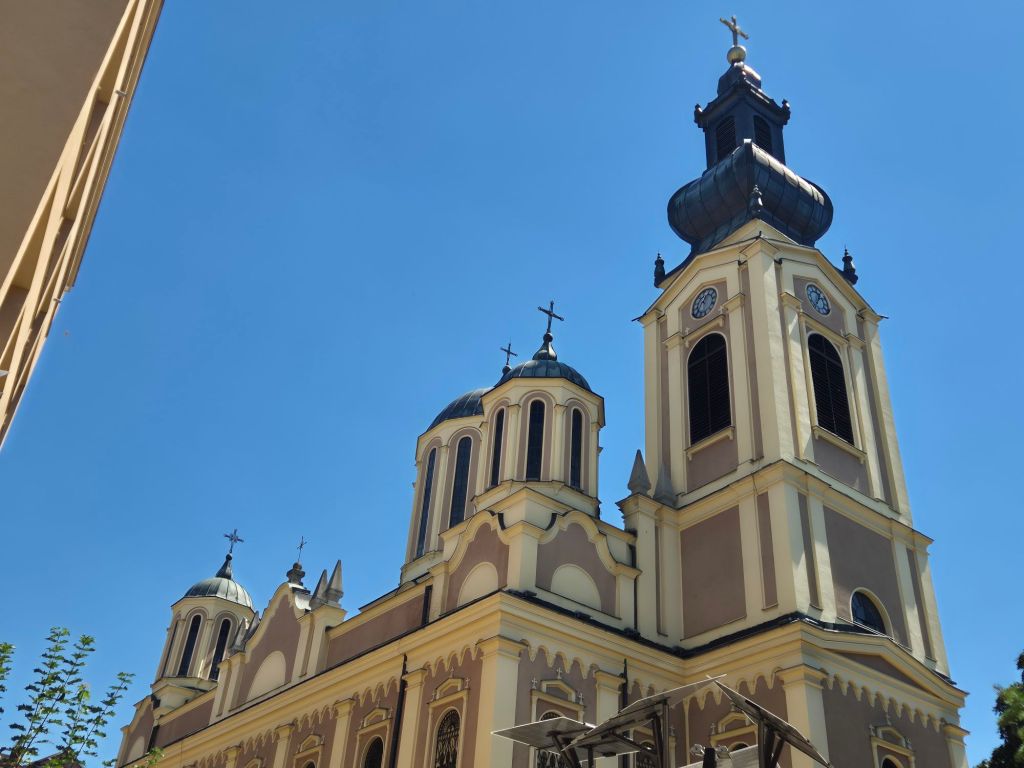
We saw a synagogue, cathedral, orthodox church and many mosques.
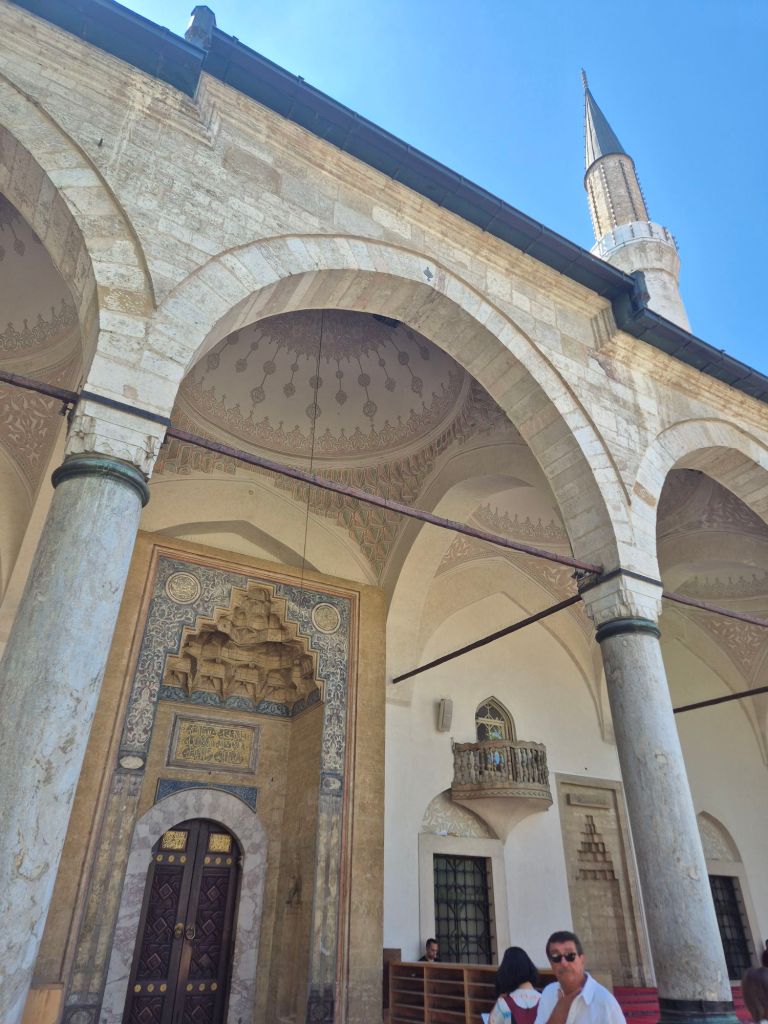
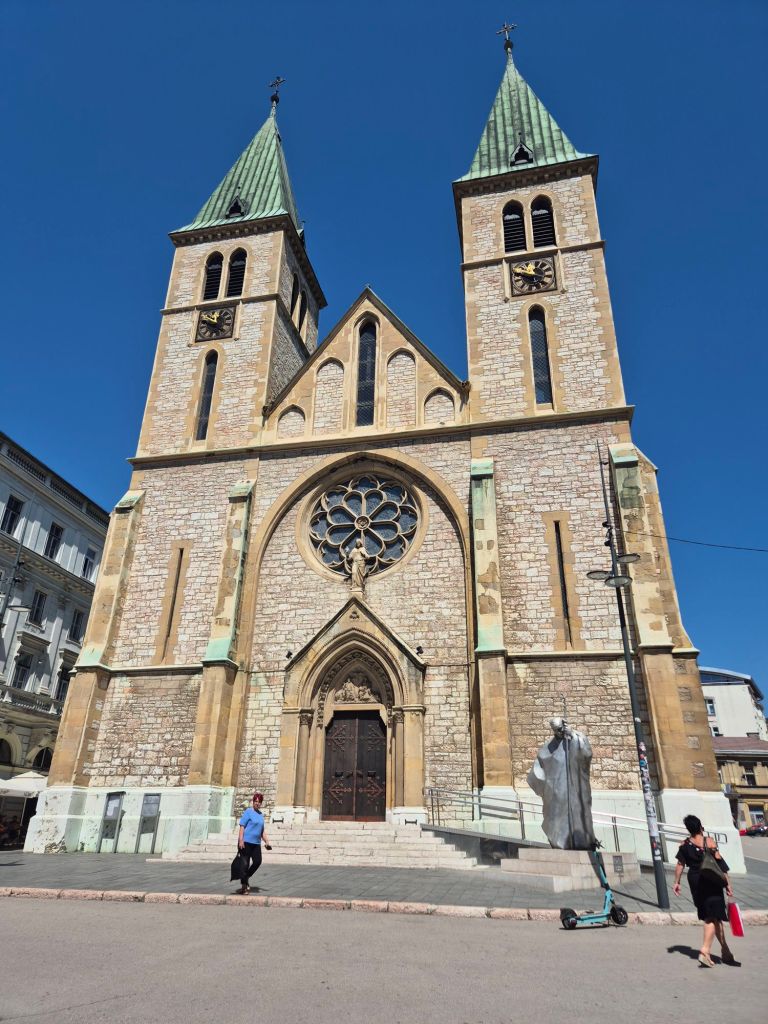
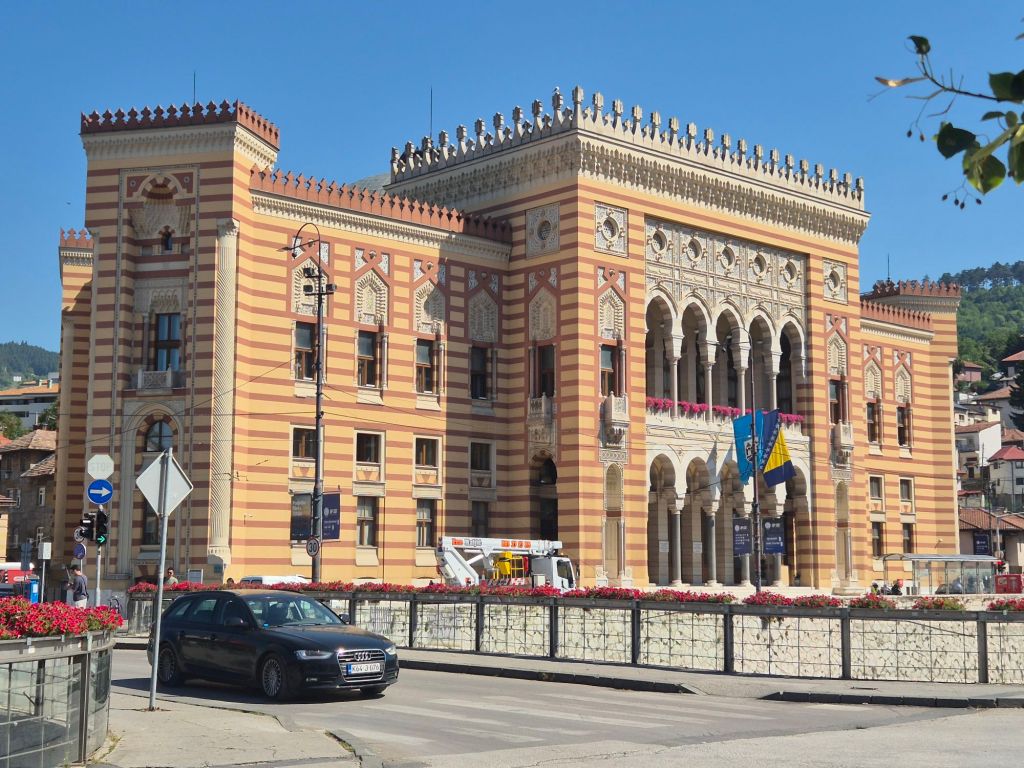
We passed by the town hall which was rebuilt after being burned down in the Balkans War – it was a library, over 1,000,000 books were lost.. They managed to find that the original architect’s family still had the design plans so it is today, as it’s always been.
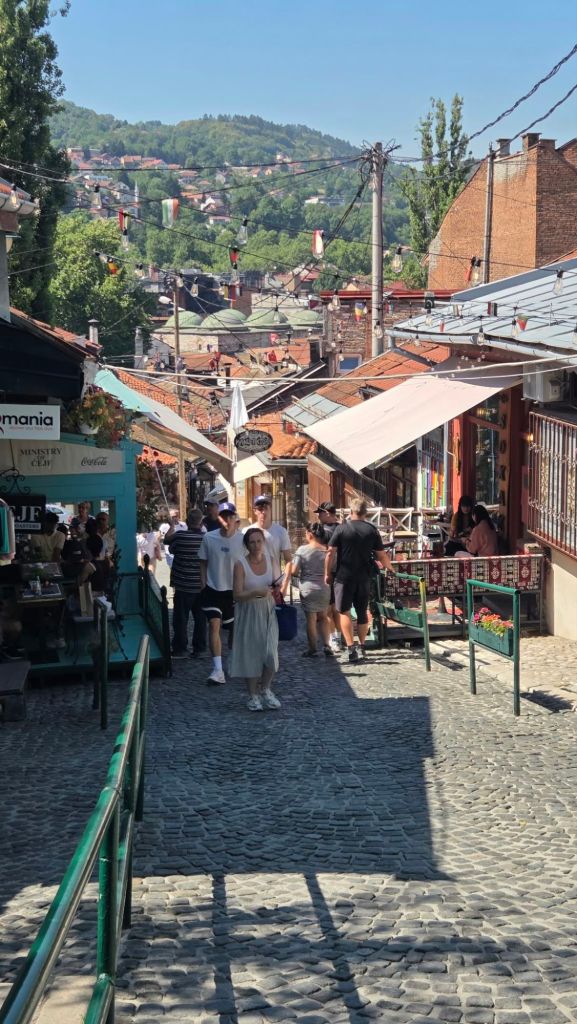
We walked through the old town where streets are named for the trades that traditionally practised there, e.g. coppersmith Street.
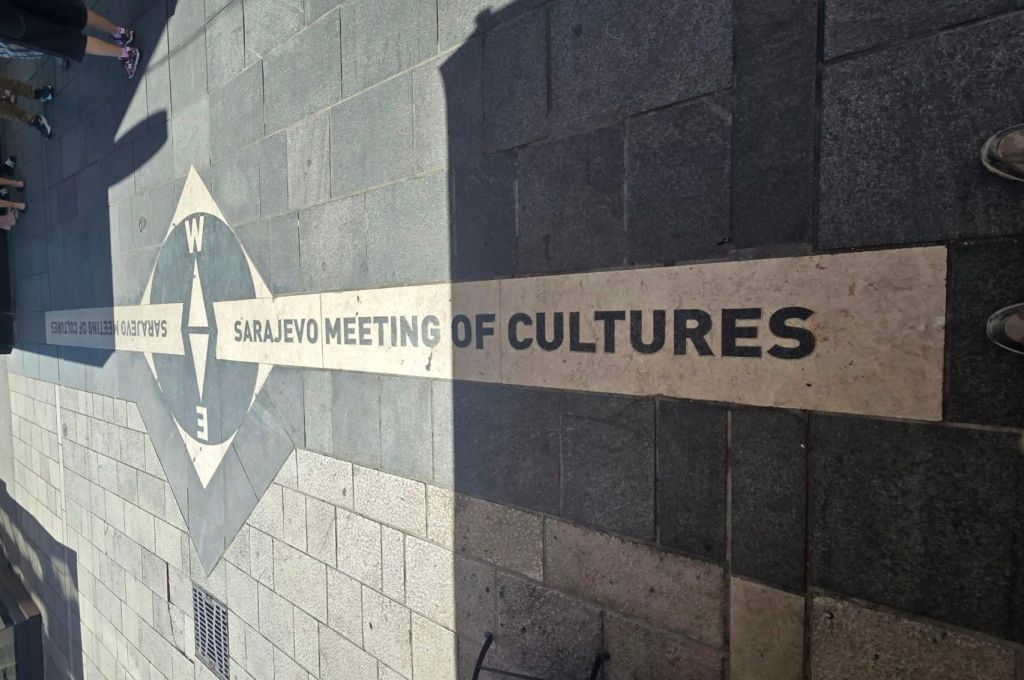
We passed a spot where it you look West you see the oriental heritage of Sarajevo from the Ottomans and if you look West you see the western heritage of the Austro-Hungarian Empire.
In the fruit market we saw where a shell landed and killed over 60 civilians going about their daily business. It has been turned into a reminder/piece of art. These types of mortar holes, where three or more people died, were filled with red paint and are called a “Sarajevo Rose”.
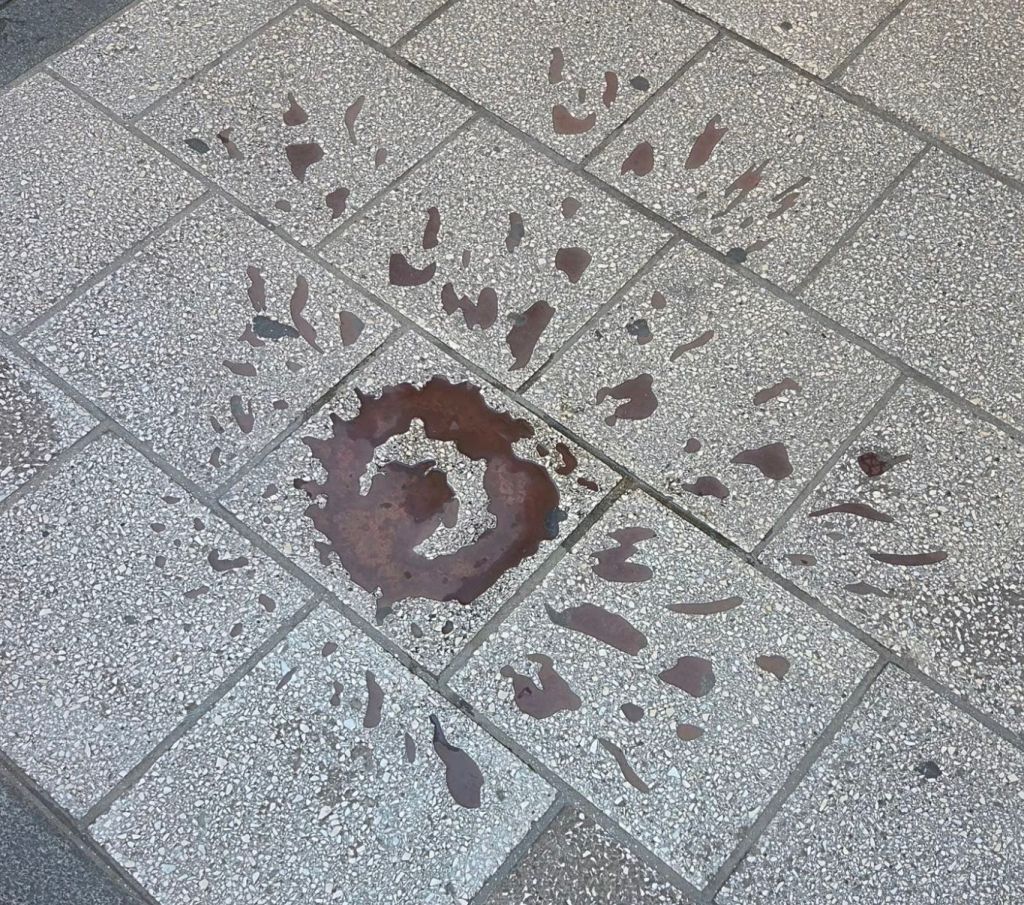
Names of the dead from this attack are on the market wall.
We learned about the siege of Sarajevo which lasted for 1425 days with over 300 shells/grenades on average hit the city each day. The worst day was 22 July 1993 when the city was shelled 3777 times.
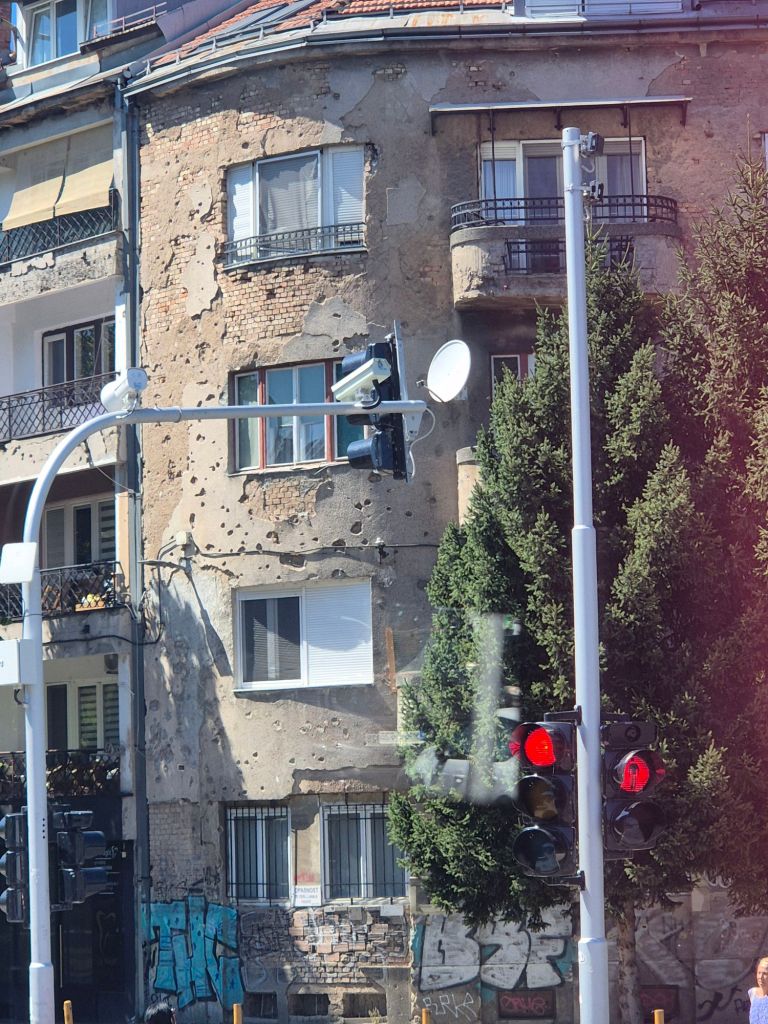
When the tour was over we had tasty lunch at a little cafe recommended by our guide, before joining the second tour.
The afternoon tour was a bit of a disappointment. During the siege of Sarajevo, a tunnel of 800m was dug under the runway of Sarajevo airport to connect the centre of Sarajevo with the Free Bosnian area outside Sarajevo. The Bosnian people used this to either escape or to get food in for starving people, as well as weapons to fight back.
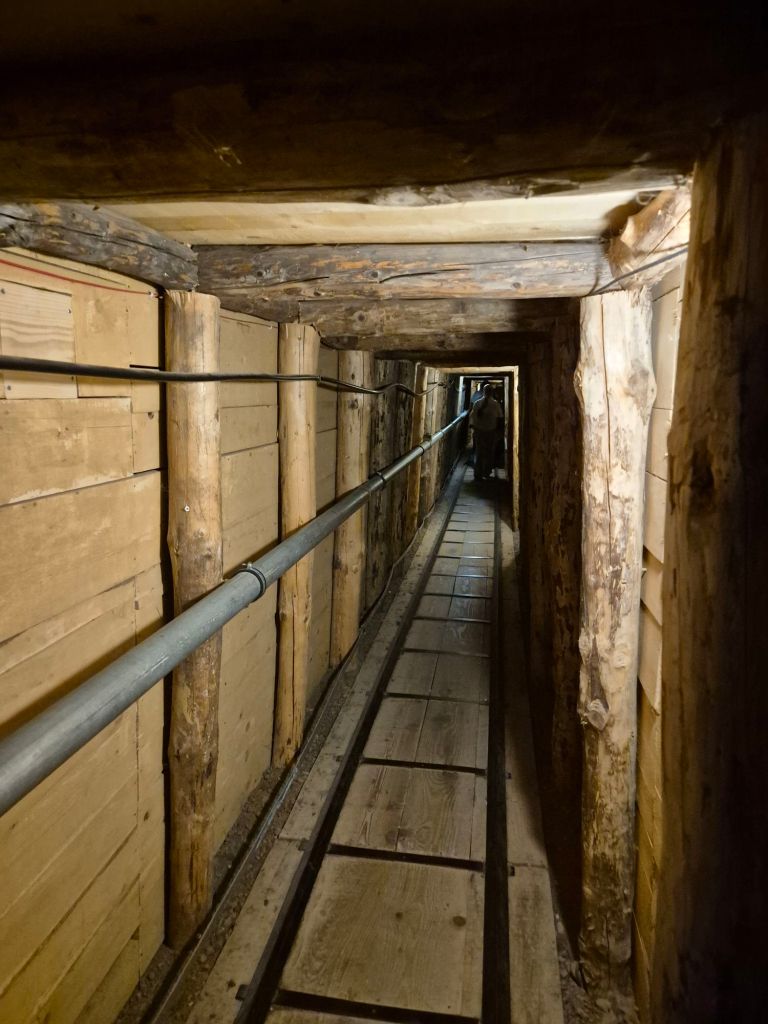
It sounded like it would be an interesting tour when we booked it, but we watched a 10min video with no dialogue, 45min bus ride to the tunnel, watched another 17min video no dialogue, walked a recreated tourist tunnel and had a 45min bus ride back. Oh well, you win some, you lose some.
Now back in our room for a break from the heat. We’ll head out later to find dinner.
This morning we walked a short distance down the road where we’re staying to the base of the Sarajevska Gondola to Trebević, the top of one of the hills/mountains that surround Sarajevo.
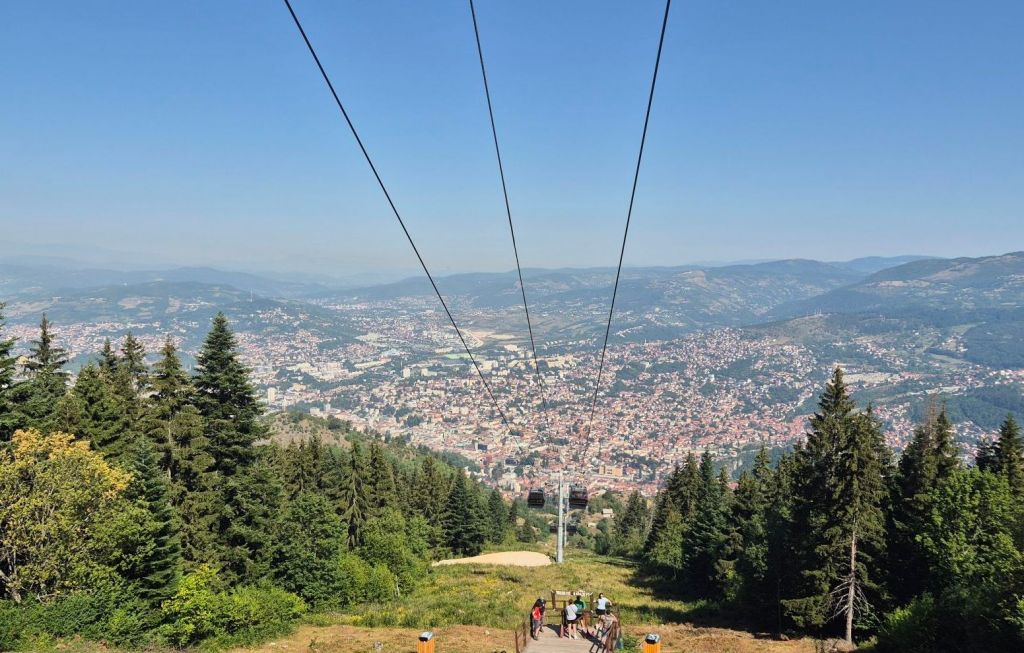
It was used for the winter Olympics bob-sled and similar sports.
Once we reached the top, 1628m, we took in the view then followed a path to the bobsled track.

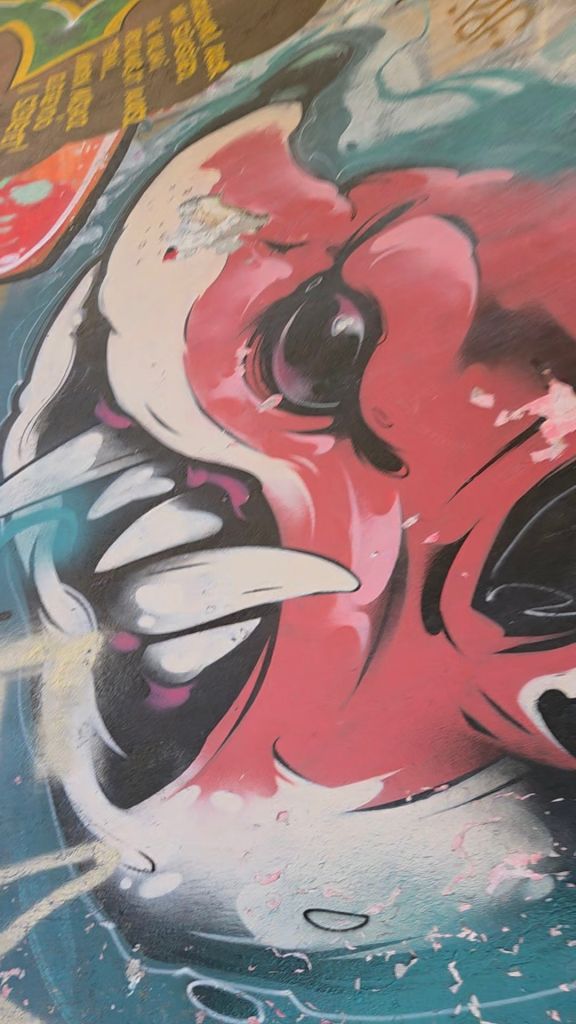
Our guide on yesterday’s walking tour had said that the track survived the shelling and has now been painted by artists. That might have been a bit if a stretch as most of the painting was just graffiti tags, but there were a couple of really well done street art sections.
Some of the corners had walls twice my height-and if you watch bobsledding you see them go right up near the top on some corners. It must be a scary sport!
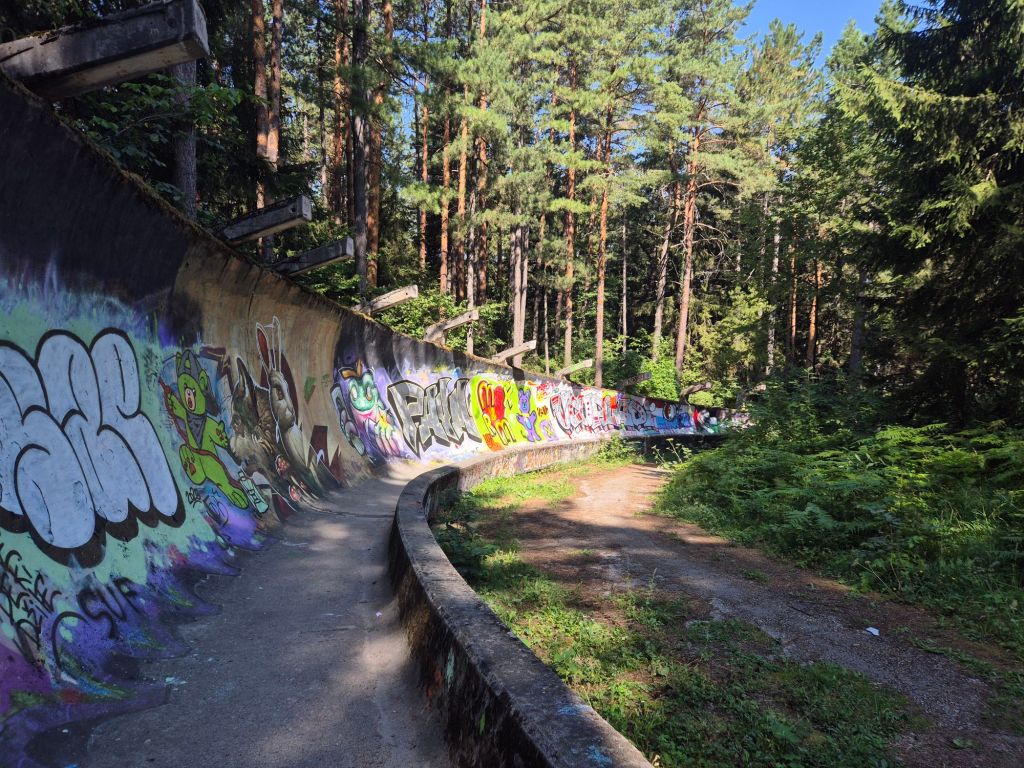
We walked along the track for a bit then thought we may as well keep going down as the 15 mins uphill back to the gondola station would have been horrible! So we followed the track through the woods to the end, then followed the road back into town.
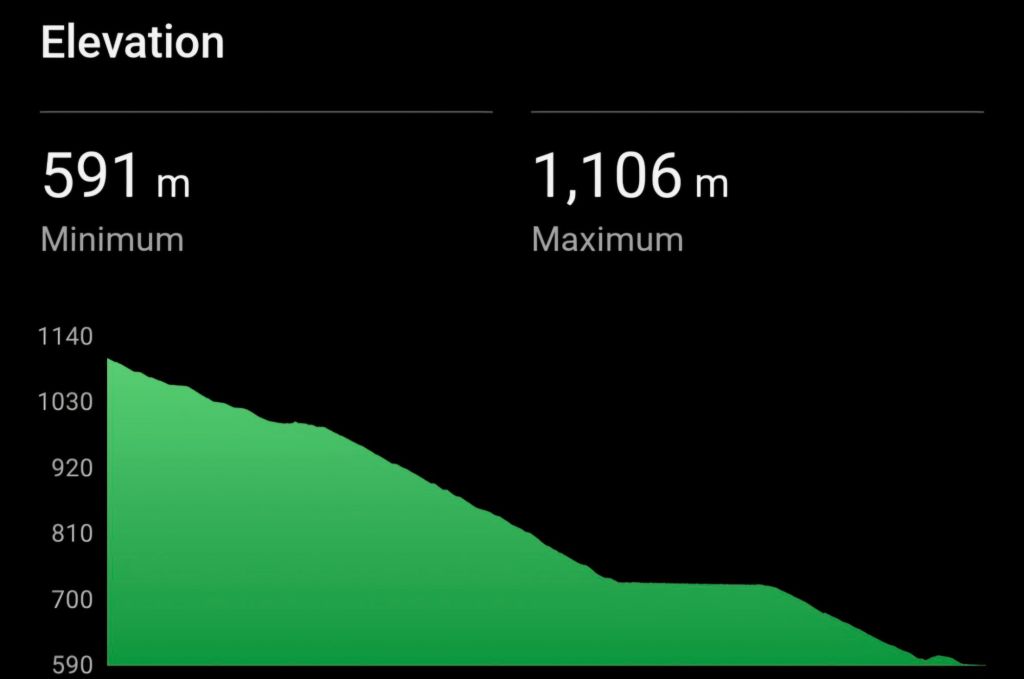
90 minutes, >5km and >600m elevation loss later we made it back to our accommodation.
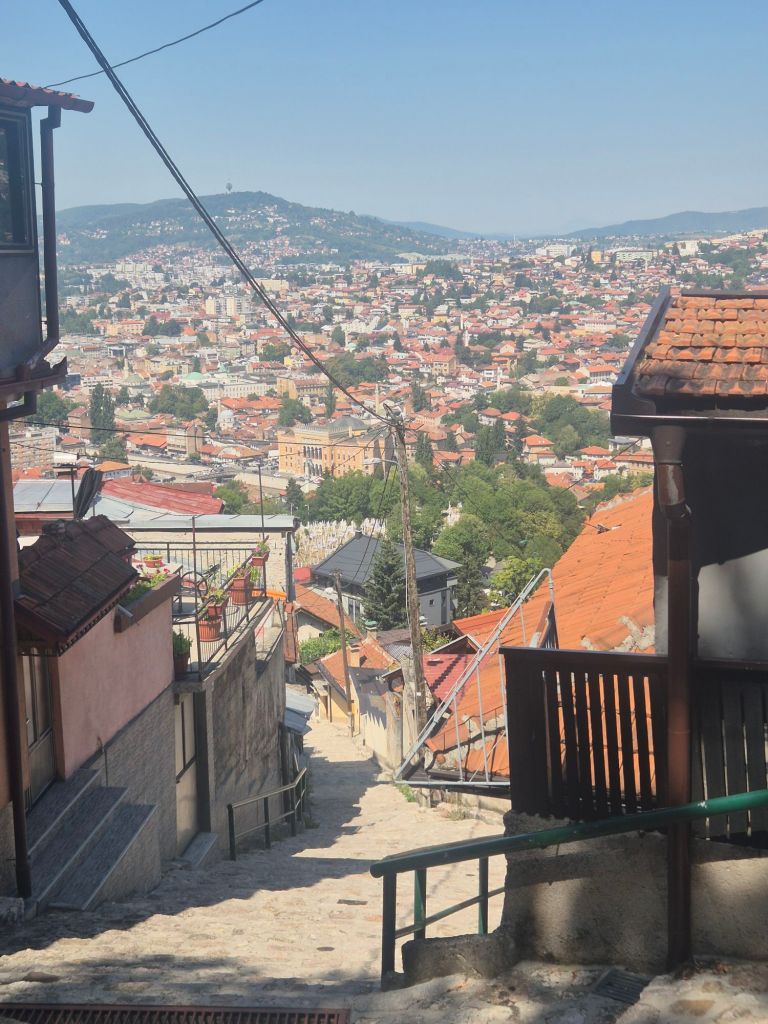
Oh my aching knees. Some sections of the road beyond the bobsled track were so steep you could only shuffle, they had hand rails and cars were banned!
After our morning of walking/hiking and sore knees, it was time for a rest.
Unless of course you’re called Kevin who took himself off to the Museum of Crimes Against Humanity and Genocide. This museum is run by volunteers and those that survived the atrocities between 1992 – 1995.
In that time over 200,000 died, 60% were civilians. It is estimated that over 30,000 are still missing. There were over 650 concentration camps housing over 200,000. Rape was used more than 23,000 times as a weapon of war on both men and women.
Within the museum are personal letters from dads to kids, kids back to their dad whom they never saw again. Accounts of seven brothers all being murdered, one girl lost everyone in her family except one cousin. Kids at one camp made themselves a soccerball from socks – 1994 was a World Cup year.
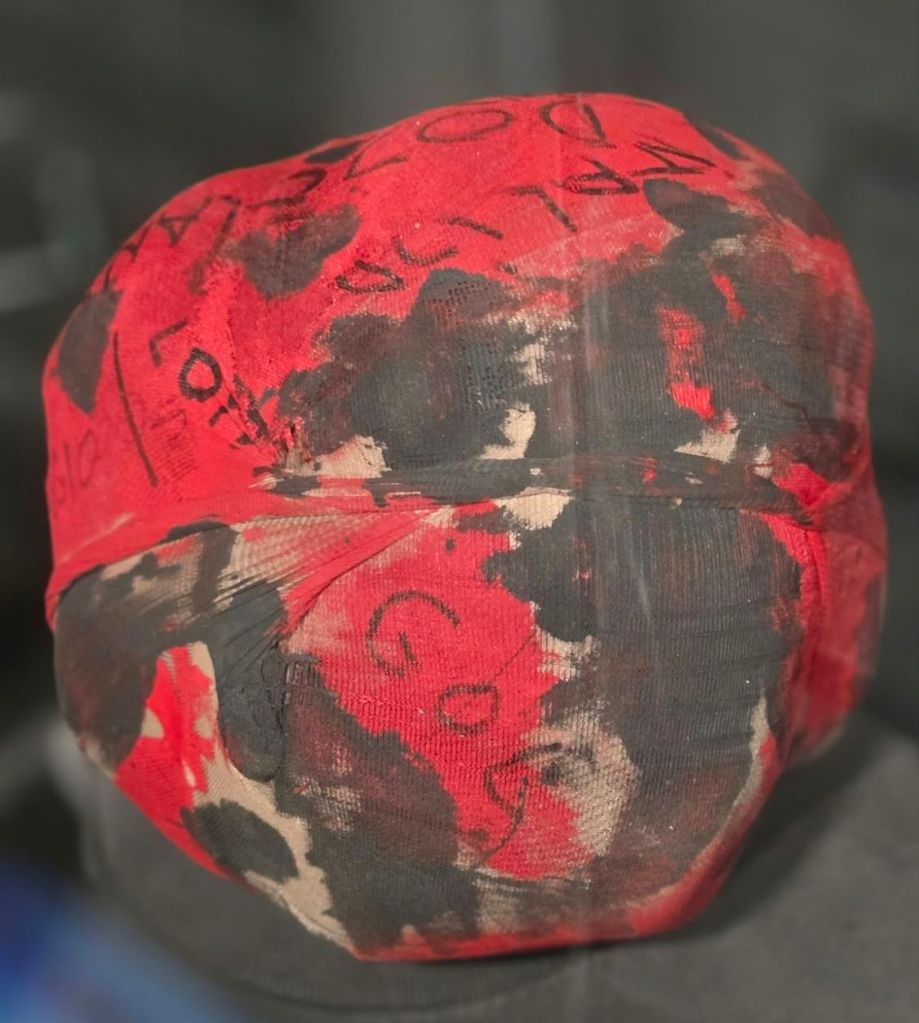
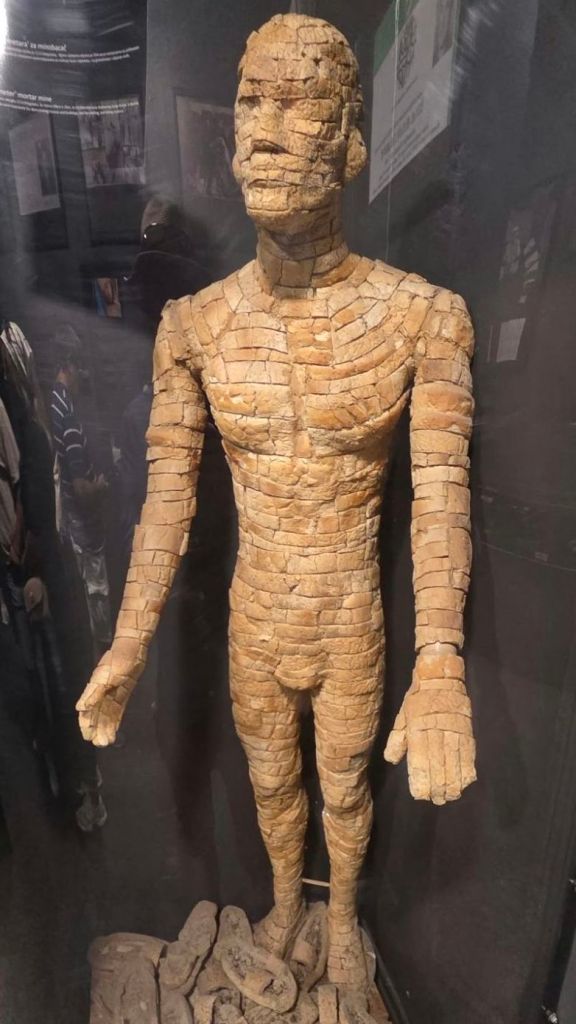
There was a statue made entirely out of bread, representing the daily ordeal of queuing for bread that many endured, often whilst being shot at/bombed.
It was a difficult museum to visit. These things happened just 30 years ago.
Later this afternoon we met back up for a pre-planned treat – a hammam and a massage. It was a lovely and relaxing couple of hours.
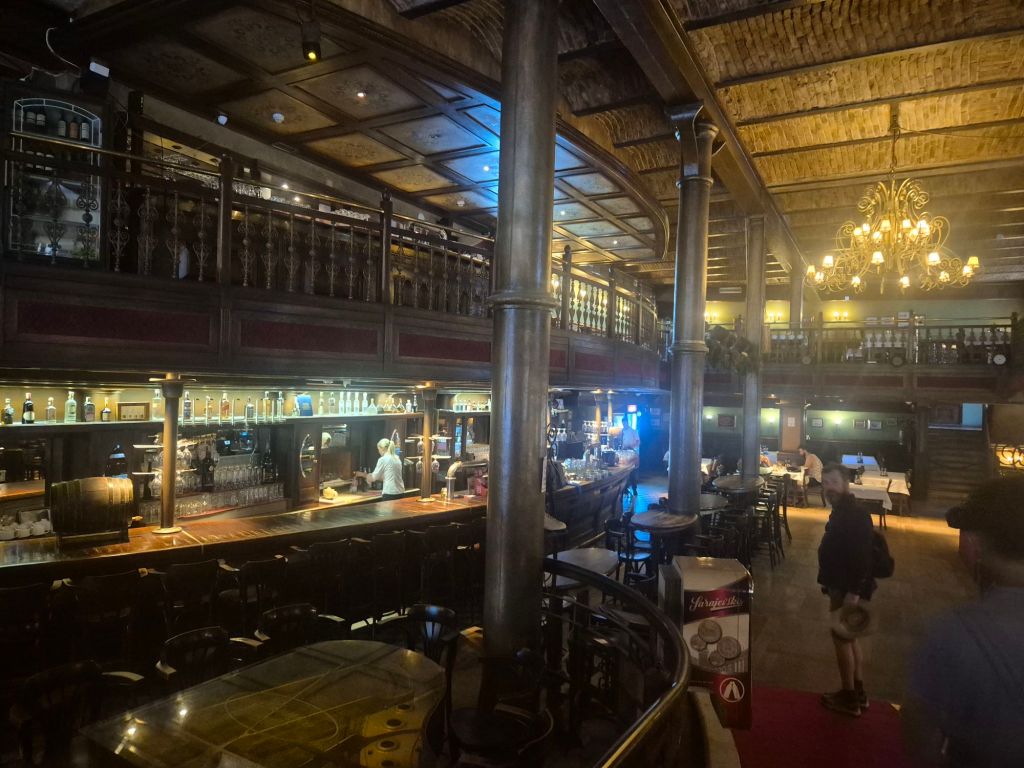
Afterwards we stopped at the Sarajevsko Brewery bar which is at the bottom of our road and had a beer and dinner before heading back up the hill.
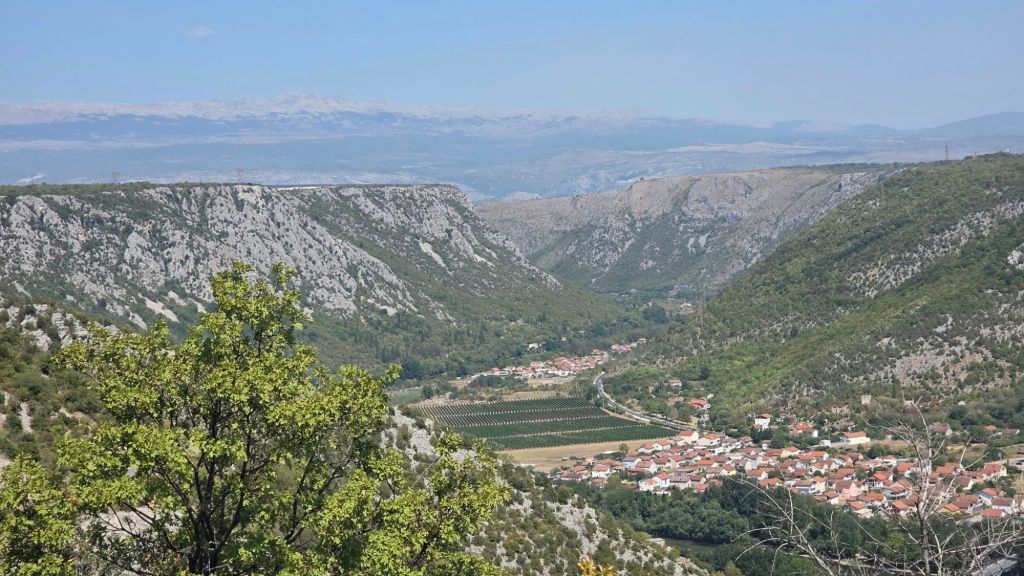
Today we headed south to Mostar. The journey down was through a gorgeous valley surrounded by very pretty granite mountains and turquoise rivers. Much more dramatic landscape than the previous hills we’ve seen.
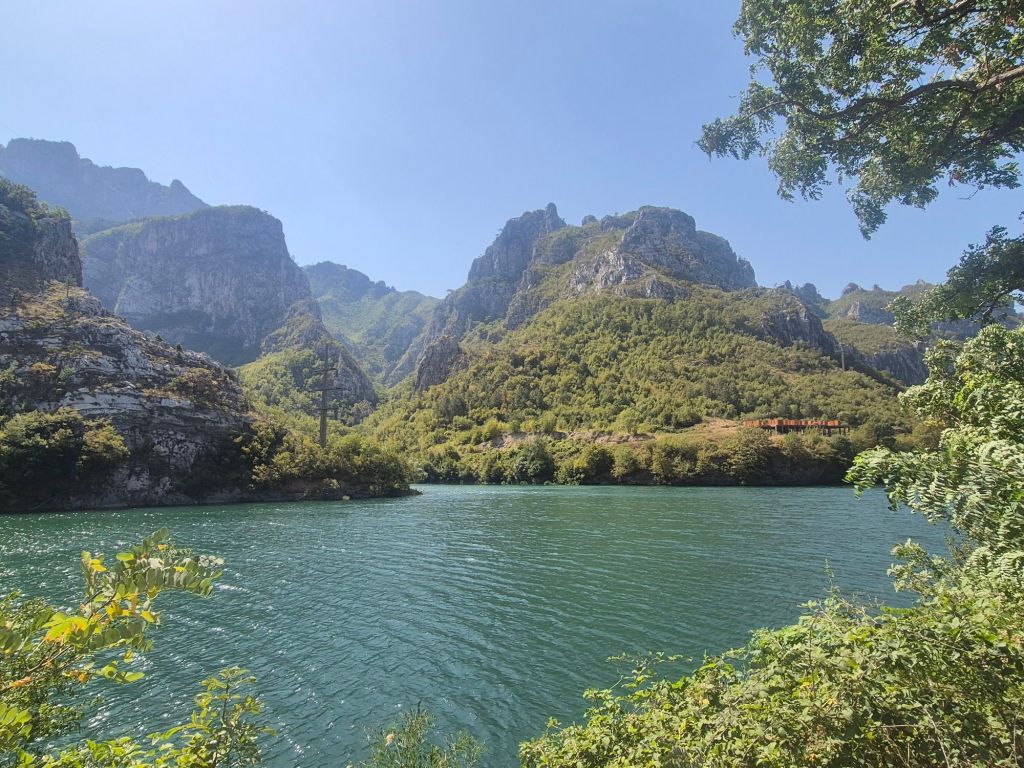
We stopped by the roadside and dipped our feet into the water. Very relaxing. Not quite right for swimming as there was a strong current, a sharp drop off and a strong wind!
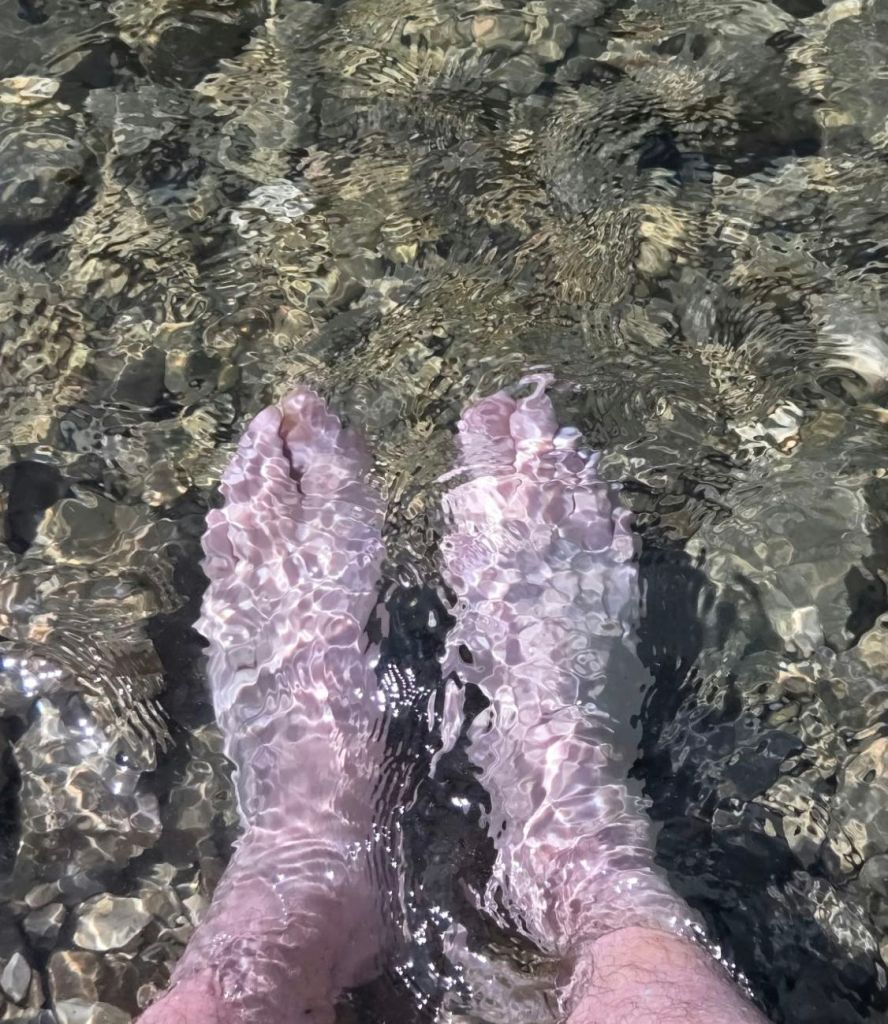
Leaving the river’s edge we passed through a couple of tunnels and instantly the landscape changed. From granite mountains with lots of greenery, we suddenly had dry brown hills with scrubby plants as our view.
As it was a short drive we arrived in Mostar before lunch so heading into the the centre, found a car park and walked towards the old town.
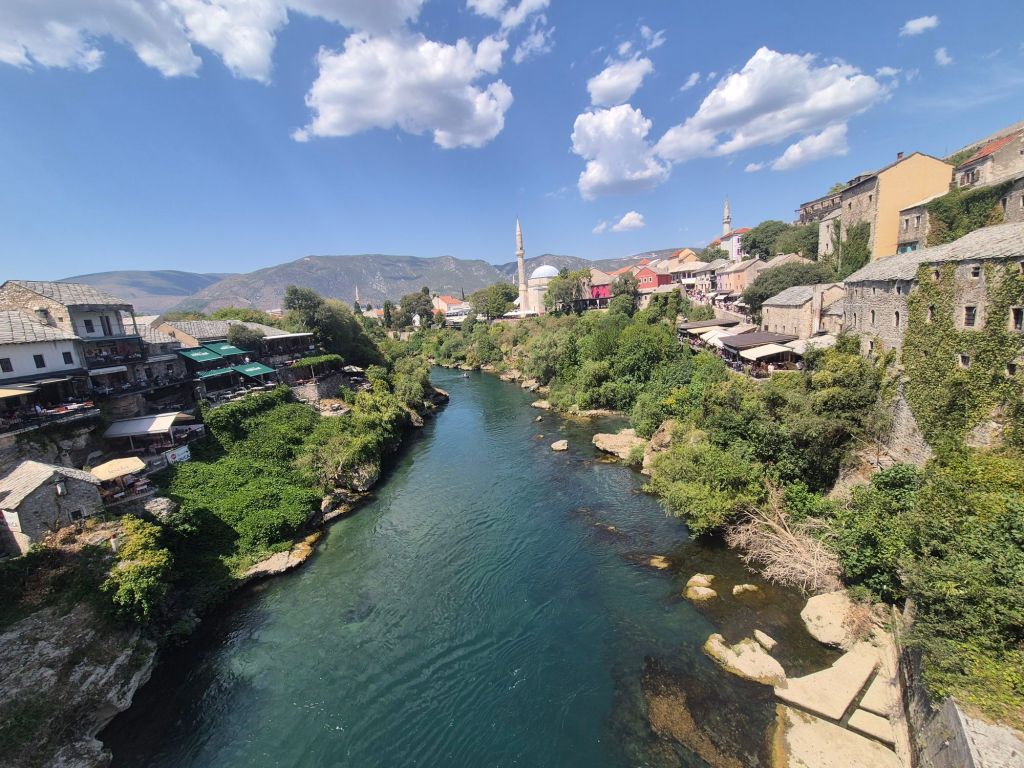
Yet again it was hot 41° so we grabbed a beer and soft drink in the shade to vaguely rehydrate ourselves. The pedestal fan and misting that the cafe provided helped, though it is much less humid here than Ljubliana was last week.
We ate lunch by the river, close to the famous Mostar bridge. The original bridge was built in 1566 survived both world wars, only to be destroyed during the Balkan War in 1993. What we see now was a rebuild using old stones and completed in 2004.
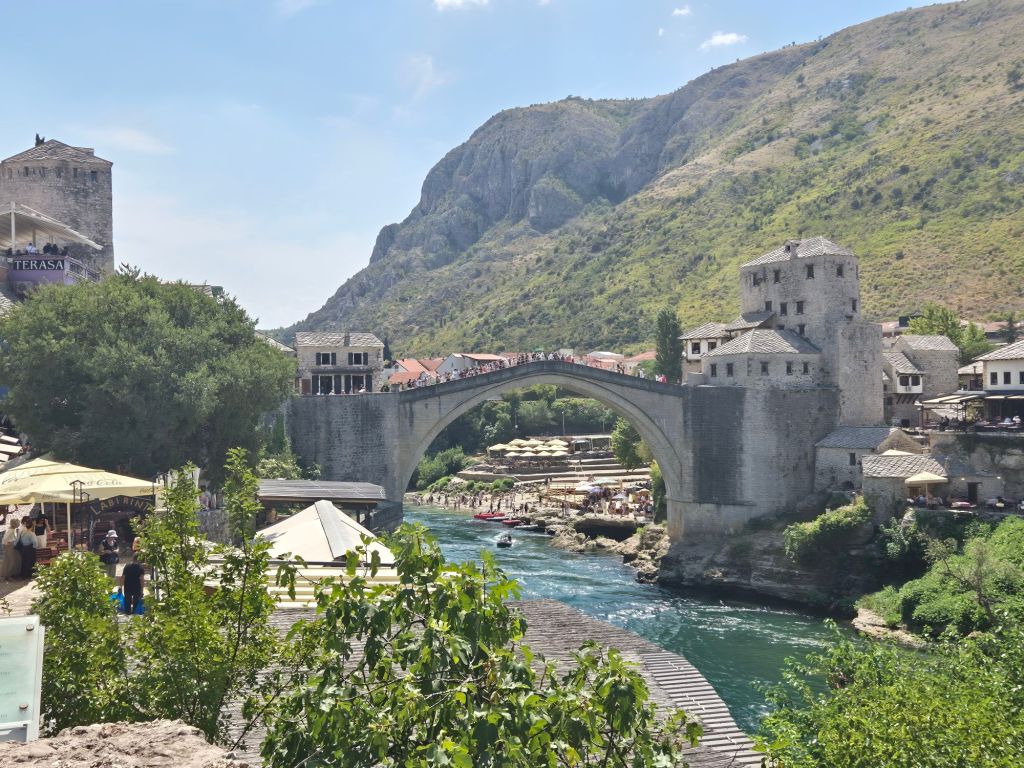
The bridge surface appears to be marble, it is so slick and shiny, they have added horizontal slats to aid people to get over the bridge without slipping.
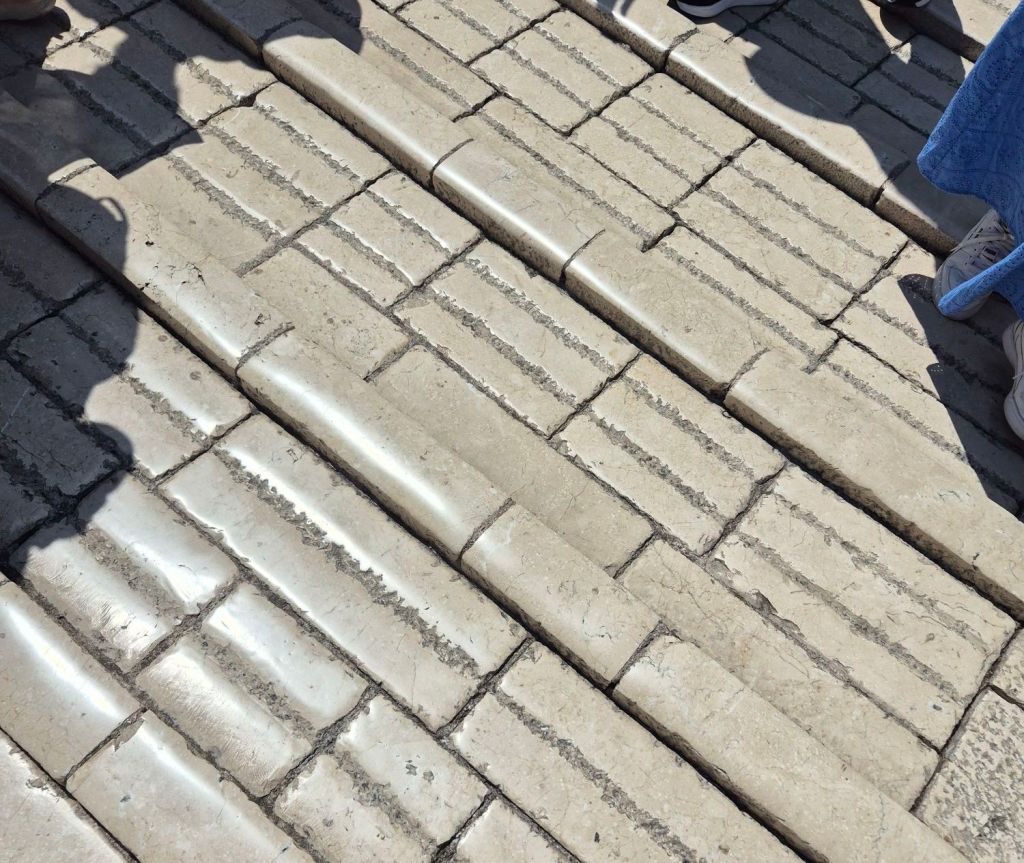
The streets of the old town are bedded river stones, they’re also highly polished from years of wear, we frequently saw people sliding across them, but fortunately we didn’t see anyone fall!
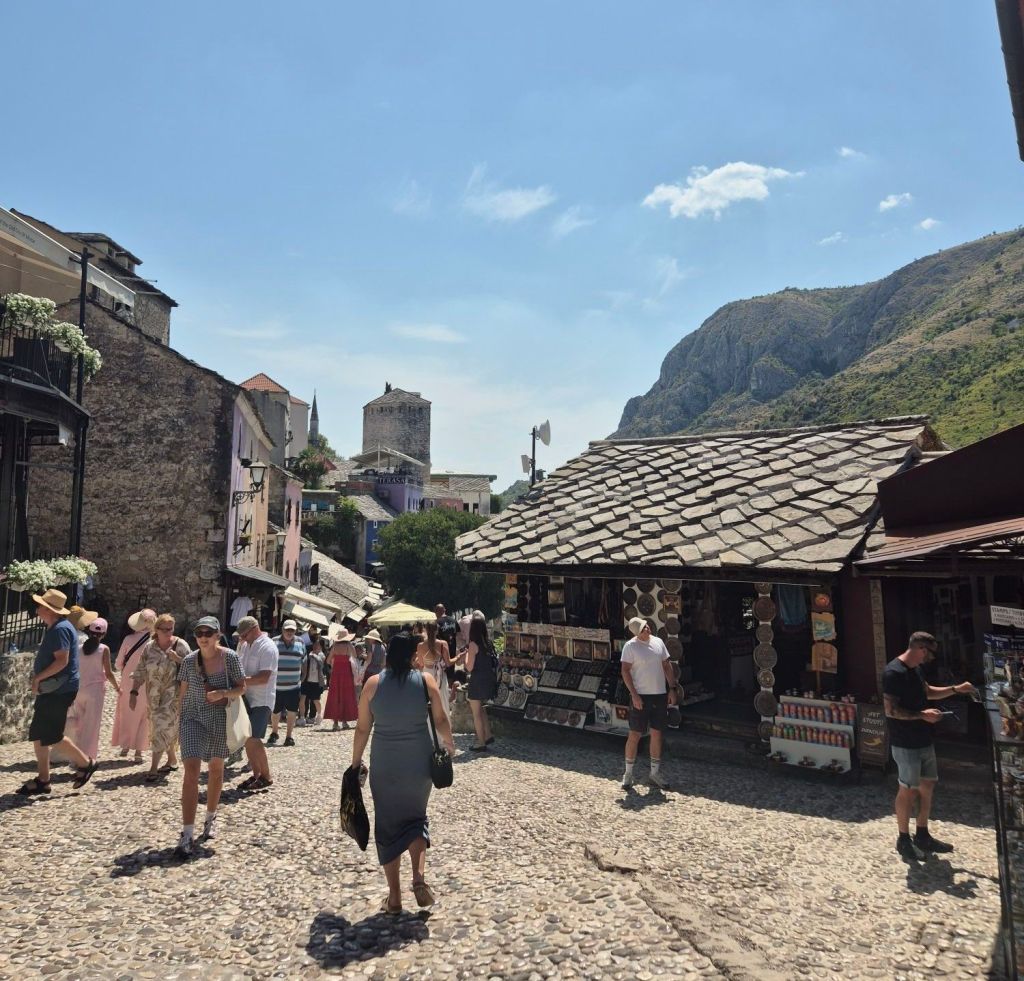
The river wending it’s way through the city was a welcome relief for the many people swimming in it. As were the second and third cold drinks and icecream that we consumed in an attempt to stay cool.
When we got back to our car and drive towards our hotel the temp was showing as 42° ( a new colour for the temperature blanket!) No wonder it felt hot!
It took 6 hours for the AC to reduce the temperature in our room to 26° last night. It only got down to 24°!
Due to another extreme heat day, this morning was spent making a plan for October through to mid-December. Cities to stop at, ferries needed and bookings that likely need to be done well in advance. Plans made in pencil, Auschwitz tour booked, 2 ferries booked.
We then headed to Međugorje, a town famous for some of the population having apparitions of the Virgin Mary, the 1st was in 1981, by a local called Ivan. The town became popular and despite Communism, people kept coming. The following year, Ivan was out with friends on his way up ‘apparition hill’ when the Virgin Mary appeared again. She told him not to go on as the police were waiting for him.
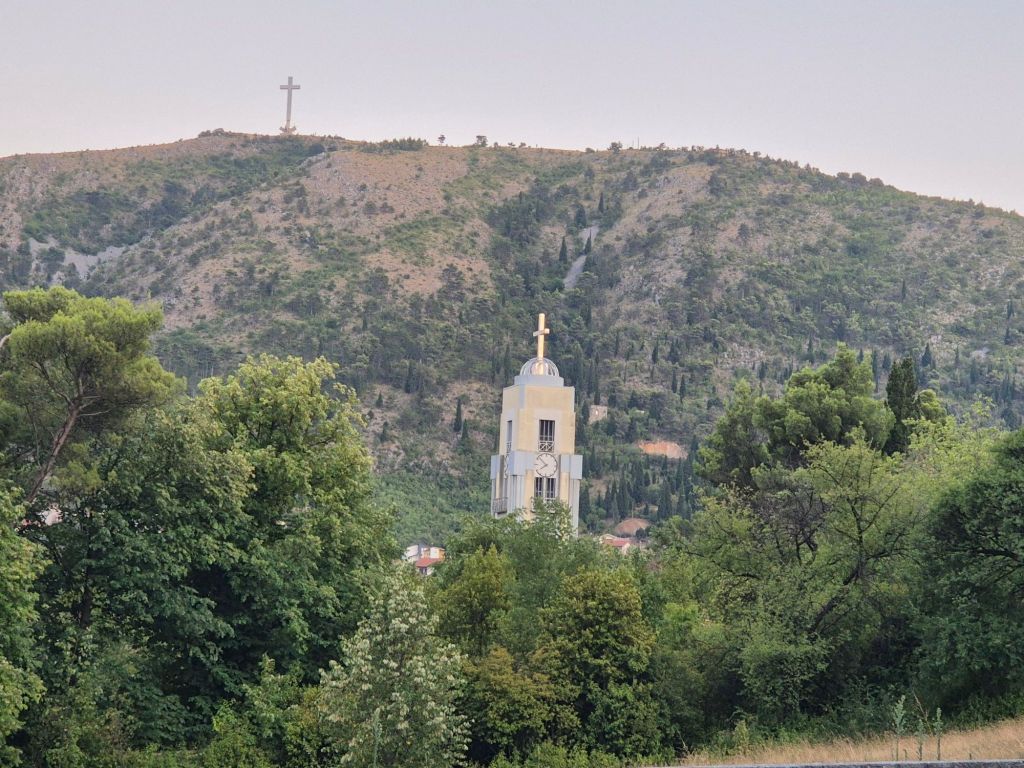
The place where this apparition is reported to have taken place is marked with a blue cross. Blue because that was the only paint his father had in the shed when they installed the cross.
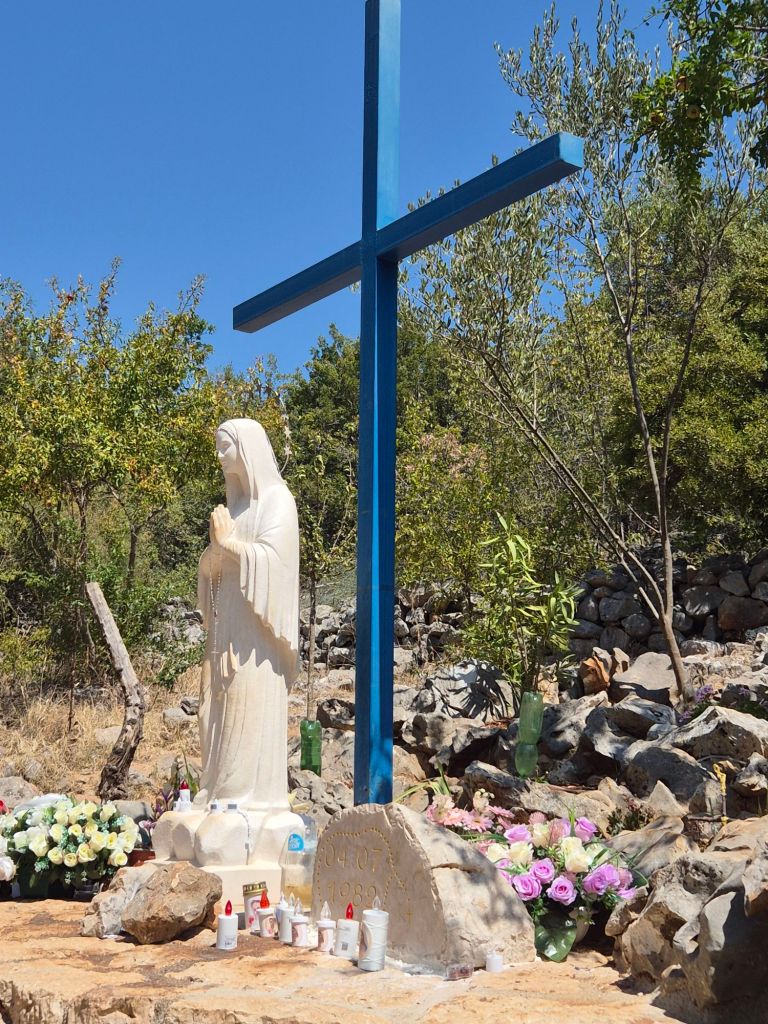
We didn’t go up the hill as it was really hot, and we didn’t have appropriate footwear for the terrain. The rosary beads from Fatima got a fourth run. (Can’t hurt right?)
Međugorje truly is a place of miracles, the public toilets were clean and free.
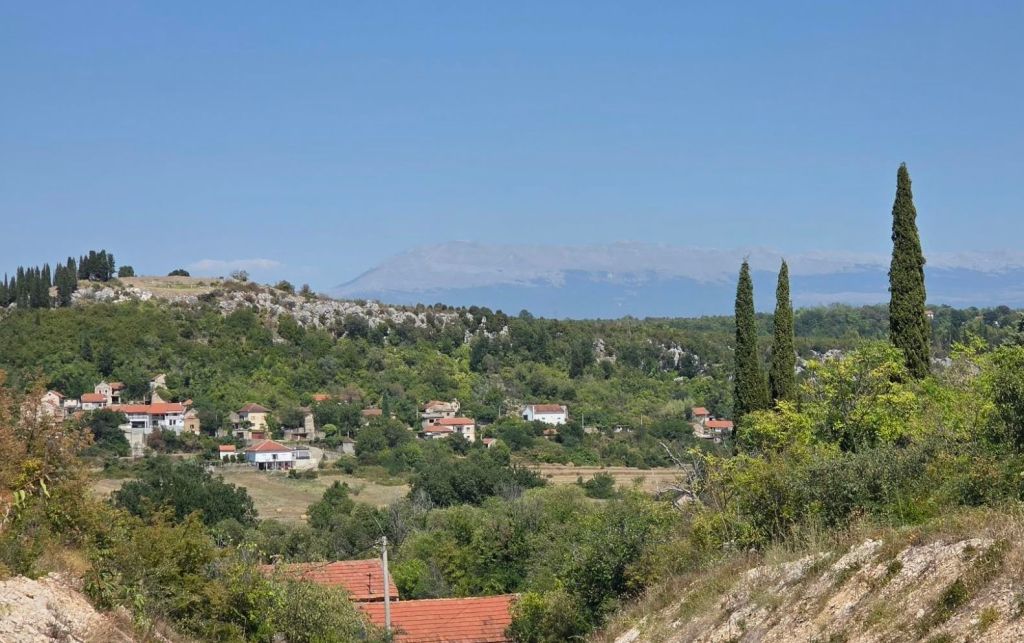
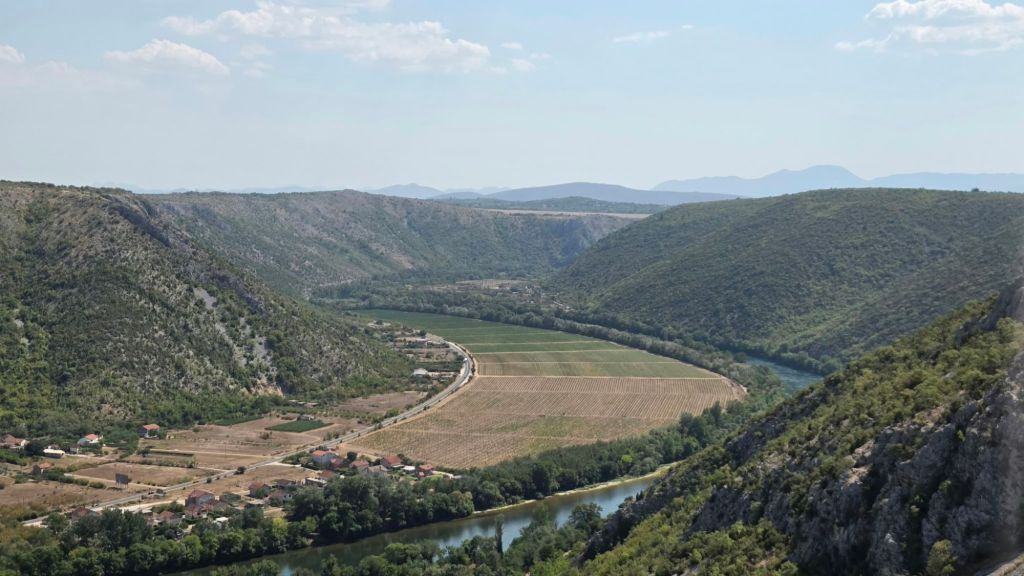
Then it was back to the accommodation via some stunning scenery – the main reason we did this drive.
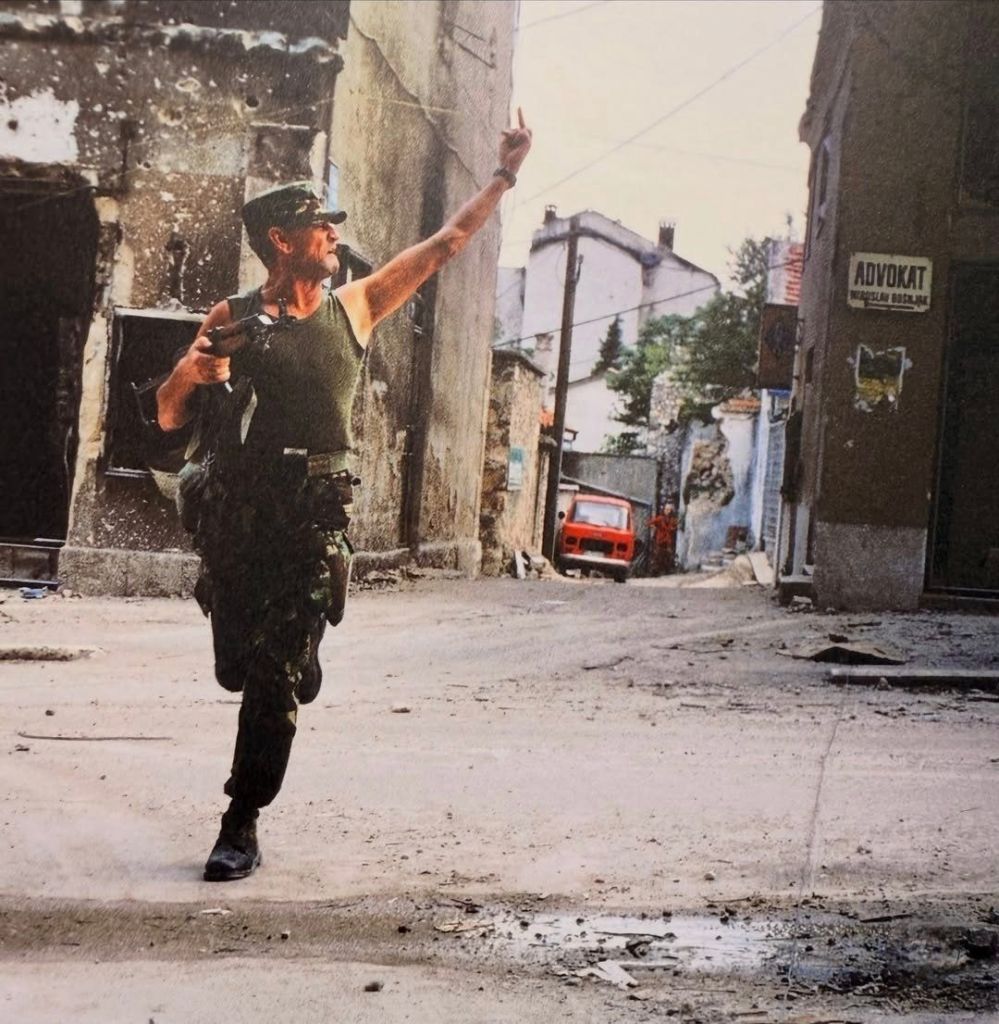
In the afternoon we went into Mostar Old Town again and visited the Mostar War Photo Museum, it included a display of photos about different aspects of the local battles and siege as well as a 30 minute documentary. It was quite intense as you could imagine. Kevin’s favourite photo was some boys playing soccer in the shelter of a garage. (Couldn’t find it online) Mine was a soldier sprinting across a street flipping the bird to a sniper. If you might die, may as well be protesting as you do!
From there we grabbed a bite to eat before joining a tour ” The Death of Yugoslavia “. The tour had been scheduled to start at 4pm, but was rescheduled to start at 6pm due to the heat.
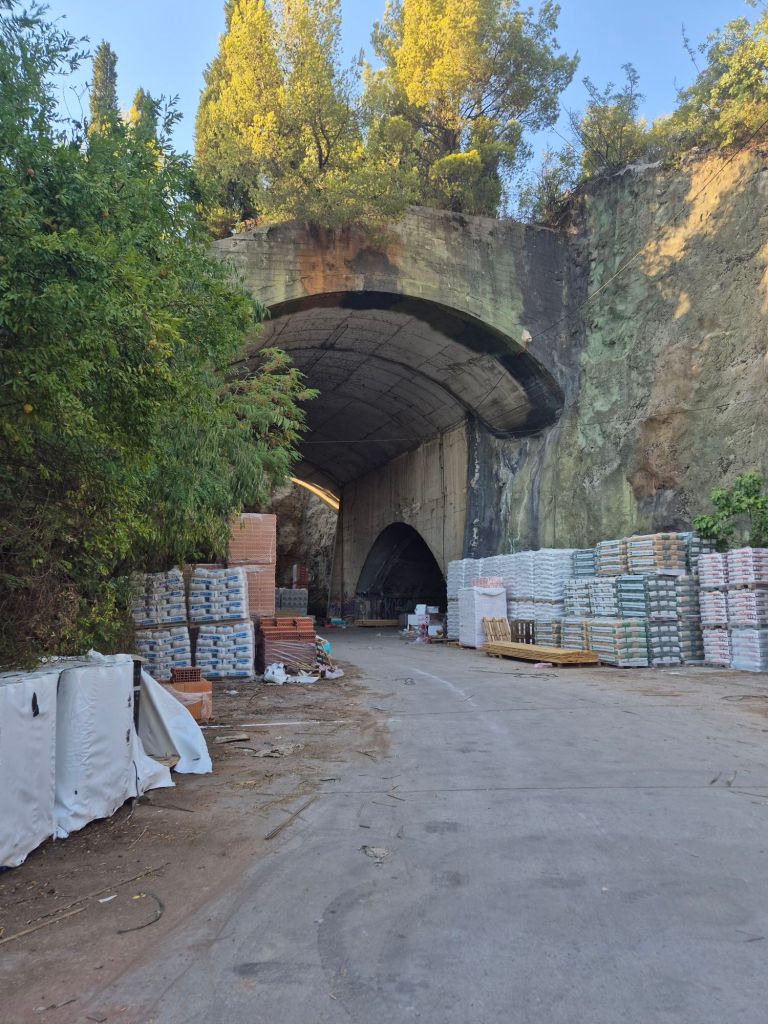
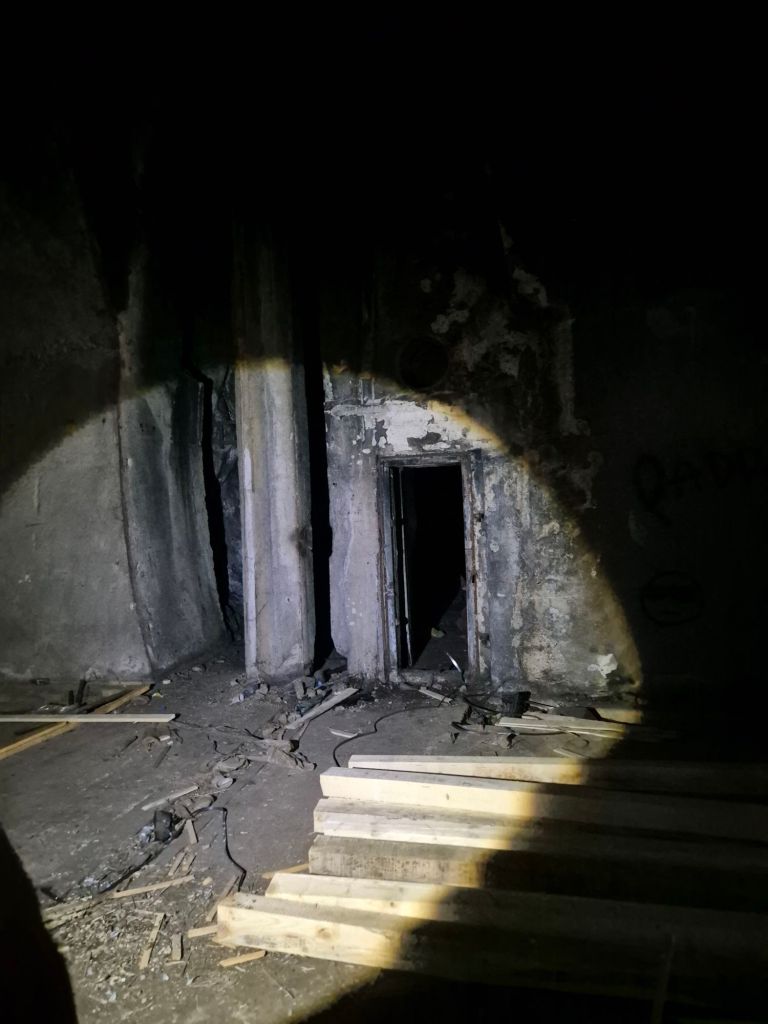
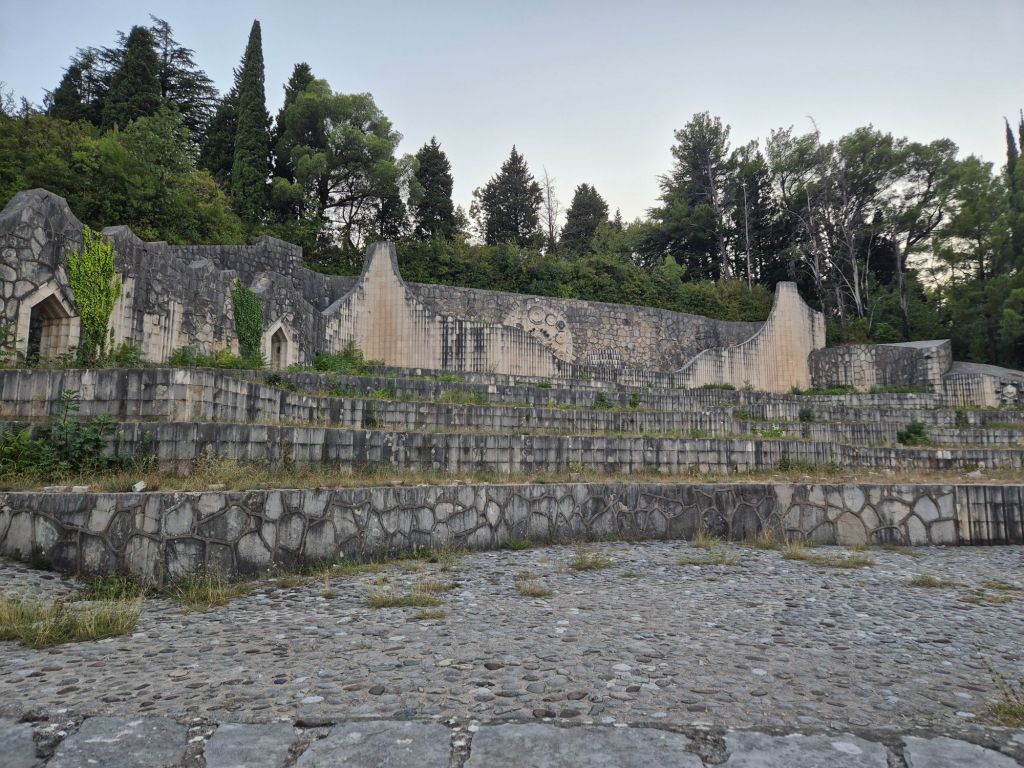
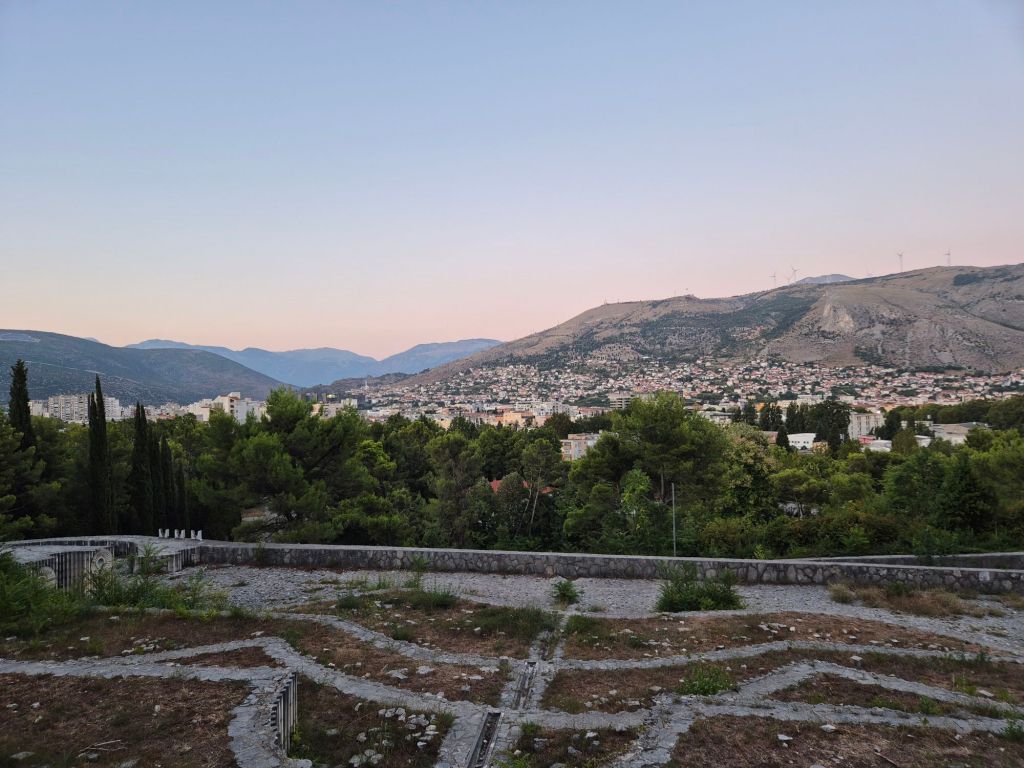
It was an interesting tour, in four parts that covered regional politics and conflict since WW2, through to today, from Tito’s secret MiG tunnels to a memorial to the WW2 partisans.
Another day over 40° so we had a lazy morning indoors and did some planning for our month in the Balkans when we return from Türkiye.
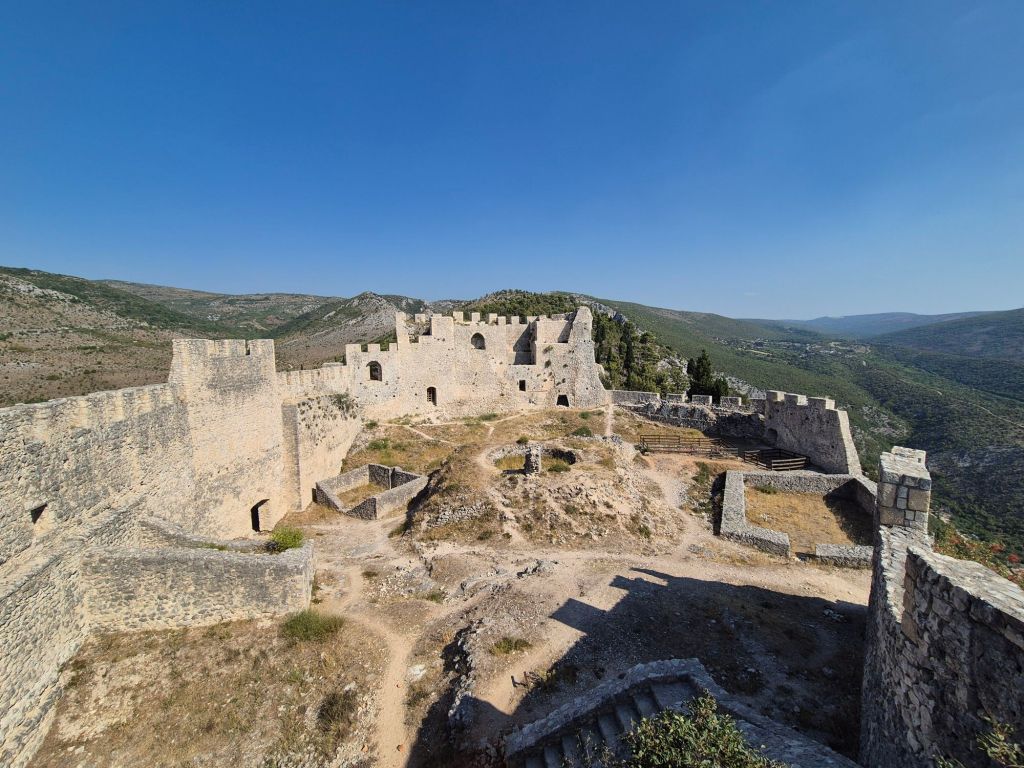
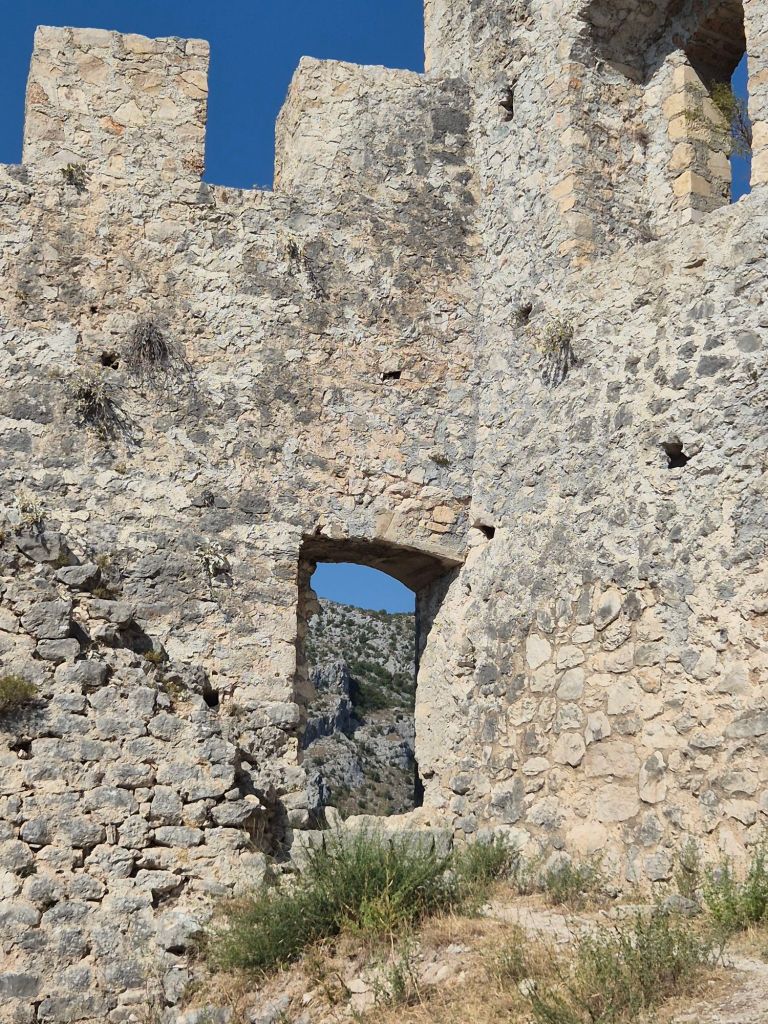
We then drove to a hill a short distance from town, parked up and hiked up to Stari grad Blagaj (Blagaj Fortress).
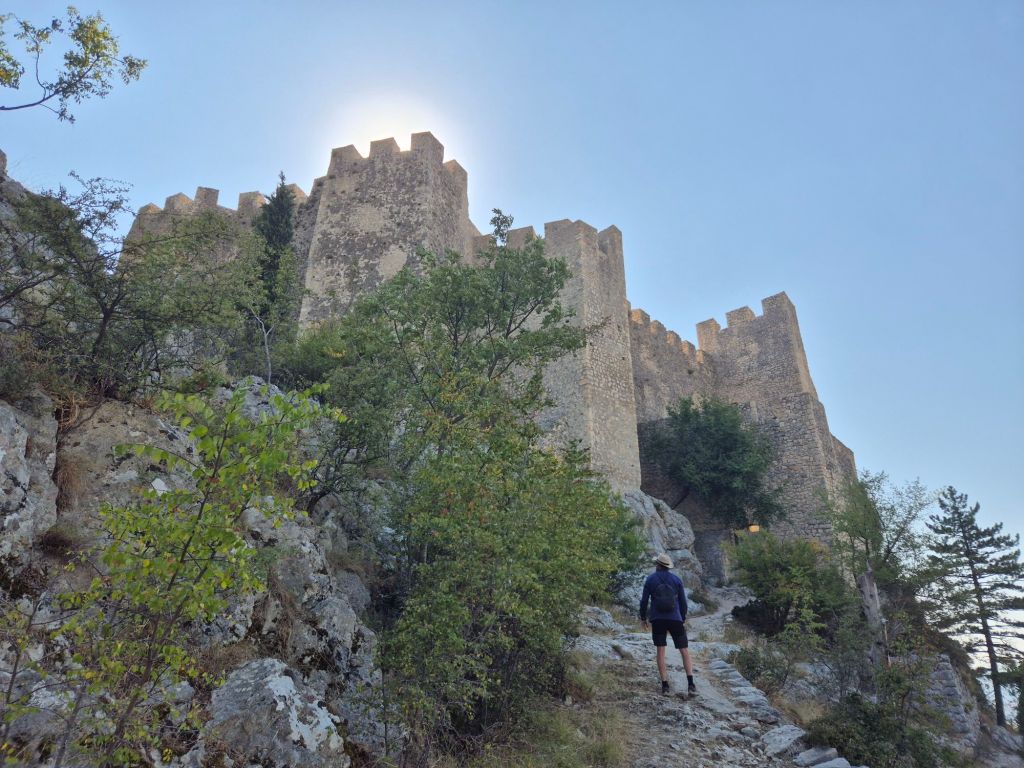
It was the strangest thing, 40° today felt so much cooler than 40° at home. Maybe the lack of humidity here? Who knows.
So anyway we climbed up 100m elevation gain in about 900m to enter the fortress.

It was so nice to have a path and an attraction to ourselves!
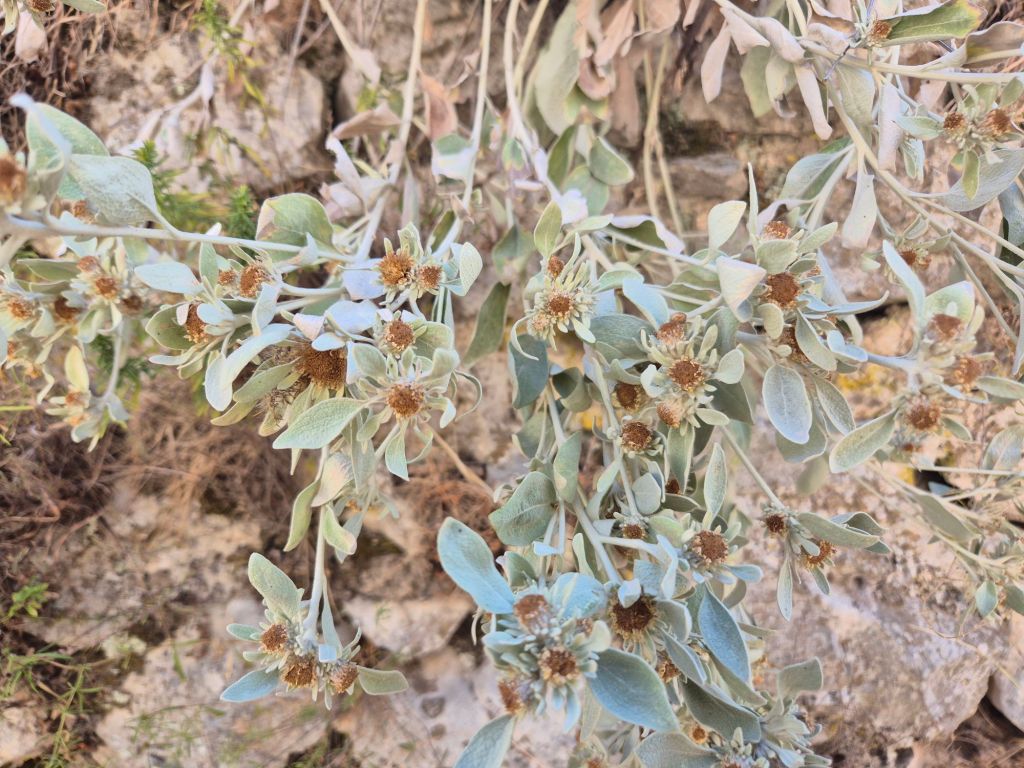
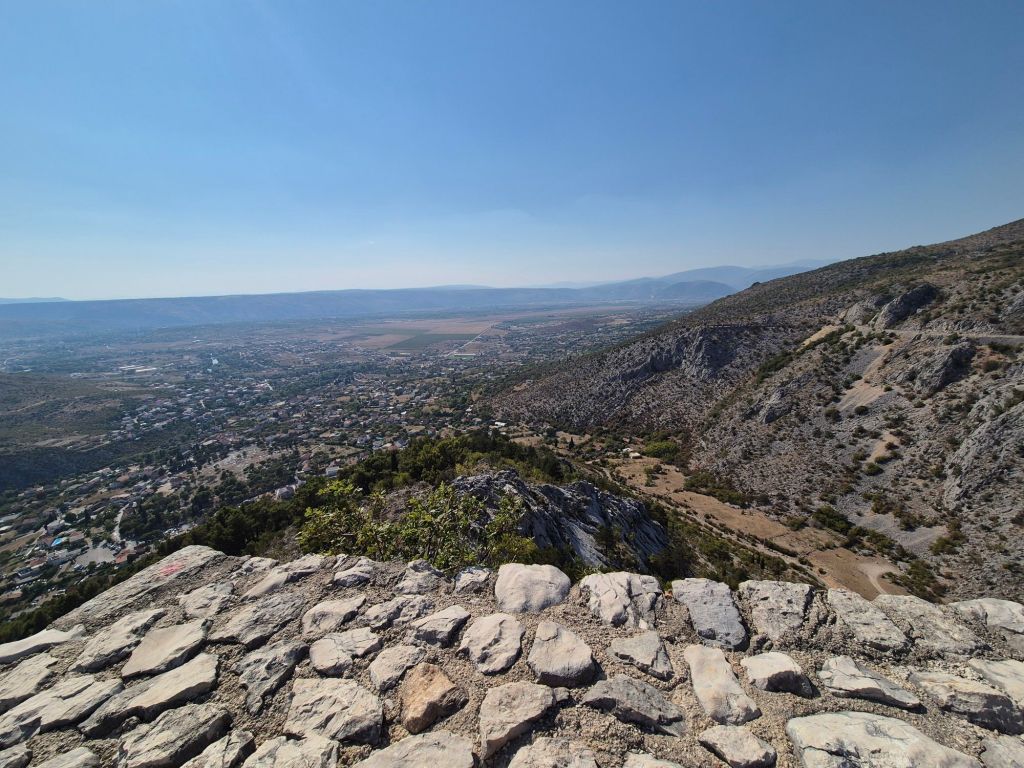
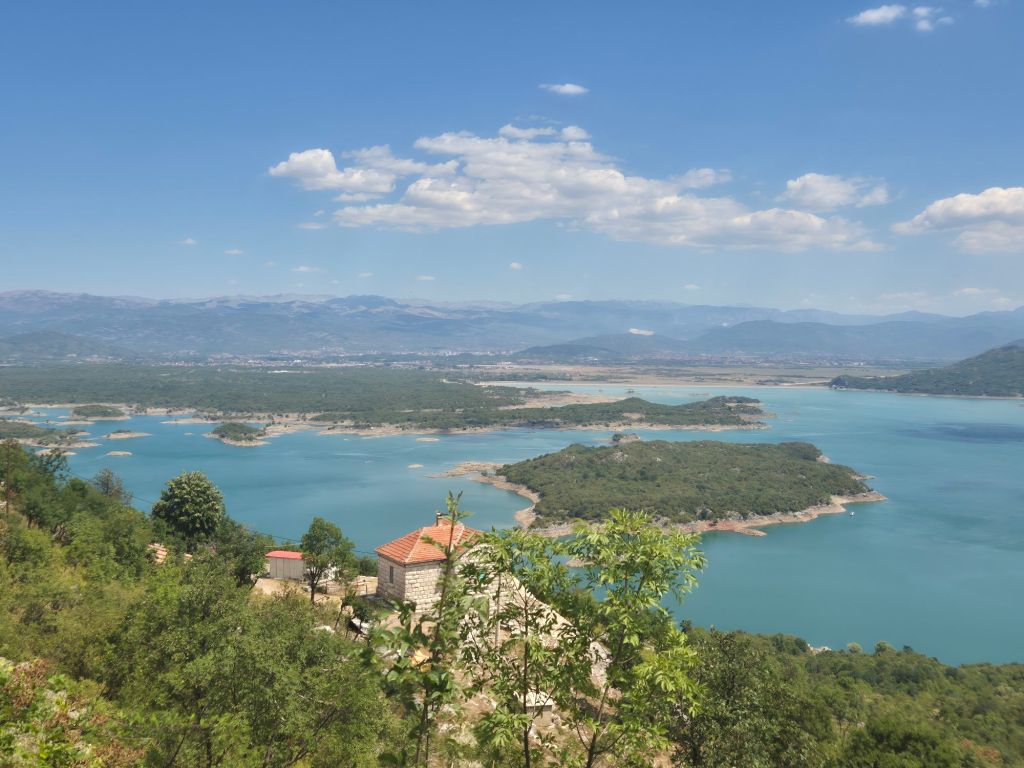
The views from the top were vast.
And Podgorica
We drove from Mostar to Podgorica today, had an hour sitting in the sun, in the queue for passport control. There was one agent available, the queues were incredibly long behind us. We may have been ahead of the worst of it.
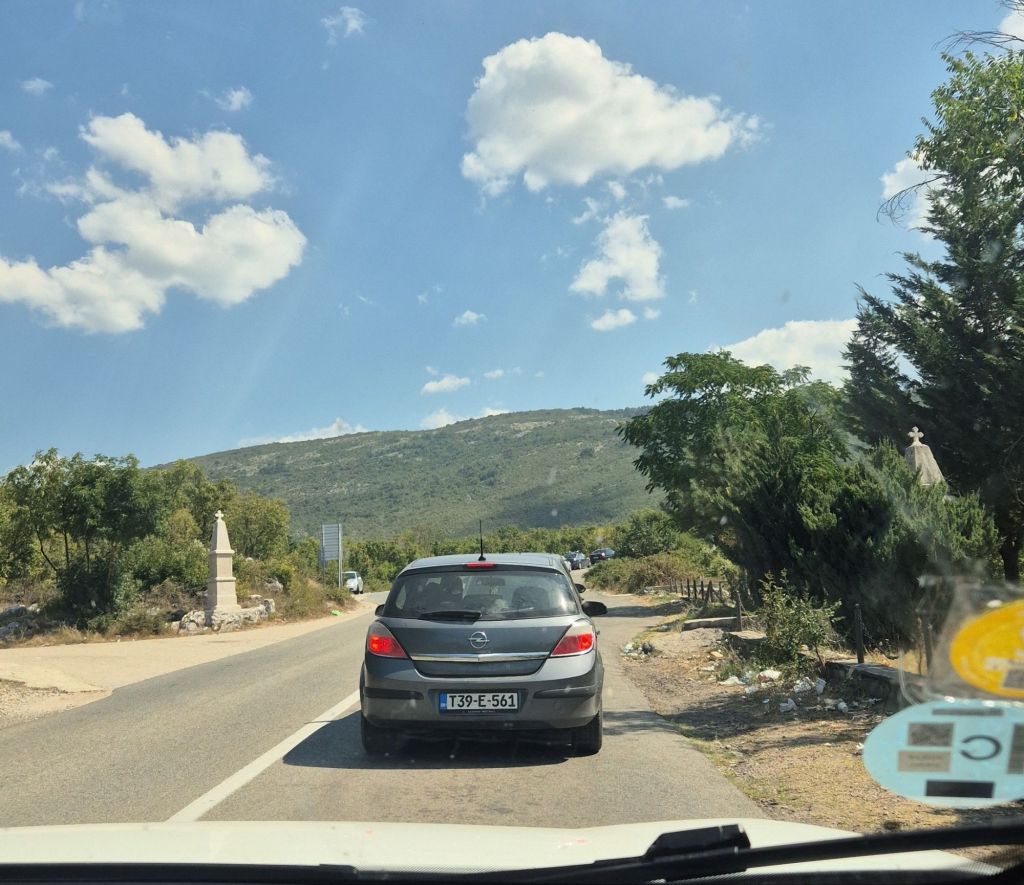
Kevin’s passport got stamped entering Montenegro, but we realised a while later that mine did not.
Fingers crossed that’s not an issue on Monday when we fly to Türkiye.
Also had to make an ’emergency’ run to a shopping mall to replace a pair of trousers and a shirt that were left behind in Mostar.
Only realised when unpacking dirty clothes to do some laundry. Am really annoyed about it, I had hung the shirt, trousers and a bra on a hanger on the wardrobe door on Friday to dry when we got home from our tour. The hotel staff must have moved them into the wardrobe and closed the door when they delivered towels on Saturday. Because I NEVER put clothes in wardrobes (for this reason) and this was THE ONE time we didn’t triple check the room before leaving. I hate the waste of money and clothes.
Today we didn’t really have any plans to explore what is purported to be “Europe’s most boring capital city”. Instead, we finished up laundry and repacking bags with what we need for Türkiye
We also had a trip to the police station to report our presence & location as is required. You are supposed to produce this evidence if asked. If you stay in a hotel they do this for you. We were in an apartment who did not.
However the police station said they don’t do it and referred us to somewhere that opens at 8am Monday morning, by which time we will (hopefully) be through security at the airport for our flight. A waste of energy and stress. Caught up on some sleep.
Hot tip: stay in a hotel in Montenegro
Through security, no problems except Kevin now has to extra passport stamps than I do, and there is no evidence that I even visited Montenegro.



Leave a comment…