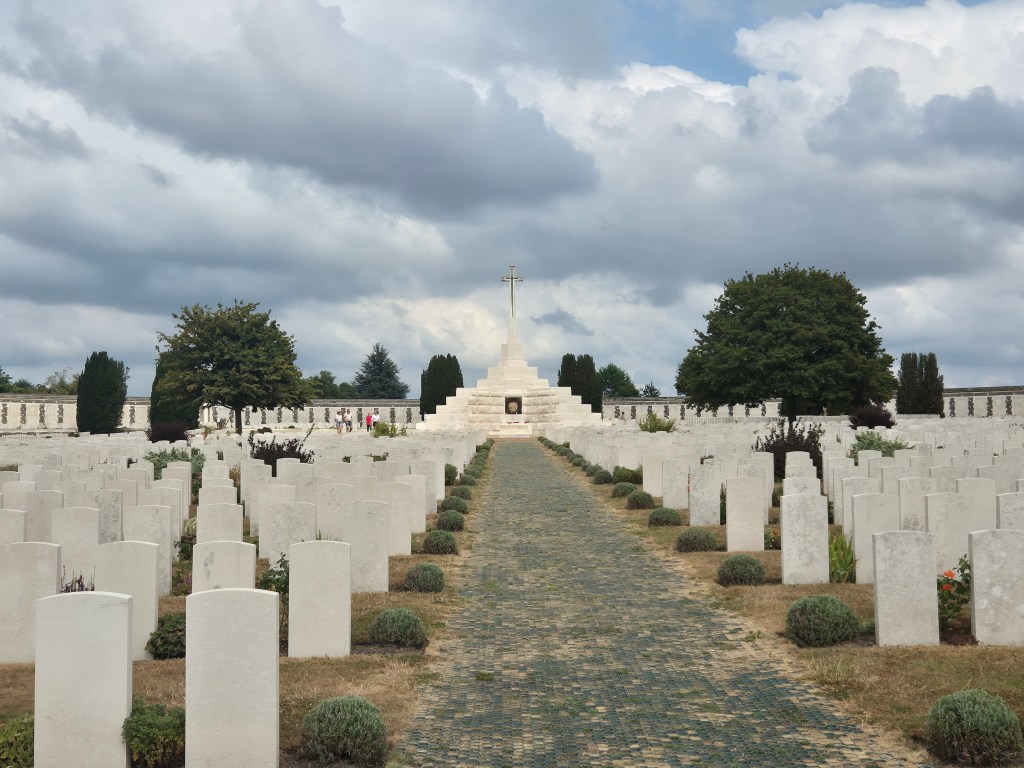
We’ve up and left Paris, getting out of the car park with only a very small side mirror bump right at the last bend, and out of Paris with the minimum of fuss. A small annoyance with the oil light going on in the car. We pulled into a servo, google translated the relevant page of the Spanish car manual, added a bottle of oil, had a quick consult with our mechanic (Aiden) and with the aid of a YouTube video for manually resetting the oil change counter we were back on our way.
Heading to Giverney today.
We arrived and found some parking near the Monet bust.
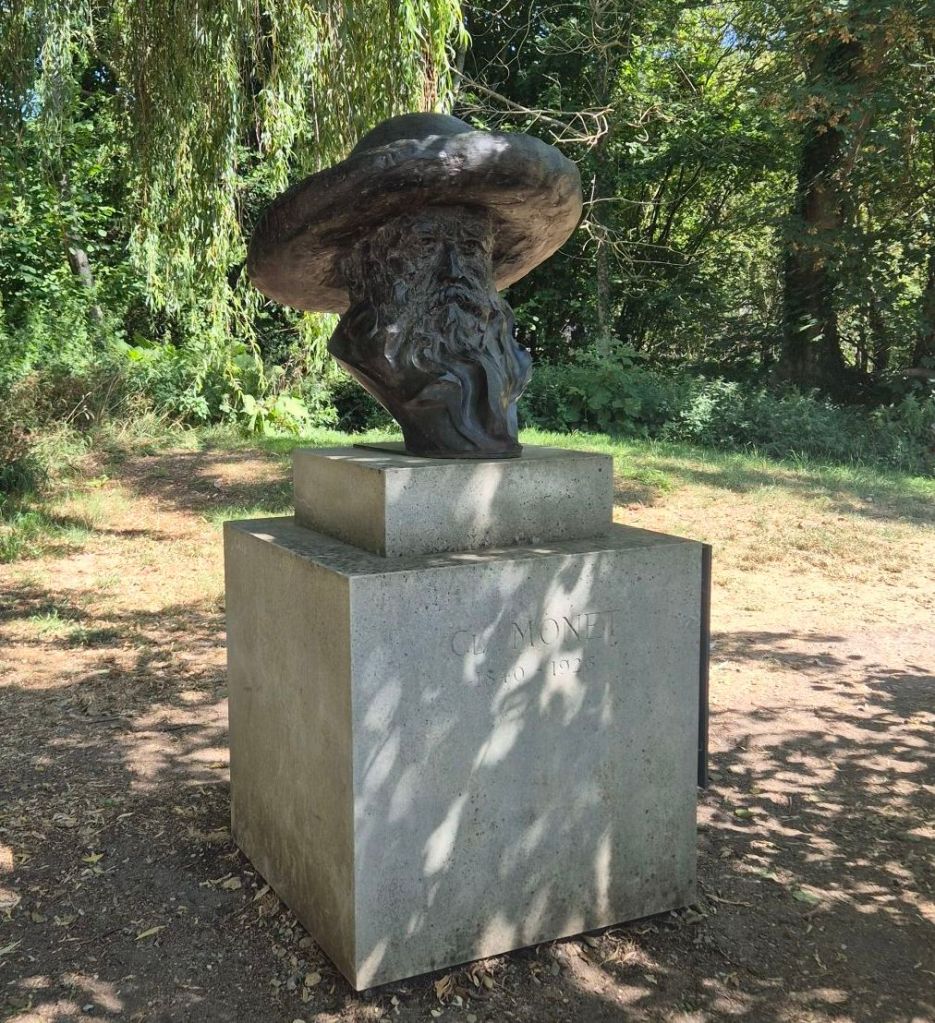
Then walked to the entry of Monet’s House & Garden.
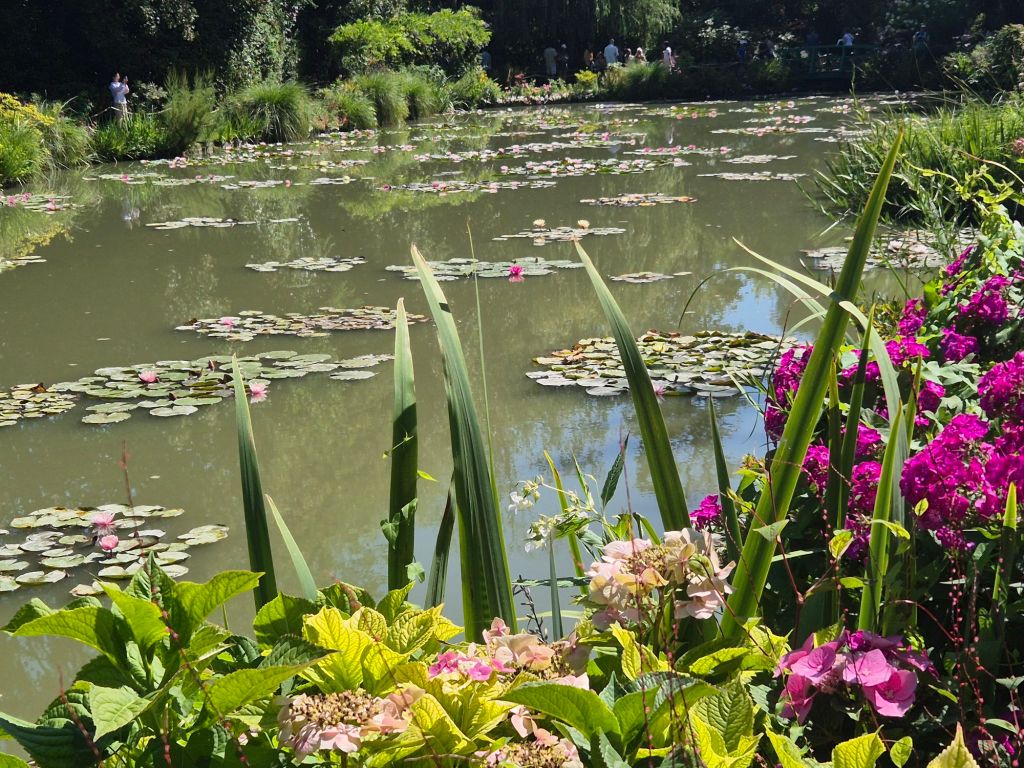
Using the underpass we visited the Japanese Garden – scene of the most famous “Waterlillies” painting,
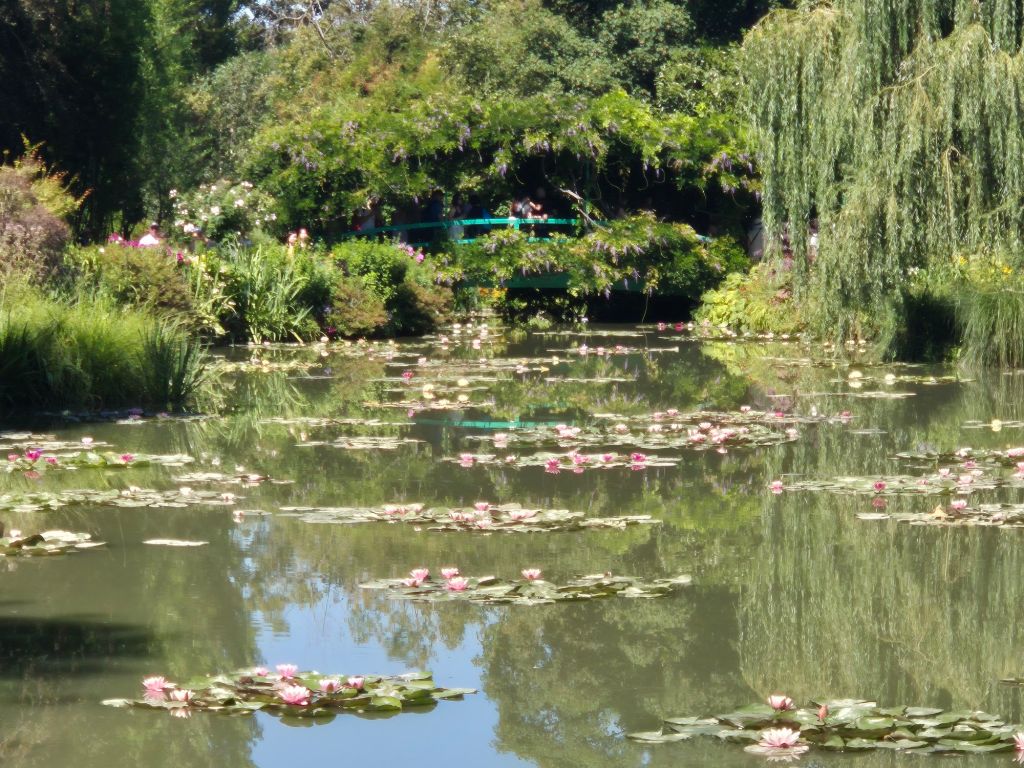
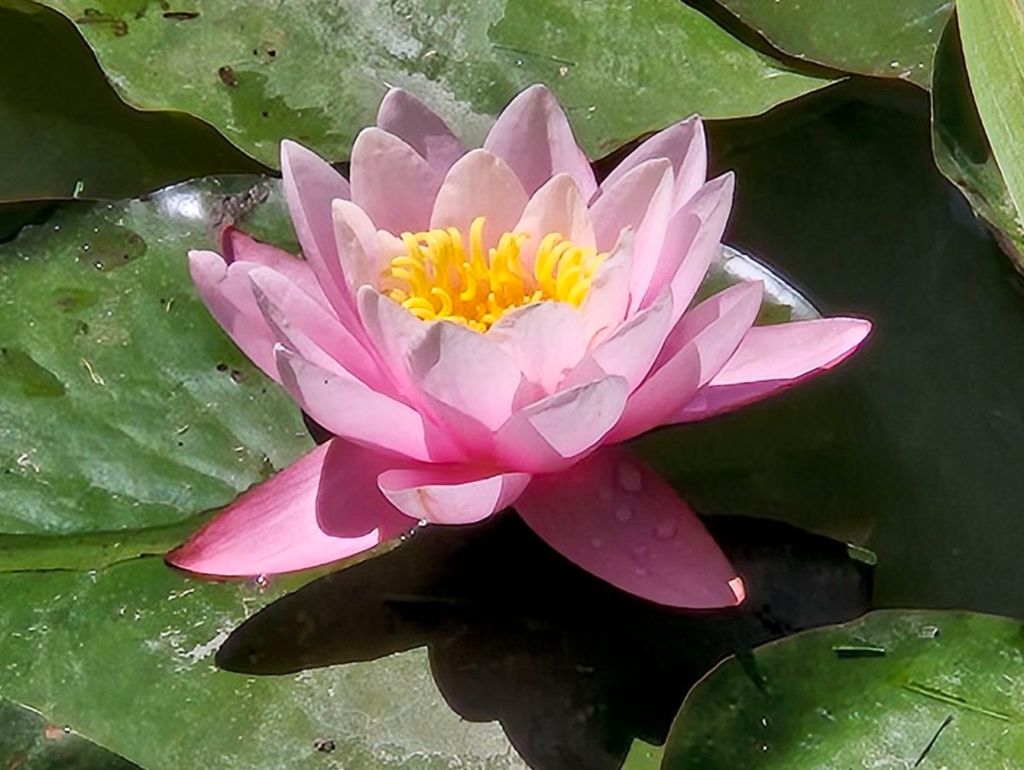
then wandered around the main gardens
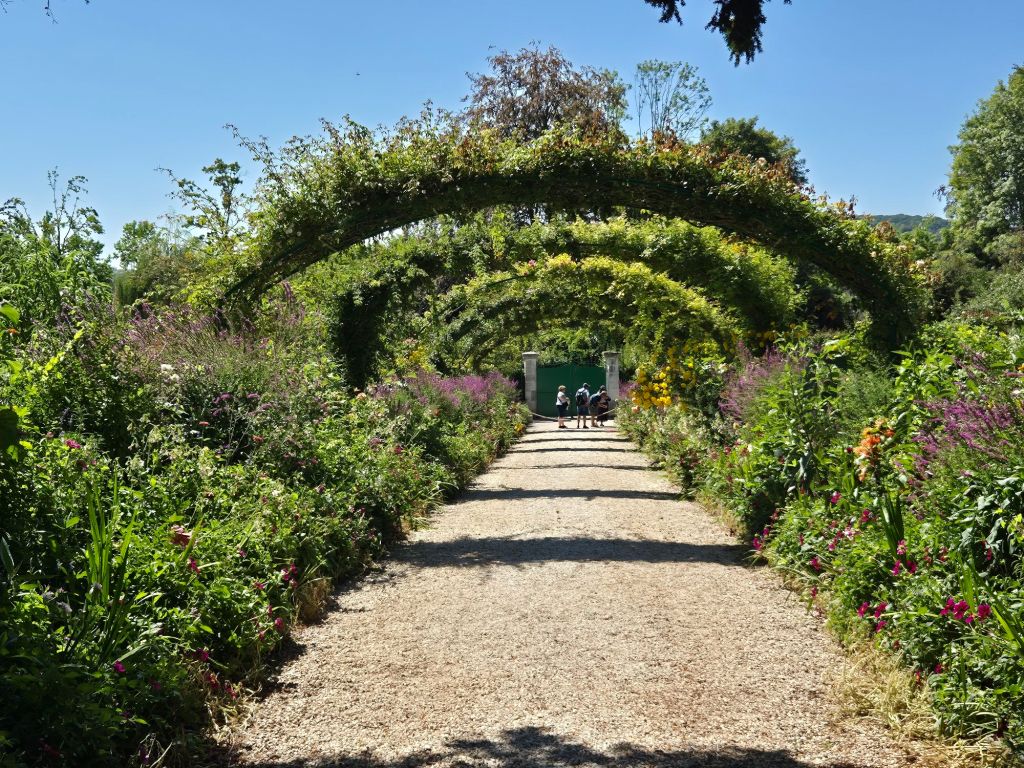
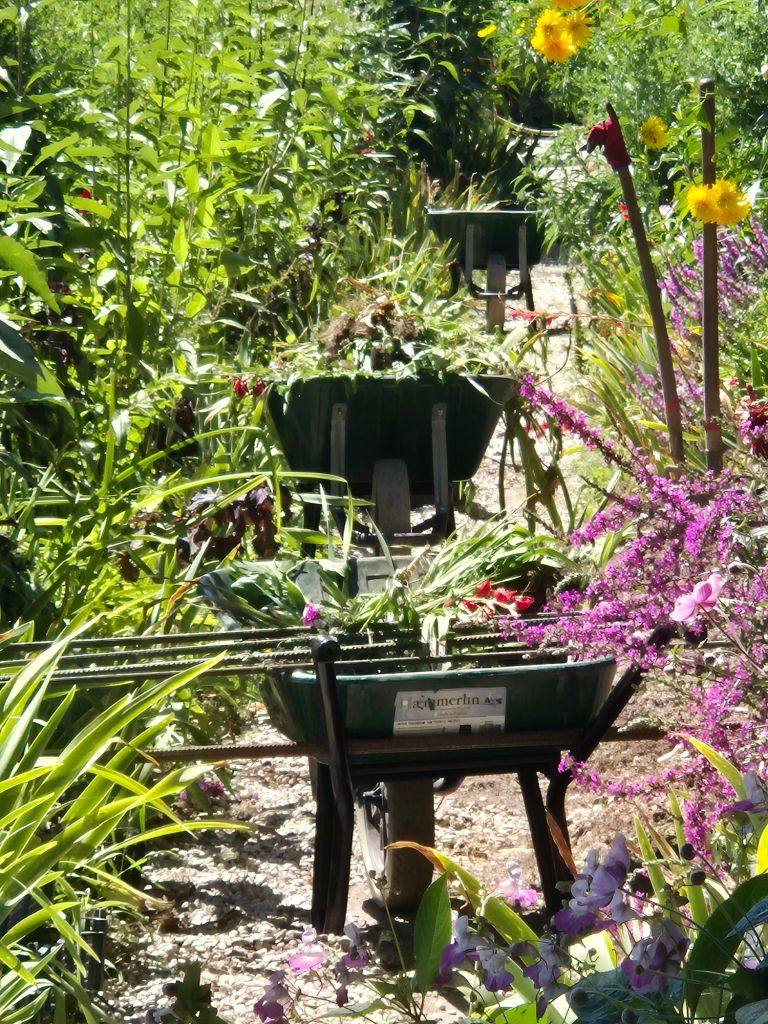
before entering the house.
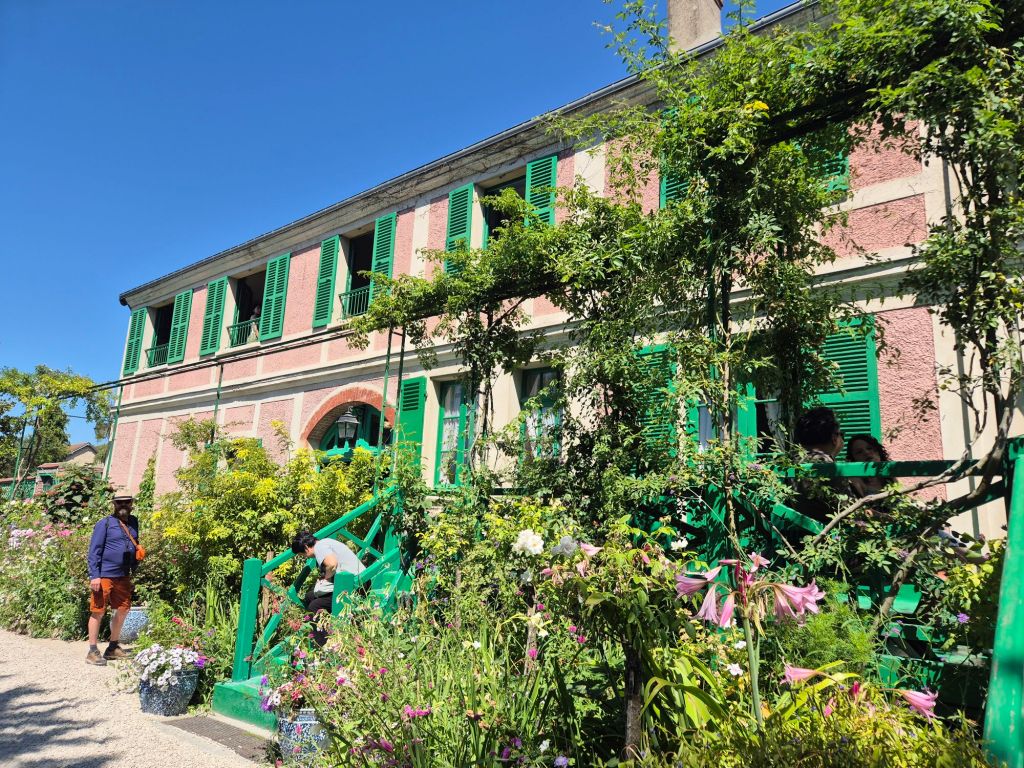
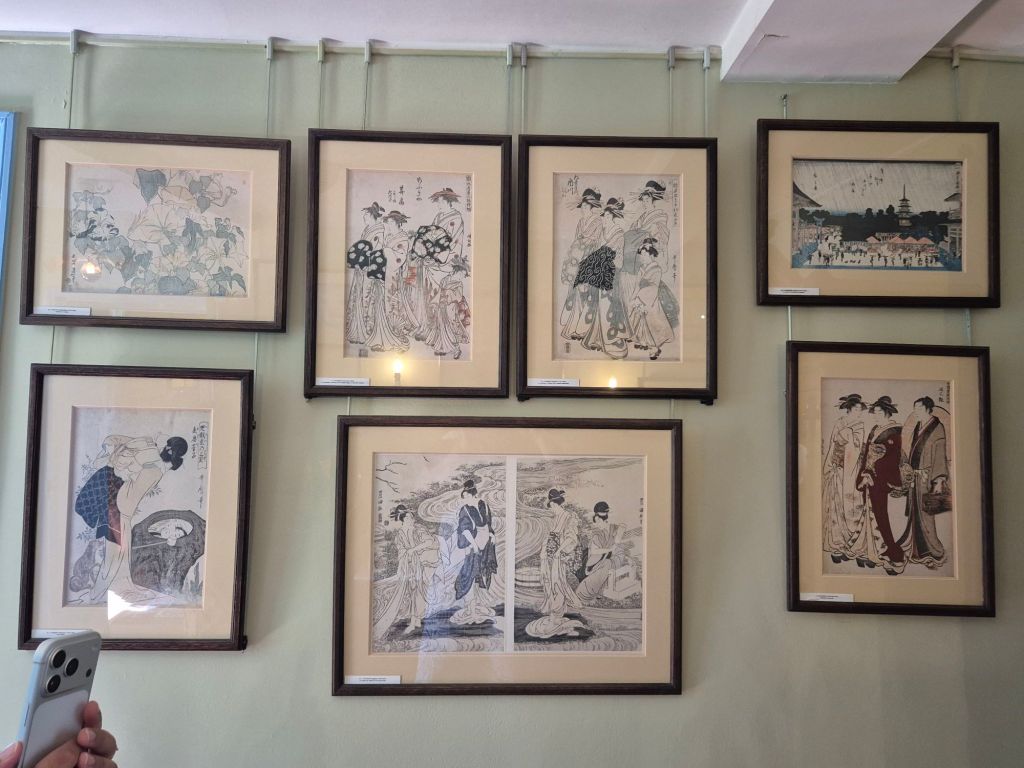
We were surprised to see the house almost entirely decorated with Japanese art!
We then wandered into the village, stopped for lunch and looked at a couple of galleries. Nothing purchased. We found where our accommodation is and worked out how to access it as it’s on a pedestrian only street.
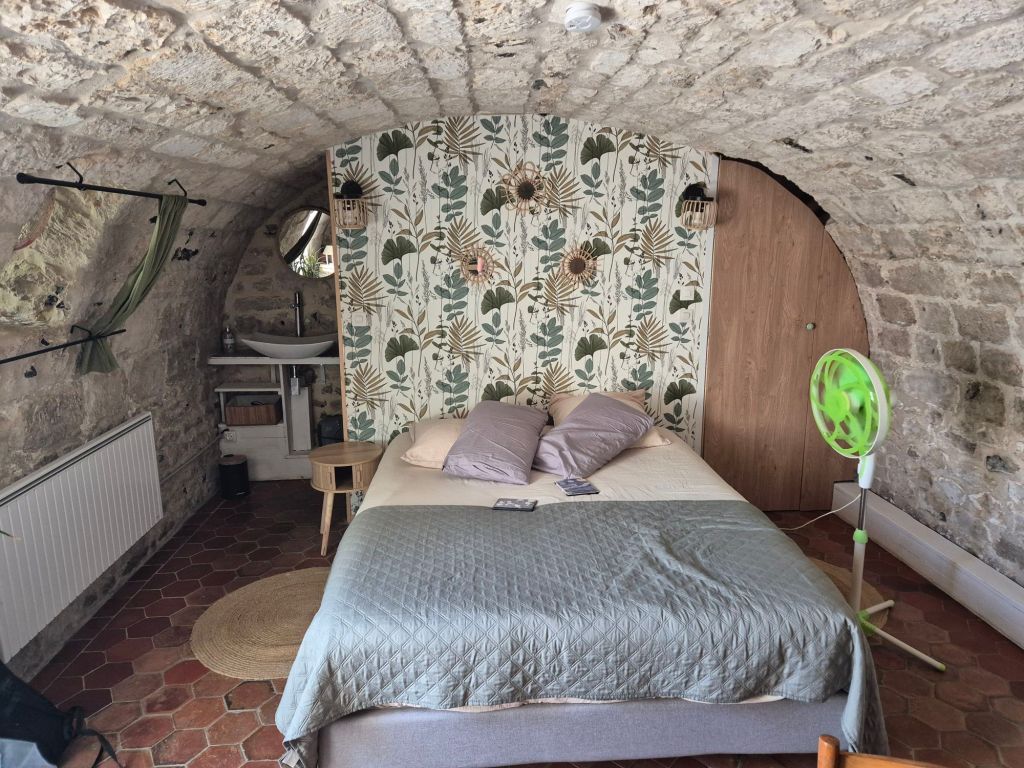
Then headed into Vernon to do a quick shop and drove back to Giverny. The temps are climbing and we figured it was time for a quick siesta in our incredibly cute cellar/cave room.
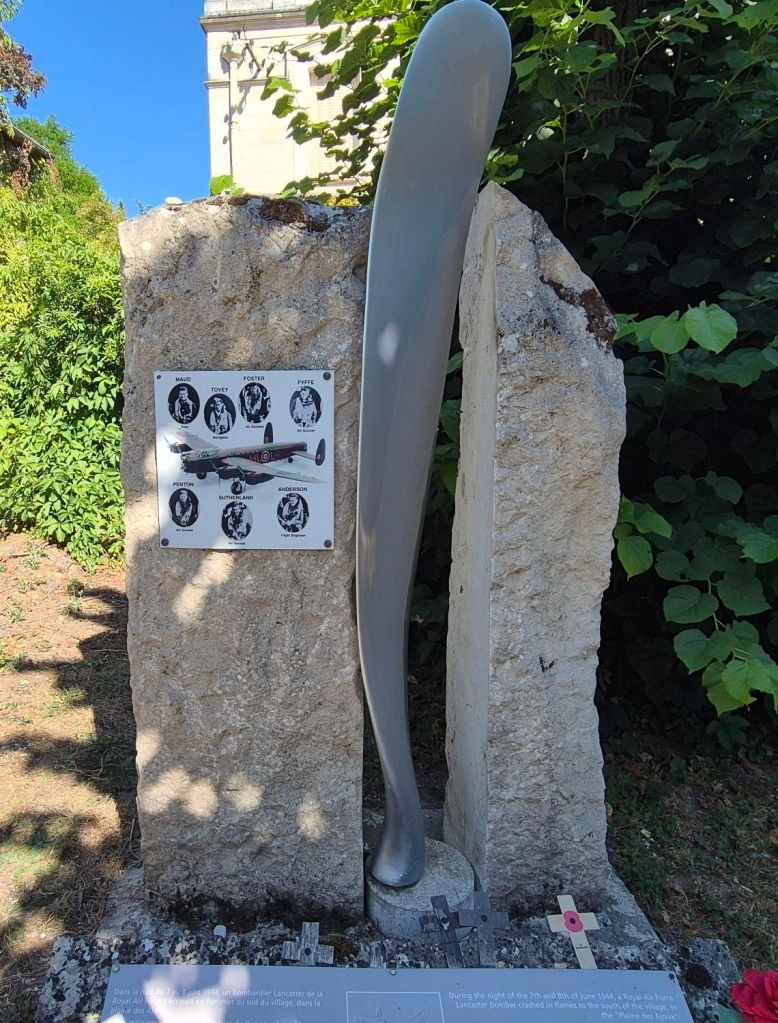
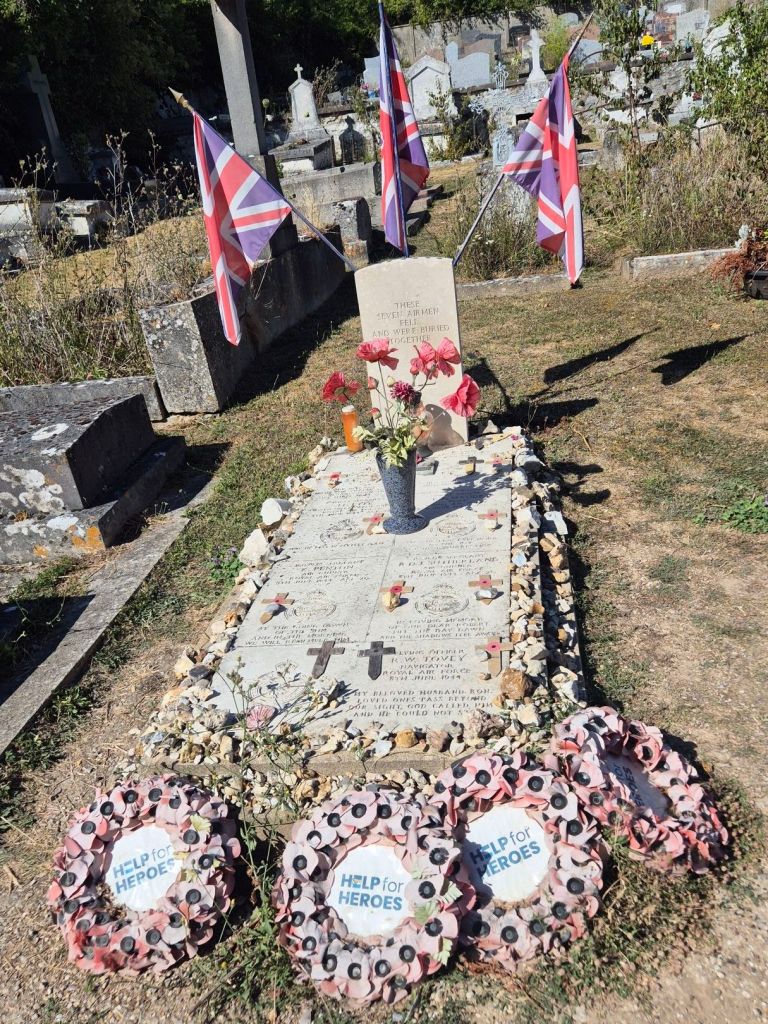
After siesta we walked down the road to view Monet’s tomb and the Giverny Church. Near the church was a memorial and also a grave for 7 airmen who died in a plane crash on the edge of town in June 1944.
We left Giverny this morning and drove north to Arras.
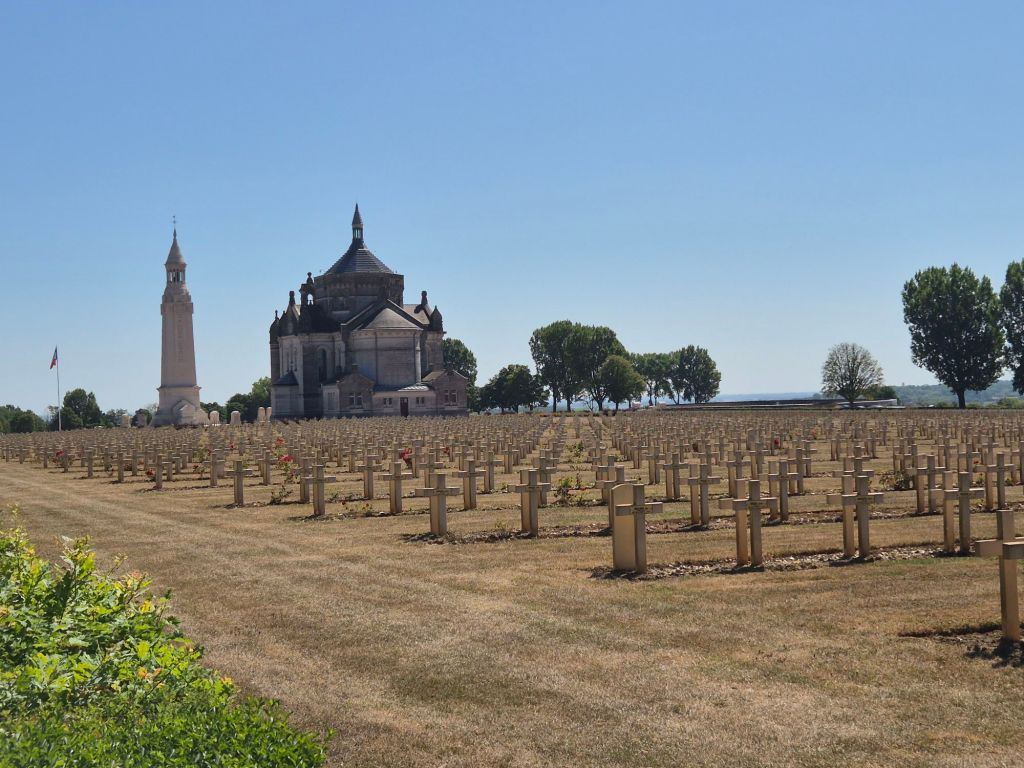
Our first stop was at the Notre Dame de Lorette – Nécropole nationale de Notre-Dame-de-Lorette, France’s largest war cemetery. It’s located on the Lorette Ridge that the Germans occupied for most of the war.
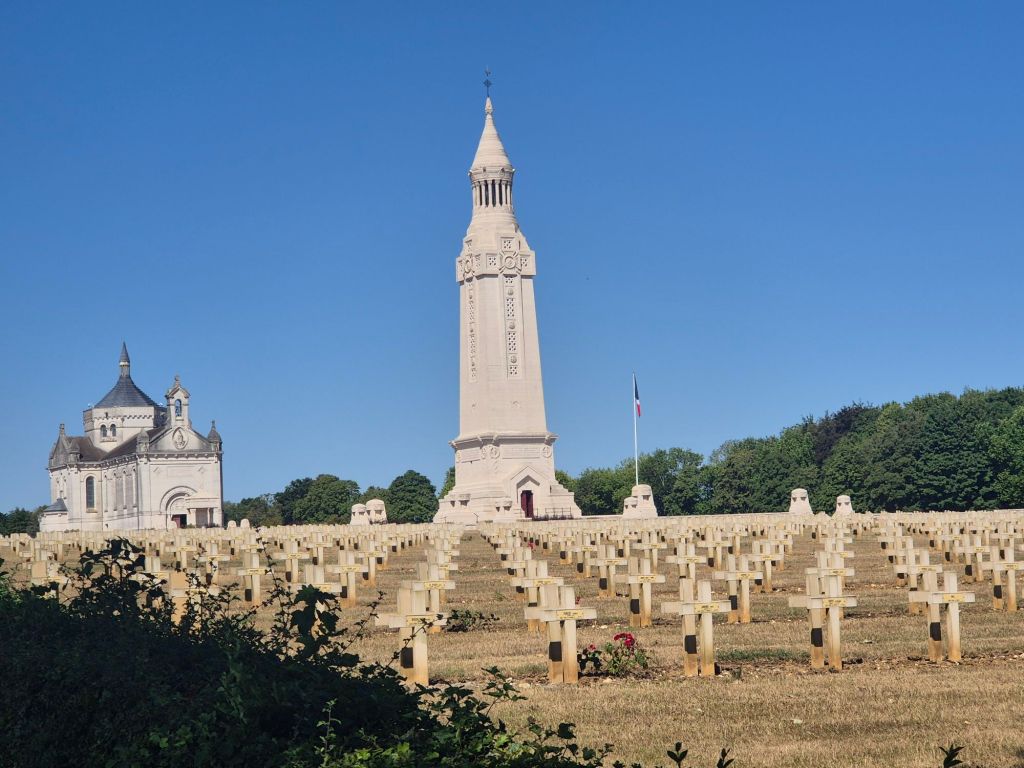
There are over 22,000 individual graves and a further 24,000 unknown soldiers in ossuaries or mass graves.
We primarily came here to view L’Anneau de la mémoire, that lists the names of every soldier who died in the north of France in World War 1 – almost 600,000 names, in alphabetical order, regardless of rank, nationality and ‘side’.
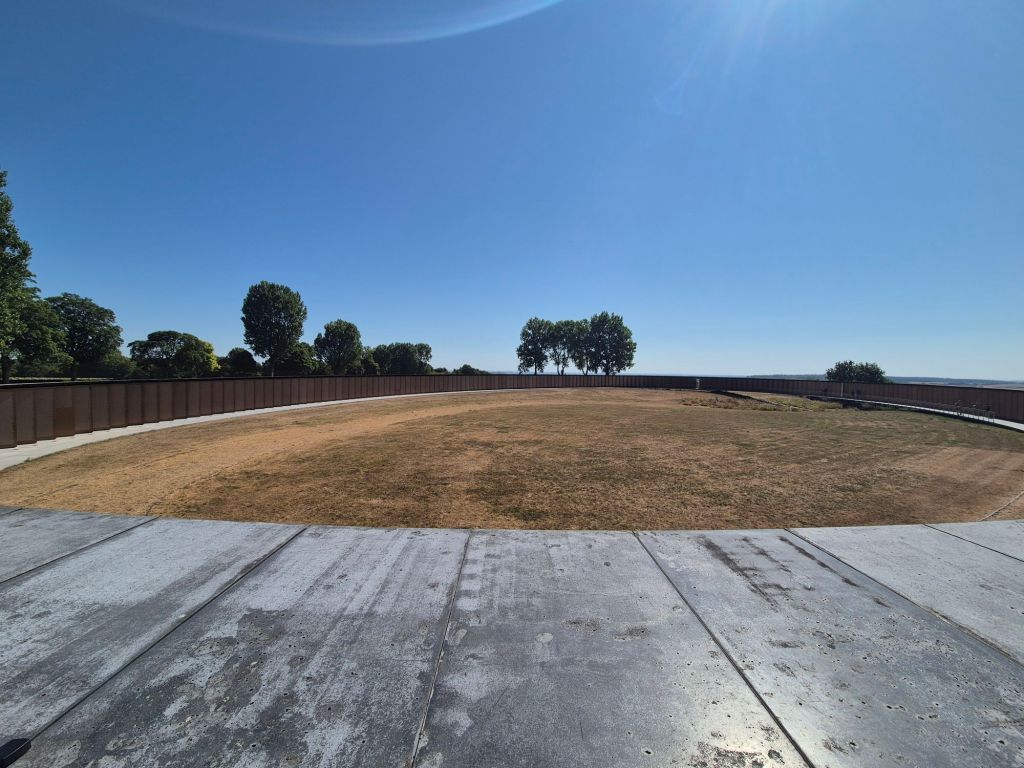
This memorial was unveiled on the centenary of armistice day.
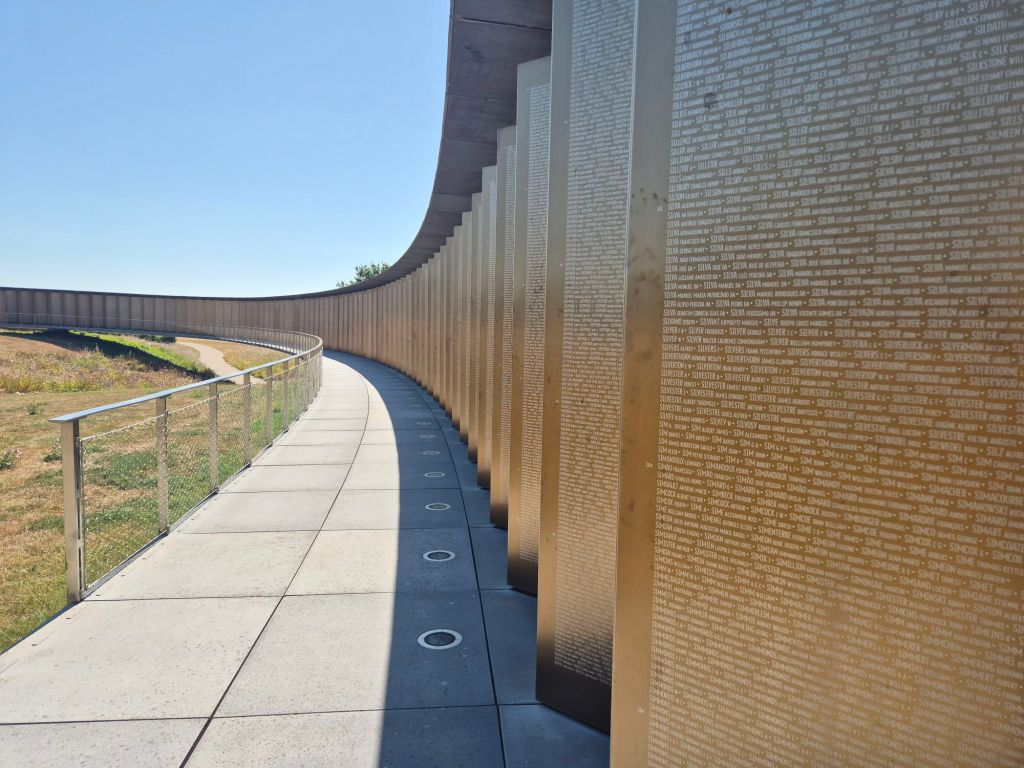
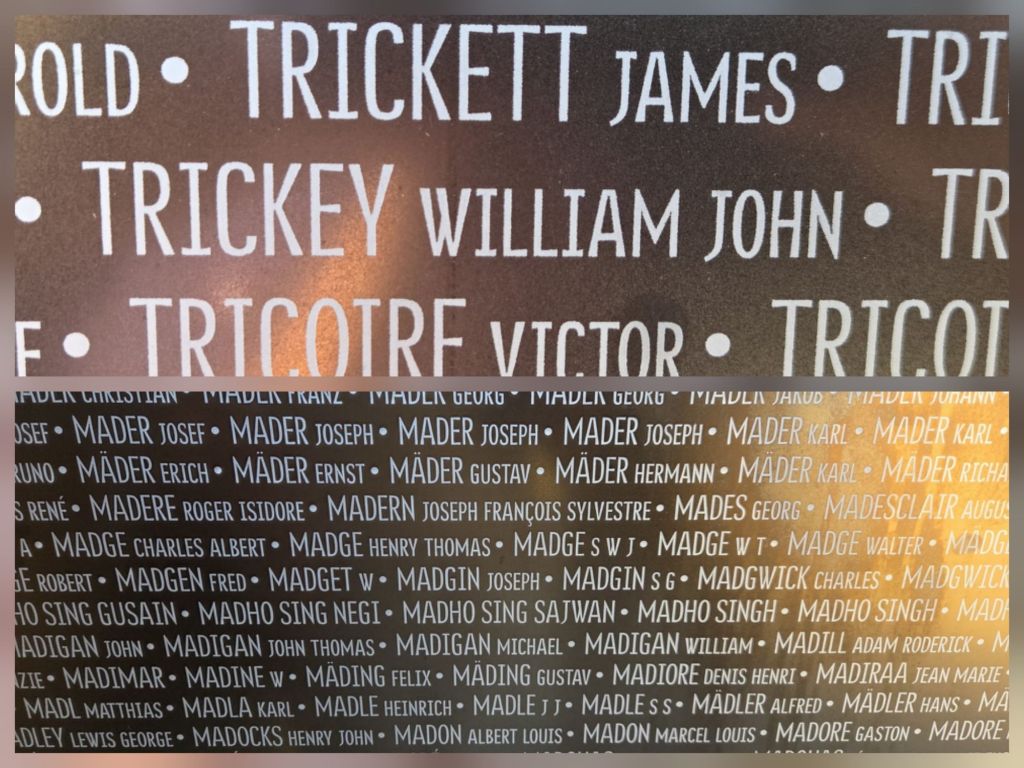
We located the names of a couple of Kevin’s relatives on the wall. His great grandfather (William Trickey) is among the missing and doesn’t have a grave.
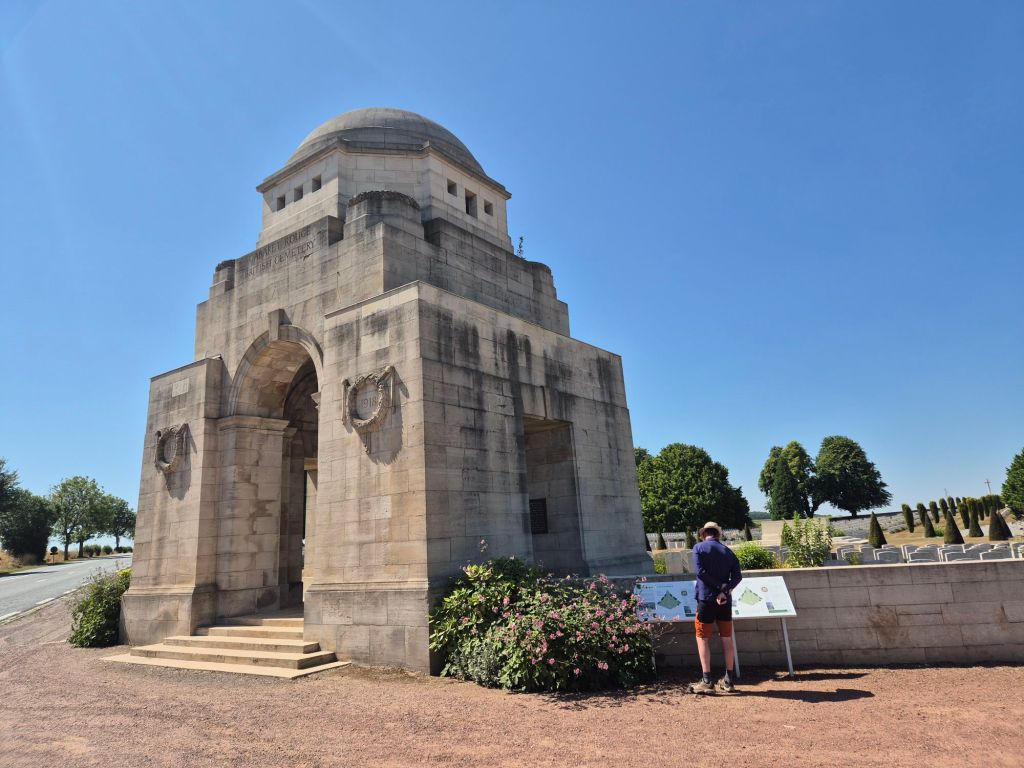
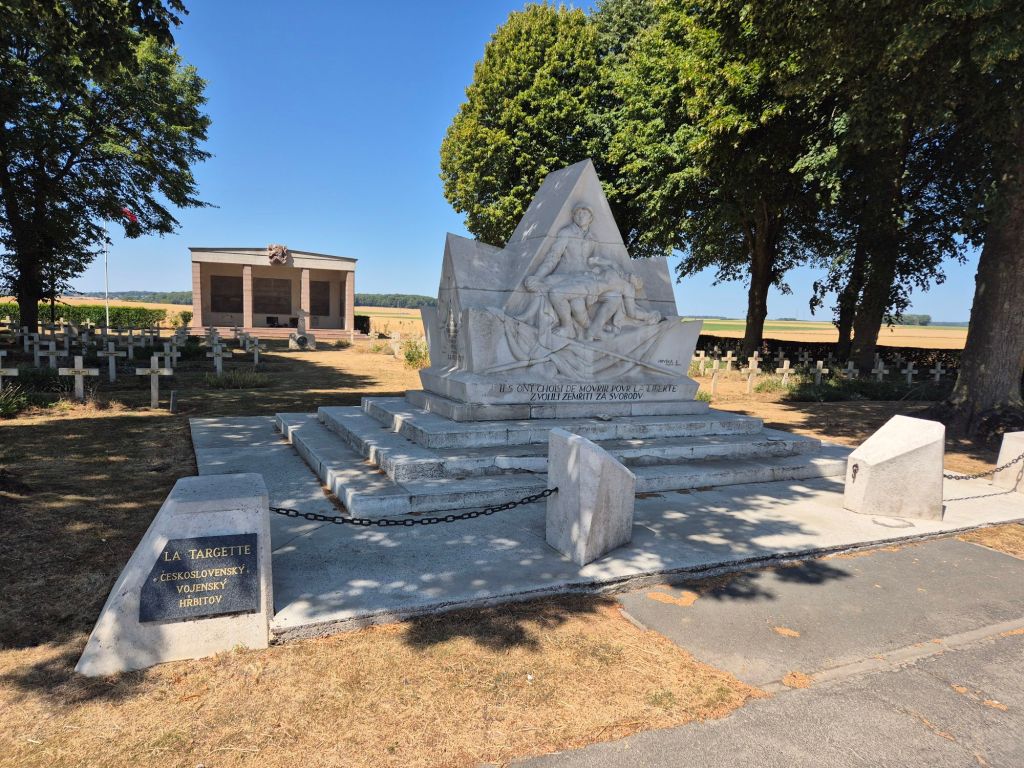
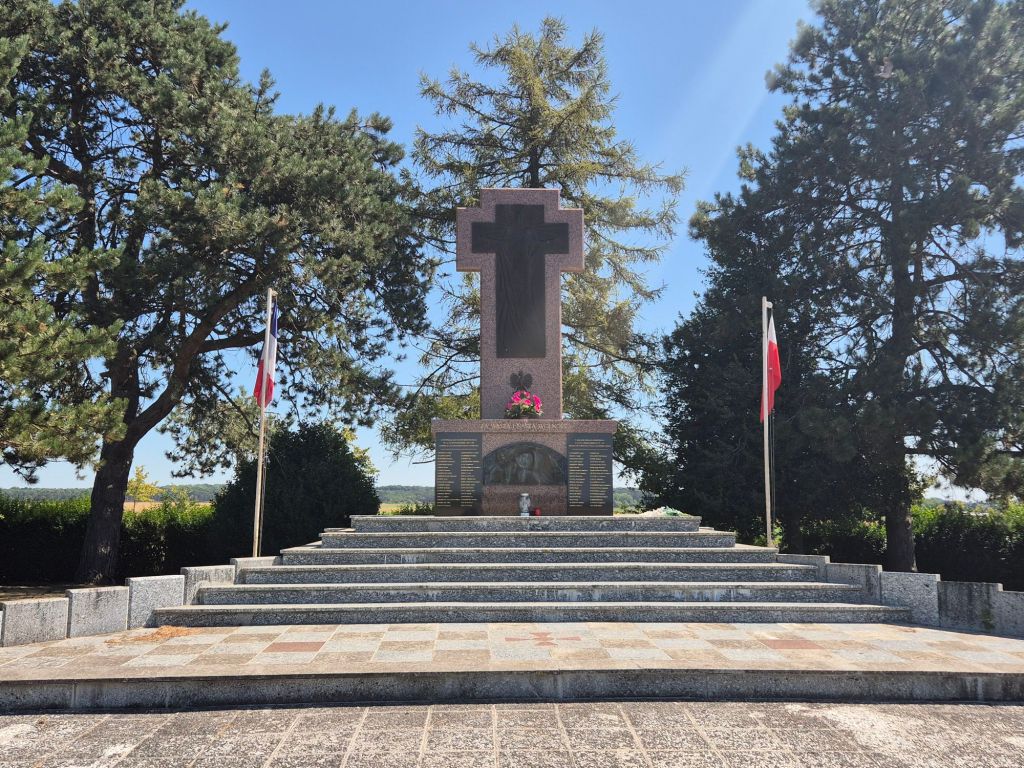
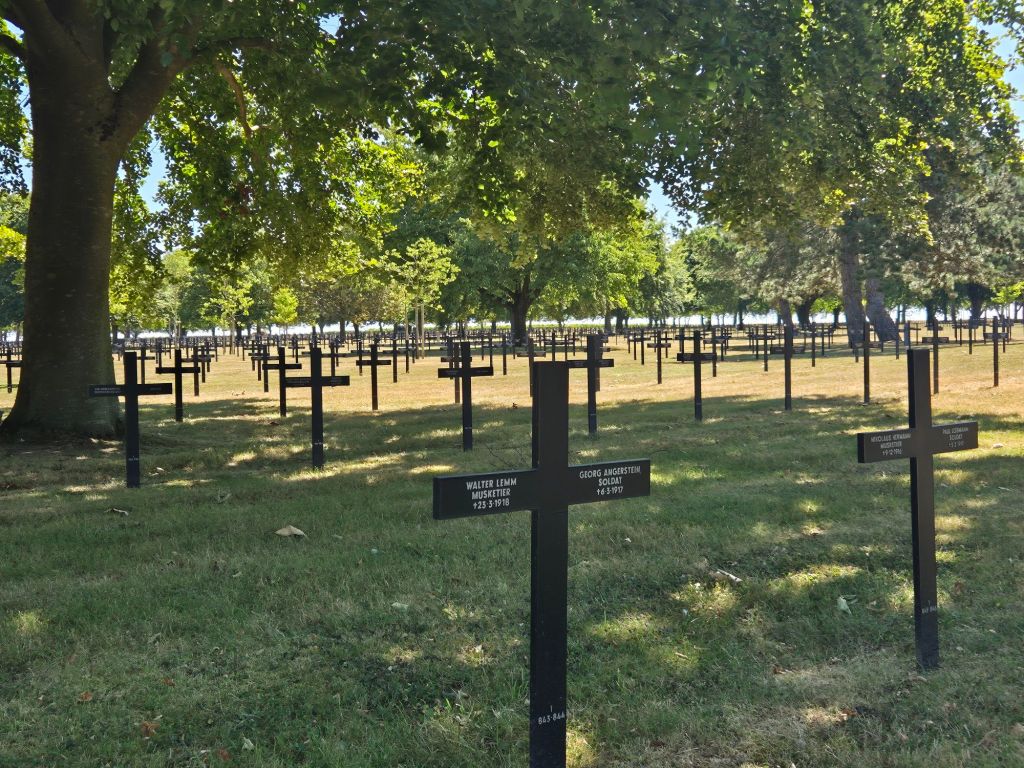
From there we stopped at the German cemetary. It’s quite different to the Commonwealth and French graves. We also stopped briefly at Polish, Czech and British memorials.
We then headed into town to the Commonwealth War Graves Commission Visitor Centre and had a tour of the site, seeing the stonemasons, woodworkers, blacksmiths and more at work. All the headstones for all CWG cemeteries are made here, not just those in France.
From there we went to the Wellington Quarry. The entry to a series of tunnels that were dug by New Zealander miners to connect ancient chalk quarries.
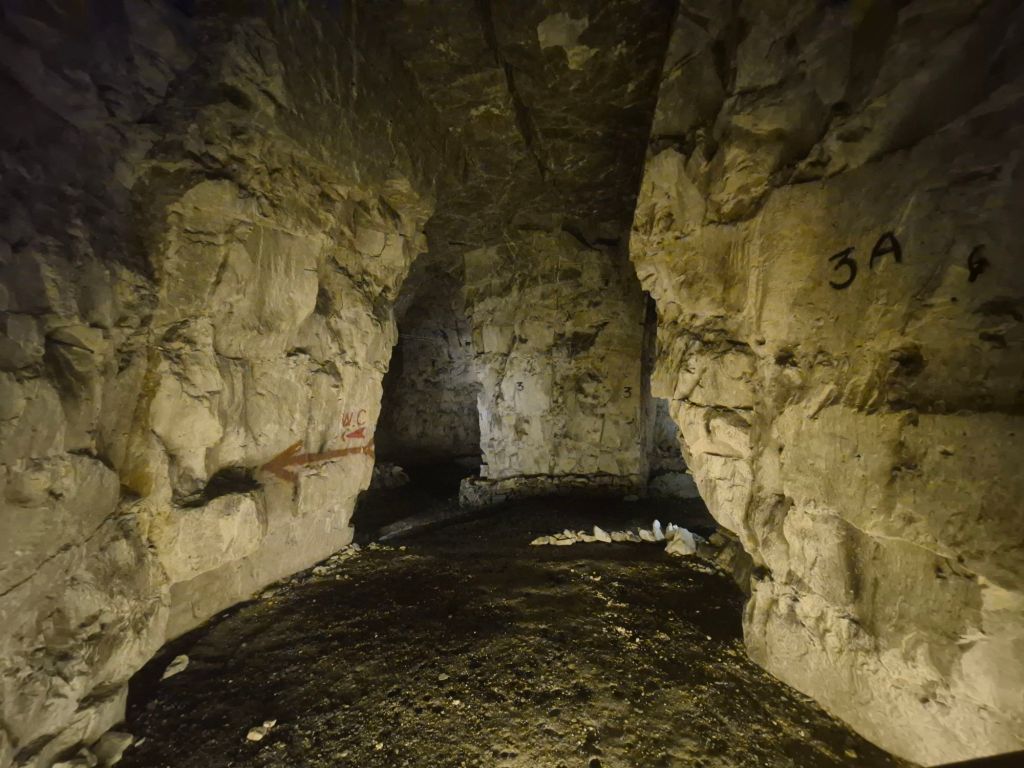
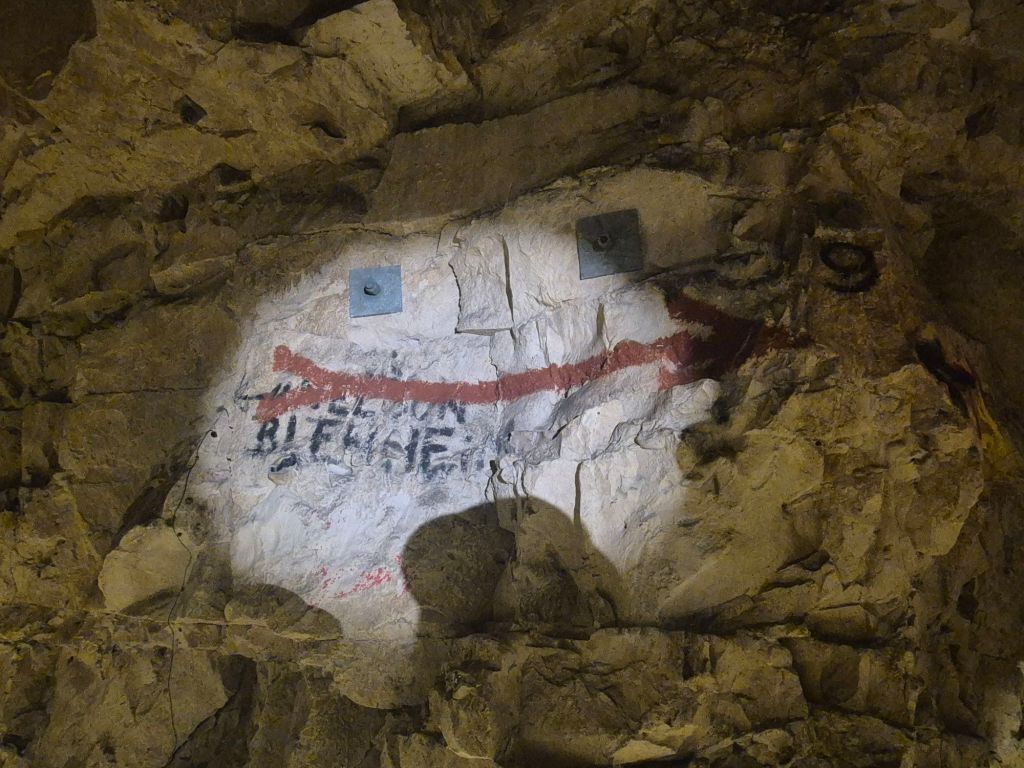
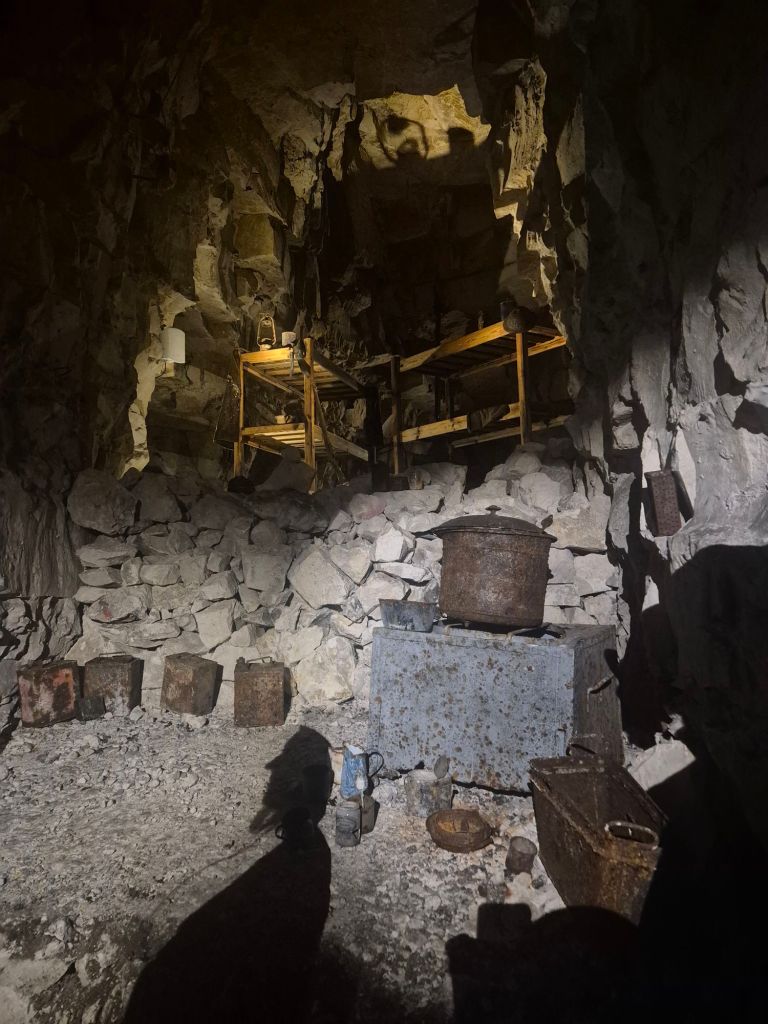
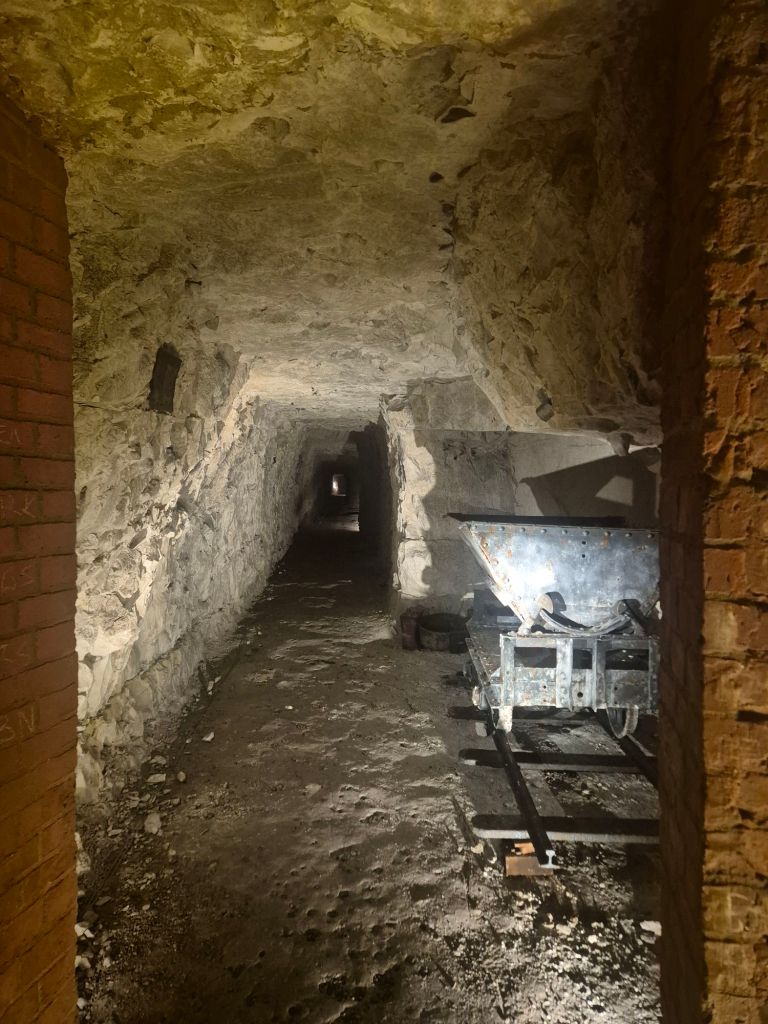
They had 6 months to complete the task so that 24,000 soldiers could hide in the 20km of tunnels for a week, then surprise the Germans just metres from their trenches.
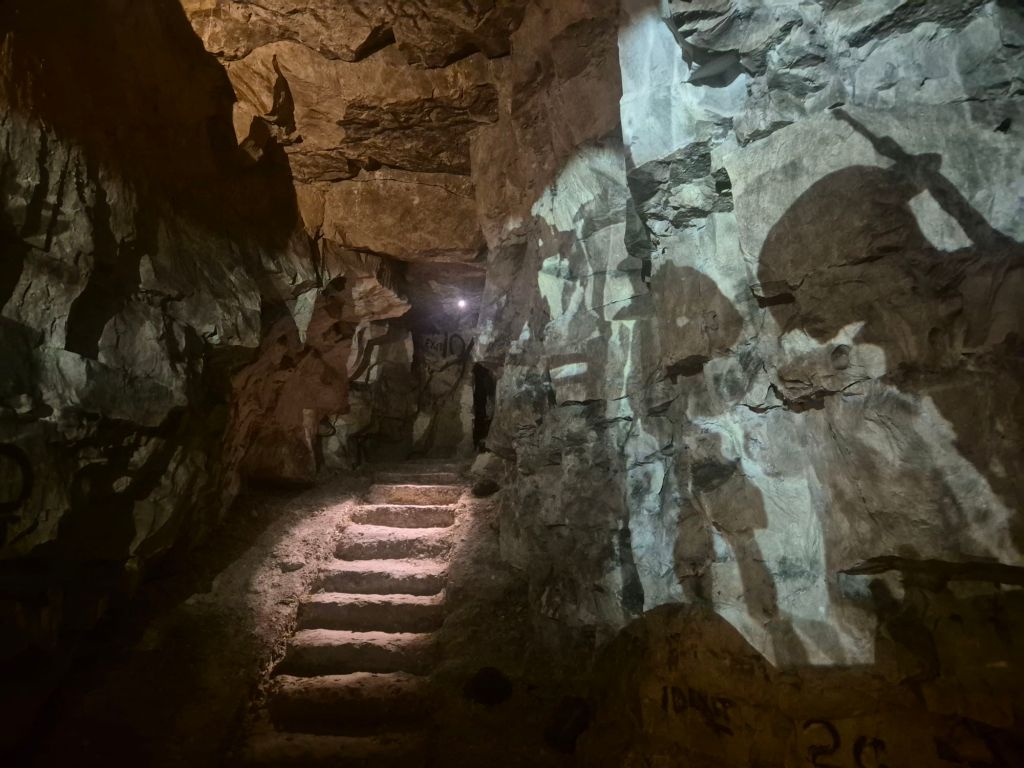
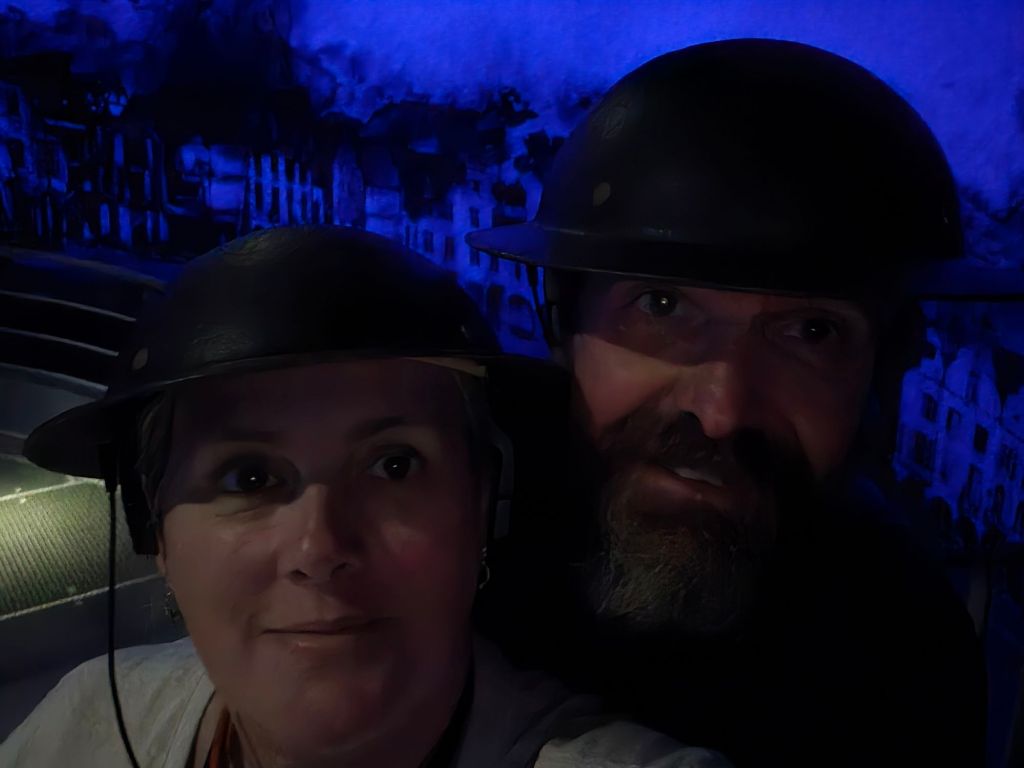
This is another battle that we hadn’t heard of before this trip. The tunnel tour was excellent, really well put together.
We then grabbed some food to cook and headed to our accommodation.
We have a two day battlefields tour starting tomorrow.
We started a World War 1 battlefields tour today with Sacred Ground Tours. I recorded what we saw as we saw it, no hope of remembering it all otherwise.
Apologies, it is long and detailed!
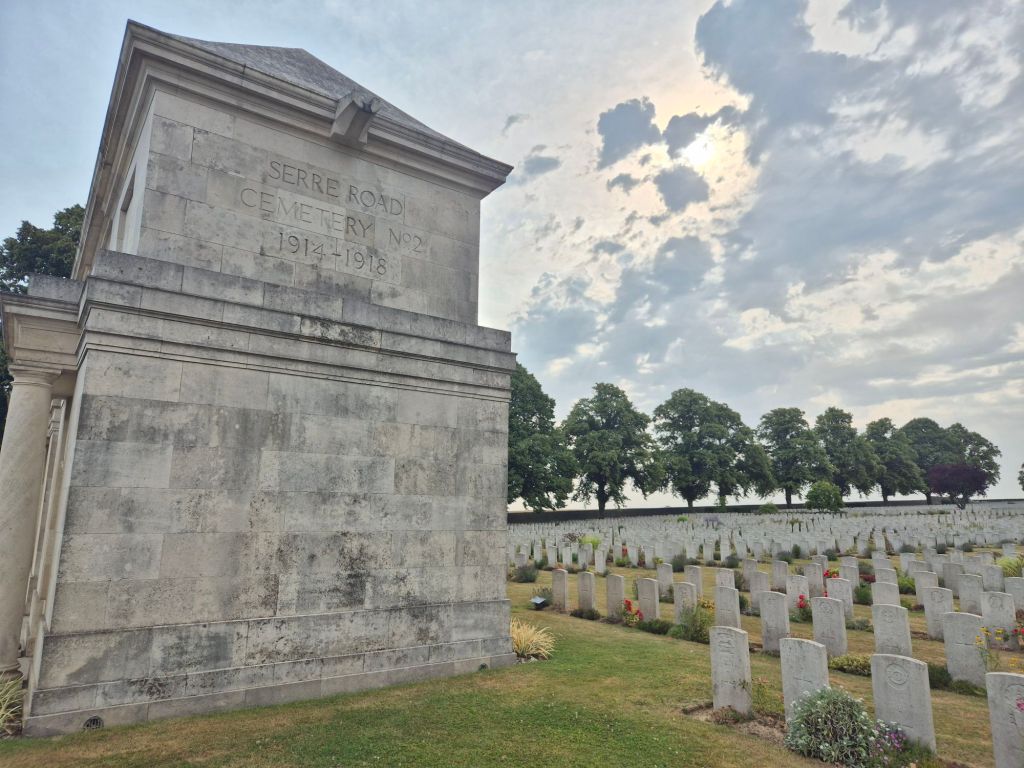
First stop was at Serre Road No2 cemetary.
We then visited Beaumont-Hamel, memorial to the Royal Newfoundland Regiment.
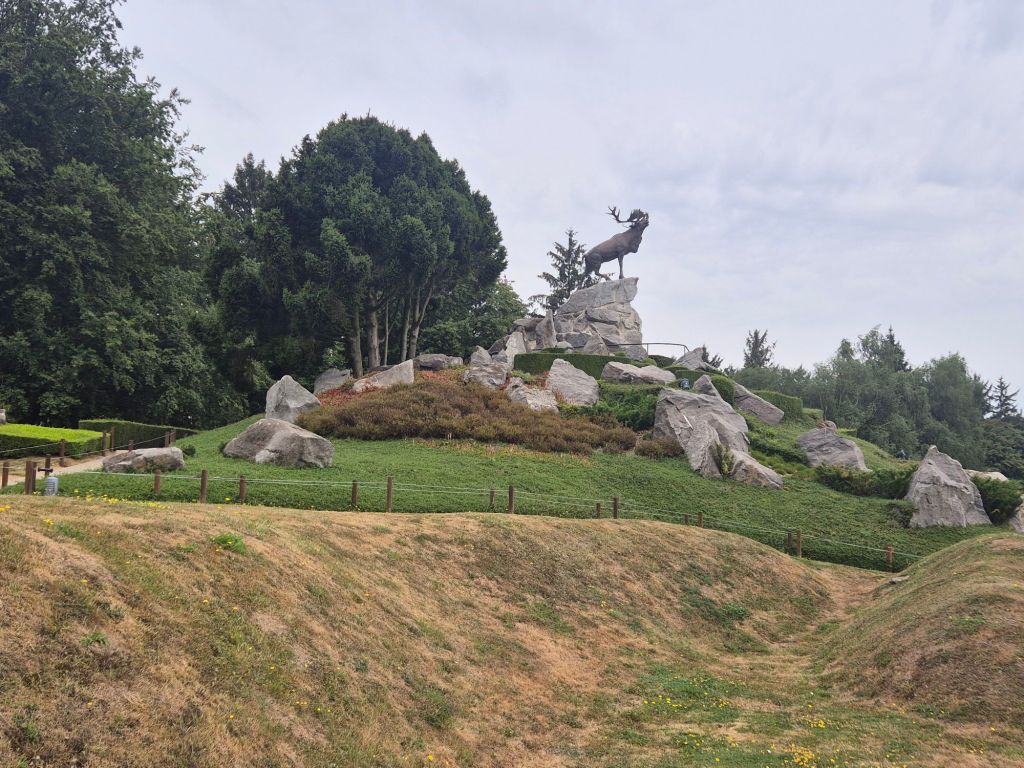
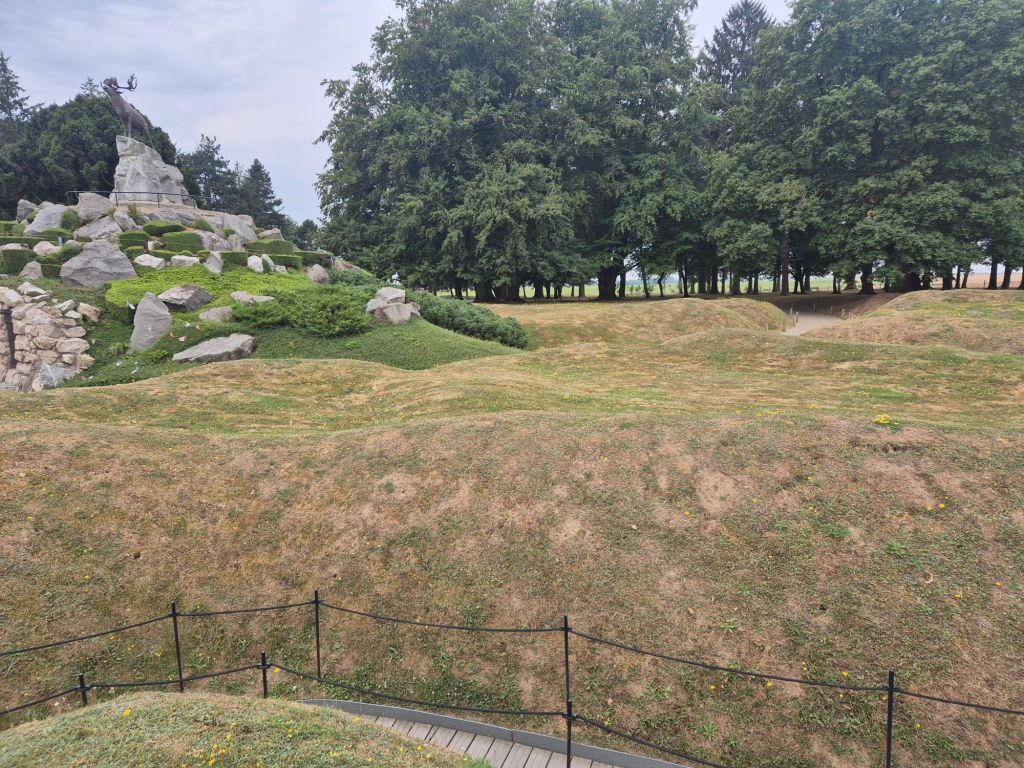
After the war the Newfoundland government and families chipped in to purchase the battlefield. It’s been left as it was with trenches and bomb craters etc still in place, but overgrown. 782 went into battle, 65 attended roll call the next day – 90% wiped out.
We then went to the Thiepval memorial. Taller than Arc de Triomphe, it was originally planned to be 3x larger.
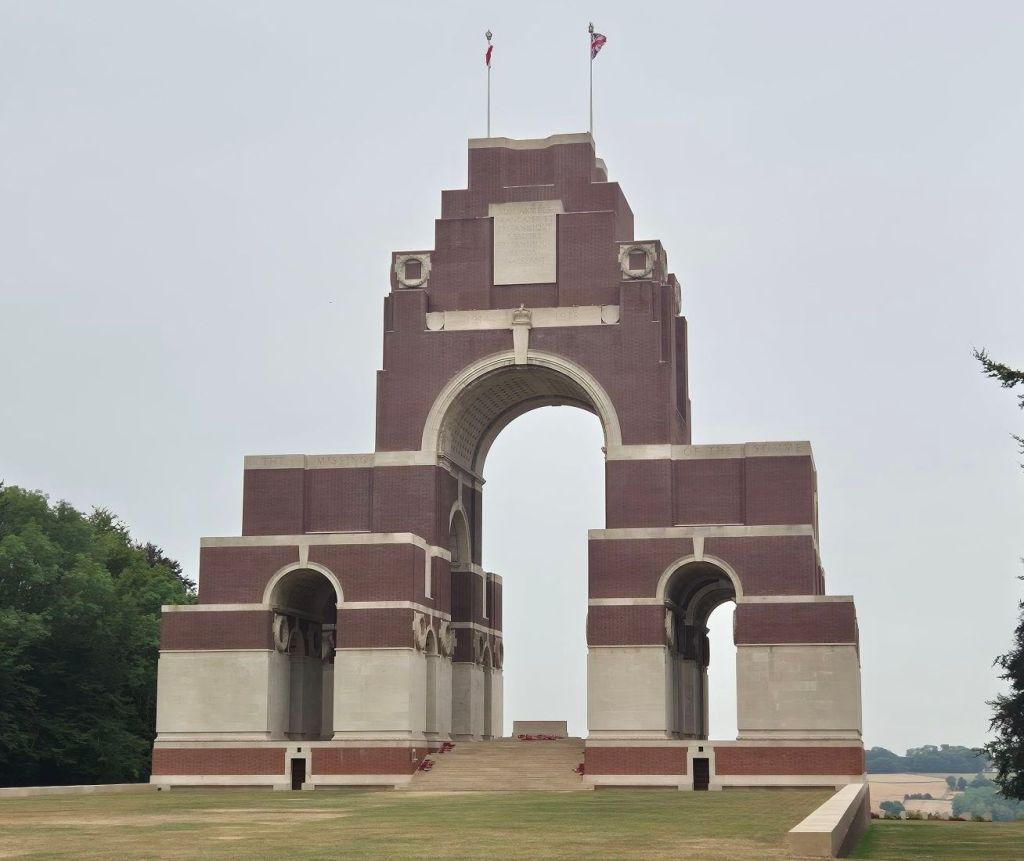
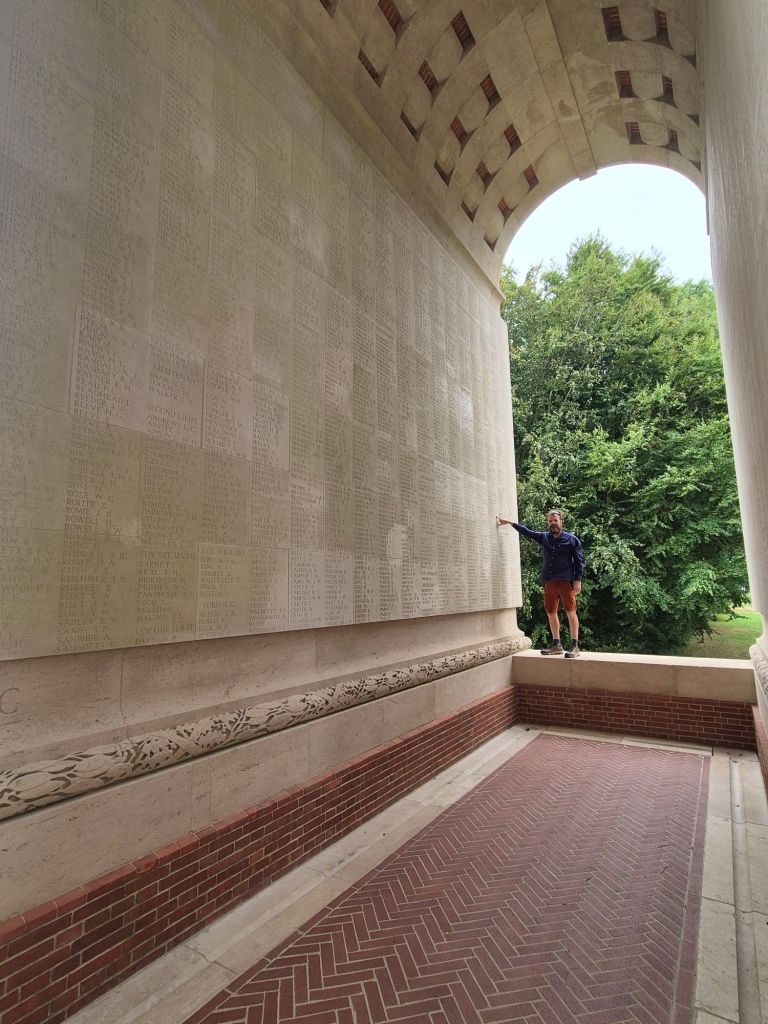
73,000 names of the missing from the Somme. We found Kevin’s great grandfather’s name on Pier 1C.
From the Thiepval Ridge we could see Mouquet Farm and Pozieres.
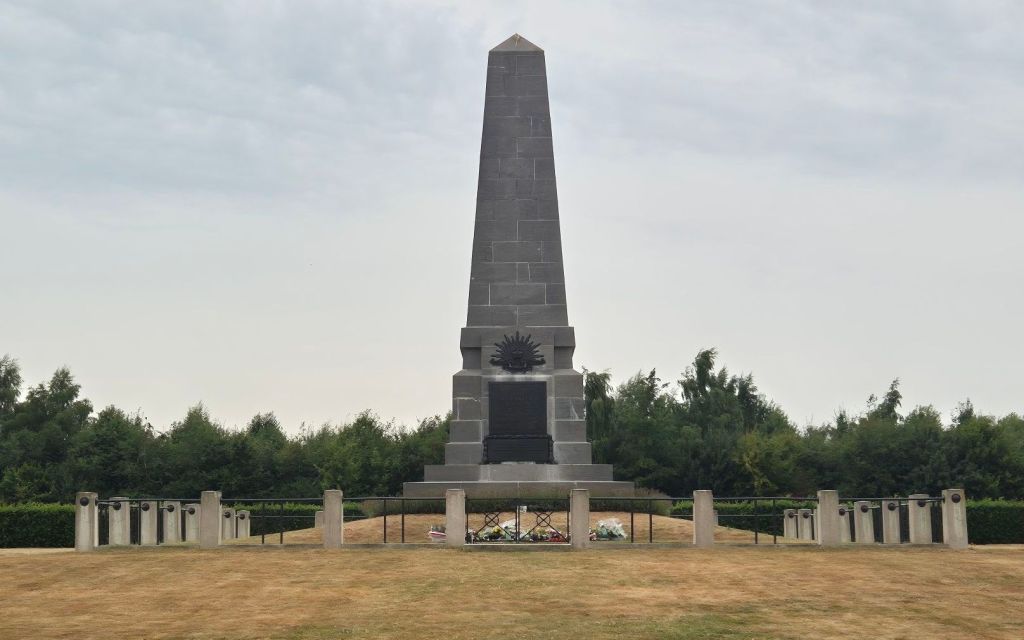
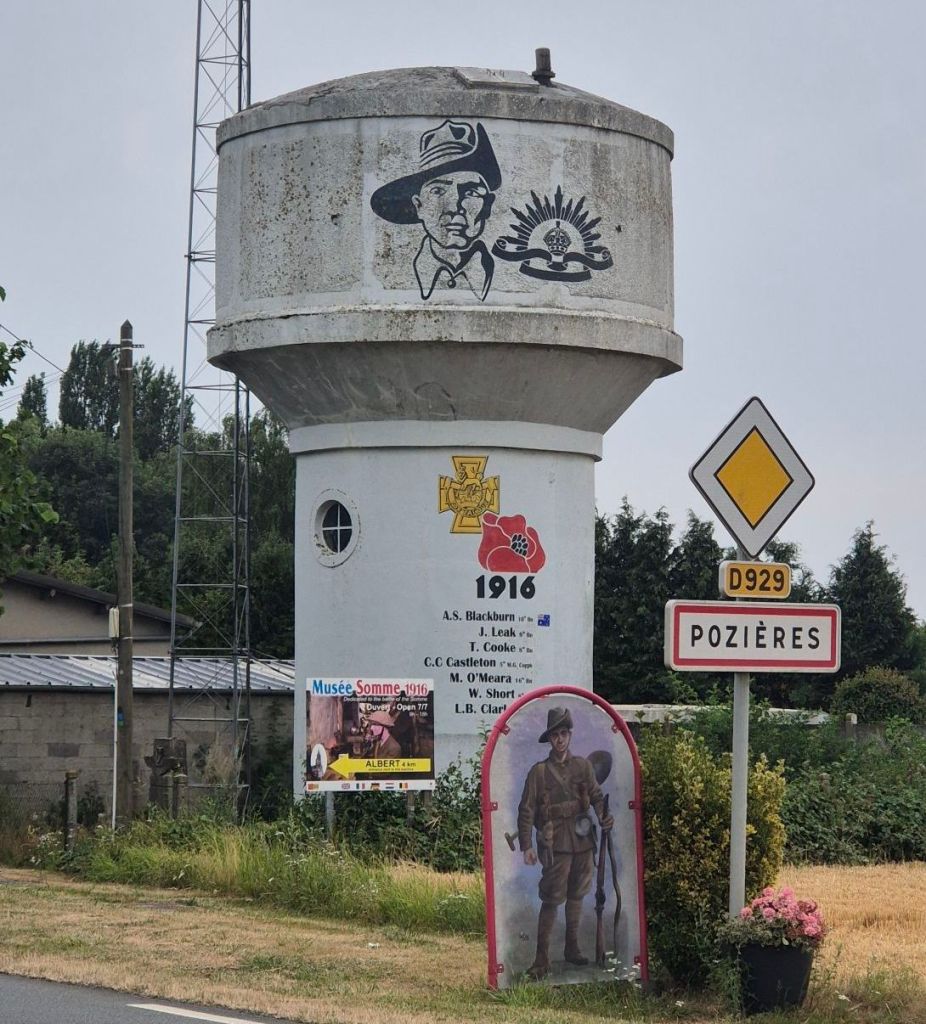
We stopped at the Australian 1st Division Memorial and saw the remains of German bunkers built under a house in Pozieres village.
We stopped at the Monument of Tanks.
Fun facts: tanks were invented by a guy from Adelaide – Lancelot de Mole. They were originally called ‘Land Ships’, but became known as Tanks because when they were transporting them, they painted “tank” on the side so people would think they were moving water tanks!
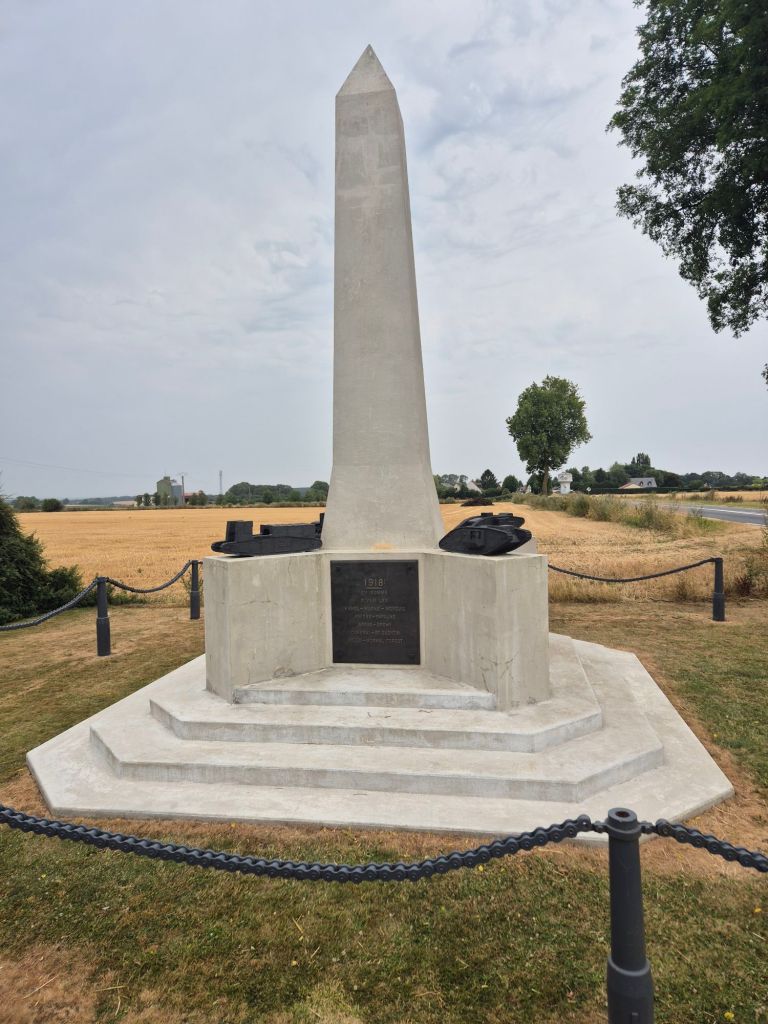
The fence is made from tank parts.
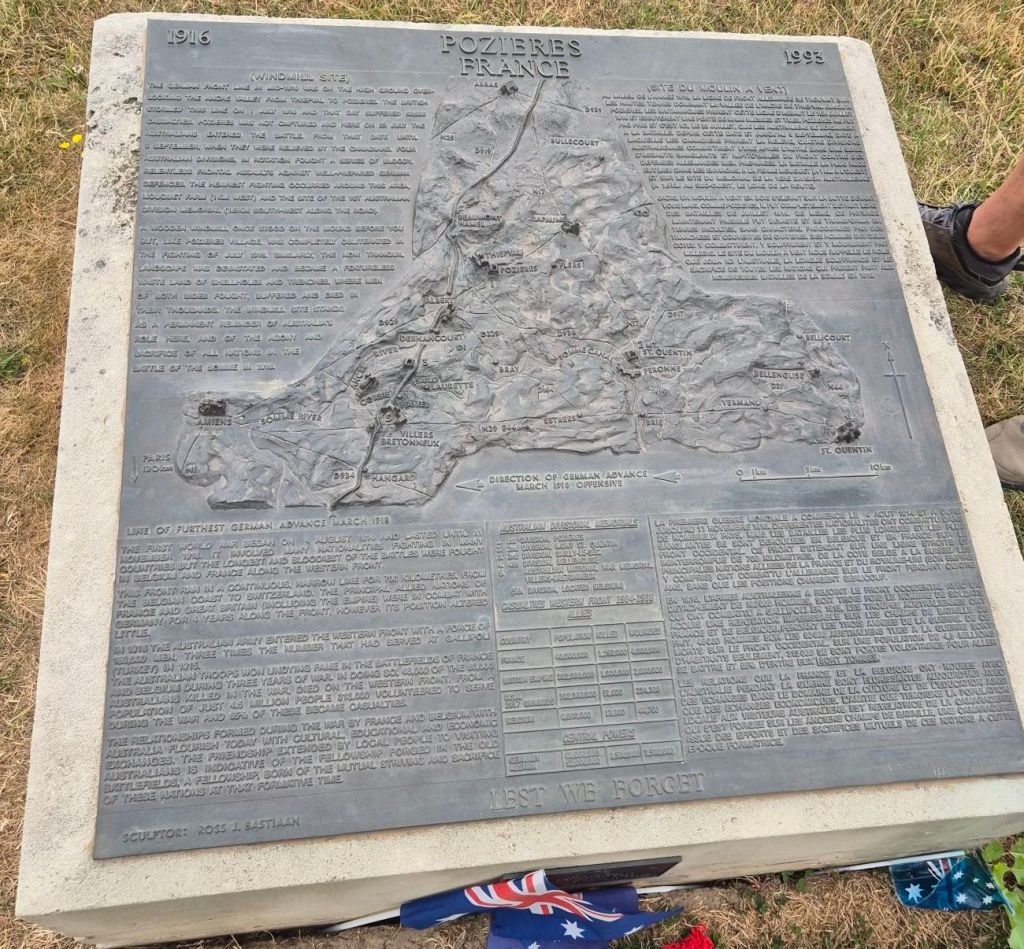
We crossed the road to visit the site of the Pozieres windmill. This is near where Albert Jacka should have been awarded a second VC.
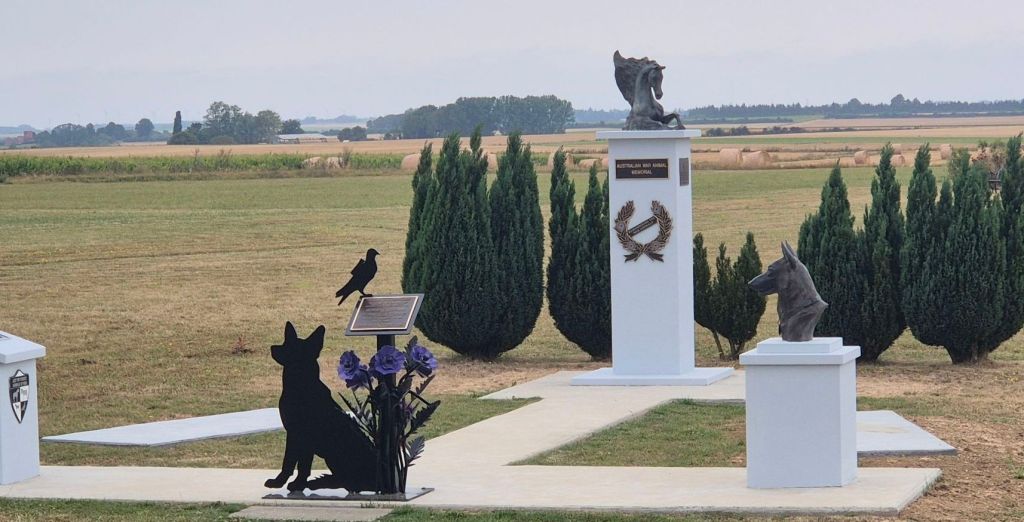
Just behind it, we saw the Australian War Animal Memorial. Stanley would have been pleased that we saw it, he always wore a purple poppy on ANZAC Day.
Funny story with this one, the people (Queenslanders) who raised the money were fraudulent!
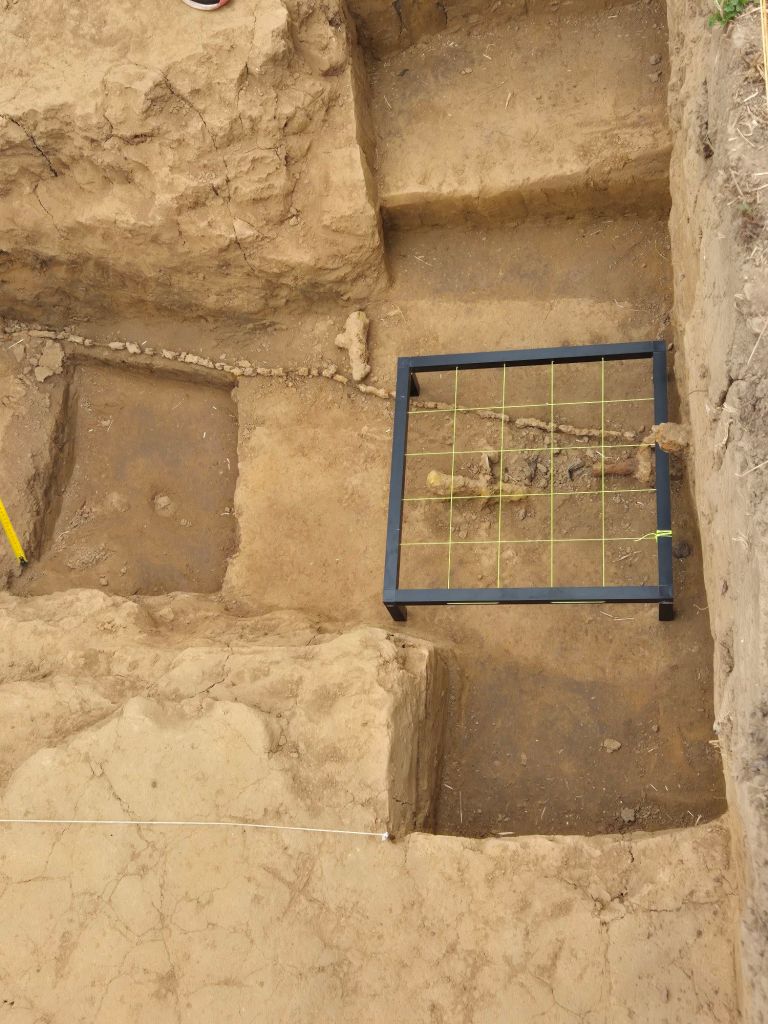
Our guide then tracked down the site of a Flinders University dig in Pozieres. They’re apparently looking for a German gun, but have found two trenches. We were lucky enough to have an unscheduled stop to view their dig sites. One site had uncovered steps into a German trench,
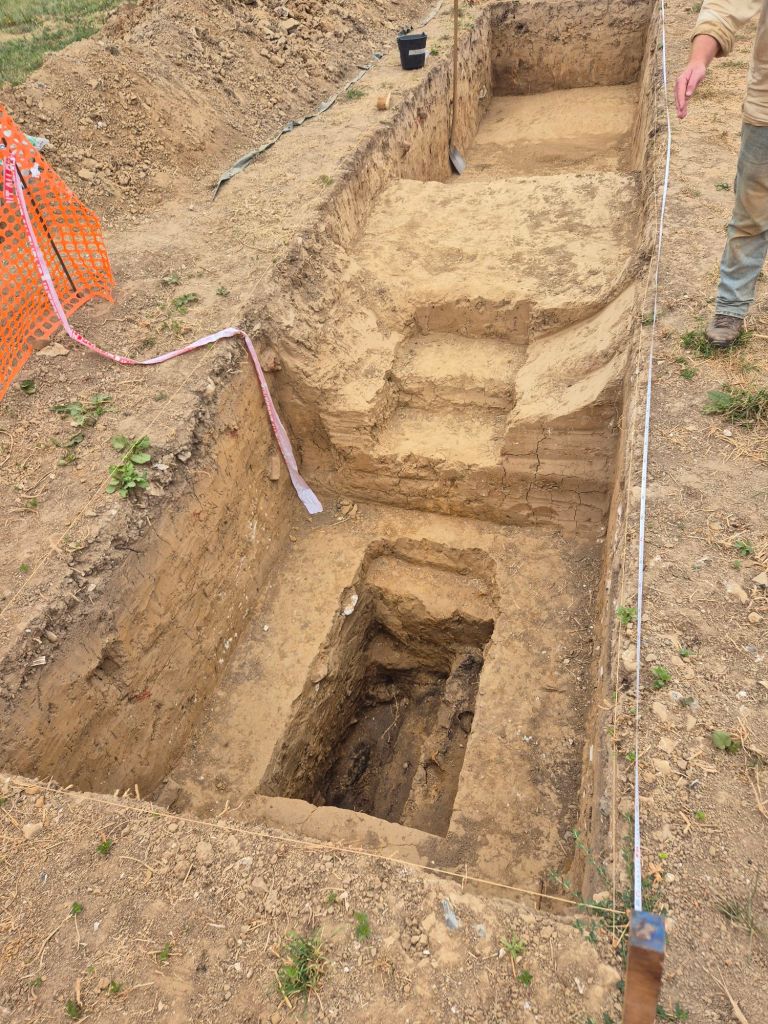
the other has uncovered another German trench, a communication wire and a couple of guns.
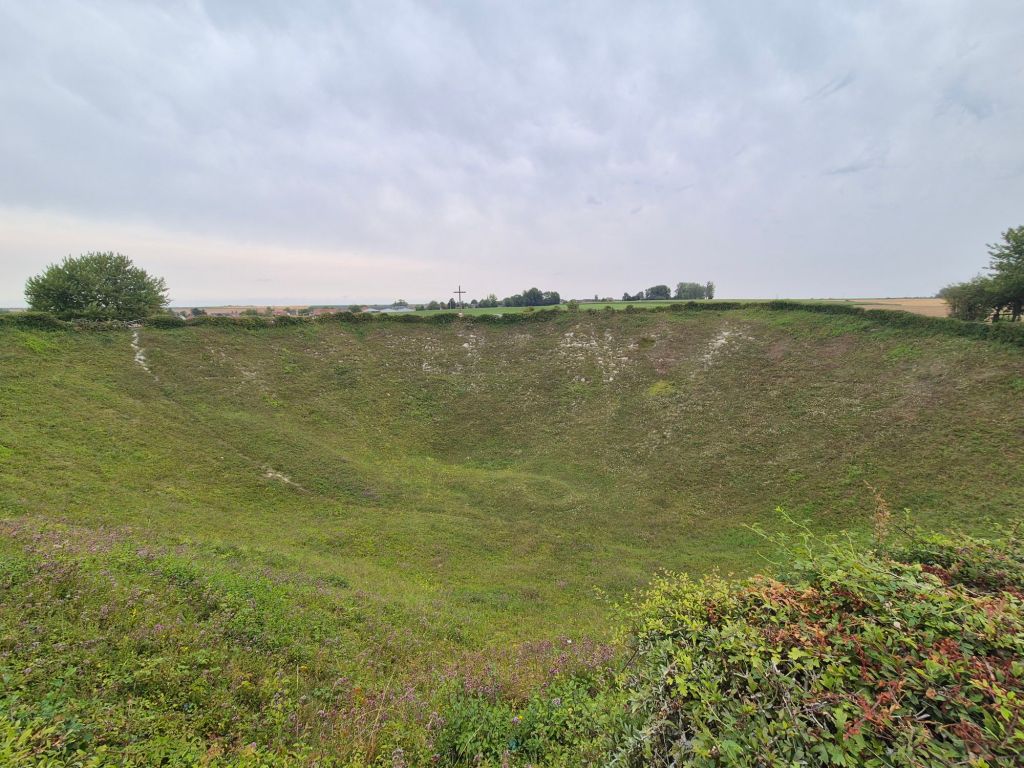
We then stopped at the Lochnager crater, site of the largest explosion in the history of the world at that point, that took place on the first day of the battle of the Somme. It would have been under German trenches at the time. This site was purchased by an Englishman who visited once and saw people riding motorbikes up, down and around it. He bought the land to preserve it; it’s now managed by the Lochnager Crater Foundation.
There was a guy at the site selling items he’s found over the years including helmets, mugs, buttons, hat badges etc. And stubby holders!
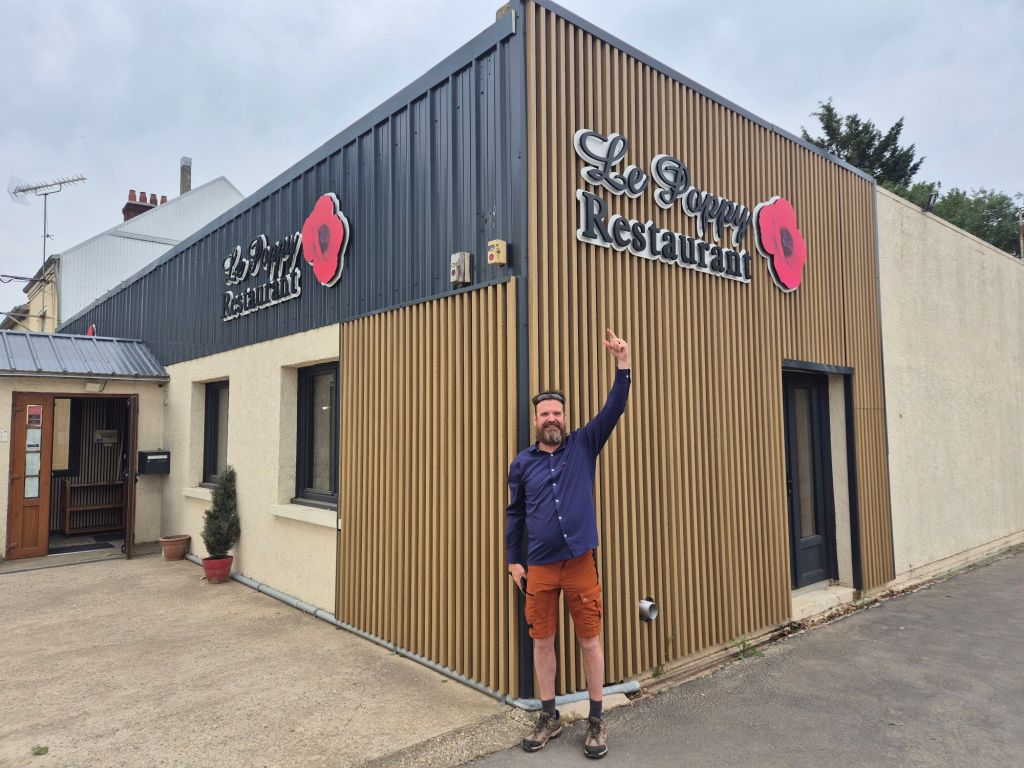
We stopped for lunch at a café called ‘Le Poppy Restaurant’. Poppy is Kevin’s grandparent name!
During our drives our guide pointed out things such as trench wire holding posts being used as fence posts around fields!
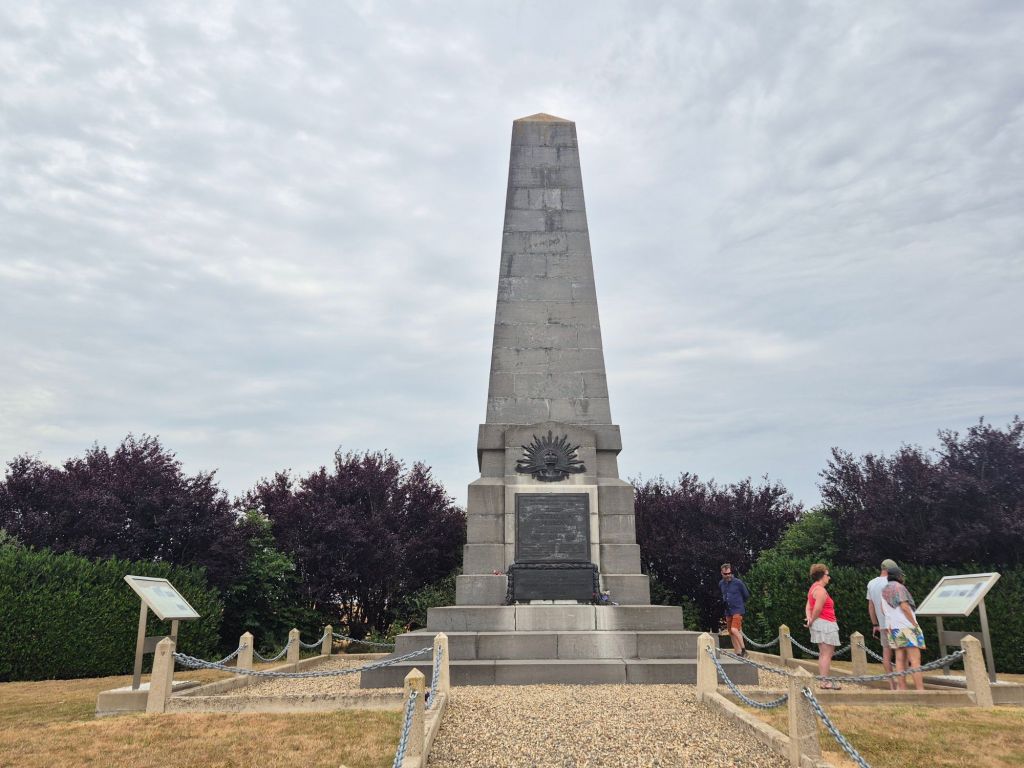
We stopped at the Third Australian Memorial. This was the division that Monash was in charge of before he was given responsibility for all 5 divisions.
A bit further down the road we passed the place where the Red Baron was shot down by an Australian machine gun. Allegedly his last words were “kaput”.
We crossed the Somme River and Canal and headed to the Monash Centre at the Villeurs Bretonneux Memorial.
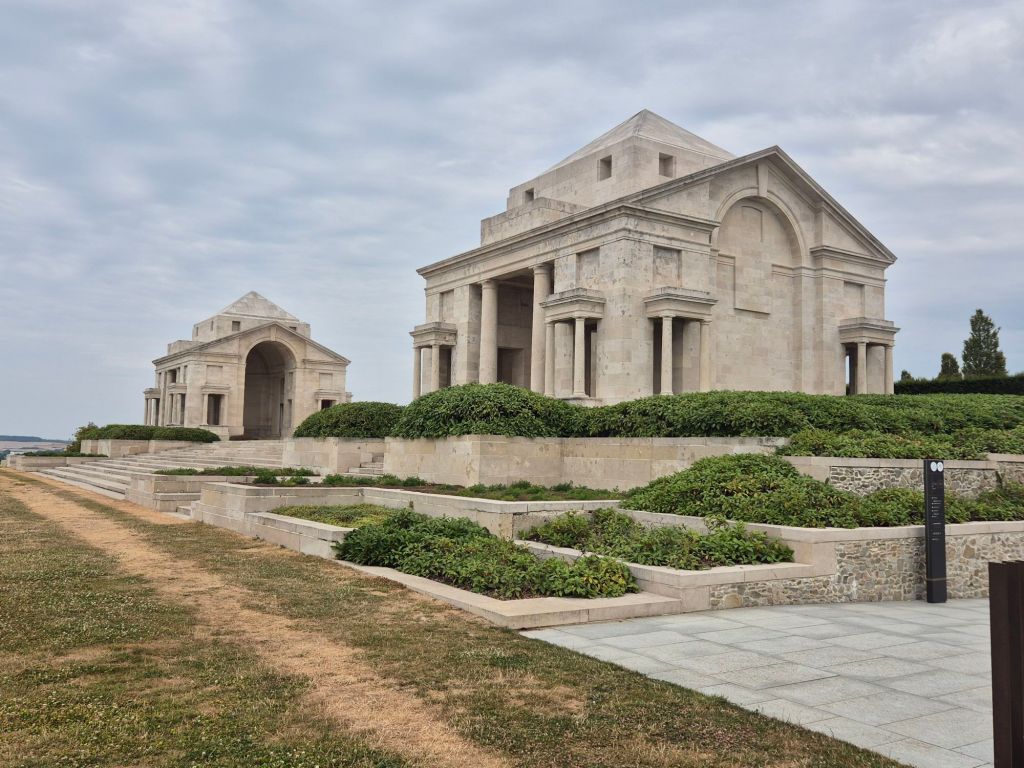
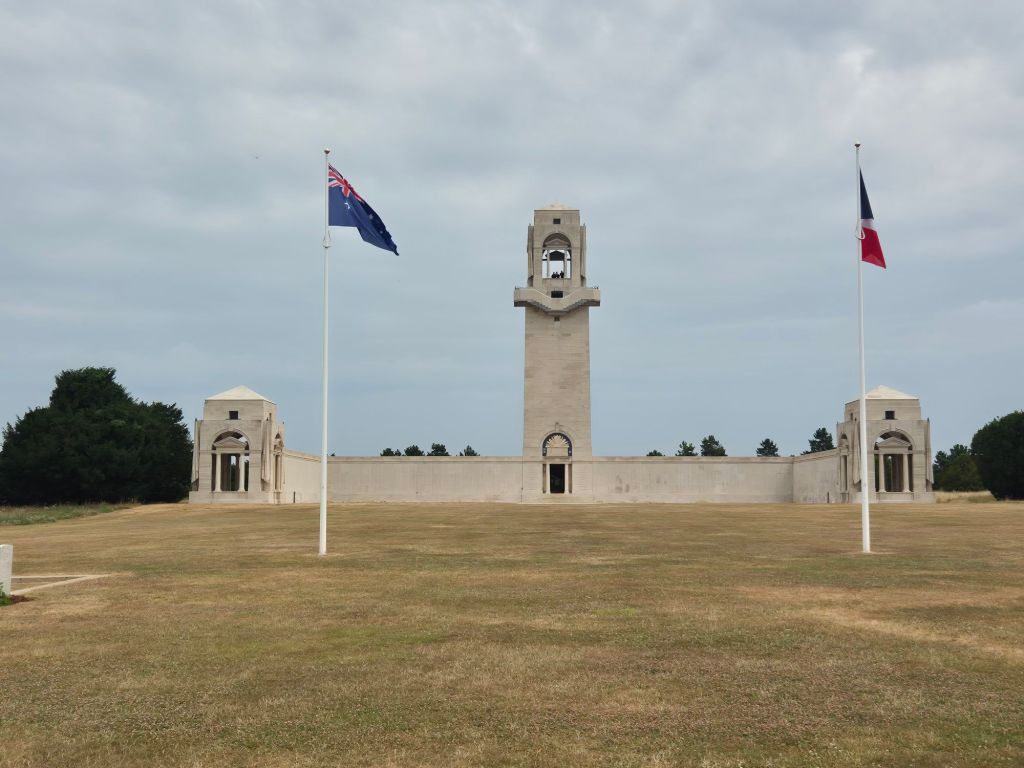
Walking through the gravestones we noted headstones for several 18 and 19 year olds and even on for a 17 year old. They’re so young.
Behind the memorial is the new Sir John Monash Centre. This museum has detailed and interactive displays about Monash’s tactics and Australian battles as well as about Australia and Australia’s role in WW1.
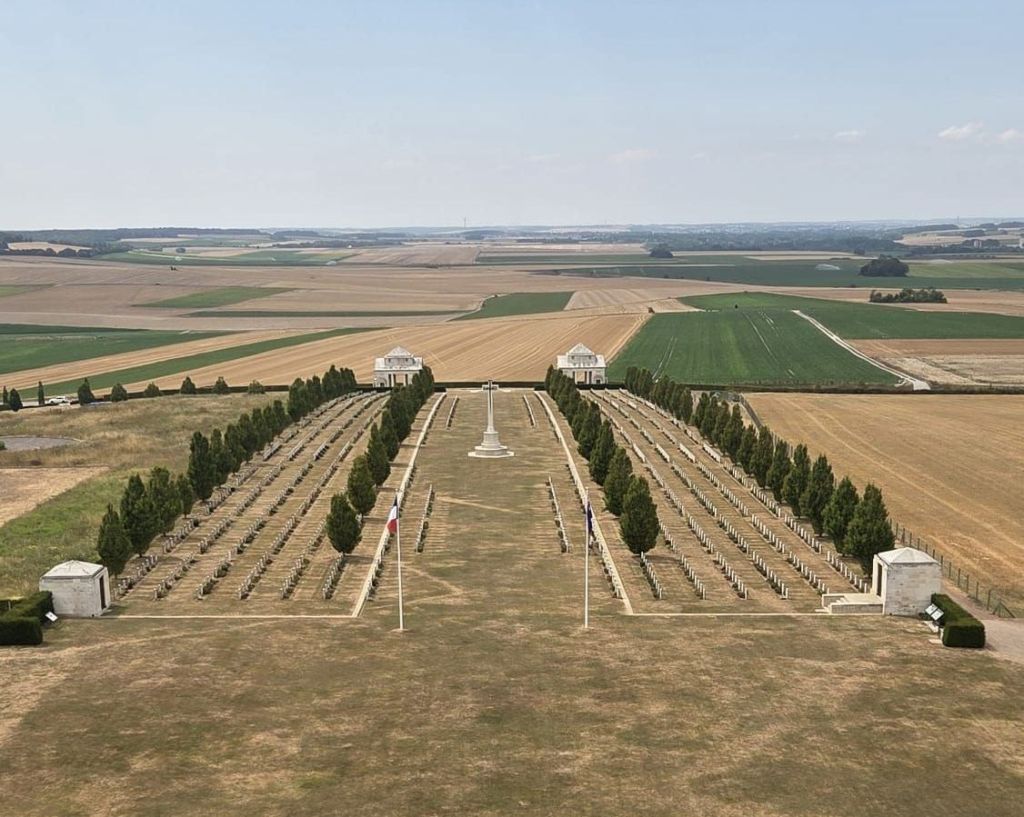
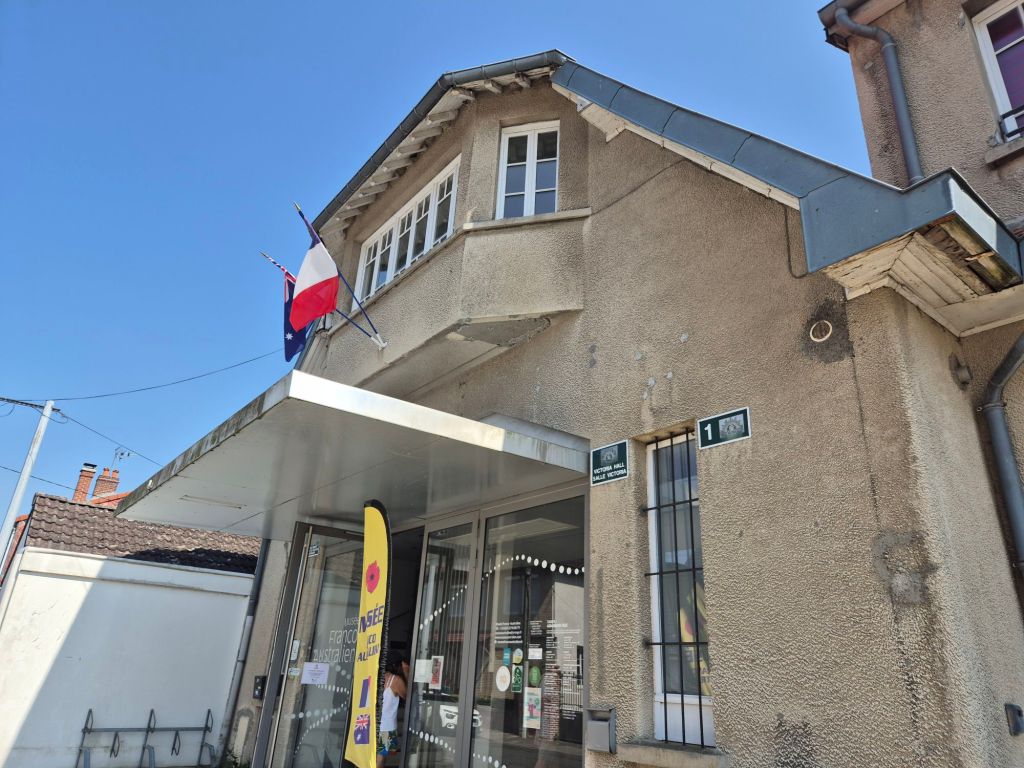
From there we popped to the Victoria School and museum in Villeurs-Bretonneux – the school was rebuilt by funds raised by the people of Victoria.
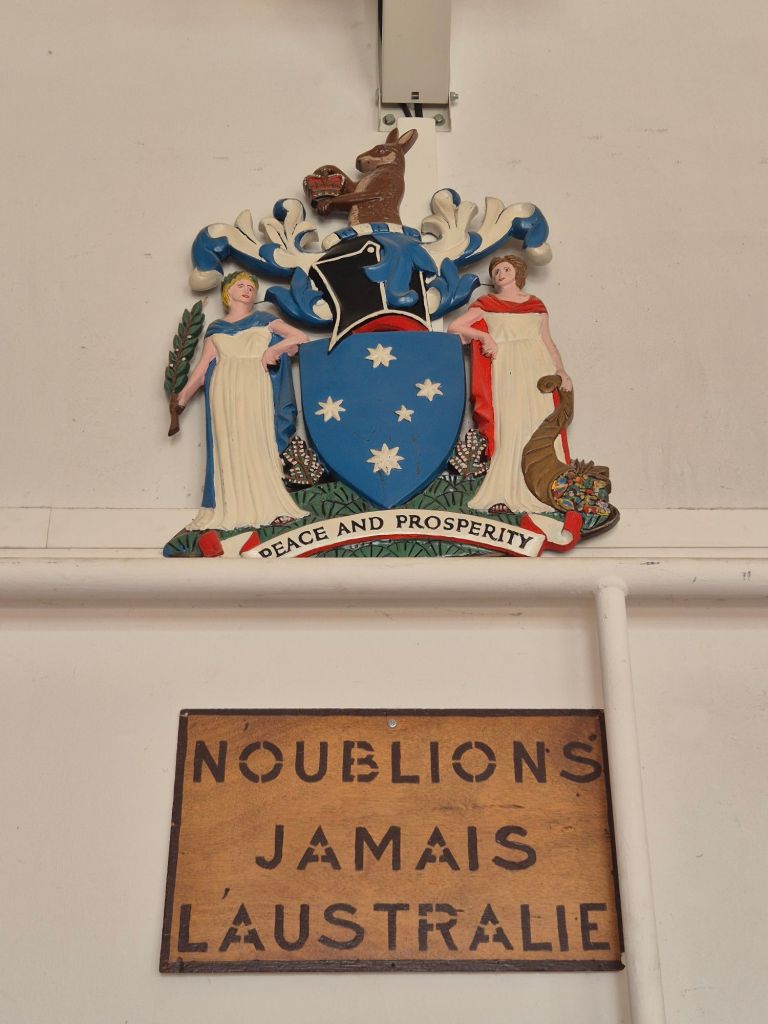
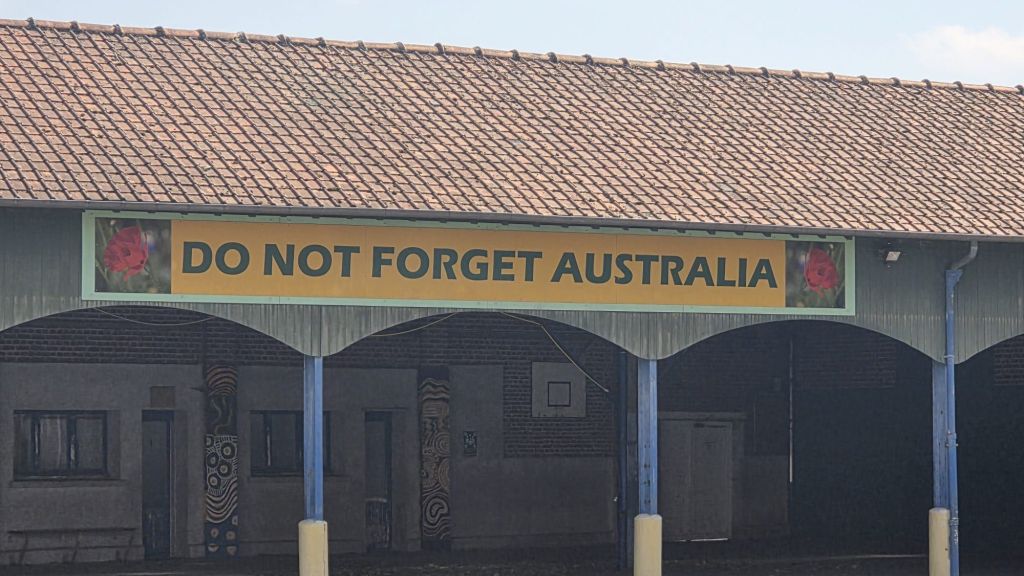
It was a long, but very interesting day.
Day 2 of our WW1 battlefield tour.
We headed north out of Arras.
We travelled through the area where the 4 Canadian divisions, led by a Canadian General fought together for the 1st time. Vimy Ridge is as important to Canadians as Gallipoli is to Australians.
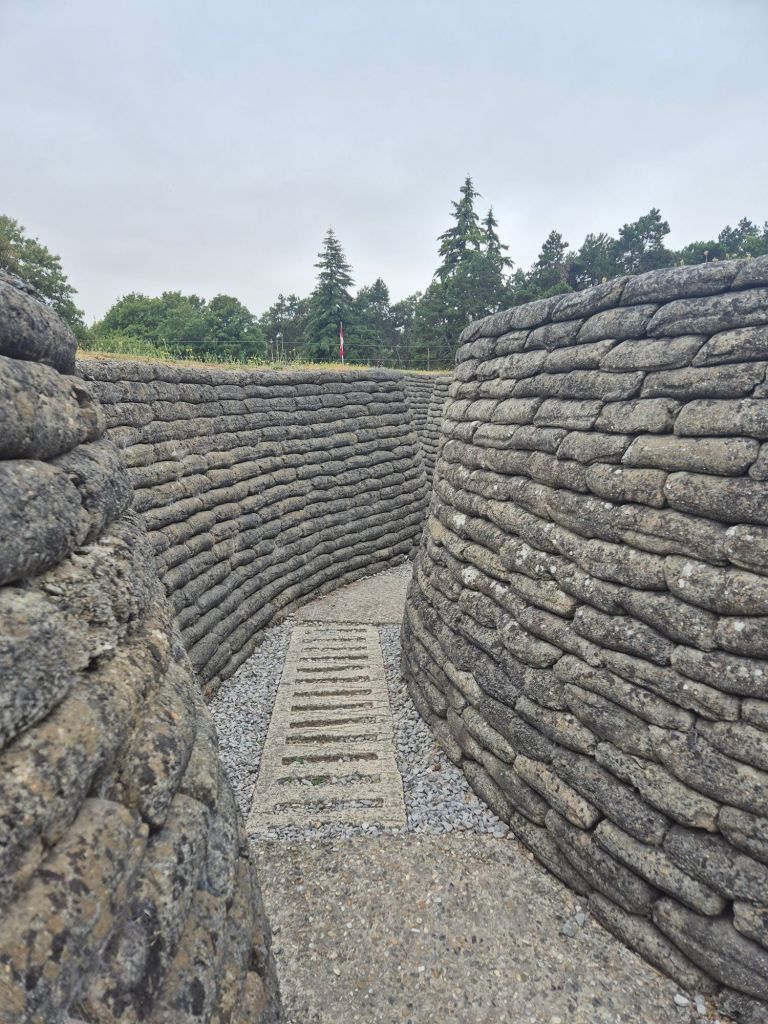
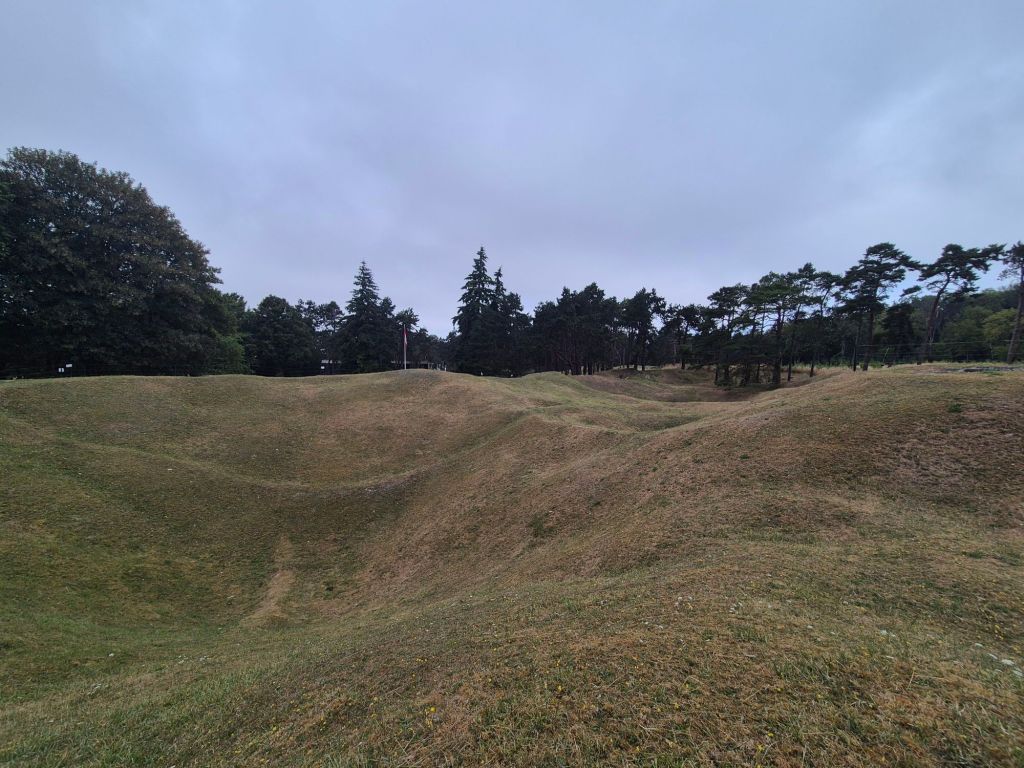
The French government gifted part of the battlefield to the Canadians who have left the it as it was, with craters created by the underground mines, tunnels and trenches.
The trenches are so close together, you would literally have been able to see the eyes of your enemy counterparts. Between the trenches, large craters were created by defensive mining, this was done to make no-mans land harder to cross.
The Canadian memorial was much admired by Hitler, apparently he had soldiers assigned to protect it during WW2. Strange.
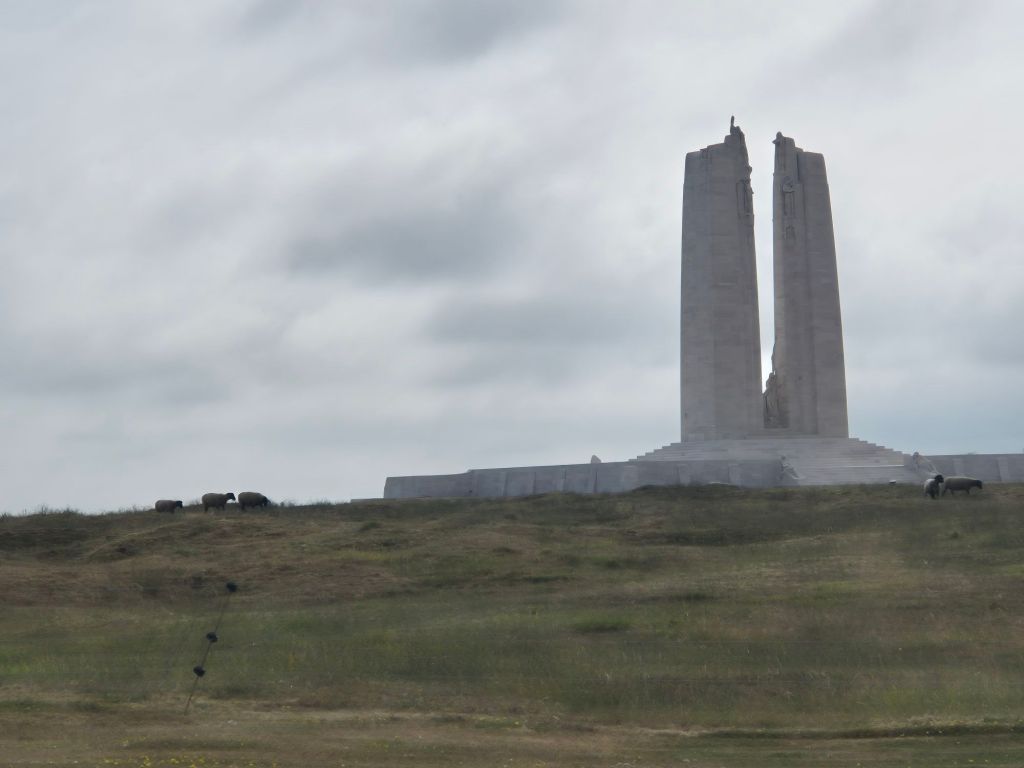
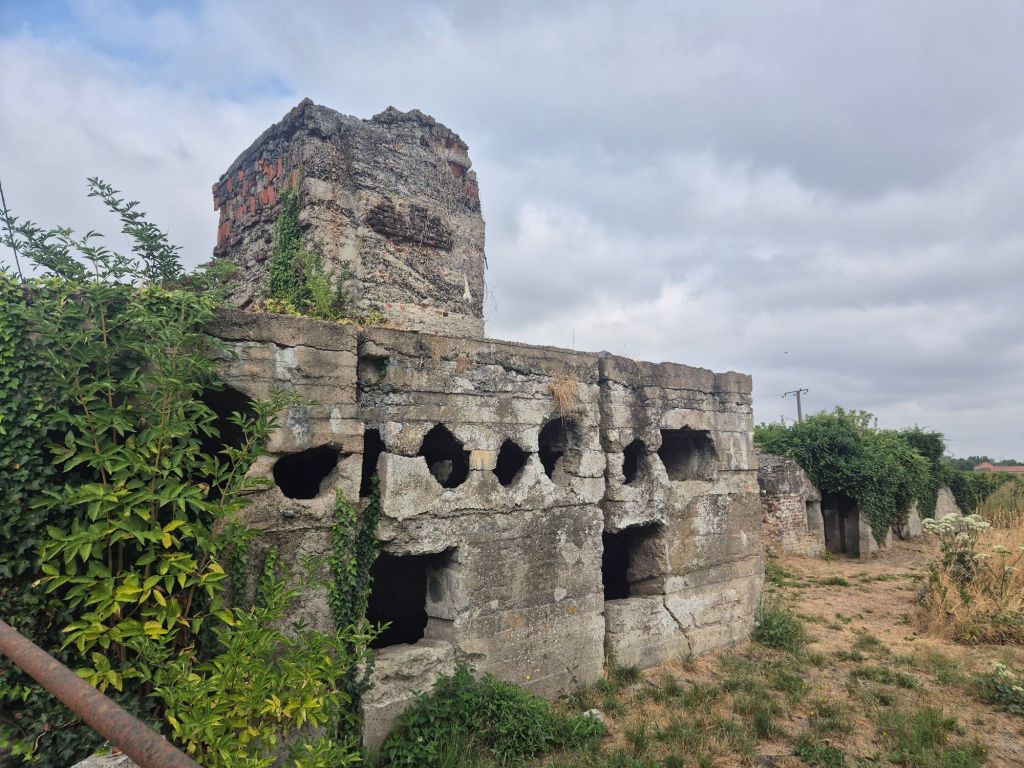
Heading further north, we stopped at an area just outside Lille where multiple German bunkers are visible.
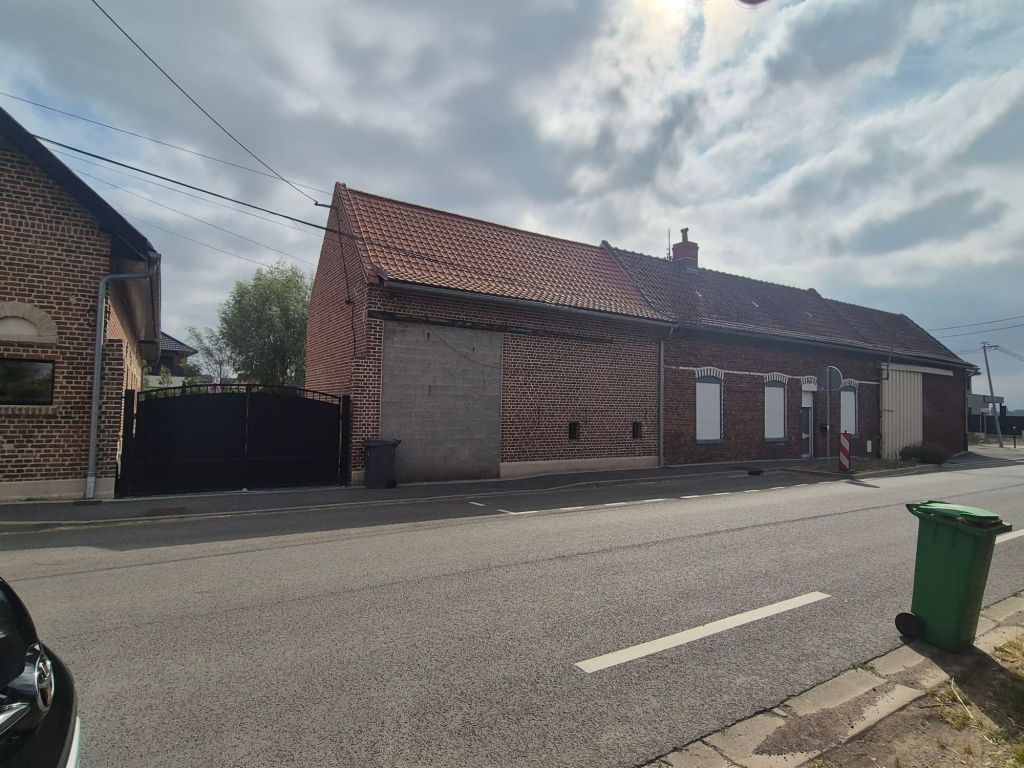
Passing through Fromelles we passed the house where Hitler was billeted during WW1.
From here we headed to
the former mass graveyard at Pheasant Wood. This was discovered in 2009, containing 250 Australian and British soldiers killed in July 1916. They were reburied with full military honours in a new Pheasant cemetery in 2010. DNA testing has identified 181 of the soldiers so far.
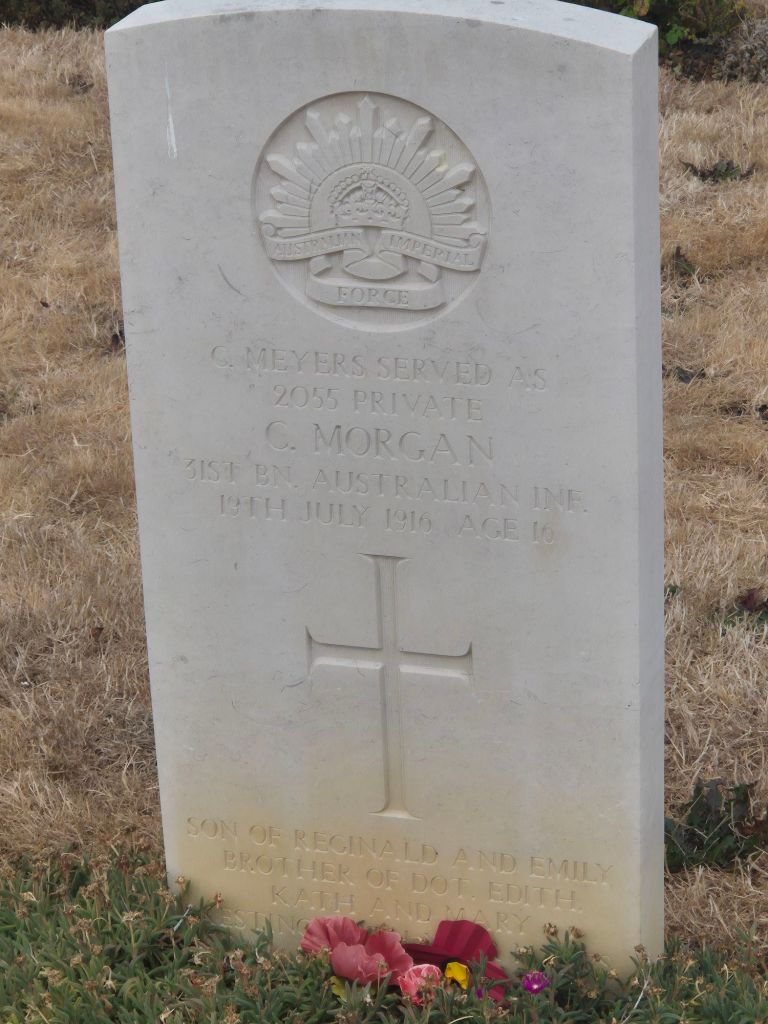
Fromelles was considered a quiet area, a combat “nursery” where they sent new soldiers to gain skills. In July 1916 the Germans from Lille were seen heading south to the Somme so the British felt a diversion was needed. British General Haking was assigned responsibility for creating that diversion by attacking at Fromelles. For reasons known only to him he commenced the attack at 18:00. In July where it doesn’t get dark until 22:30. The battle was over by dawn and is one of the biggest disasters the Australians went through.
The Australian 5th Division suffered 5533 dead and wounded in one day. The battle had no effect on the ability of the Germans to send forces south to the Somme.
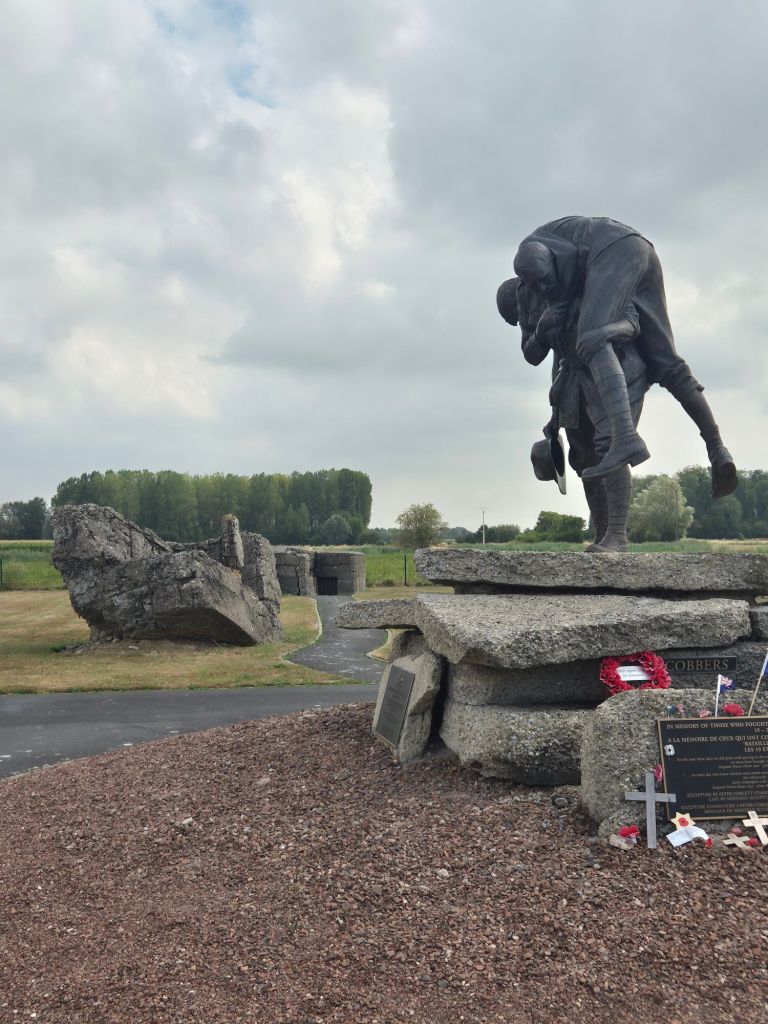
General Haking had forbidden the Australians to go into no-mans land to collect their wounded. Sergeant Simon Fraser ignored this, he has his mates are commemorated in The Cobbers sculpture.
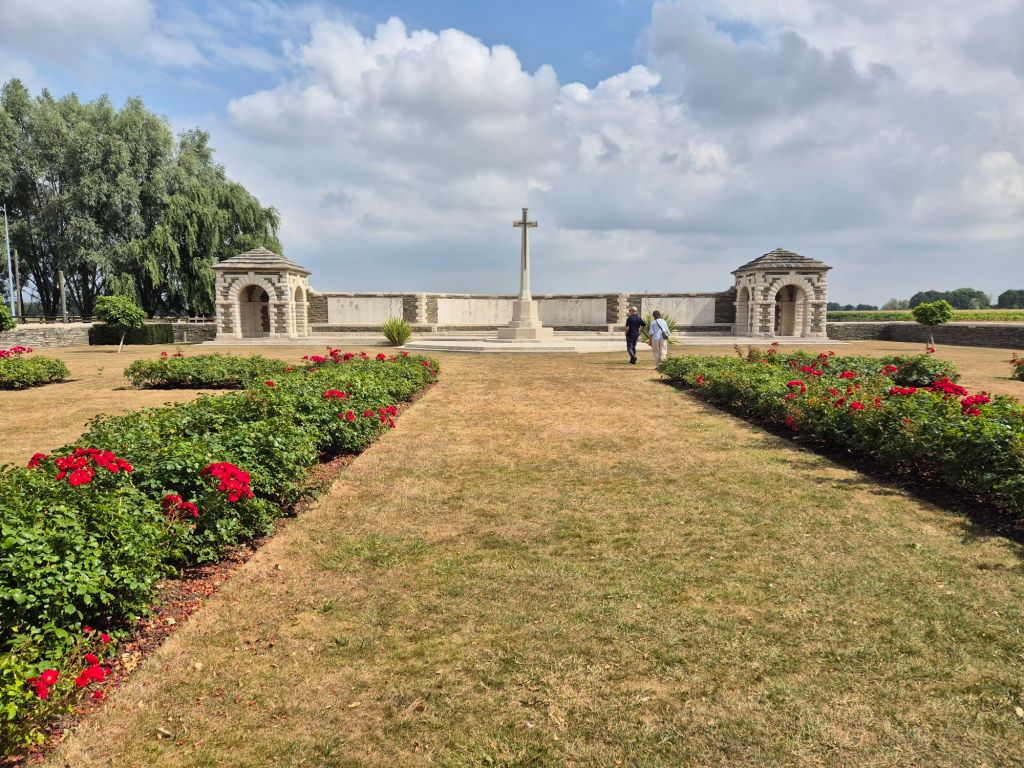
From here we walked to VC Corner Australian Cemetery. The cemetery contains only 410 Australian soldiers, all unknown, with no headstones just two simple crosses and 410 rose bushes. The memorial wall at the back of the cemetery lists the names of 1294 Australian soldiers with no known grave.
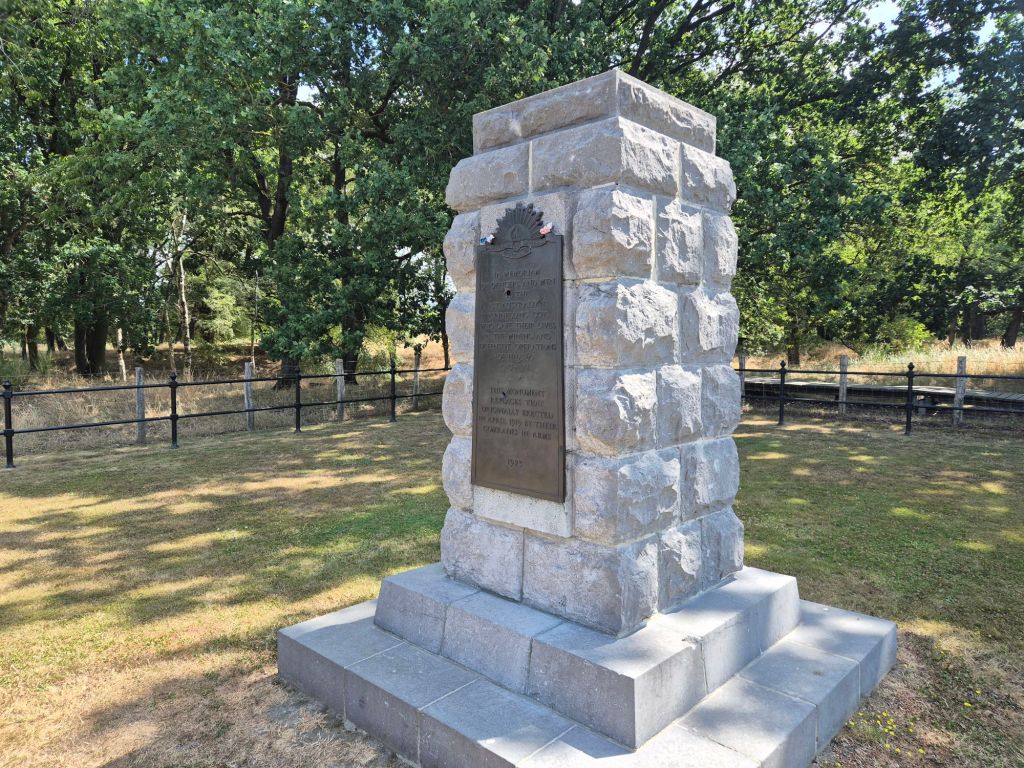
We then crossed the border into Belgium and headed towards Messines Ridge. In this area the 3rd Australian Division lost 1/3 of its men before they even reached the frontline due to gas attacks. Messines is the only area on the Western Front where Australians and New Zealanders fought side by side. Messines is also where a coordinated detonation of 18 mines went off, killing 10,000 Germans. There were more mines dug, but only 18 were detonated, the rest were left, one exploded in the 1950s killing a cow, another remains under a farmhouse that we drove past.
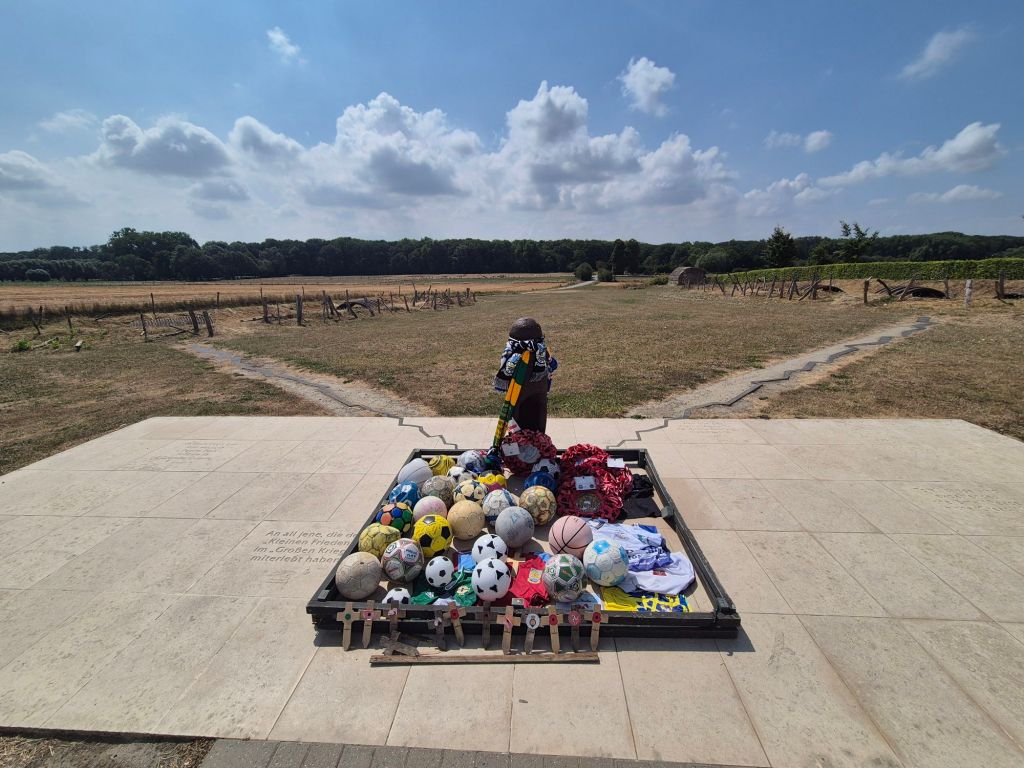
We stopped at the memorial to the Christmas truce in 1914. Previous visitors have left footballs, shirts and scarves at a monument funded by UEFA. Behind this memorial is Mud Cemetery, the only cemetery with only Aussies and Kiwis.
Our final stop before lunch, Hill 60, was where 1 of the 18 previously mentioned mines was set off with 24000kg of explosives. The tunnel was finished off by the 1st Australian Tunnelling Company. Watch the movie “Beneath Hill 60”, it is about this specific explosion.
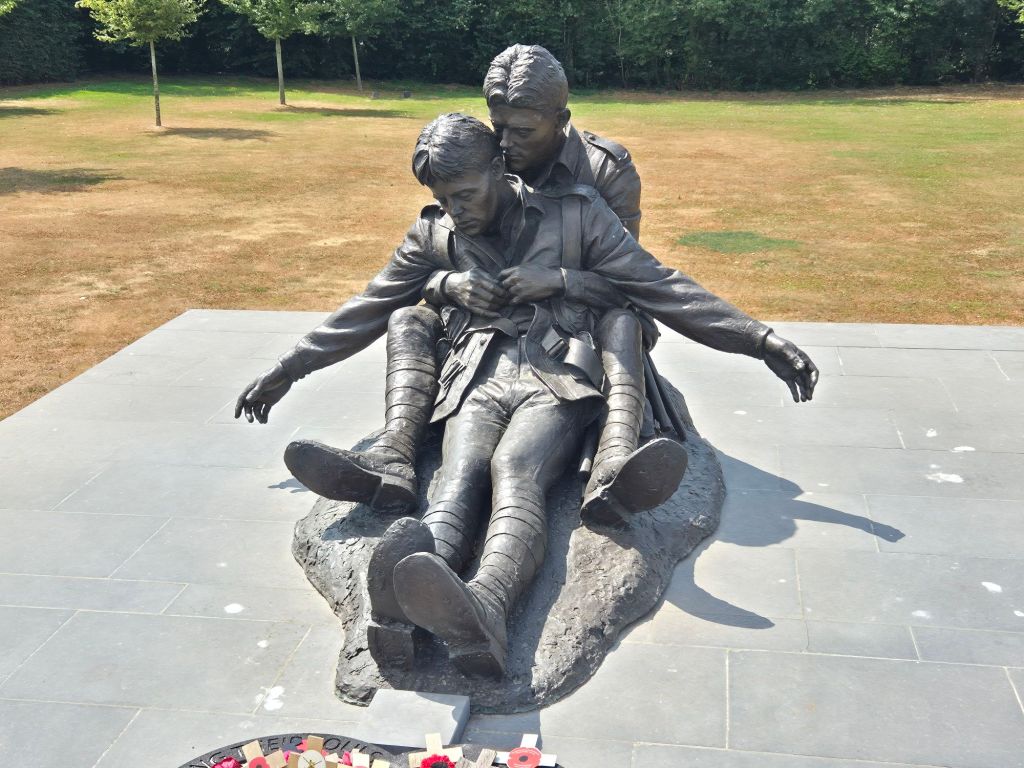
After lunch we crossed the road to The Brothers in Arms Memorial Park. This park was set up to remember brothers and sisters who died in the war. The sculpture represents 2 Australian brothers as 1 cradles the other taking his last breath. The two brothers are John and James Hunter.
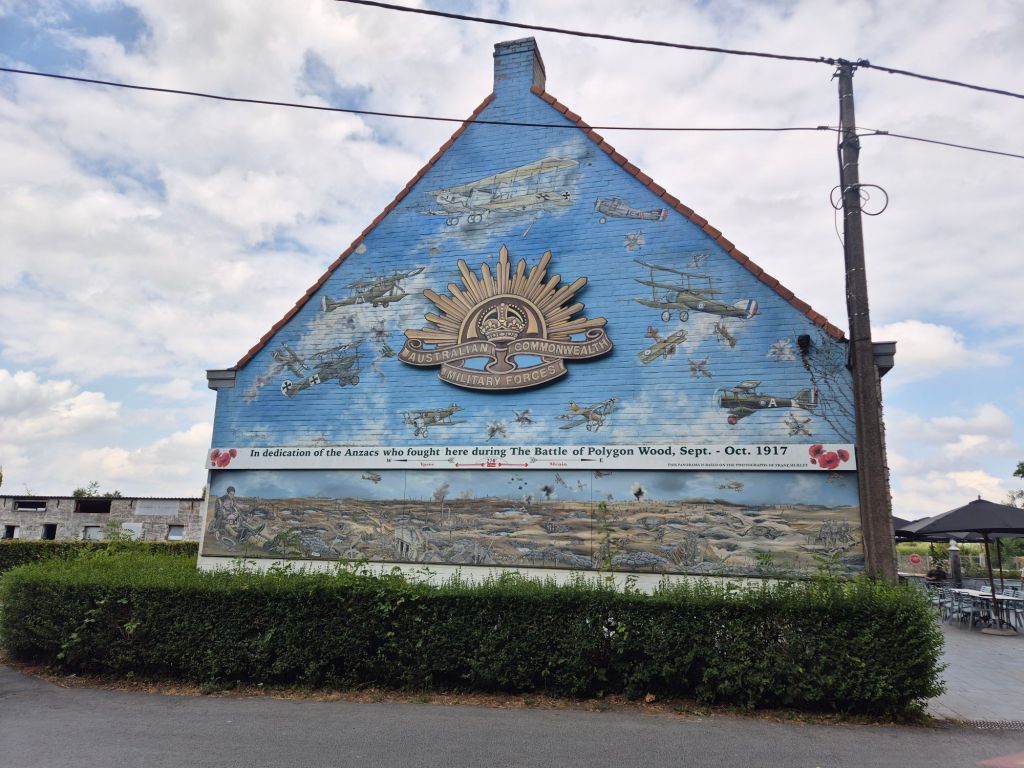
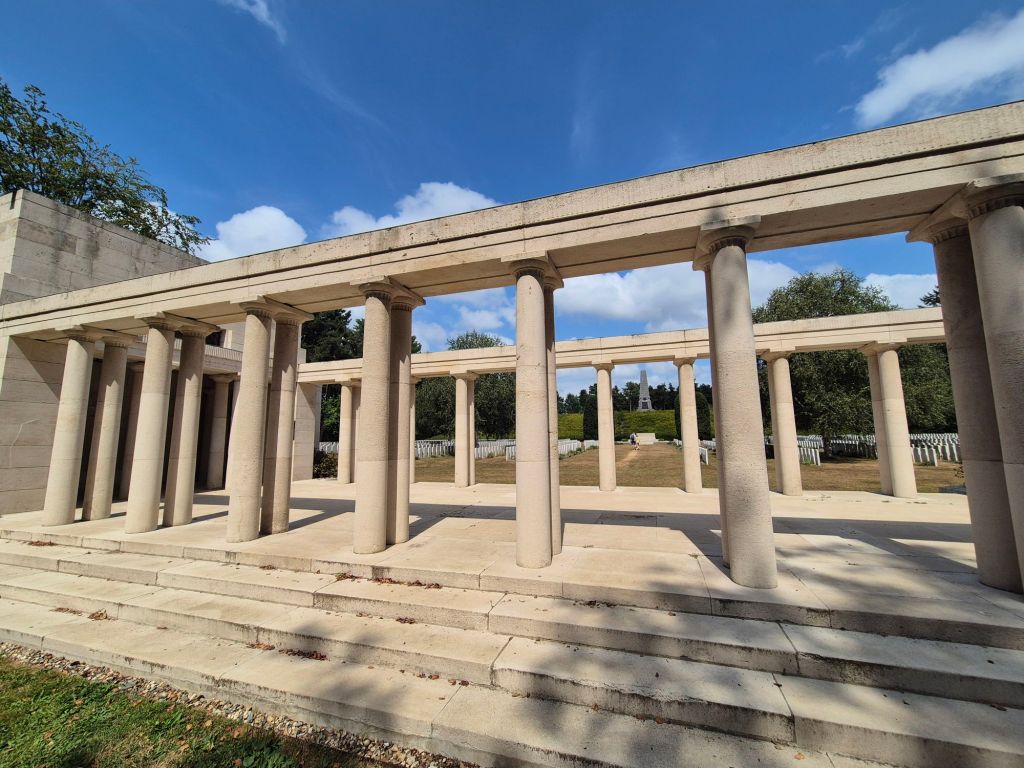
We then visited and walked through Polygon Wood to the 5th Australian Division Memorial. The battle of Polygon Wood was part of the 3rd battle of Ypres in 1917. This was considered a success as German ground was taken causing severe casualties on the 4th German Army. Unfortunately all the ground won was lost in the German Spring Offensive of 1918.
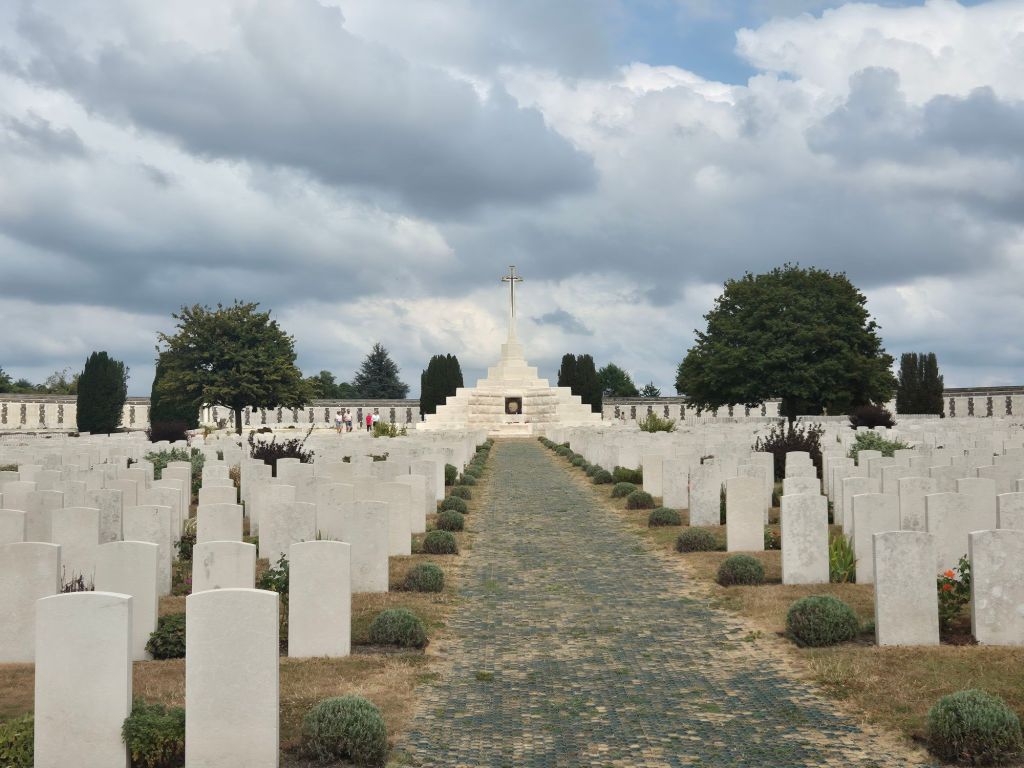
Tyne Cot Cemetery was next, the largest of all the Commonwealth cemeteries. It contains almost 12000 graves and a memorial wall with 35000 names of the missing. The memorial was added after they’d run out of room at Menin Gate.
The centre cross was built upon an old German blockhouse, captured by the 3rd Australian Division in late 1917.
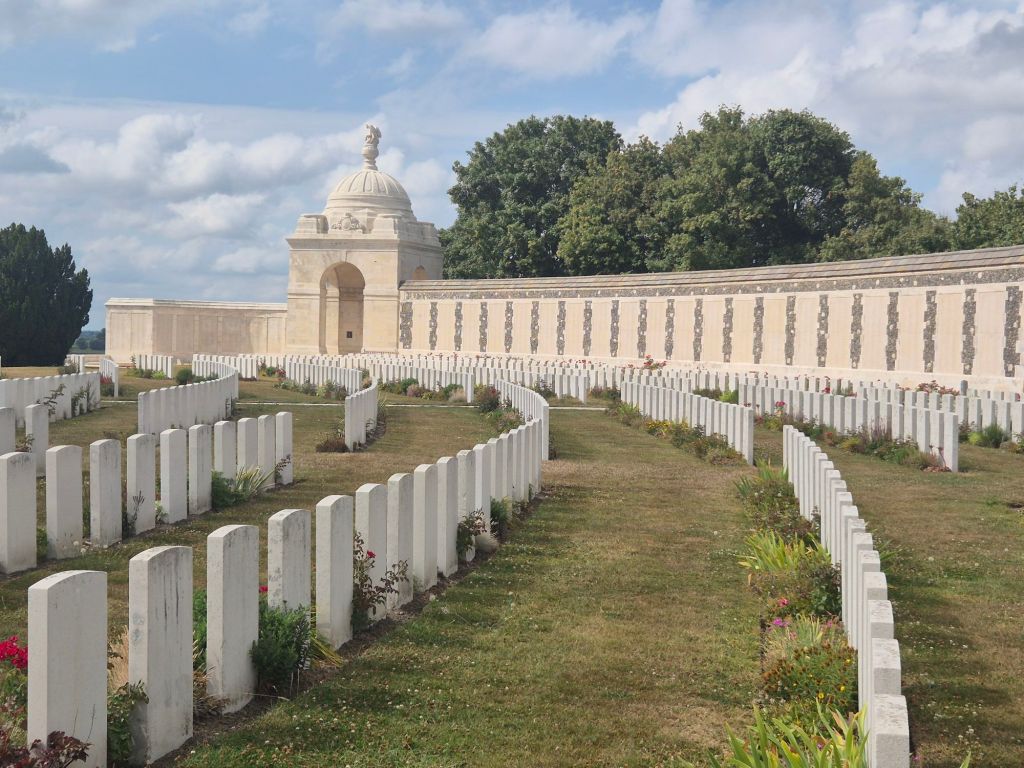
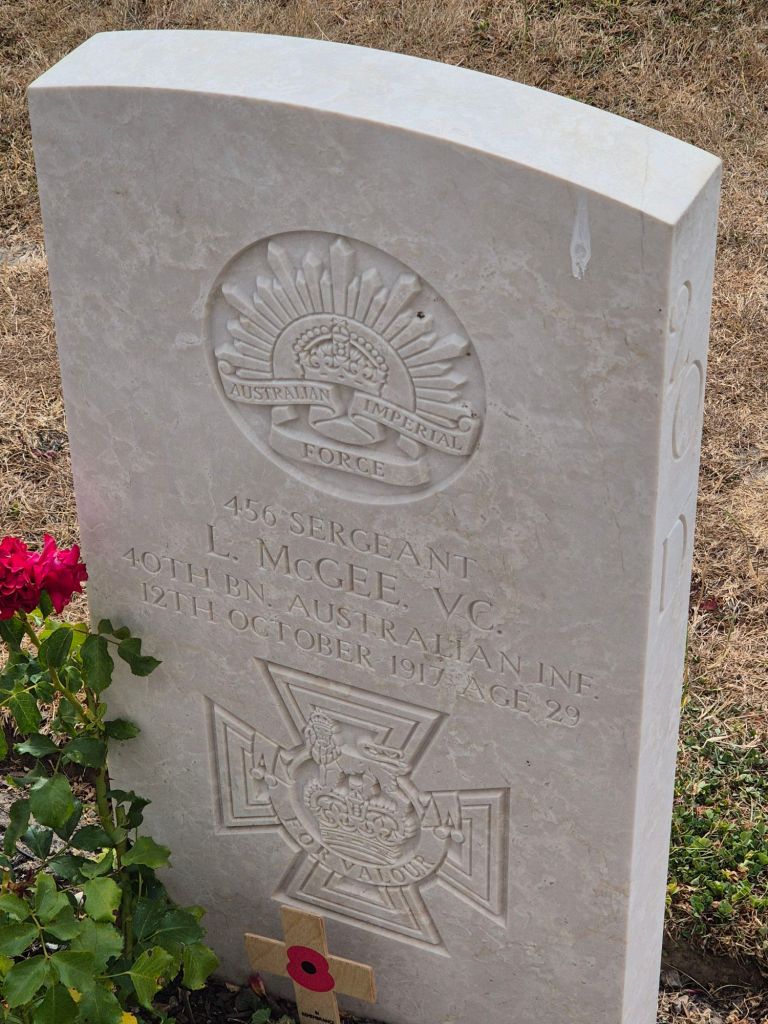
Within the cemetery there are 2 Australians who were awarded the Victoria Cross, both for storming and taking out German machine gun posts.
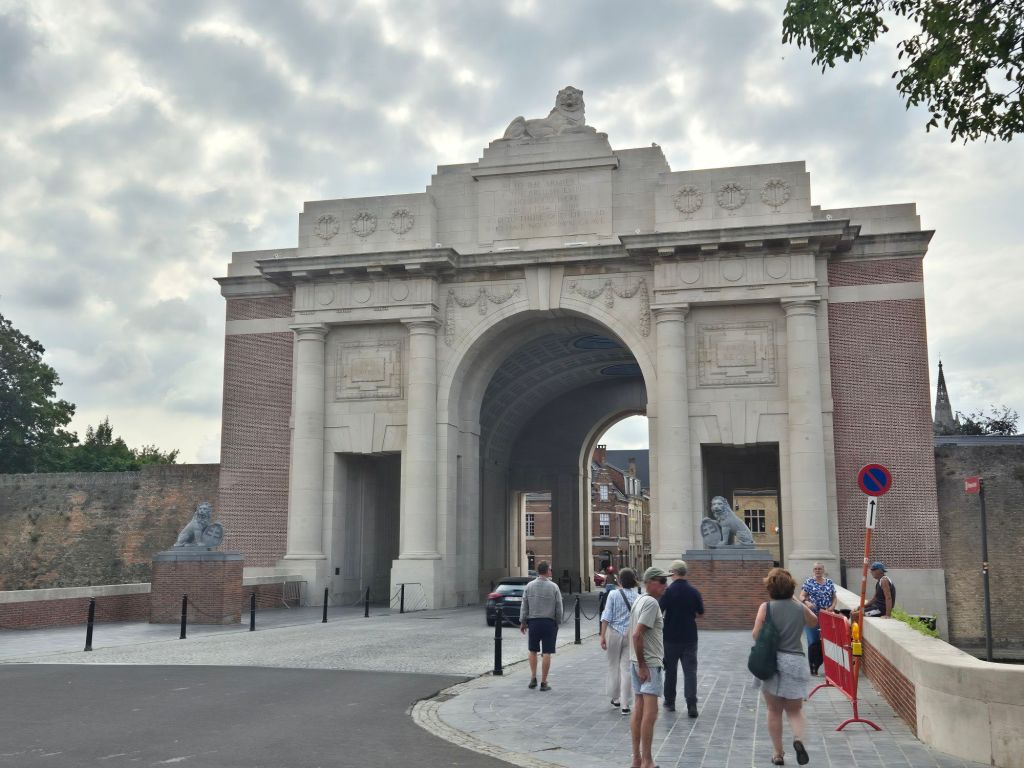
The Menin Gate was our last stop of our 2 days. This was completed in 1927 as a memorial to the missing. It lists over 54000 names. The people of Ypres wanted to do something themselves to remember the dead. Since 1928, except during WW2, there has been a ceremony every night at 20:00 when the last post is played. We will be there tonight to witness the ceremony.



Leave a comment…